
Hot Products Manufacturer & Products Serving Berlin
Industrial-grade photovoltaic mounting systems, precision structural anchors, and Eurocode-compliant connection technologies engineered for metropolitan Berlin, Brandenburg industrial clusters, and Central European energy infrastructure.
Engineered Solar Mounting Hardware Serving Berlin
High-demand structural components designed for high-stress urban rooftops, historic roof substructures, and suburban commercial PV arrays across Berlin and Brandenburg.
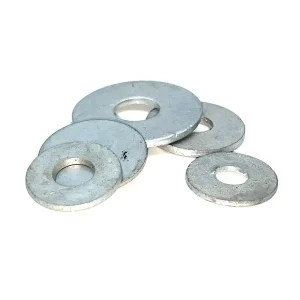
Stainless Steel Flat Washer for Pressure & Corrosion Resistance
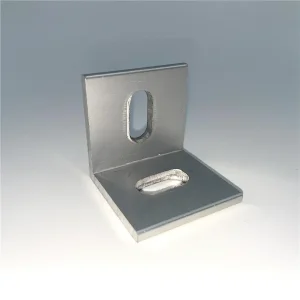
Aluminum Alloy Angle Bracket for Urban Solar PV Substructures
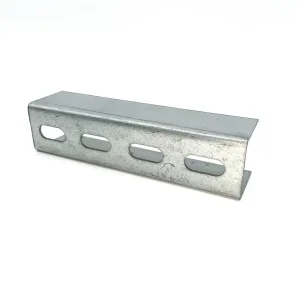
Durable PV Mounting Purlin Connector with Anti-Corrosion Treatment
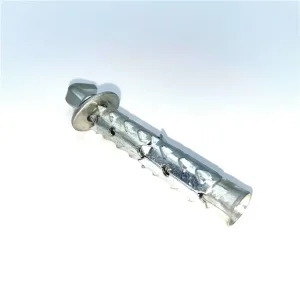
Heavy-Duty Fish Scale Expansion Bolt for Cracked & Non-Cracked Concrete
The Berlin Renewable Energy Transition & High-Tolerance Fastening Engineering
The Senate Department for Mobility, Transport, Climate Protection and the Environment of Berlin instituted the Solargesetz Berlin (Solar Act Berlin), creating an unprecedented regulatory mandate: starting in 2023, rooftop solar photovoltaic systems became compulsory for all newly constructed buildings and substantial roof renovations across commercial, residential, and public property sectors. This transformation requires hundreds of megawatts of installed capacity on aging brick structures, historic Wilhelminian (Gründerzeit) residential buildings, flat bitumen logistics decks, and futuristic science campuses such as Berlin Adlershof.
Unlike greenfield ground-mounted utility parks where foundations can be bored into undisturbed soil, the metropolitan environment of Berlin presents severe structural constraints. Structural engineers face brittle mortar joints, varied concrete quality from multiple construction eras, stringent heritage protection guidelines (Denkmalschutz), and localized aerodynamic microclimates that trigger severe wind uplift around high-density mid-rise blocks.
Critical Mechanical Insight for Berlin EPCs: Hardware selection cannot rely on generic fastener ratings. With wind gust velocities reaching Eurocode 1 Zone 2 peaks (25 m/s base velocity) across the North German Plain and specific building heights exceeding 22 meters in Berlin-Mitte, mounting hardware requires precise tensile ratings, guaranteed minimum yield stress, and documented electrolytic passivation.
Our manufacturing complex bridges this divide by delivering precision-forged structural bolts, custom extruded aluminum mounting brackets, and corrosion-resistant fasteners fabricated in direct compliance with European standards, slashing supply chain bottlenecks for engineering procurement firms operating in Berlin and the wider DACH territory.
Core Engineering Assurances
Every structural fastener batch engineered for Berlin deployment is subjected to destructive tensile verification and metallurgical spectroscopy before leaving our manufacturing floor.
- Full alloy traceability according to EN 10204 3.1 inspection certification.
- Passivated stainless steel grades A2-70, A4-80, and high-tensile 8.8 / 10.9 steels.
- Guaranteed galvanic isolation systems preventing aluminum rail degradation.
- Hot-dip galvanizing exceeding DIN EN ISO 1461 coating thickness limits.
Global Sourcing Dynamics vs. Local Berlin Job-Site Demands
How direct-from-source manufacturing in China's fastener epicenter resolves lead time, cost inflation, and material bottlenecks for Berlin general contractors and energy utilities.
Global Raw Material Scalability
Situated in the industrial heart of Handan (China's Fastener Capital), our automated multi-stage cold headers, hot forgings, and CNC extrusion mills operate directly adjacent to world-class steel billets and raw aluminum processing centers. This eliminates tiered distributor markups, providing Berlin EPC projects with an unassailable pricing advantage and batch consistency across multi-megawatt allocations.
Hamburg & Rotterdam Rail Corridors
Efficient delivery pipelines directly link our containerized consignments via multimodal maritime corridors into the Port of Hamburg and rail terminals in Berlin-Westhafen and Grossbeeren logistics center. Standardized packaging, pre-labeled according to Euro-pallet (EPAL) dimensions and barcode-indexed for immediate job-site staging, reduces local installation downtime by up to 35%.
Severe Urban Air Quality Shield
Metropolitan Berlin experiences localized industrial emissions alongside elevated seasonal humidity. Fasteners specified for rooftop service must endure ISO 9223 C3 to C4 urban-industrial corrosion classifications. Our proprietary organic flaking and duplex stainless treatments prevent premature pitting, stress corrosion cracking (SCC), and catastrophic bolt shear.
Macro-Industry Structural Engineering & Eurocode Calculators
Solving wind uplift, snow drift loads, and bi-metallic thermal expansion within the demanding meteorological realities of Eastern Germany.
Aerodynamic Wind Uplift & Suction Calculation (DIN EN 1991-1-4)
In Berlin's central and suburban districts, commercial building heights typically span 15 to 35 meters. At these elevations, corner and edge zones of flat roofs experience turbulent vortex shedding, creating negative suction pressures exceeding -2.8 kN/m² during seasonal low-pressure fronts.
Our heavy-duty carriage bolts and fish scale expansion anchors are engineered with extended thread engagements and optimized collar geometries that disperse high pull-out forces evenly into concrete deck slabs and structural purlins, entirely eliminating the risk of cone breakout failure.
Calculated Safety Factor: All anchor tensile metrics comply with EOTA TR 029 guidelines, ensuring a minimum design safety coefficient of γM = 1.5 across both cracked and uncracked concrete classes C20/25 to C50/60.
Snow Load Distribution & Thermal Creep (DIN EN 1991-1-3)
Winter conditions in Berlin and Brandenburg regularly bring wet snow accumulation and subsequent ice dams along the base edges of tilted PV arrays. This produces high downward static forces compounded by cyclic thermal contraction from -15°C winter minimums to +38°C summer rooftop extremes.
To eliminate rail buckling, our AL6005-T6 purlin brackets and stainless steel connecting hoops feature precision-slotted bolt channels. These slotted configurations permit linear micro-expansion along the rail's longitudinal axis while maintaining positive rotational clamping torque.
Bimetallic Isolation: Integrated vulcanized EPDM gaskets and fluoropolymer isolating bushings prevent destructive galvanic couples between aluminum mounting profiles and stainless steel hardware.
| Material Grade | Yield Strength Rp0.2 (MPa) | Tensile Strength Rm (MPa) | Corrosion Category (ISO 9223) | Typical Berlin Application Scenario | Regulatory Standard |
|---|---|---|---|---|---|
| Austenitic A2 (1.4301 / AISI 304) | ≥ 450 | 700 – 850 | C3 (Urban / Continental) | Standard rooftop module clamps & bracket fasteners | DIN EN ISO 3506-1 |
| Marine Grade A4 (1.4401 / AISI 316) | ≥ 600 | 800 – 1000 | C4 – C5 (Industrial / Acidic) | Rail hubs, industrial exhaust corridors, water treatment plants | DIN EN ISO 3506-1 |
| Hot-Dip Galvanized Carbon Steel (Grade 8.8) | ≥ 640 | 800 – 950 | C3 – C4 (HDG 85μm Zinc) | Structural post bases, ballast anchors, ground mounts | DIN EN ISO 898-1 |
| Extruded Aluminum AL 6005-T6 | ≥ 240 | ≥ 260 | Atmospheric Passivated | Racking rails, trapezoidal roof brackets, splice connectors | DIN EN 755-2 |
Rigorous Localized Support & German Regulatory Guardrails
Meeting the structural, building code (Bauordnungsrecht), and sustainability criteria mandated by German building authorities and European Union technical assessments.
CE & ETA Verification Pathways
Mounting fasteners and structural anchors designed for public infrastructure and multi-family dwellings across Berlin undergo rigorous testing pathways aligned with European Technical Assessments (ETA). We maintain documented factory production control (FPC) procedures fulfilling DIN EN 1090-1 and 1090-2 Execution Class 2 (EXC2) structural execution standards.
Eurocode 3 & Eurocode 9 Alignment
Design values for pull-through resistance, shear capacity, and bending moments are calculated according to Eurocode 3 (Design of steel structures) and Eurocode 9 (Design of aluminium structures). Complete engineering documentation packages accompany bulk deliveries to simplify review by Berlin Prüfingenieure (licensed structural verification engineers).
Full REACH & RoHS Environmental Audit
German municipal tenders consistently impose strict environmental supply chain criteria. All coatings, passivations, and surface protective seals applied to our hex bolts, carriage screws, and pressure plates are 100% hexavalent chromium-free (CrVI-free), strictly honoring EU REACH Regulation (EC) No 1907/2006 and the RoHS Directive.
Localized Application Scenarios Across Berlin & Brandenburg
Real-world structural configurations engineered to overcome urban geometry, aging building envelopes, and modern logistics infrastructure.
1. Altbau Roof Retrofits (Gründerzeit Districts)
Across Prenzlauer Berg, Kreuzberg, and Charlottenburg, late 19th-century residential structures feature complex roof profiles with traditional clay tile (Biberschwanz) or standing seam zinc cladding. Our adjustable stainless steel brackets and corrosion-resistant purlin connectors interface with timber rafters without splitting historical rafters, allowing solar mounting arrays to conform to strict historic preservation (Denkmalschutz) envelopes.
2. Large-Span Commercial Logistics Centers
Along the BAB 10 Berlin orbital motorway and industrial freight parks in Ludwigsfelde, Grossbeeren, and Schönefeld, multi-hectare industrial warehouses utilize thin-gauge trapezoidal sheet metal roofing. Our specialized non-penetrating trapezoidal clamps and high-strength blind rivet bolt systems lock directly onto sheet ribs, securing heavy multi-row PV setups without breaching roof waterproofing membranes.
3. Municipal S-Bahn & Rail Infrastructure Carports
Berlin's urban mobility corridors, including Deutsche Bahn / S-Bahn surface facilities and municipal BVG bus depots, are actively deploying large-scale solar carports. Our high-tensile 8.8 carriage bolts, double-hole pressure plates, and heavy-duty expansion anchors withstand continual mechanical vibrations, rail brake dust, and cyclic dynamic wind loads from passing commuter train traffic.
Next-Generation Mechanical Research & Digital BIM Integration
As the European solar installation sector accelerates automation and prefabrication, the physical interface between structural mounting frames and modular hardware is rapidly evolving. Handan Youlong Fastener continues investing heavily in metallurgical advancement, smart installation features, and digital construction interoperability.
Our research and development pipeline addresses the primary labor and durability challenges confronting European construction managers:
- Micro-Encapsulated Reactive Threadlocking: Eliminates periodic torque re-tightening audits mandated on commercial roofs by bonding threads chemically upon installation.
- Ultra-High Durability Zinc-Nickel (Zn-Ni) Alloy Electroplating: Provides over 2,500 hours of neutral salt spray endurance at a reduced coating thickness, preserving tight thread tolerances.
- Building Information Modeling (BIM) Digital Twins: High-precision 3D Revit and IFC component models with embedded mechanical yield data for seamless integration into structural FEA software.
Need Project-Specific Static Calculations for Berlin?
Our engineering team collaborates directly with German structural engineers, offering customized bill of materials (BOM) optimization, FEA stress modeling, and bespoke sample testing.
Consult Our Technical TeamHot Products Serving Berlin Infrastructure Projects
Complete load-path hardware designed to maintain joint integrity across commercial, residential, and industrial renewable energy projects.
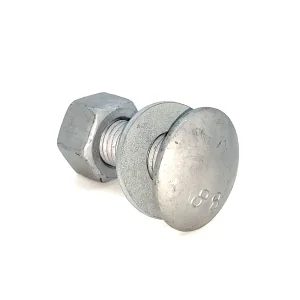
Heavy-Duty Hot-Dip Galvanized Carriage Bolt for Outdoor Solar Framework
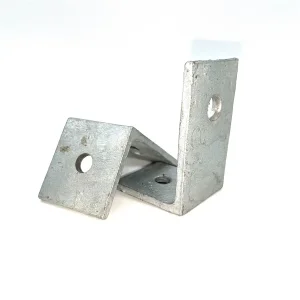
Heavy-Duty Stainless Steel Angle Bracket for Precision PV Rail Mounting
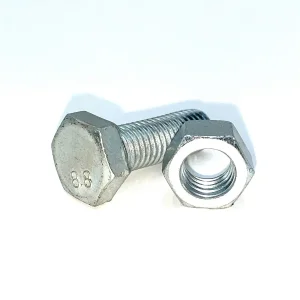
High-Strength Hex Bolt for Heavy Structural Mounting & Engineering
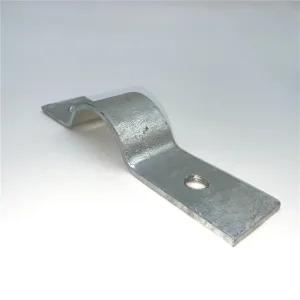
Heavy-Duty Adjustable Stainless Steel Solar Mounting Hoop for Cylindrical Posts
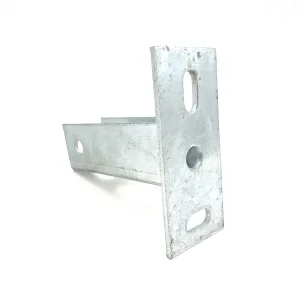
High-Strength Aluminum Alloy Solar PV Mounting Base for Ballasted Systems
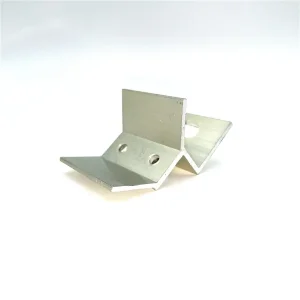
Custom Trapezoidal Metal Roof Clamp for Direct-Fix PV Installation
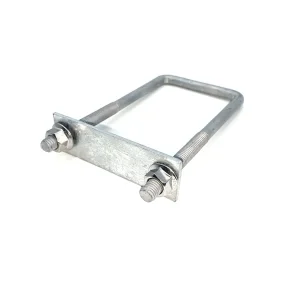
High-Strength Double-Hole Pressure Plate for Heavy-Duty Racking Interlocks
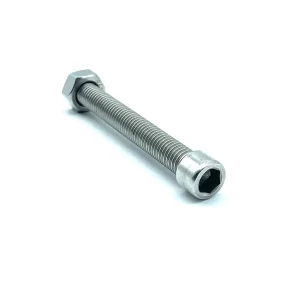
Stainless Steel Hex Socket Cap Screw for Confined Mounting Channels
Frequently Asked Questions for Berlin EPCs & Structural Engineers
Answers to common inquiries regarding German building code compliance, material selection, customs logistics, and custom manufacturing.
How do your mounting components satisfy the Solargesetz Berlin requirements for commercial and residential roofs?
The Solargesetz Berlin requires commercial and residential rooftops to maximize usable solar area while honoring strict local structural building safety codes (Bauordnung für Berlin - BauO Bln). Our product line provides modular flexibility: our aluminum mounting brackets, trapezoidal clamps, and high-strength fasteners allow low-ballast, non-roof-penetrating configurations for flat industrial roofs, as well as high-load timber rafter connections for historic steep-pitch tile roofs.
Crucially, all hardware metrics provide documented yield strengths, shear ratings, and pull-out capacities certified under Eurocodes 1, 3, and 9, giving local German structural certifiers (Prüfingenieure) the verified engineering data required for structural sign-off.
What measures prevent galvanic corrosion between aluminum rails and stainless steel fasteners in wet Berlin conditions?
Galvanic (bimetallic) corrosion represents the primary failure point when dissimilar metals with distinct electrochemical potentials—such as aluminum (anodic) and stainless steel (cathodic)—are in direct conductive contact in the presence of an electrolyte like rain, melting snow, or urban dew. To prevent premature deterioration of the aluminum rail channel, we implement a dual-defense protocol:
First, all aluminum components (such as our AL6005-T6 rails and angle brackets) receive a minimum 10–15 μm clear anodization layer that establishes an insulating aluminum oxide barrier. Second, our stainless bolt assemblies incorporate UV-stabilized, non-conductive vulcanized EPDM washers or high-density polyamide bushings that isolate the stainless steel fastener head and threads from raw aluminum contact, keeping installations fully aligned with DIN 18800 guidelines.
What are typical freight transit timelines and customs clearance procedures from Handan to Berlin?
For standard sea freight consignments, cargo departs Tianjin or Qingdao Port directly to the Port of Hamburg (transit time: 26 to 32 days). From Hamburg, containers transfer by feeder rail or direct road trucking into Berlin logistics terminals (such as Westhafen or GVZ Grossbeeren) within 24 to 48 hours of port customs release.
We supply full export documentation: commercial invoices matching German ATLAS customs declaration standards, packing lists arranged by Euro-pallet index, preferential certificates of origin (where applicable), and Mill Test Certificates (MTC EN 10204 3.1) to avoid clearance delays with German customs authorities (Zollamt).
Can Youlong fabricate custom solar mounting brackets directly to our proprietary CAD/BIM specifications?
Yes. Our in-house engineering team operates specialized tooling, progressive stamping, hot forging, and 5-axis CNC machining centers. Contractors and distributors can supply drawings in STEP, DWG, DXF, or PDF format. We review structural feasibilities, verify bend radius allowances against material grain, produce prototype samples for physical pull-out testing, and proceed to volume fabrication once your project engineers grant written drawing approval.
How does the fish scale expansion bolt perform in older concrete structures common in Berlin?
Older industrial buildings and post-war reconstruction concrete in Berlin often present lower compression ratings, micro-fissures, or inconsistent aggregate distribution. Traditional smooth-sleeve anchors are susceptible to progressive slip under cyclic wind fatigue. Our fish scale expansion bolt features staggered, overlapping external serrated scales that grip multiple surface contact points within the drilled borehole.
As the conical mandril is drawn into the expansion sleeve during torque setting, the scales bite into the concrete substrate, creating a mechanical friction lock that reliably resists seismic vibrations and wind-induced shear loads without inducing catastrophic circumferential bursting stress in fragile concrete edges.
What packaging standards are implemented to ensure zero transit damage across maritime container routes?
Bulk shipments undergo multi-layer protective packaging: small fasteners are packed in heavy-duty 25 kg corrugated cardboard boxes with internal vapor corrosion inhibitor (VCI) bags to prevent maritime salt humidity corrosion. Boxes are stacked onto ISPM-15 heat-treated, fumigated solid wood Euro-pallets (1200 x 800 mm), shrink-wrapped with waterproof polyethylene film, corner-guarded with rigid edge protectors, and secured using heavy steel strapping. Aluminum profiles are wrapped in protective non-scratch sleeves and bundled in rigid wooden crates to prevent bending or deflection during transshipment.
Secure Your Fastener & Racking Supply for Berlin Projects
Partner directly with a proven industrial manufacturer capable of fulfilling demanding European engineering tolerances. Request full material test reports, comprehensive product catalogs, custom OEM prototypes, or containerized wholesale quotations today.
Send Inquiry Now