
Featured Fastening Solutions for Canadian Applications
Precision-manufactured structural connections verified for high torque retention under extreme thermal contraction cycles, certified according to international tensile standards and fully compatible with Canadian construction practices.
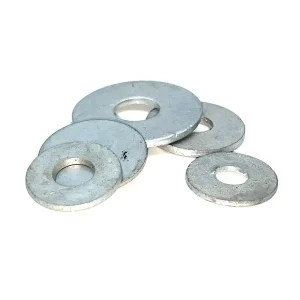
High-Quality Stainless Steel Flat Washer for Canadian Winter Exposure
- Grade: AISI 304 / 316 Marine-Rated
- Anti-galling surface passivation
- Distributes clamping torque on PV rails
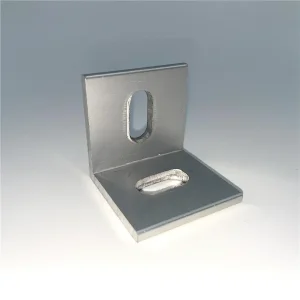
Aluminum Alloy Angle Bracket for High Snow Load Solar Racking
- Alloy: AL6005-T6 High Strength Extrusion
- Anodized thickness: >12μm protection
- Engineered for 4.2 kPa snow drift load
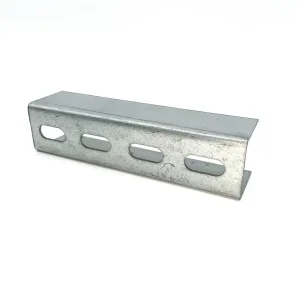
Durable PV Mounting Purlin Connector with Seismic Micro-Adjustment
- Anti-corrosion electro-galvanized / HDG
- High shear tolerance for freeze-thaw soil
- Rapid installation with pre-punched slots
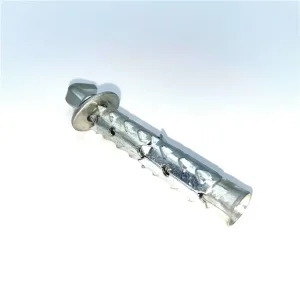
Heavy-Duty Fish Scale Expansion Anchor Bolt for Sub-Zero Concrete
- 3-piece heavy expansion sleeve grip
- Resists vibrational heave & frost shock
- High pull-out rating in C20-C50 concrete
Canadian Commercial & Industrial Realities: Demand Drivers for 2026–2030
Canada represents one of the world's most demanding physical environments for mechanical fasteners and photovoltaic racking structures. From the windy prairie corridors of Southern Alberta to the maritime industrial ports of Nova Scotia and Ontario's high-density commercial rooftops, procurement strategies require an uncompromising engineering foundation.
The Alberta Renewable Energy Expansion & Deregulated Market
Alberta has transformed into the primary engine of utility-scale solar generation in Canada. Driven by a merchant market structure and corporate Power Purchase Agreements (PPAs), developers are deploying hundreds of megawatts across Brooks, Claresholm, and Vulcan County. These expansive prairie arrays encounter relentless chinook gusts exceeding 130 km/h paired with rapid thermal swings spanning 35°C in a single 12-hour period. Hardware failure due to bolt slackening, ductile-to-brittle transition, or galvanic shearing can precipitate cascading multi-panel dislodgement, translating directly into millions of dollars in operational downtime.
Ontario & Quebec Commercial Rooftop Retrofits & Net-Metering
Eastern Canada’s logistics hubs across the Greater Toronto Area (GTA), Montreal, and Ottawa are rapidly converting industrial warehouse roofs into clean micro-powerplants. With heavy snow drifts accumulating behind parapets, mechanical penetrations and ballast brackets must endure extraordinary downward compressive loads. Non-penetrating trapezoidal sheet metal clamps and high-torque carriage bolts must guarantee absolute waterproofing integrity without violating roof membrane warranties or inducing stress fatigue on light-gauge steel roof decks.
Atlantic Maritime & Northern Mining Salt/Chemical Salinity
Infrastructure projects located along the coasts of British Columbia, Nova Scotia, and Newfoundland, as well as northern mining sites in Ontario's Ring of Fire and the Northwest Territories, combat extreme atmospheric classifications ranging from ISO C4 to C5-M. Standard carbon zinc plating deteriorates within 24 to 36 months under marine salt-fog or acidic tailing vapors. Premium hot-dip galvanizing exceeding 85 microns, coupled with passivated AISI 316 austenitic stainless steel fastening assemblies, represents the mandatory engineering benchmark for survival.
Macro-Engineering Solutions: Mitigating Canadian Cold-Climate Structural Hazards
When global EPC contractors and Canadian project developers evaluate fastener and mounting supply chains, procurement decisions extend far beyond unit price. Total Cost of Ownership (TCO) is dictated by field assembly velocity, zero-failure structural reliability, and absolute compliance with provincial building codes.
1. Sub-Zero Ductile-to-Brittle Transition Management
Carbon steels commonly utilized in commodity fasteners experience a steep drop in fracture toughness when ambient temperatures plunge below -20°C, reaching critical vulnerability at -40°C in central Canada. Our manufacturing protocol employs micro-alloyed boron and low-carbon boron quenched-and-tempered steels that maintain Charpy V-Notch impact energy ratings of >27 Joules at -40°C. For solar racking brackets and ground clamp joints, we specify precision cold-drawn stainless steel (A2-70 / A4-80) and heat-treated structural aluminum (6005-T6), avoiding catastrophic brittle fractures under sudden winter dynamic gust loading.
2. Thermal Expansion Differential & Galvanic Isolation
A primary design challenge across Canadian solar farms is the significant thermal coefficient mismatch between aluminum PV rails (23.1 × 10⁻⁶ /K) and carbon or stainless steel support posts (11.0 to 17.0 × 10⁻⁶ /K). Over a seasonal delta of 75°C (-35°C winter low to +40°C summer high), a 50-meter rail expands and contracts by more than 85 mm. Our structural purlin connectors, slotted angle brackets, and double-hole pressure plates are engineered with precision longitudinal tolerances, integrated EPDM/nylon isolating bushings, and serrated anti-vibration flange interfaces to prevent bi-metallic electrolytic pitting and bolt shearing.
| Material Specification | Yield Strength (Rp0.2) | Tensile Strength (Rm) | Cold Toughness (-40°C) | Primary Canadian Application | Code Compliance |
|---|---|---|---|---|---|
| AISI 316 (A4-80) Stainless Steel | ≥ 600 MPa | ≥ 800 MPa | > 45 J (Excellent) | Maritime solar arrays, high-humidity processing plants | ASTM F593 / CSA S16 |
| AISI 304 (A2-70) Stainless Steel | ≥ 450 MPa | ≥ 700 MPa | > 50 J (Superior) | General C&I rooftop installations, panel mid/end clamps | ISO 3506-1 |
| 6005-T6 Extruded Aluminum Alloy | ≥ 240 MPa | ≥ 260 MPa | No brittle transition | Heavy-load rail profiles, angle brackets, purlins | CSA S157 |
| Grade 8.8 HDG Carbon Steel | ≥ 640 MPa | 800–1000 MPa | > 27 J (Tested) | Concrete foundation anchors, steel pile racking frames | ASTM A325 / A153 |
| Grade 10.9 Alloy Fasteners | ≥ 900 MPa | ≥ 1040 MPa | Special low-temp heat treat | Wind turbine nacelle & heavy structural steel connections | ASTM A490 / CSA G40.21 |
Canadian Domestic Supply Chain Integration & Logistics Hubs
International procurement is only as dependable as the freight corridor that delivers it. We provide end-to-end containerized logistics and consolidated bulk LCL freight directly into Canada’s core industrial distribution centers.
Direct Intermodal Corridors (Vancouver & Montreal)
Shipments destined for Western Canada discharge at the Port of Vancouver (Roberts Bank / Deltaport) and link directly to Canadian Pacific Kansas City (CPKC) or Canadian National (CN) intermodal rail lines for rapid transit to Calgary and Edmonton freight terminals in under 5 business days.
Customized Palletization for Canadian Cold Staging
Recognizing that building materials in Canada often sit in unheated staging yards during winter blizzards, our export crates feature vapor-barrier barrier foils, desiccant packs, and heat-treated ISPM-15 certified wooden pallets that endure sub-zero outdoor storage without packaging degradation.
Tariff & Customs Brokerage Support
Full documentation support conforming to CBSA (Canada Border Services Agency) regulations. Precise Harmonized Tariff Schedule (HS) classification guarantees frictionless customs clearance without unanticipated anti-dumping reclassifications or border staging hold-ups.
Technical Roadmap: Next-Generation Fastening Systems (2026–2030)
As photovoltaic modules expand beyond 700W+ with surface areas exceeding 3.1 square meters, dynamic aero-elastic flutter and snow pressure create unprecedented mechanical forces on racking hardware. Here is how our R&D pipeline supports your future project pipeline.
Single-Bolt Rapid Clamping Mechanics
Reducing Canadian job-site labor hours is imperative given unionized trade rates and short seasonal construction windows. Our latest pre-assembled clamp modules allow one-click rail insertion with integrated grounding pins, cutting installer racking time by up to 38% compared to traditional loose-bolt hardware.
Super-Alloy Geomet & Zinc-Nickel Diffusion Coatings
To bridge the gap between standard hot-dip galvanizing and high-cost solid stainless steel, our engineering team has qualified ultra-thin micro-layer zinc flake and zinc-nickel barrier coatings. These treatments eliminate hydrogen embrittlement risks in Grade 10.9 structural bolts while delivering over 1,800 hours of ASTM B117 salt spray endurance.
Smart IoT Embedded Tension Monitoring
In remote high-latitude installations where physical inspection visits are cost-prohibitive during sub-zero months, we are piloting wireless piezoelectric washers. These sensors report bolt pre-load decay directly to SCADA systems, alerting operations and maintenance teams prior to wind-induced array detachment.
Industrial Fasteners & Solar Mounting Hardware for Canadian Importers
Explore our full line of factory-direct structural fasteners, roof clamps, mounting bases, and machine screws. Retaining original factory manufacturing precision with Canadian engineering adaptations.
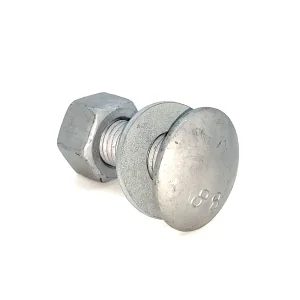
Heavy-Duty Hot-Dip Galvanized Carriage Bolt for Prairie Wind Farms
- Coating: ASTM A153 HDG >85μm
- Square neck anti-rotation lock
- High shear for timber & channel steel
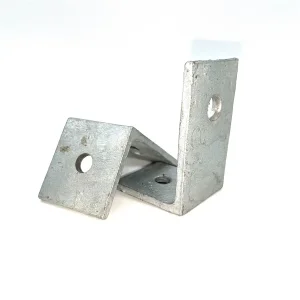
Heavy-Duty Stainless Steel Angle Bracket for Canadian Mining Installations
- Solid 304/316 formed stainless plate
- Precision slotted for thermal slide
- Resists chemical & sulfur attack
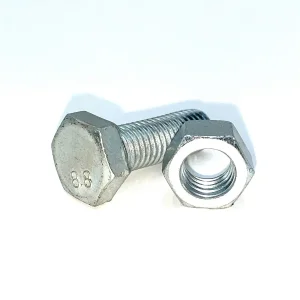
High-Strength Structural Hex Bolt for Canadian Cold Steel Erection
- Grade 8.8 / 10.9 high tensile alloy
- Sub-zero impact tested at -40°C
- Standard coarse UNC/metric threading
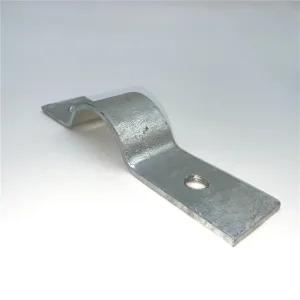
Adjustable Stainless Steel Solar PV Mounting Hoop for Canadian Telemetry
- Heavy-duty band with worm gear lock
- Fast pipe-mount solar attachment
- Corrosion-proof 304 marine finish
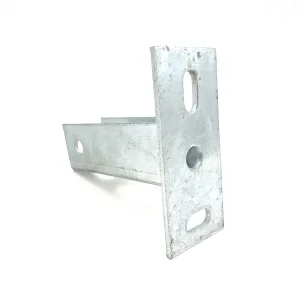
High-Strength Aluminum Alloy PV Mounting Base for Ballasted Roofs
- Wide footprint protects roof membranes
- Extruded 6005-T6 anodized aluminum
- Pre-drilled for fast anchor setting
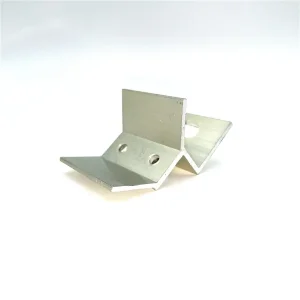
Custom Trapezoidal Metal Roof Clamp for Canadian Industrial Plants
- Zero roof sheet penetration required
- Custom profiles match Vicwest & Butler
- Integrated EPDM weather seal layer
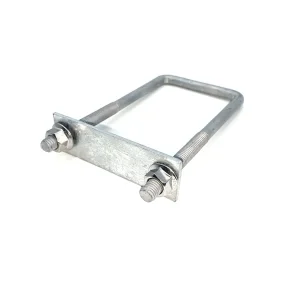
High-Strength Double-Hole Pressure Plate for Heavy Snow Deflection
- Dual-point clamping prevents glass warp
- Compatible with 30mm–40mm framed solar
- Certified grounding clip channel
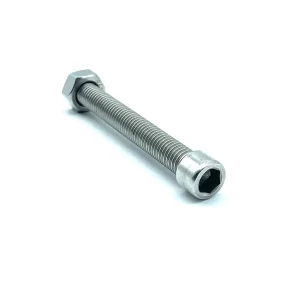
Stainless Steel Hex Socket Cap Screw for Canadian Substation Electronics
- High tensile DIN 912 / ISO 4762 specs
- Precision internal hex resists cam-out
- A2-70 / A4-80 passivated corrosion res.
Frequently Asked Questions for Canadian Engineers & Buyers
Comprehensive engineering guidance concerning metallurgy, Canadian standards, load calculations, and cross-border shipping logistics.
Accelerate Your Canadian Solar & Infrastructure Projects
Direct factory supply of certified photovoltaic mounting hardware, extreme cold-climate anchors, and precision structural fasteners. Get a factory-direct quote with comprehensive metallurgical test data within 24 business hours.