Nordic Engineering Standards • ISO 12944 C5-M Compliant
Hot Products Factories & Precision Hardware for Denmark
Technical Whitepaper & Procurement Directory: Engineered Fasteners, BIPV Extrusions, and Photovoltaic Mounting Hardware for Danish Onshore & Offshore Corrosive Environments.
Primary Engineering Specifications
Tier-1 Photovoltaic Hardware & Anchors Tailored for Danish Projects
Pre-engineered structural components tested under cyclical saline fog, high wind uplift, and heavy snow loads in accordance with Eurocode 1 (EN 1991) and Danish Building Regulation BR18.
A4-80 / 316 Marine Grade
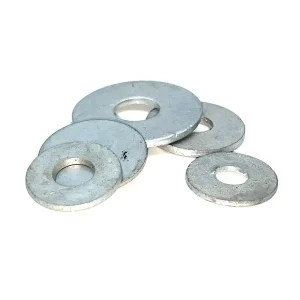
Denmark Maritime Stainless Steel Flat Washer
Engineered for high-torque bolting in coastal Jutland arrays, distributing tensile loads while preventing galvanic contact abrasion across aluminum-steel rail interfaces.
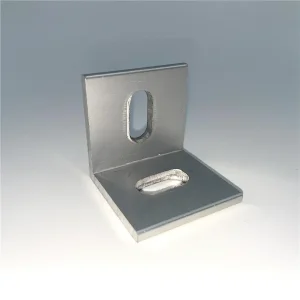
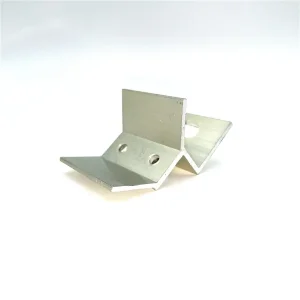
Danish Utility-Scale Solar PV Aluminum Angle Bracket
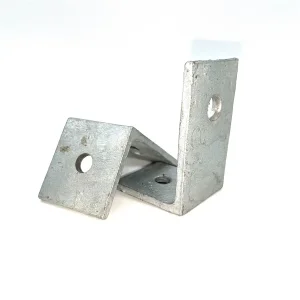
Structural 90-degree interface bracket with ribbed stiffening. Optimized for rapid alignment along purlins on utility-scale Danish ground mounts facing gale-force North Sea winds.
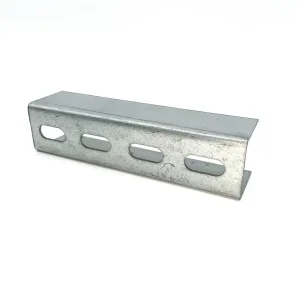
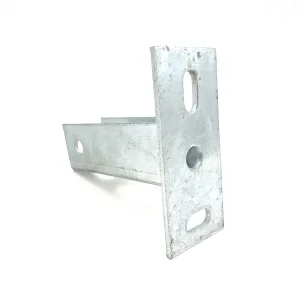
High-Strength Adjustable Purlin Connector for Denmark
Dual-axis slotted structural purlin connector designed to compensate for uneven Nordic roofing rafters and sub-structures without requiring hot site modifications or drilling.
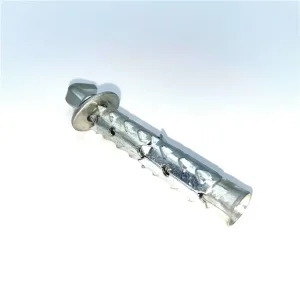
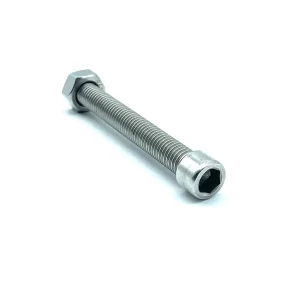
Patented fish-scale frictional sleeve providing maximum grip capacity in precast concrete ballast blocks and foundations across freezing-thawing soil cycles throughout Denmark.
Navigating Denmark's Ambitious 2030 Green Transition & Coastal Realities
Denmark stands as a global beacon for clean energy transformation, driven by its legally binding goal under the Danish Climate Act to reduce greenhouse gas emissions by 70% by 2030 (relative to 1990 levels) and achieve carbon neutrality by 2045. To meet these rigorous targets, the Danish Energy Agency (Energistyrelsen) has orchestrated an exponential expansion of onshore solar photovoltaic (PV) capacity and decentralized hybrid energy parks, alongside unprecedented offshore ventures like the North Sea and Bornholm Energy Islands.
However, operating hardware in the Kingdom of Denmark introduces unique, severe engineering constraints. No geographic location in Denmark is further than 52 kilometers from the sea. The surrounding waters—the North Sea, Skagerrak, Kattegat, and Baltic Sea—generate an aggressive saline marine microclimate classified under ISO 9223 and ISO 12944 as C4 to C5-M (Marine Coastal).
Standard commercial-grade galvanization or unverified steel fasteners inevitably succumb to premature pitting, crevice corrosion, and catastrophic tension loss within 24 to 36 months under continuous marine aerosol exposure. Consequently, Danish EPC contractors, municipal utilities, and asset owners impose rigorous compliance mandates under Eurocode 3 (Steel EN 1993), Eurocode 9 (Aluminum EN 1999), and Danish Building Regulations BR18. Hardware procurement is no longer treated as a generic commodity transaction, but as a critical mission-line failure mitigation strategy.
C5-M Atmospheric Salinity Thresholds
Danish coastal projects require fasteners and brackets engineered with high Pitting Resistance Equivalent Numbers (PREN ≥ 23 for stainless alloys) and Zinc-Aluminum-Magnesium (Zn-Al-Mg) coatings reaching 310g/m² with self-healing boundary layers.
Strict Substructure Structural Interoperability
Danish agricultural soil exhibits notable moisture saturation and high organic acidity. Concrete anchoring must demonstrate verified crack-bridging, freeze-thaw resilience, and sustained shear retention under Eurocode 2 (EN 1992-4).
Global Enterprise Sourcing Demands: Traceability, CBAM, and Scalable Manufacturing
How Tier-1 European developers bridge the gap between factory-floor metallurgical precision in Handan and institutional project delivery in Scandinavia.
Procurement teams managing multi-megawatt portfolios across Northern Europe face an increasingly intricate landscape. As European developers navigate the transition toward the EU's Carbon Border Adjustment Mechanism (CBAM) and Corporate Sustainability Due Diligence Directive (CSDDD), transactional sourcing from brokers without metallurgical pedigree is no longer viable. Tier-1 Danish buyers demand direct factory transparency, comprehensive cradle-to-gate carbon accounting, and granular EN 10204 Type 3.1 Material Test Certificates (MTCs) validating raw melt chemistry and tensile proof loading.
Handan Youlong Fastener Co., Ltd., situated at the heart of the Yongnian Fastener Manufacturing Cluster, solves this structural bottleneck. By consolidating primary cold forging, automated progressive stamping, secondary CNC machining, and specialized surface treatment under one tightly auditable quality management umbrella, Youlong eliminates the interface risks that typically plague distributed sub-tier supply chains.
Our strategic procurement framework eliminates middleman premiums while establishing complete heat-number batch traceability from primary billet smelting down to individual hex bolts and mounting brackets delivered directly to ports like Aarhus, Copenhagen, or Esbjerg.
Procurement Dimension
Conventional Broker Market
Youlong Direct Tier-1 Factory
Metallurgical Verification
Batch-blended, unverified melt analysis
EN 10204 3.1 Mill Certs with chemical spectroscopy
Corrosion Testing
Theoretical or 240-hr basic salt spray
ISO 9227 tested up to 3,000+ hrs neutral saline spray
Scientific resolution of bimetallic corrosion, dynamic wind flutter, and cyclic thermal fatigue in high-latitude renewable installations.
1. Galvanic Corrosion Dissimilar Metal Decoupling
When aluminum alloy mounting rails (such as AL6005-T6) come into direct physical contact with stainless steel or carbon steel fasteners in the presence of conductive North Sea salt mist, an electrochemical galvanic cell forms. The standard potential differential drives rapid galvanic oxidation of the aluminum rail base. Youlong delivers specialized bimetallic isolation hardware—including UV-stabilized virgin EPDM insulating flat washers, anti-friction geometric flanges, and non-conductive sleeve inserts that mechanically isolate dissimilar metals, maintaining structural integrity across 30+ year project lifecycles.
Unmanned offshore transformer platforms, gigawatt-scale tracker parks across Jutland.
Regulatory Framework & Auditing
Danish Compliance Assurance: Eurocodes, BR18, and CE Marking
Under the Danish Construction Products Regulation (CPR 305/2011) and Danish National Annexes to the Eurocodes, all structural elements must carry verifiable CE Marking accompanied by an authenticated Declaration of Performance (DoP). Fasteners, bracket connections, and extrusion profiles delivered by Handan Youlong Fastener Co., Ltd. undergo full conformity assessments against:
EN 1090-1 & EN 1090-2: Execution of steel structures and aluminum structures (EXC2 & EXC3).
EN 1993-1-4 (Eurocode 3): Design of steel structures – Supplementary rules for stainless steels.
EN ISO 3506-1 & 3506-2: Mechanical properties of corrosion-resistant stainless steel fasteners.
ISO 9001:2015 & ISO 14001: Factory-audited quality management and ecological controls.
Our engineering desk delivers localized Danish technical submittal packages—including mechanical finite element analyses (FEA), pull-out calculations under local soil frost depths (800mm to 1200mm per BR18), and batch-level spectrographic analysis—facilitating immediate municipal and third-party engineering approval.
Direct Danish Project Technical Audits
Prior to mass containerized shipment, Youlong supports third-party verification audits conducted by international inspection bodies (such as SGS, TÜV, or Bureau Veritas). Every shipment includes complete testing documentation: tensile rupture test reports, dimensional optical comparator scans, and zinc/anodizing layer thickness measurements.
Authoritative technical insights for structural engineers, project managers, and sourcing officers.
Why is grade A4 (AISI 316) preferred over grade A2 (AISI 304) for Danish solar racking?
Grade A2 (18/8 chromium-nickel) stainless steel provides adequate resistance in typical continental atmospheric conditions. However, Denmark's narrow geography means airborne marine chloride ions are pervasive. Grade A4 contains 2.0% to 3.0% Molybdenum (Mo), which substantially enhances the passive oxide film against chloride pitting and crevice corrosion under ISO 12944 C4 and C5-M classifications. For installations located within 25 kilometers of the Danish coastline, specifying A4-70 or A4-80 fasteners is standard engineering best practice.
How does Youlong prevent hydrogen embrittlement in high-strength carbon steel structural bolts?
High-strength bolts (Class 8.8, 10.9, and 12.9) can be vulnerable to internal hydrogen embrittlement following chemical pickling and electroplating. Youlong employs controlled mechanical blasting instead of aggressive acid pickling for high-tensile grades, paired with an immediate de-embrittlement heat-baking cycle (minimum 4 hours at 200°C ± 10°C within 1 hour of electro-deposition). Our hot-dip galvanized fasteners follow ISO 10684 protocols with rigorous centrifugal spin balancing to ensure flawless thread engagement without post-coating chasing that could strip zinc protection.
What documentation is supplied to satisfy Danish Building Regulation BR18 requirements?
Every shipment arrives with a full technical compliance dossier: EN 10204 Type 3.1 Mill Test Certificates referencing specific billet heat numbers, spectrographic chemical composition, Charpy impact toughness ratings at sub-zero temperatures, and tensile proof load testing. Structural brackets and clamps include CE Marking certificates under EN 1090, finite element calculation reports against Eurocode 3 and 9, and neutral salt spray test logs validated under ISO 9227.
Can Youlong customize aluminum extrusion brackets to fit proprietary Danish trapezoidal roof profiles?
Yes. Our in-house tooling and die-manufacturing facility produces custom trapezoidal metal roof clamps matching specific crown profiles from Nordic manufacturers like Ruukki, Tata, or Lindab. We engineer clamping profiles with integrated EPDM gaskets and factory-assembled stainless rivets or bimetallic self-drilling screws, eliminating the need for drilling through the load-bearing metal deck sheet and safeguarding long-term building envelope warranties.
What are the lead times and containerized shipping logistics from Handan to Danish ports?
Standard tooling production cycles run from 15 to 25 days depending on order tonnage. From our manufacturing facility in Handan, sealed sea containers are trucked via direct expressway corridors to Tianjin Port (less than 6 hours transit), where they depart on premier container alliances directly serving Aarhus, Copenhagen, and Bremerhaven hubs. Typical ocean transit time ranges between 28 and 36 days, with full real-time bill-of-lading tracking.
How does Youlong support thermal expansion differentials across large Danish PV arrays?
Danish temperatures range from winter extremes of -15°C to summer metal rooftop temperatures approaching 65°C. Aluminum rails expand approximately 2.3 mm per meter per 100°C Delta-T. Youlong designs slotted three-hole and sliding expansion splice connectors that provide controlled lateral movement while preventing rail buckling, micro-cracking of PV modules, and shearing forces on roof purlins.
Complete Hardware Matrix
Hot Products Catalog: Industrial Fasteners & Mounting Hardware for Denmark
Explore our structural components, heavy-duty brackets, and precision fasteners engineered for renewable projects across Northern Europe.
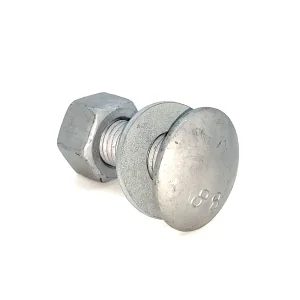
Featuring a domed round head and square neck that locks into structural channel slots, preventing spin during one-sided field installation on Nordic timber and steel frames.
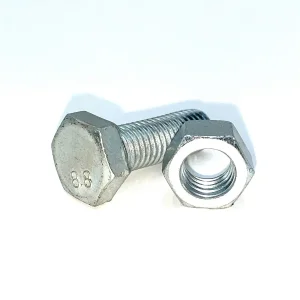
Cold-forged from structural carbon or alloy steel, designed to withstand continuous vibration and cyclic fatigue across Danish wind turbine towers and solar racking sub-bases.
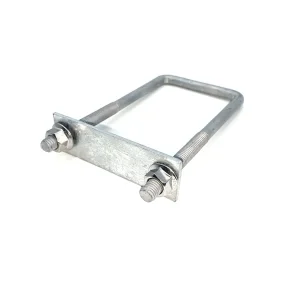
Danish Pole-Mount Solar PV Stainless Steel Hoop Clamp
Adjustable cylindrical pipe and column clamp for telecommunication, utility post, and micro-grid solar panel installations throughout rural and coastal Denmark.
Danish Commercial Roof Solar PV Aluminum Mounting Base
Engineered for direct fastening to concrete ballasts or membrane roofs. Wide-foot footprint distributes downward forces and manages uplift loads under Danish storm conditions.
Non-penetrating architectural roof clamp designed for Scandinavian industrial standing-seam and trapezoidal profile sheets. Pre-fitted with marine EPDM isolation pads.
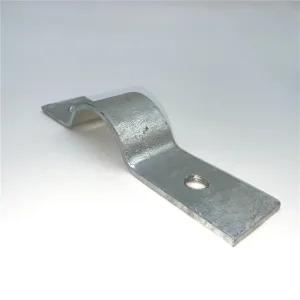
Reinforced dual-aperture clamping plate engineered to bind framing sections and split junctions without deflection or loosening under turbulent Nordic wind shears.
Fast Factory-Direct Response for Nordic Procurement
Ready to Supply Your Danish Renewable Infrastructure Project?
Send your structural design drawings, BOM hardware quantities, or custom extrusion specifications directly to our engineering desk. Receive an itemized factory proposal, EN 10204 3.1 compliance roadmap, and ocean logistics schedule within 24 hours.