
Featured High-Performance Components for Singapore EPCs
Precision-manufactured structural fastening hardware engineered to resist C5-M tropical marine atmospheric exposure and cyclic aerodynamic thermal stresses.


Singapore's Clean Energy & Industrial Hardware Ecosystem
Evaluating commercial trajectories, regulatory mandates, and metallurgical constraints under the Singapore Green Plan 2030.
Singapore's Macro Industrial & Infrastructure Context
Singapore occupies an exceptional position within Southeast Asia's industrial topography. As an equatorial archipelago constrained by land availability, the city-state has implemented pioneering engineering directives through the Singapore Green Plan 2030. These policies push developers toward maximum utilization of industrial rooftops, floating reservoirs, marine berths, and multi-tier logistics centers throughout Jurong Industrial Estate, Tuas Port, and Changi's aviation corridors. This aggressive deployment environment creates unprecedented mechanical challenges: high ambient relative humidity consistently fluctuating between 70% and 95%, year-round ultraviolet radiation, and a persistent maritime airborne aerosol containing elevated sodium chloride concentrations.
In this context, industrial hardware procurement is never a commoditized transaction. B2B procurement managers, structural consultants, and engineering, procurement, and construction (EPC) conglomerates operating out of Singapore demand uncompromising metallurgical resilience. Substandard fasteners, unsecured brackets, and uncertified connectors present substantial risks of accelerated crevice corrosion, stress cracking, galvanic cell breakdown, and sudden structural fatigue. Ensuring structural stability across a mandatory 25-year lifecycle requires strict material selection protocols, verified dimensional tolerances, and documented traceability back to base melt origins.
Global Supply Chain Shifts & Singapore as an Engineering Hub
On an international scale, the structural hardware and PV mounting sector is moving through a structural transformation. Global EPC enterprises are moving away from fragmented, non-traceable transactional sourcing. They now favor vertically integrated manufacturing partners capable of providing mill test certification (MTC EN 10204 Type 3.1), advanced numerical simulations, and standardized surface passivation technologies. While manufacturing clusters in Handan and Hebei offer massive throughput advantages, Singapore serves as the regional operational nucleus where specifications, legal compliance, and quality verification frameworks are defined for projects expanding across ASEAN, Australasia, and the Middle East.
Our global supply infrastructure resolves these supply friction points. By integrating heavy-industry cold forging, automated CNC precision stamping, robotic extrusion processing, and automated electrolytic and hot-dip surface finishing, we supply Singapore-headquartered contractors with components that meet both international standard specifications and regional building codes.
BCA Compliance Integrity
Full conformance with Building and Construction Authority (BCA) specifications and Singapore Standard SS EN 1993 (Eurocode 3) for structural steel connection reliability.
C5-M Surface Passivation
Anti-corrosion treatments exceeding 1,000 to 3,000 hours of neutral salt spray (ASTM B117) via continuous automated zinc flake, HDG, and passivated stainless steel chemistries.
FEM Wind Drag Verification
Engineered to withstand sudden equatorial convective squalls, with aerodynamic testing validated against CP 3: Code of Practice for Wind Loads on Buildings.
Specialized Engineering Application Scenarios Across Singapore
Field-proven mechanical connection performance across high-load, safety-critical industrial installations.
| Deployment Environment | Dominant Physical Load / Stress | Recommended Metallurgy & Spec | Critical Engineering Focus |
|---|---|---|---|
| Jurong Island Petrochemical Complex | Corrosive airborne hydrocarbons, acidic gases, extreme UV | Stainless Steel AISI 316 / A4-80, Super Duplex | Pitting Resistance Equivalent Number (PREN > 25), zero stress corrosion cracking. |
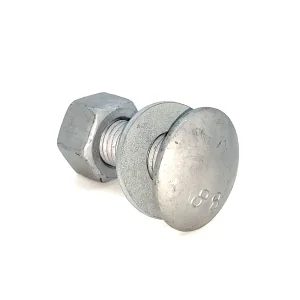
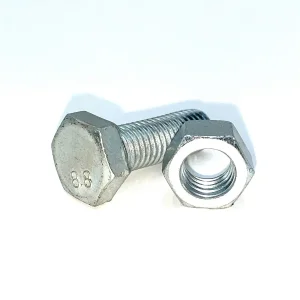
| Tuas Megaport Logistics Rooftops | Cyclic wind buffeting, extensive vibration, large structural spans | High-Tensile Class 8.8 / 10.9 HDG Carriage & Hex Bolts | Torque-retention geometric locking, minimum 85 μm zinc coat thickness. |
| Floating PV (Tengeh / Kranji Reservoirs) | Continuous water submersion, dynamic aquatic wave action | Anodized AL6005-T6, SS316 Anchors & Isolators | Galvanic electrical isolation, hydrophobic EPDM gaskets, anti-galling threads. |
| Urban Mixed BIPV & Commercial Facades | Thermal expansion displacement, strict building fire compliance | Custom AL-Alloy Brackets, Structural Expansion Fixings | Tight tolerance slip slots, non-combustibility certification under SS 546. |
Localized Support, Compliance Assurance & Technology Roadmap
Advanced quality engineering backed by reliable international fulfillment networks.
Localized Support & Statutory Compliance Framework
Navigating cross-border procurement for mission-critical infrastructure demands end-to-end procedural rigor. Our technical distribution pipeline is built around the documentation benchmarks required by Singapore's BCA Registered Professional Engineers (PEs). Each shipment comes complete with mill certificates tracing raw billet chemistries, computerized tensile/yield stress test curves, non-destructive ultrasonic flaw reports, and verified salt-spray chamber documentation.
We maintain dedicated supply chain operations supporting key Southeast Asian transshipment hubs. This structure ensures streamlined customs clearance, phased site-delivery scheduling to minimize jobsite storage bottlenecks, and complete warranty accountability tailored to multi-megawatt EPC milestones.
R&D Roadmap: Smart Fastening & Circular Metallurgy
Looking ahead, commercial success will belong to organizations that move beyond static physical components. Our active research and development efforts are concentrated on three key areas:
1. Self-Inspecting Sensor-Embedded Fasteners: Developing RFID and piezo-resistive sensor bolt arrays capable of transmitting real-time clamp-load relaxation metrics wirelessly to automated structural health dashboards. This reduces manual inspection costs in hazardous marine environments.
2. Eco-Shield Passivation: Eliminating heavy-metal hexavalent chromium and minimizing zinc runoff through advanced organo-ceramic and thermal-diffusion micro-coatings that align with BCA Green Mark Platinum certification metrics.
3. Direct Finite-Element Integration: Offering EPC project designers downloadable CAD/BIM parameter models mapped with non-linear plasticity profiles to accelerate regulatory approval workflows.
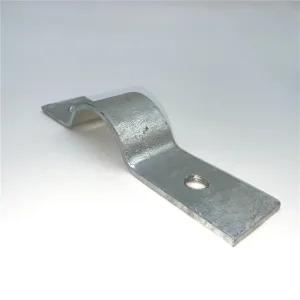
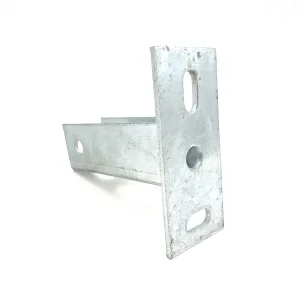
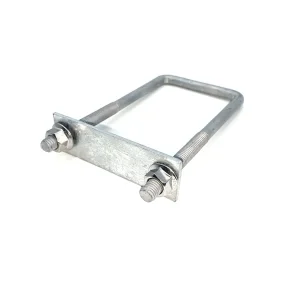
High-Strength PV Racking Hardware & Heavy Fastening Systems
Comprehensive structural components available for bulk supply, regional distribution, and OEM custom production.



Frequently Asked Technical & Procurement Questions
Direct technical clarifications for structural consultants, project directors, and procurement leads.