
Corrosion Barrier
Engineered to withstand the extreme cyclic thermal variations, micro-abrasive sand ingress, and heavy structural load factors typical of the Najd Plateau and Central Province solar corridors.
The Riyadh metropolitan sector is undergoing an unprecedented capital expansion, cementing its stature as the technological and economic engine of the Arabian Peninsula. Driven by the National Industrial Development and Logistics Program (NIDLP) and the mandates of the Saudi Green Initiative (SGI), the Kingdom has set a target of producing 50% of its electricity from renewable sources by 2030, with over 40 gigawatts targeted for large-scale photovoltaic (PV) generation. The Greater Riyadh basin is not merely an administrative hub; it has become the focal point for sprawling commercial rooftop distributions, logistics park electrification, and massive utility-scale installations across regions such as Sudair, Al-Kharj, and the broader Najd Plateau.
Mega-developments including New Murabba, King Salman Park, the expansion of King Khalid International Airport, and extensive transport arteries such as the Riyadh Metro demand structural integrity capable of enduring continuous service cycles for 25 to 30 years. Within this demanding framework, solar mounting components and structural fastening mechanisms cannot be treated as commoditized sundries. They represent mission-critical links where structural stability directly impacts Levelized Cost of Electricity (LCOE) and the long-term safety of human life and capital assets.
Sino-Saudi bilateral manufacturing partnerships provide the backbone for this logistical surge. By marrying the deep industrial scale and metallurgical expertise of China’s premier manufacturing zones—notably Handan, known as China's Fastener Capital—with stringent local regulatory standards overseen by the Saudi Standards, Metrology and Quality Organization (SASO), contractors operating in Riyadh now secure factory-direct supply lines optimized for harsh desert geographies.
Globally, the solar hardware industry is navigating a decisive transition toward high-durability, pre-engineered mounting structures. As utility solar installations shift toward high-capacity bifacial modules (exceeding 600W to 700W+ per panel), mechanical racking components endure substantially higher static wind loads, dynamic torsional flutter, and deadweight pressures. Furthermore, international engineering standards such as IEC 61215, IEC 61730, and AS/NZS 1170.2 are increasingly integrated into local civil engineering codes across the Middle East.
The historical reliance on generic carbon steel hardware with standard electroplating has proven disastrous in arid and hyper-saline desert environments. Industry attention has turned toward cutting-edge metallurgical formulations: continuous Hot-Dip Galvanizing (HDG) delivering minimum zinc thicknesses of 85 µm to 120 µm, advanced Zinc-Aluminum-Magnesium (ZAM) alloys with self-healing boundary layers, and austenitic stainless steels (AISI 304 and 316) treated with passivation and anti-galling lubrication.
Chinese manufacturing facilities have evolved from simple labor-intensive assembly lines into fully automated, AI-monitored forging and CNC stamping ecosystems. This industrial evolution allows engineering teams to fabricate mounting systems, brackets, and expansion anchors that maintain strict dimensional tolerances within ±0.05 mm, ensuring rapid, zero-fault installation on rapid-timeline engineering, procurement, and construction (EPC) projects across Riyadh and GCC economic corridors.
Deploying long-life structural fasteners in Riyadh demands rigorous design mitigation against four severe environmental stressors unique to Central Saudi Arabia.
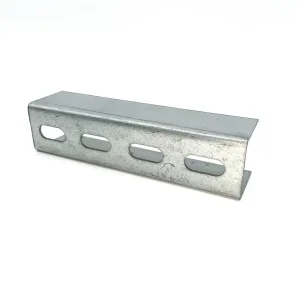
Riyadh experiences ambient day-to-night temperature deltas exceeding 30°C, with rooftop metal surface temperatures frequently peaking above 75°C during summer heatwaves. This aggressive diurnal cycling generates intense thermal expansion and contraction within aluminum rails and steel purlins. Our connectors incorporate engineered slotted profiles and spring-loaded pressure plates that accommodate axial thermal elongation without transferring destructive shear forces to foundation expansion anchors.
Frequent dust storms (Shamal) carry angular silica micro-particles at wind speeds exceeding 80 km/h, creating continuous abrasive scouring against metallic surfaces. Standard zinc paints or thin electroplated coatings erode within 24 to 36 months, exposing parent metals to rapid pitting. We apply multi-layer thermal diffusion galvanizing and Dacromet coatings that offer surface hardness ratings exceeding 400 HV, resisting mechanical abrasion and sand scouring.
Riyadh's geological substructure often features fractured limestone, caliche formations, and soils with elevated sulfate and chloride concentrations. When coupled with condensation cycles, electrolytic reactions rapidly occur between dissimilar metals. Our engineered assemblies utilize specialized vulcanized EPDM isolation washers, fluoropolymer isolating sleeves, and grade SS316 fasteners to eliminate galvanic current flow between aluminum profiles and galvanized steel sub-structures.
Direct comparative parameters illustrating metallurgical properties and mechanical thresholds required for structural compliance under Saudi building regulations.
| Component Group | Base Metallurgy | Surface Treatment Standard | Tensile / Yield Strength | Salt Spray Life (ASTM B117) | Optimal Riyadh Application Area |
|---|---|---|---|---|---|
| PV Guide Rail & Extrusions | AL6005-T5 / AL6063-T6 | Anodized ≥ 15μm (Class 1) | ≥ 260 MPa / ≥ 240 MPa | 1,500+ Hours | Commercial Logistics Parks, Sudair Solar Farms |
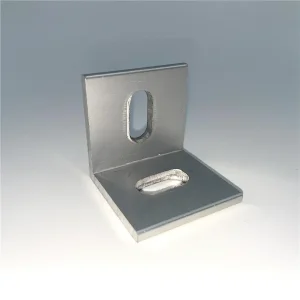
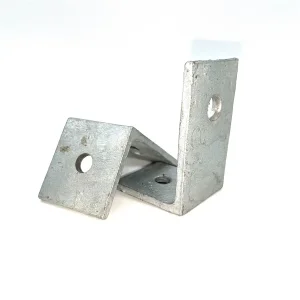
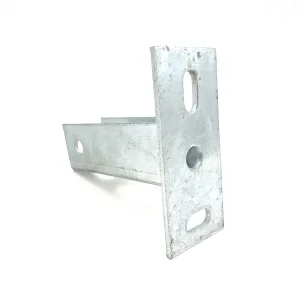
| Angle & Purlin Brackets | Austenitic SS304 / SS316 | Passivated & Shot-Peened | ≥ 620 MPa / ≥ 310 MPa | 3,000+ Hours | High-Load Roof Junctions, Coastal/High Humidity Zones |
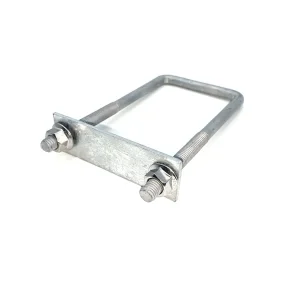
| Structural Foundation Anchors | Q235B / Carbon Steel Grade 8.8 | Hot-Dip Galvanized ≥ 85μm (ISO 1461) | 800 MPa / 640 MPa | 2,000+ Hours | Concrete Plinths, Ballast Slabs, Substation Foundations |
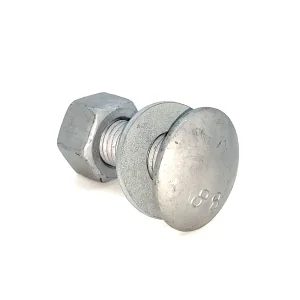
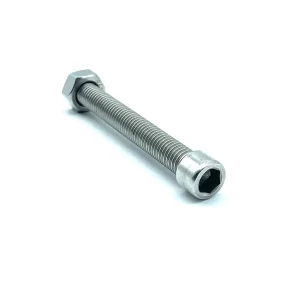
| Heavy Hex & Carriage Bolts | High-Tensile Alloy / SS316 | Dacromet / Geomet 500 Plus | Grade 8.8 / 10.9 (DIN EN ISO 898) | 2,400+ Hours | Primary Structural Frameworks, Tracker Drive Assemblies |
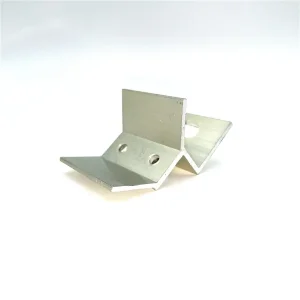
| Non-Penetrative Roof Clamps | AL6005-T5 with SS304 A2-70 Screws | Hard Anodized + High-Durability EPDM | Pull-out ≥ 3.8 kN per seam | 2,000+ Hours | Trapezoidal & Standing Seam Industrial Warehouses |
*All test reports, mechanical mill certificates (EN 10204 Type 3.1), and third-party laboratory verifications (SGS, TÜV Rheinland) are accessible upon project specification review.
Tailored structural hardware configurations resolving complex engineering challenges across industrial, commercial, and utility environments.
The expanding logistics districts in Northern and Southern Riyadh house hundreds of thousands of square meters of single-skin and sandwich-panel trapezoidal sheet metal roofing. Traditional penetrating screws cause leaks, thermal bridges, and roof corrosion. Our specialized non-penetrative trapezoidal clamps grip the standing ribs with high frictional clamping force (>3.5 kN), utilizing EPDM isolation pads to guarantee 100% waterproof seals while eliminating metal tear-out during high wind downdrafts.
With municipal sustainability targets transforming corporate headquarters, medical campuses, and governmental centers across Riyadh, solar parking canopies have emerged as an engineering standard. These systems must combine architectural aesthetic refinement with continuous fluid drainage. Our M-Type extruded aluminum water channels and modular strut brackets provide structural support for heavy-duty modules while functioning as integrated rainwater run-off channels, preventing standing water and localized structural fatigue.
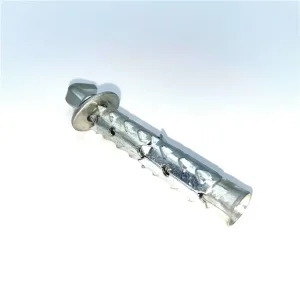
The rocky soil profile around Riyadh presents severe challenges for direct-driven ramming piles due to shallow, dense subterranean bedrock. EPCs frequently turn to precast concrete plinths or shallow drilled ballast blocks. Our fish-scale mechanical expansion bolts and heavy-duty embedment anchors achieve high pull-out safety factors in C35/C45 grade concrete, verified by torque-controlled expansion sleeves that maintain tensile capacity even under low-frequency ground vibrations.
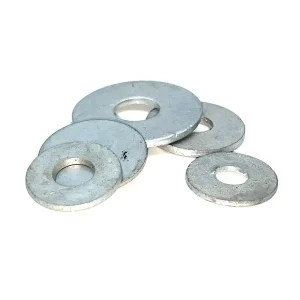
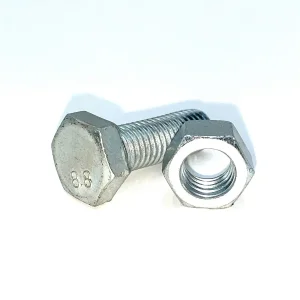
Subterranean tunnels, elevated transit guideways, and utility corridors in the Riyadh Metro network require fastener reliability that exceeds standard building codes. Our high-tensile Grade 8.8 and 10.9 hex bolts, paired with precision stainless washers, resist dynamic cyclic shear loads and high acoustic vibrations generated by regular rapid transit operations, ensuring continuous structural stability with minimal maintenance cycles.
How advanced materials science, automated cold-heading robotics, and IoT sensor integration are reshaping infrastructure longevity in desert climates.
Traditional batch hot-dip galvanizing produces thick, effective zinc barriers, but handling and thermal shearing on job sites frequently fractures the brittle zinc-iron alloy boundary. The emerging standard for Gulf desert environments is pre-coated continuous Zinc-Aluminum-Magnesium (typically 6% Al, 3% Mg) strip steel. In the presence of moisture and airborne electrolytes, magnesium ions migrate across cut edges to form an insoluble simonkolleite barrier, effectively "self-healing" cut-end surfaces and eliminating on-site touch-up cold galvanizing sprays.
Labor shortages and elevated field temperatures during Saudi summers necessitate accelerated installation schedules. Next-generation brackets and purlin connectors utilize one-click cam-lock fittings and integrated pre-torqued snap-spring mechanisms. Field trials in the Riyadh area demonstrate an installation efficiency gain of 35% to 45% per megawatt installed, significantly lowering total installation costs while eliminating installer torque error through visual torque indicators.
For critical utility infrastructure, pilot initiatives are introducing micro-strain piezo-resistive sensors embedded directly into high-tensile anchor bolt heads. These smart fasteners communicate wirelessly via LoRaWAN telemetry to central SCADA networks in Riyadh facility command centers, delivering real-time alerts on bolt tension loss, unexpected wind-induced cyclic fatigue, and foundation micro-settlement long before structural failure can manifest.
Direct answers to pressing engineering, regulatory, and supply chain questions for contractors operating across the Kingdom of Saudi Arabia.
Explore our full line of corrosion-resistant carriage bolts, heavy stainless brackets, roof clamps, and structural mounting hardware serving GCC regional infrastructure.
Connect with our technical desk in Handan for CAD reviews, custom SASO-compliant testing documentation, mechanical pull-out calculations, and containerized dispatch schedules.