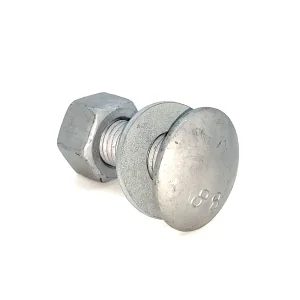
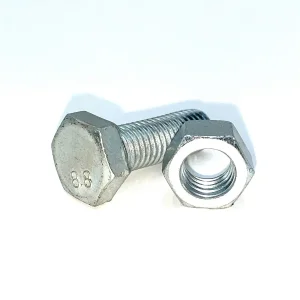
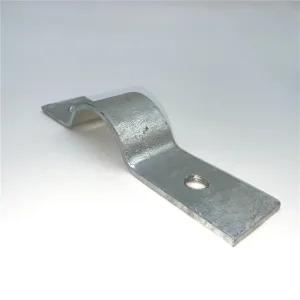
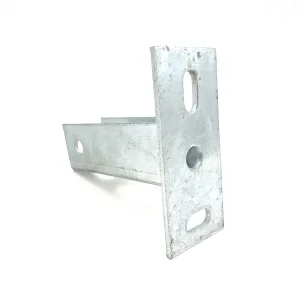
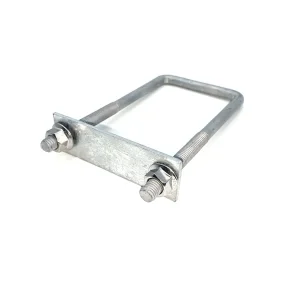
High-Velocity Engineered Fasteners Ready for Boston Deployment
Engineered to meet stringent Massachusetts 780 CMR building codes, ASCE 7-22 wind uplift specifications, and ISO/ASTM quality certifications for utility and commercial installations.


Boston's Industrial Transformation & Structural Hardware Resilience
A comprehensive engineering review of supply chain integration, regional environmental mechanics, and procurement optimization across Massachusetts and the Greater New England corridor.
The Greater Boston metropolitan area—encompassing Middlesex, Suffolk, Norfolk, and Essex counties—is navigating one of the most rigorous green infrastructure and building efficiency transitions in North America. With the aggressive enforcement of the City of Boston's Building Emissions Reduction and Disclosure Ordinance (BERDO 2.0) alongside the statewide Massachusetts Clean Energy and Climate Plan for 2030 and 2050, municipal authorities, commercial real estate developers, and academic institutions are retrofitting multi-megawatt solar photovoltaic arrays across legacy urban rooftops, campus structures, and parking canopies. However, structural and mechanical procurement in this regional market must contend with a uniquely punitive confluence of environmental and regulatory parameters.
From the industrial piers of Charlestown and East Boston to the suburban biotech research hubs expanding along Route 128 and Interstate 495, mechanical hardware encounters severe coastal atmospheric exposure. Atmospheric chlorides driven by maritime winds from Massachusetts Bay intermix with high relative humidity, industrial sulfurous compounds, and drastic winter temperature oscillations. The relentless winter cycle of sub-zero freezes, ice-dam loading, chemical de-icing aerosols, and nor'easters exerting sustained gust pressures over 115 mph (mandating adherence to ASCE 7-22 structural uplift mandates) means generic hardware compromises structural integrity prematurely.
Why Tier-1 Solar EPCs & Industrial Distributors Source from Handan Youlong
Bridging global manufacturing density from China's premier fastener industrial base with exact New England commercial specifications.
Handan Yongnian Cluster Scale
Situated in China's fastener epicenter, we leverage fully integrated upstream steel sourcing, hot-dip galvanizing, and automated extrusion facilities. This delivers immediate cost efficiency without the standard third-party domestic distribution markups common in the northeast US corridor.
Metallurgical Strictness & Traceability
Every production heat undergoes automated spectral composition validation. From austenitic 304/316 alloys to structural grade 8.8 and 10.9 steels, our fasteners feature comprehensive EN 10204 3.1 material test certifications verifying tensile yield, elongation, and charpy impact energy.
Custom OEM/ODM Drawing Precision
Boston's historic masonry, retrofitted flat membrane roofs, and novel trapezoidal standing seams often demand non-standard clamping profiles. Our multi-station cold formers and 5-axis CNC machining centers turn CAD/CAM specifications into field-ready samples in as fast as 7 business days.
In structural hardware procurement, the total cost of ownership is governed by durability rather than initial price per unit. A catastrophic anchor bolt failure on a commercial rooftop array in Cambridge or an offshore-exposed substation at the Port of Boston carries liability, remediation, and structural downtime expenses that dwarf hardware line items. Chinese precision manufacturing has evolved from volume commoditization to advanced engineering. Our facility deploys multi-stage cold heading with optical dimensional screening, vacuum heat treatment to preserve crystal lattice stability, and environmentally controlled passivation lines to eliminate surface ferritic contamination.
Engineering Fastener Solutions for Greater Boston Environments
Matching critical fastener geometries and corrosion prevention chemistries with regional commercial deployment scenarios.
| Target Sub-Market / Application | Predominant Environmental Stressors | Material & Finishing Class | Recommended Fastening System |
|---|---|---|---|
| Boston Harbor & Seaport District Marine terminals, waterfront logistics, coastal rooftops |
High salinity air, continuous moisture, salt fog crystallization | SS316 (A4-70 / A4-80) | Passivated 316 carriage bolts with EPDM anti-galvanic isolation washers |
| Route 128 / Cambridge Tech Corridors Life science campus parking canopies & microgrids |
Vibration fatigue, dynamic thermal swing, aesthetic visibility | Anodized AL6005-T6 + SS304 | Integrated grounding mid/end clamps with anti-rotation square neck carriage bolts |
| Metrowest Commercial Distribution Warehouses Massive trapezoidal and standing seam metal roofs |
Sustained snow drift accumulation, wind vortex uplift | Al-Mg-Zn Coating / SS304 | Direct-mount trapezoidal standing-seam clamps with dual EPDM compression seals |
| Urban Institutional Flat Roofs (Back Bay, Fenway) Concrete ballasted arrays on gravel ballast membranes |
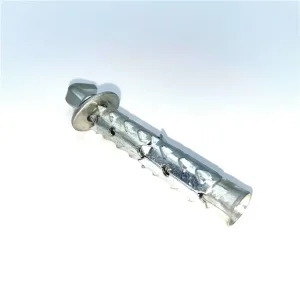
High wind shear, non-penetrating ballast constraints | HDG (ASTM A153) & Grade 8.8 | Heavy-duty fish scale wedge expansion anchors rated for cracked concrete |
| Industrial Substation & Clean Energy Storage BESS enclosure mounts and high-voltage conduit runs |
Electromagnetic exposure, heavy vibrational torque drift | A2-70 Stainless + Nylon Insert | Hex socket cap screws coupled with serrated flange locking nuts |
A critical consideration for New England solar engineers is galvanic corrosion isolation. Aluminum mounting extrusions (typically 6005-T6 or 6063-T5) paired directly with unpassivated carbon steel or unprotected stainless steel in the presence of Boston Harbor's electrolyte-rich marine aerosol will trigger electrochemical corrosion. The aluminum acts as an sacrificial anode, degrading rapidly around the bolt hole and loosening mechanical clamping torque. Handan Youlong's complete fastener assemblies integrate UV-stabilized virgin EPDM barrier washers and custom Dacromet or delta-seal barrier coatings that eliminate electrical continuity between dissimilar metals, preserving the 25-to-30-year lifecycle promised by tier-1 asset operators.
Frequently Asked Questions for Boston Procurement Teams
In-depth responses covering international shipping logistics, code certifications, and bulk ordering specifications.
Full Series: Industrial Structural Fasteners & Solar PV Components
Complete assembly inventory designed for utility scale deployments, distributor wholesale distribution, and commercial contracting.