The Highland Lacustrine Challenge & Seismic Amplification
Mexico City sits at an altitude of approximately 2,240 meters above sea level in the Valley of Mexico, surrounded by the Trans-Mexican Volcanic Belt. The urban subsoil is uniquely segmented into Zone I (firm hill formations), Zone II (transition zones), and Zone III (lacustrine soft clays of ancient Lake Texcoco). Soft clay zones amplify low-frequency seismic waves during tectonic events originating from the Cocos and North American plate subduction zones.
For industrial structures, commercial solar installations, and logistical warehousing located across Iztapalapa, Azcapotzalco, Vallejo, and bordering Mexico State industrial clusters (such as Tlalnepantla, Naucalpan, and Cuautitlán Izcalli), fastener failure is catastrophic. Fasteners must deliver certified cyclic ductility, anti-loosening friction retention under dynamic harmonic resonance, and non-brittle yield points adhering strictly to the Mexico City Building Code (Normas Técnicas Complementarias - NTC-RCDF).
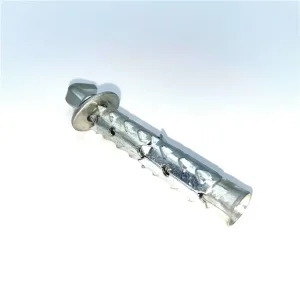
Critical Engineering Reality: Standard commercial-grade bolts fail under the cyclic oscillation profiles of Mexico City's soft clays. Fasteners must feature metallurgical micro-alloying and fish-scale multi-point grip geometries to preserve tensile integrity during long-duration tremors.
High Solar Irradiation & Nearshoring Industrial Expansions
Despite seismic challenges, Mexico City and its surrounding metropolitan logistics corridors enjoy superior solar irradiation exceeding 5.2 to 5.8 kWh/m²/day. With the rapid escalation of nearshoring (relocalización de cadenas de suministro) driven by the USMCA (T-MEC) trade framework, multinational manufacturers and third-party logistics (3PL) conglomerates are retrofitting millions of square meters of rooftop facilities with distributed solar generation systems under CFE’s (Comisión Federal de Electricidad) 500 kWp net metering regulations.
These large-scale commercial roofs demand lightweight yet immensely stiff aluminum profiles and stainless steel connection accessories that avoid exceeding the structural load-bearing limits of aging purlin networks while resisting aggressive atmospheric oxidation caused by metropolitan nitrogen oxide (NOx) and sulfur dioxide (SO₂) urban smog.