
High-Priority Hardware for Panamanian Solar & Civil Engineering
Engineered to resist dynamic coastal salt spray, hyper-saline trade winds, and high UV cycles across Panama City, Colón, Chiriquí, and Pacific littoral corridors.
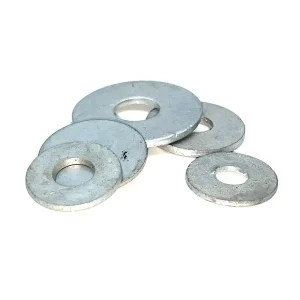
Marine-Grade Stainless Steel Flat Washer for Panama Port Structures
Precision-stamped DIN 125/ISO 7089 compliant washers engineered to prevent galvanic corrosion and distribute high-torque bolt tension across port crane mounts and coastal solar sub-frames.
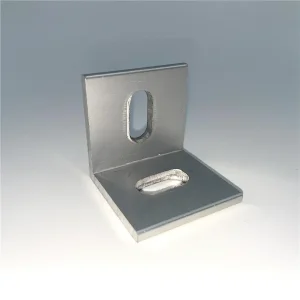
High-Tensile Aluminum Alloy Angle Bracket for Panama Solar PV Parks
Structural anodized aluminum mounting bracket configured for rapid tilted rooftop and ground-mount arrays across Chiriquí's high-irradiance solar corridors, withstanding 150 km/h gusts.
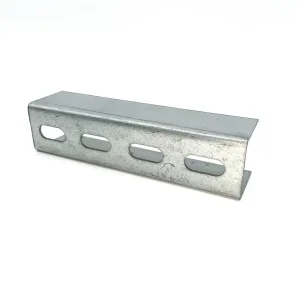
Heavy-Duty PV Mounting Purlin Connector for Panama Logistics Warehouses
Adjustable cold-rolled steel purlin connector engineered for massive distribution center roofs in the Colón Free Trade Zone, enabling frictionless thermal expansion compensation without deformation.
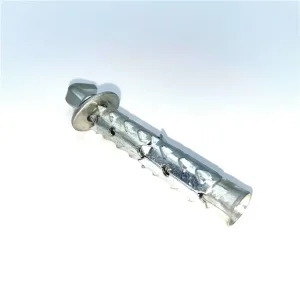
Fish Scale Heavy-Duty Expansion Bolt for Panama Concrete Infrastructure
High-friction ribbed sleeve expansion anchor suited for cracked concrete foundations, lock gate maintenance piers along the Panama Canal, and elevated highway overpass support beams.
Navigating Panama's Industrial Expansion & Coastal Corrosion Demands
The Republic of Panama serves as the definitive multi-modal logistics crossroads of the Western Hemisphere. Beyond the monumental operations of the Panama Canal, the nation is undergoing an aggressive multi-billion-dollar infrastructure modernization campaign. From the expansion of the Colón Free Trade Zone (Zona Libre de Colón) and the Pacific logistics corridor at Panama Pacífico, to the civil engineering demands of Metro Line 3 and the Fourth Panama Canal Bridge, structural fasteners and mounting brackets face operating parameters seldom matched elsewhere in the tropics.
Under Panama's National Energy Plan (Plan Energético Nacional 2015–2030), the transition toward decentralized utility-scale photovoltaic generation in Chiriquí, Coclé, and Herrera has accelerated solar racking demands. However, Panama's unique geography—flanked by both the Pacific Ocean and the Caribbean Sea across an isthmus rarely wider than 80 kilometers—imposes aggressive ISO 9223 C4 to C5-M marine atmospheric corrosion categories. High humidity (often exceeding 90%), combined with airborne chloride aerosols and intense ultraviolet radiation, causes accelerated degradation of inferior non-metallurgically certified fasteners.
Why Atmospheric Engineering Matters in Panama
In standard environments, standard electro-galvanized zinc layers (5–8 microns) disintegrate within 14–24 months when exposed to Panama’s tropical rain-wash cycles. Our specialized hot-dip galvanized coatings (HDG ASTM A153 ≥ 85 microns), Zinc-Nickel electro-coatings, and austenitic A4-70 (AISI 316) stainless alloys are formulated specifically to deliver a 25-to-30-year design life across Panama’s wet-tropical maritime corridor.
Cluster Economics: Why Yongnian, Handan Powers Central America’s Hardware Supply
Procuring hardware for utility-scale Latin American megaprojects requires an unbroken supply chain that marries raw metallurgical dominance with tight CNC dimensional accuracy.
Vertical Integration from Billet to Bolt
Situated in the heart of Yongnian—China's recognized Fastener Capital—our manufacturing compound leverages immediate proximity to premier steel mills, automated high-speed multi-station cold formers, and precision CNC threading centers. By controlling wire rod drawing, spheroidized annealing, heading, and heat treatment under one roof, we eliminate intermediate handling markups and ensure end-to-end metallurgical traceability.
Cost-to-Tensile Strength Ratio Optimization
For engineering procurement contractors (EPCs) operating under strict CAPEX constraints in Panama, our automated high-throughput lines output up to 2,000 tonnes monthly. This industrial scale yields a 22–35% direct cost efficiency advantage over regional middlemen and North American distributors, while strictly adhering to ISO 898-1 property classes and ASTM F593 standards.
Full 3.1 Mill Certs & Testing Transparency
Every single export crate destined for the ports of Balboa, Cristóbal, or Manzanillo International Terminal is accompanied by EN 10204 Type 3.1 inspection certificates. Our in-house testing laboratory conducts rigorous optical emission spectrometry (OES) chemical validation, digital Rockwell hardness tests, axial tensile pull-out verification, and accelerated ASTM B117 salt spray chamber audits.
Mission-Critical Use Cases in Panama's Strategic Sectors
From interoceanic transit facilities to high-wind agricultural solar farms, see how our components integrate into real-world Panamanian projects.
Colón Free Zone Logistics Hubs
The extensive warehouses and cold-storage facilities within the Colón Free Zone feature sprawling trapezoidal standing seam metal roofs. Our custom standing seam roof clamps and purlin connectors allow zero-penetration commercial rooftop solar arrays, eliminating leak hazards during Panama’s heavy 8-month rainy season while withstanding sudden Atlantic convective gusts.
Chiriquí & Central Plains Solar Parks
Panama's utility-scale photovoltaic expansion concentrates in provinces like Chiriquí and Coclé. Here, ground-mounted arrays require high-strength hot-dip galvanized carriage bolts, double-hole pressure plates, and AL6005-T5 mounting bases that guarantee stable clamping against seasonal trade winds (Los Vientos Alisios) without thread stripping or micro-cracking.
Canal Transit & Port Infrastructure
Ship-to-shore (STS) container cranes, maritime fender mountings, and dry-dock rail guides at Balboa and Cristobal ports demand structural anchor bolts and fish-scale expansion bolts capable of sustaining severe cyclical shear loads and submerged or splashed saline exposure without structural embrittlement.
Engineering Fastener & Racking Material Selection for Panama
A reference guide for consulting structural engineers, EPC project managers, and technical procurement directors specifying fasteners for Central American deployments.
| Material / Grade | Yield Strength (Re, N/mm²) | Tensile Strength (Rm, N/mm²) | Protective Coating / Treatment | Ideal Panama Environmental Application |
|---|---|---|---|---|
| AISI 316 / A4-70 Stainless Steel | 450 MPa | 700 MPa | Passivated / Self-Healing Cr₂O₃ Film | Coastal C5-M Port terminals, maritime structures within 2km of Caribbean/Pacific surf, exposed solar docks. |
| AISI 304 / A2-70 Stainless Steel | 450 MPa | 700 MPa | Passivated Clean Finish | Inland C3 Commercial rooftop solar racking in Panama City, David, Santiago, and inland industrial sheds. |
| Carbon Steel Grade 8.8 / 10.9 | 640 / 900 MPa | 800 / 1040 MPa | Hot-Dip Galvanized (HDG) ≥ 85μm (ASTM A153) | Heavy Civil Heavy civil structural framing, foundation anchor cages, bridge brackets, Metro Line expansions. |
| Extruded Aluminum AL6005-T5 | ≥ 225 MPa | ≥ 260 MPa | Clear Anodized Film (≥ 12–15μm) | Solar Racking Utility solar rail sections, module end/mid clamps, rooftop angle stanchions across all provinces. |
| Zinc-Aluminum-Magnesium (ZAM) Steel | ≥ 355 MPa | 470–630 MPa | Self-Healing Zn-Al-Mg Alloy Layer (275–350g/m²) | Next-Gen Solar Long-span solar ground tracking purlins, open-air agricultural agrivoltaics in Azuero Peninsula. |
Mission-Critical Hardware & Mounting Systems Serving Panama
Comprehensive portfolio of certified fasteners, clamps, and base systems manufactured directly in our Handan facility for containerized consolidation and rapid Pacific/Atlantic shipping.
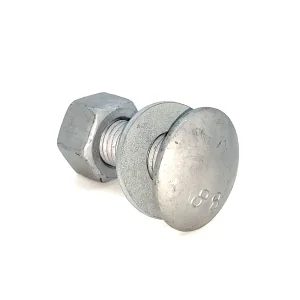
Hot-Dip Galvanized Carriage Bolt for Heavy Civil Framing in Panama
Square-neck anti-spinning structural carriage bolts with thick metallurgical zinc bonding, designed for rapid field assembly of heavy timber, steel racking, and utility fencing.
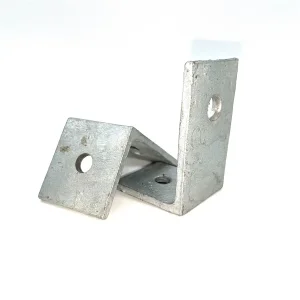
Stainless Steel Solar Angle Bracket for Panama Wind-Load Racking
Reinforced cold-formed stainless angle brackets delivering rigid 90-degree mechanical ties between aluminum guide rails and steel substructures under severe storm wind uplift forces.
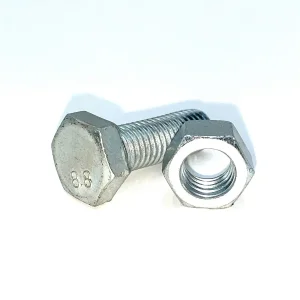
High-Strength Structural Hex Bolt for Panama Megaprojects & Bridges
Quenched and tempered high-tensile structural hex head bolts built to DIN 931/933 and ISO 4014/4017 for heavy machinery, highway flyovers, and container terminal cranes.
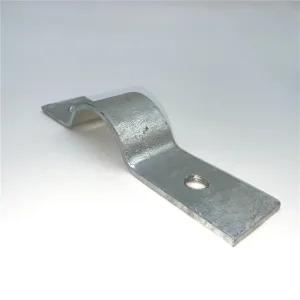
Stainless Steel Solar PV Mounting Hoop Clamp for Panama Utility Poles
Heavy-duty adjustable radial hoop bands engineered for mounting solar streetlights, telecom antennas, and monitoring stations securely onto circular concrete utility poles.
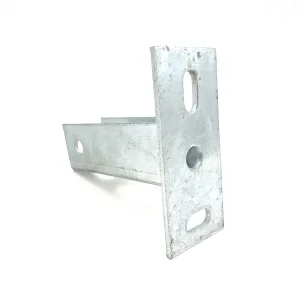
Structural Aluminum Solar PV Mounting Base for Panama Concrete Ballasts
Die-cast and extruded structural foundation base plates enabling fast leveling and anchoring of ground racks directly to precast concrete ballasts across uneven terrain.
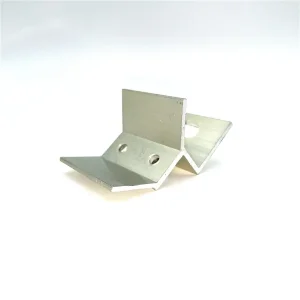
Trapezoidal Sheet Metal Roof Clamp for Panama Industrial Rooftops
Custom-machined non-penetrating clamping assembly with integrated EPDM waterproof gaskets, built for commercial trapezoidal tin roofs across Panama City distribution centers.
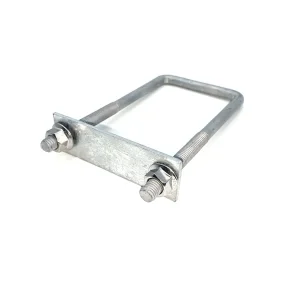
Double-Hole PV Module Pressure Plate for Panama Wind-Prone Solar Arrays
Heavy-gauge aluminum dual-hole clamping plate engineered to evenly distribute module edge retention pressure and prevent glass frame deformation under cyclical tropical gale buffeting.
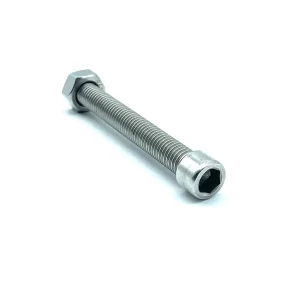
Stainless Steel Hex Socket Cap Screw for Panama Port Electrical Cabinets
Precision DIN 912 stainless machine socket screws for inverter enclosures, solar combiner boxes, and automated maritime navigation electronics in wet coastal marine zones.
Optimizing Trans-Pacific Freight & Consolidation to Panama
Sourcing structural fasteners from China for installation in Panama requires more than good unit pricing; it demands sophisticated logistics execution. Operating from our Handan hub, we offer end-to-end containerized export workflows through major North China deep-water ports (Tianjin/Qingdao) directly to Balboa (Pacific side) and Cristóbal/Manzanillo (Atlantic side).
Our logistics management handles customized container stuffing plans that maximize volumetric weight ratios—layering heavy, dense fasteners (anchor bolts, hex nuts, threaded rods) at the container base with lightweight extruded aluminum rails and stamped brackets above. This reduces per-kilogram landed ocean freight costs by up to 28% compared to fragmented LCL shipments.
The Complete Handan-to-Panama Supply Protocol
- Factory Raw Material Inspection: Chemical spectrometer batch heat verification before cold heading.
- Dimensional Tolerancing: Statistical Process Control (SPC) automated vision checking for thread pitch and diameter accuracy.
- Surface Treatment Verification: Magnetic coating thickness audits & destructive salt spray chamber testing.
- Seaworthy Packing: Reinforced 25kg inner boxes stacked on heat-treated, fumigated ISPM-15 wooden pallets with triple-layer moisture-barrier shrink wrap.
- Customs Clearance Documentation: Seamless provision of Bill of Lading, Certificate of Origin, Form E, Packing List, Commercial Invoice, and 3.1 Mill Test Certificates.
Frequently Asked Questions by Panamanian Importers & EPCs
Comprehensive engineering clarifications addressing corrosion standards, customs clearance, transit times, and custom OEM fabrication.
What fastener grades are recommended for Panama's coastal solar farms?
For installations within 5 kilometers of the shoreline (such as port facilities at Colón or coastal arrays in Coclé), we strongly advocate for austenitic stainless steel grade AISI 316 (A4-70 or A4-80) due to its 2–3% molybdenum content which halts chloride pitting corrosion. For inland installations across Chiriquí, hot-dip galvanized carbon steel (ASTM A153 with zinc thickness ≥ 85 microns) or AISI 304 (A2-70) coupled with EPDM isolation gaskets against aluminum rails provides an optimal balance between structural durability and capital expenditure.
What is the typical shipping lead time from your factory to Balboa or Cristóbal?
Standard production lead times for container-load orders (20 to 28 tonnes) average 15 to 25 calendar days, depending on custom tooling or surface treatment requirements. Ocean transit from Tianjin Port (Xingang) or Qingdao to Balboa or Manzanillo International Terminal generally takes between 26 and 32 days via direct trans-Pacific container liner services. We coordinate fully with Panamanian customs brokers and global freight forwarders to provide pre-cleared documentation sets.
How do you mitigate galvanic corrosion between aluminum racking and steel fasteners?
Galvanic corrosion occurs rapidly in Panama’s humid maritime air when dissimilar metals (like aluminum rails and stainless steel bolts) come into electrical contact in the presence of an electrolyte (rainwater containing dissolved marine salts). We mitigate this by supplying integrated dielectric isolation barriers: UV-stabilized virgin EPDM washers, nylon sleeved bushings, and delta-seal dacromet coatings that prevent physical metal-to-metal contact, preserving the structural integrity of both components.
Can you manufacture custom brackets according to specific project blueprints?
Yes. We specialize in custom OEM and ODM manufacturing based on CAD drawings, 3D STEP files, or physical engineering samples. Our tool-and-die workshop can prototype custom stamped brackets, extruded aluminum rail geometries, or custom forged anchor bolts within 7 to 10 days, followed by structural load testing, dimensional CMM verification, and volume production.
Do your fasteners comply with seismic codes required in Panama?
Panama’s structural building design regulations (REP-2021) mandate compliance with seismic load criteria, particularly for elevated structures, commercial rooftops, and transit projects like the Metro. Our heavy-duty fish-scale expansion bolts and chemical capsule anchors are rated for cracked concrete zones under cyclical seismic excitation, delivering documented ultimate shear and pull-out resistance values in accordance with ISO 898 and ACI 355 requirements.
What quality documentation is provided with every shipment?
Every single commercial export container includes an exhaustive quality dossier: an EN 10204 Type 3.1 Material Test Certificate declaring chemical heat analysis and mechanical tensile/yield properties; a certified salt spray chamber test report (ASTM B117); a dimensional verification sheet; and our Certificate of Conformity. Third-party visual and destructive inspection audits by SGS, BV, or TÜV Rheinland can be arranged upon client request prior to port departure.
Ready to Partner with China’s Premier Fastener & PV Mounting Supplier?
Whether you are engineering a multi-megawatt solar plant in Chiriquí, expanding logistics warehouses in the Colón Free Zone, or specifying structural fasteners for Panama's civil transit networks, our factory engineers deliver unmatched value, certified metallurgical precision, and dependable shipping schedules.
Send Inquiry Now