Direct Industrial Inventory
Featured Wedge Anchors & Solar PV Structural Hardware
High-load anchoring hardware manufactured in Yongnian, Handan — the fastener capital of China. Standard, customized, and OEM expansion configurations.
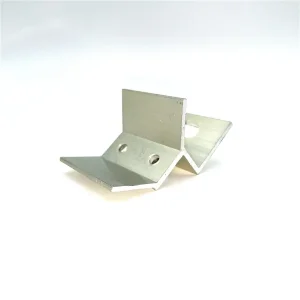
Trapezoidal Metal Roof Clamp for Solar PV Installation - High-Strength, No Drilling
View Factory Specs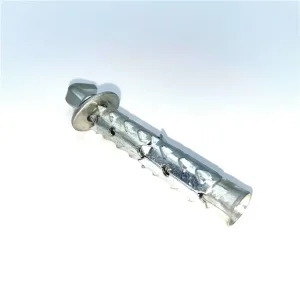
Heavy-Duty Fish Scale Expansion Bolt - High-Stability Fasteners
View Factory Specs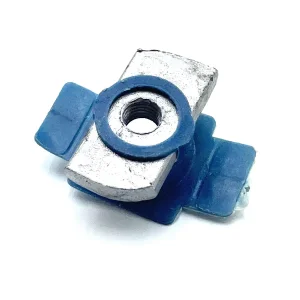
Ergonomic Plastic Wing Nut for Tool-Free Fastening in Machinery & Furniture
View Factory Specs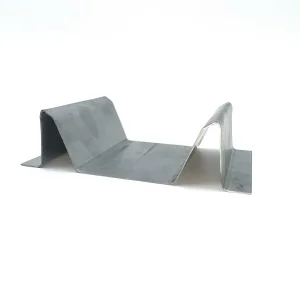
Durable M-Type Aluminum Water Channel for Solar PV Systems
View Factory Specs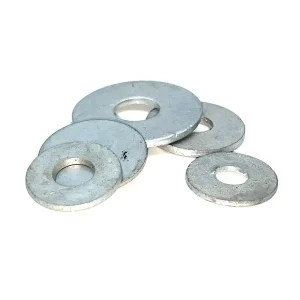
High-Quality Stainless Steel Flat Washers for Fastening Solutions
View Factory Specs
Premium Aluminum Side Clamps for Rooftop & Ground Mounting Systems
View Factory Specs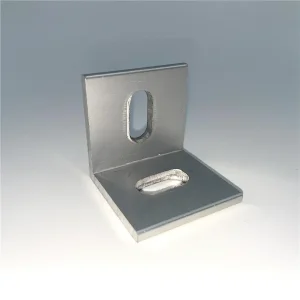
Aluminum Alloy Angle Bracket for Solar Photovoltaic Systems
View Factory Specs300K+
Metric Tonnes Shipped
Cumulative structural anchoring and PV fastener volume delivered across 6 continents.
3,000h+
Salt Spray Resistance
Verified ASTM B117 & ISO 9227 neutrality without base metal degradation.
ETA C1/C2
Seismic Qualification
Conforms to EAD 330232-00-0601 mechanical anchorage standards for cracked concrete.
100%
Raw Heat Traceability
EN 10204 3.1 chemical composition & ultimate mechanical tension certs per lot.
Industry Economics & Logistics
Global Procurement Dynamics for China Wedge Anchor Fasteners
An exhaustive analysis of international mechanical fastening specifications, supply chain resilience, and capital project qualification frameworks.
Supply Chain Clustering Advantage
Operating directly from the Yongnian industrial ecosystem allows Handan Youlong Fastener Co., Ltd. to leverage concentrated upstream billets, automated cold heading, and precision annealing lines. This clustering minimizes procurement latency for large-volume M6 to M24 carbon steel and austenitic stainless steel expansion bolts.
Yongnian Cluster
Direct Metallurgical Sourcing
EPC & Infrastructure Risk Mitigation
Civil, renewable energy, and industrial infrastructure EPCs require deterministic wedge expansion mechanics. A single anchor displacement failure during high cyclic wind or dynamic seismic events risks complete superstructure failure. Chinese high-tier suppliers fulfill these engineering requirements by providing dual-cone expansion sleeves with verified pull-out capacities.
Dynamic Cyclic Loads
Pull-Out Resistance
Total Cost of Ownership (TCO)
While upfront landing costs are critical, failure rates, torque-setting speed, and anti-corrosive lifespans dominate TCO calculations. Factory-direct engineering oversight ensures high-tolerance dimensional threads (6g/6H) that prevent thread galling during rapid pneumatic impact driving on commercial assembly lines.
6g/6H Precision
Zero-Galling Coatings
Key Information Gain for Sourcing Directors:
Procuring wedge anchors directly from China’s verified manufacturers mitigates middleman price compounding while granting structural teams access to bespoke sleeve design parameters, specialized collar hardness values, and verifiable mill certification data sheets.
Engineering Whitepaper
Metallurgical Properties & Mechanical Load Path Verification
Deep technical comparative matrix examining mechanical anchor grades, structural substrates, and protective surface treatments under extreme environmental exposure.
| Material Class | Alloy Specification | Tensile Strength (MPa) | Expansion Sleeve Metallurgy | Corrosion Classification | Typical Engineering Application |
|---|---|---|---|---|---|
| Carbon Steel 4.8 / 5.8 | AISI 1022A / 10B21 | 400 – 520 MPa | AISI 1008 Cold Formed | C1 – C2 (Indoor, Dry) | Warehouse racking, electrical conduit fastening, internal dry-wall structures |
| High-Tensile Carbon Steel 8.8 | AISI 1045 / 40Cr Boron | 800 – 830 MPa | Heat-Treated Manganese Steel | C3 (Electro-galv 5-12µm) | Industrial machinery bases, elevator guide rail fixing, HVAC platforms |
| Hot-Dip Galvanized Carbon | AISI 1035 Steel Q235B | 500 – 600 MPa | Stainless 304 or HDG Sleeve | C4 (HDG 45-65µm zinc) | Highway sound barriers, perimeter fencing, outdoor steel structural framing |
| Austenitic SS304 (A2-70) | AISI 304 (1.4301) | 700 MPa | Work-Hardened AISI 304 Clip | C3 – C4 (Industrial Urban) | Solar PV mounting brackets, facade curtain-wall brackets, sub-stations |
| Marine Grade SS316 (A4-80) | AISI 316 (1.4401) Moly-alloy | 800 MPa | Hardened SS316 Deep Drawn | C5-M / CX (Offshore Marine) | Coastal wind installations, water treatment aeration tanks, chemical plants |
Mechanical Expansion Mechanics
A precision-tapered cone drawn through a cylindrical three-segment collar causes uniform radial displacement against the concrete borehole wall. Expansion is maintained entirely by mechanical interlock and friction, precluding the chemical creep associated with epoxy injection systems in high ambient temperature environments.
Torque-Controlled Installation
Proper torque calibration (Tinst) is vital for ensuring wedge anchor performance. Under-torquing leaves the expansion clip insufficiently embedded, compromising pull-out resistance, while over-torquing risks yielding the bolt shank or fracturing the concrete cone in thin-slab installations.
Seismic Category C1 & C2 Compliance
Under seismic excitation, concrete cracks cycle open and closed. Youlong engineered expansion collars incorporate patented fish-scale ridges that maintain positive bite during micro-crack variations up to 0.8 mm, precluding progressive slip during tremor events.
Innovation Matrix
Technological Roadmap: The Evolution of Mechanical Anchoring
Anticipating infrastructure requirements: Automated smart-torque indicators, sustainable metallurgy, and digital twins for structural health monitoring.
1. Smart Torque Indicator Systems
Integration of calibrated breakaway hex heads and micro-encapsulated color-bleed washers that yield immediate visual verification once design torque is achieved, slashing QA inspection labor times on utility-scale solar farms by 65%.
Visual Verification
Zero Inspections
2. Eco-Friendly Geomet & Ceramic Coatings
Phasing out hexavalent chromium completely in favor of non-electrolytically applied zinc flake and multi-layer fluoropolymer-ceramic hybrid barrier coatings that endure salt-spray testing beyond 3,500 hours without hydrogen embrittlement hazards.
RoHS Compliant
No Embrittlement
3. High-Strength Lean Duplex Alloys
Transitioning specialized heavy-duty offshore anchor lines to Lean Duplex (UNS S32101 / S32304) steels. These deliver double the yield strength of traditional 304/316 alloys, allowing downsized borehole diameters while maintaining superior pitting resistance.
Duplex Alloys
PREN > 28
4. BIM & Digital Twin Integration
Providing native parametric 3D models (Revit, Tekla, IFC) containing precise pull-out limits, required edge distances, and anchor spacing formulas. This empowers structural civil engineering teams to simulate seismic load paths during pre-construction validation.
Tekla / Revit Ready
Finite Element (FEA)
Quality Control & Verification
Audited Quality Systems & Cross-Border Compliance
Strict adherence to international construction fastener governance ensuring seamless cross-border customs clearance and zero site liabilities.
Raw Material Ingot Spectrometry
Every billet batch is evaluated using optical emission spectrometry to verify strict nickel, chromium, and carbon concentration thresholds. This step eliminates the risk of counterfeit alloy usage in critical structural concrete applications.
Lot-Specific MTC (EN 10204 3.1)
Complete transparency with every pallet: Each shipment includes independent Mill Test Certificates detailing yield limits, elongation percentages, core versus case surface hardness testing (HRB/HRC), and documented proof loads.
Customs & Packaging Protection
Export packaging includes anti-corrosion VCI liners, heavy-gauge polybags, and fumigated solid Euro-pallets strapped with steel bands. This ensures thread integrity remains intact across 40-day maritime transport cycles.
Engineering Helpdesk
Frequently Asked Engineering & Sourcing Questions (FAQ)
Detailed answers addressing critical calculations, material limitations, installation dynamics, and international procurement standards.
What factors cause wedge anchor slippage in high-strength concrete?
Anchor slip is predominantly caused by undersized borehole depth, failure to thoroughly evacuate concrete drilling dust, or inadequate torque setting. When dust remains in the hole, the expansion collar slides along pulverized debris rather than biting into the solid concrete aggregate, reducing friction capacity by up to 50%.
Can wedge anchors be deployed in lightweight hollow-core slabs or brickwork?
No. Standard wedge anchors require solid, dense substrates (un-cracked or cracked C20/25 to C50/60 concrete) to generate expansion resistance. In hollow core, brick, or aerated masonry, the concentrated radial stresses will rupture the substrate walls. Sleeve anchors, drop-in anchors, or chemical anchors with perforated sleeves are required instead.
How does Youlong prevent galvanic corrosion between aluminum rails and steel bolts?
Galvanic corrosion occurs when aluminum and steel are in direct contact in the presence of an electrolyte. Handan Youlong provides integrated insulating EPDM washers and specialized non-conductive polymer shims. For direct contact applications, we apply Dacromet or Delta-Protekt inorganic flake coatings that act as a barrier layer.
What minimum edge distances and center-to-center spacings must be maintained?
As a general rule according to ETAG 001 guidelines, critical edge distance ($C_{cr,N}$) should be at least $1.5 \times h_{ef}$ (effective embedment depth), with center-to-center spacing ($S_{cr,N}$) maintaining a minimum of $3.0 \times h_{ef}$. Failure to follow these spacing guidelines causes overlapping cone stress fields, triggering premature edge spalling.
Comprehensive Structural Catalog
More Heavy-Duty Mechanical & PV Mounting Fasteners
Factory-direct structural elements manufactured under ISO 9001 certified production lines in Handan, China.
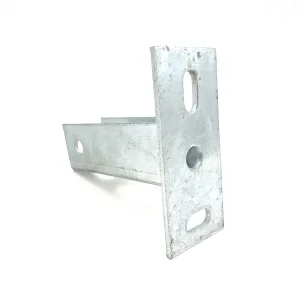
Solar PV Mounting Aluminum Alloy Base - High Load Structural Anchor
View Factory Specs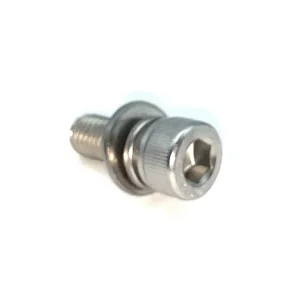
Stainless Steel Hex Socket Combination Bolt for Modular Framing
View Factory Specs
Solar PV M-Type Aluminum Water Channel Manufacturer & Engineering Supplier
View Factory Specs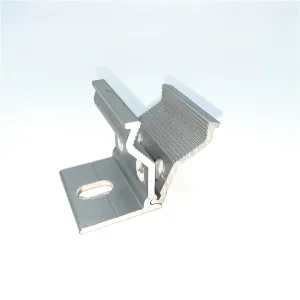
Special Clip Lock Aluminum Clip for Metal Roof Solar PV Installation
View Factory Specs
Solar PV Clip Lock Aluminum Clips - No Drilling Required
View Factory Specs
Premium Three-Hole Mounting Connector for Solar PV Splice Joints
View Factory Specs
Stainless Steel Hex Socket Combination Bolt with Washer - Corrosion Resistant
View Factory Specs