
Heavy-Duty Threaded Anchor Bolts & Foundation Hardware
Direct from Yongnian industrial cluster: High-tensile anchor rods, foundation bolts, and structural fasteners fabricated in compliance with global standards including ASTM A307, A325, A449, and DIN 975.
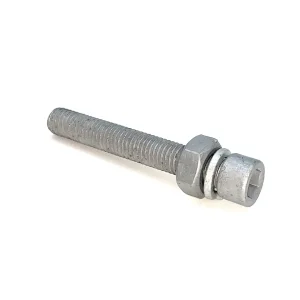
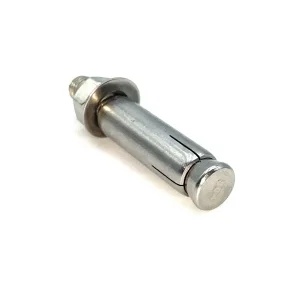

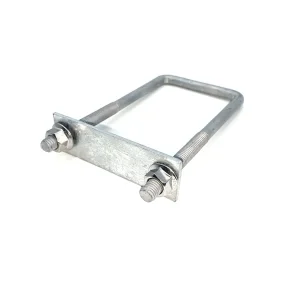
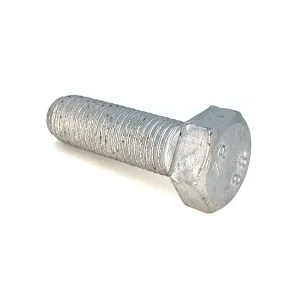
Engineering Integrity of Threaded Anchor Bolts in Modern Foundation Design
Threaded anchor bolts represent the critical structural link transferring axial tension, dynamic shear, and cyclic overturning moments from superstructure columns to deep reinforced concrete foundations.
Load Transfer Mechanics & Ductility
Structural reliability requires rigorous calibration between the bolt shank's yield tensile capability and the concrete pullout cone resistance. In earthquake zones and wind-critical substructures, specifying ductile Grade 55 or Grade 105 alloy rods ensures energy dissipation through elongation prior to brittle foundation failure.
- Ductility ratio > 14% ultimate elongation
- Charpy V-notch toughness @ -20°C verified
- Roll-threaded grain flow integrity
Micro-Structure & Anti-Corrosion Barrier
Atmospheric and sub-soil exposures demand custom protective coatings. Hot-dip galvanization strictly meeting ASTM A153 Class C guarantees minimum 85μm coating depth. For aggressive marine C5-M environments, mechanical sherardizing and fluoropolymer barrier coatings eliminate hydrogen embrittlement hazards common in electroplating.
- ISO 9227 Salt spray validation exceeding 1,500 hrs
- Zero risk of stress corrosion cracking (SCC)
- SS304/SS316 austenitic stainless options
Anchor Geometry & Embedment Mechanics
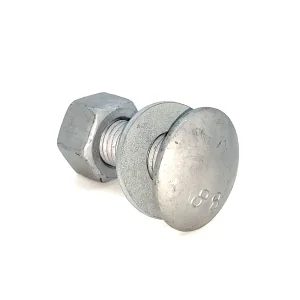
From cast-in-place L-hooked and J-hooked bolts to heavy welded-plate cage assemblies, structural performance relies heavily on head configuration. We custom-thread rod sections up to M100 diameters with thread lengths up to 1000mm, supplying double heavy hex nuts and hardened structural washers for maximum clamp force retention.
- Customized bent-profile radius controls
- High-yield anchor plate automated welding
- Class 6g/6h precise thread engagement
Industrial Cluster Resilience, Scalability & Direct Factory Efficiency
Located in Yongnian, Handan City—the undisputed fastener manufacturing hub of China—our integrated facility unites wire rod selection, multi-station cold forming, hot forging, thread rolling, heat treatment, and surface plating under one closed-loop ecosystem.
Raw Material Direct Procurement
Direct supply agreements with state-owned steel giants (HBIS, Baosteel) ensure uniform metallurgical chemistry, minimal non-metallic inclusions, and full batch heat numbers traceable to the raw ladle analysis.
Fully Integrated Automation
High-speed continuous thread-rolling systems and digital controlled continuous mesh-belt furnace heat treatment lines guarantee uniform hardening (HRC 28-34 for Grade 8.8 / 10.9) with zero surface decarburization.
Strategic Export Logistics
Our rapid freight access to Tianjin Port and Qingdao Port combined with on-site customs clearance documentation enables predictable lead times even during global supply chain disruptions.
Engineered Fastening Solutions for Extreme Operational Environments
Our threaded anchor systems are customized to overcome unique mechanical, dynamic, and chemical stressors across mission-critical sectors.
Utility-Scale Solar PV Farms
Mounting tracker foundations demand threaded anchor rods resistant to ground heave, high sustained cyclic wind uplifts, and soil galvanic corrosion. Our systems interface seamlessly with single-axis tracking pedestals, concrete ballast arrays, and aluminum bracket guide rails.
Wind Turbine Foundations & Heavy Civil
Featuring certified high-strength Anchor Bolt Cages designed for continuous high dynamic fatigue loads. Sized up to 3000mm length and class 10.9 ratings, ensuring rock-solid embedment in gravity base and pylon tower structures.
Pre-Engineered Metal Buildings (PEB)
Accurate center-to-center embedment spacing achieved via laser-cut structural steel template plates and precision-threaded anchor bolts, eliminating field re-drilling and alignment headaches during column base plate setting.
Engineering Material Matrix & Performance Thresholds
Compare mechanical ratings, tensile yield capacities, and anti-corrosion profiles to match your engineering procurement bill of materials (BOM).
| Material Standard | Grade Designation | Tensile Strength (Min) | Yield Strength (Min) | Surface Protection | Recommended Project Environment |
|---|---|---|---|---|---|
| ASTM F1554 | Grade 36 / 55 | 400 - 550 MPa | 250 - 380 MPa | HDG (Hot Dip Galvanized) | C2 - C3 Standard Building Columns & Light Poles |
| ASTM F1554 | Grade 105 Alloy | 860 - 1030 MPa | 724 MPa | HDG / Mechanical Sherardizing | C3 - C4 Wind Turbines, Crane Rails & Bridges |
| ISO 898-1 | Class 8.8 / 10.9 | 800 - 1040 MPa | 640 - 940 MPa | Dacromet / Geomet / HDG | C4 Heavy Industrial Plants & Port Infrastructure |
| AISI / ASTM | 304 (A2-70) Stainless | 700 MPa | 450 MPa | Passivated / Electro-polished | C3 - C4 Cleanrooms, Wastewater & Food Facilities |
| AISI / ASTM | 316 (A4-80) Stainless | 800 MPa | 600 MPa | Passivated Acid Finish | C5-M Offshore Wind, Marine Jetties & Coastal PV |
Full Traceability, Audited Quality & Localized Engineering Support
Meeting the exacting procurement requirements of multinational EPC contractors, structural engineering firms, and institutional distribution groups.
Mill Test Certificates (EN 10204 3.1)
Every shipment is accompanied by complete 3.1 inspection certification documenting chemical composition (Spectrometric analysis), yield & tensile strengths, elongation, hardness, and protective coating thickness verification.
Third-Party Verification
We routinely facilitate on-site inspection protocols with independent international testing agencies including SGS, TÜV Rheinland, Intertek, and BV to confirm dimensional tolerances and load ratings prior to factory departure.
Custom Engineering & OEM Packaging
Bespoke anchor assemblies supplied with project-specific color coding, steel thread-protection caps, custom palletization for harsh ocean freight, and pre-sorted kit packaging designed to reduce jobsite sorting overhead.
Technology Roadmap: Next-Generation Fastening Systems
Our engineering laboratory continuously advances structural fastening capabilities through cutting-edge metallurgical research and sustainable production frameworks.
Smart IoT Strain-Sensing Fasteners
Developing embedded Fiber Bragg Grating (FBG) and acoustic piezoresistive sensors inside heavy-duty anchor bolt cores for real-time tension loss monitoring in critical wind turbine foundations and suspension bridges.
Zinc-Flake Green Plating Systems
Replacing traditional heavy chemical dipping with zero-effluent chrome-free zinc-flake micro-coatings that deliver 2,000+ salt spray hours with no danger of hydrogen embrittlement on Ultra-High Tensile 12.9 Grade fasteners.
Automated Robotic Thread Rolling
Integrating multi-axis collaborative robotic arms and computer vision laser micrometer checks into our Yongnian cold-forming bays, reducing dimensional thread pitch variance to within ±0.015mm.
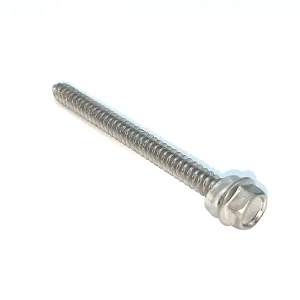
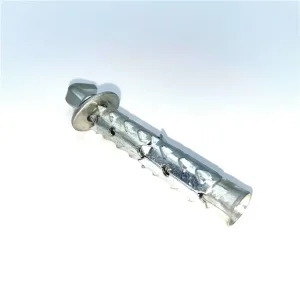
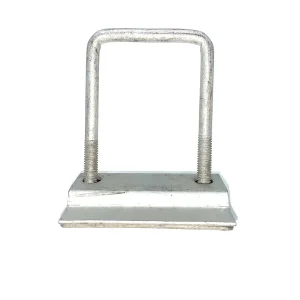
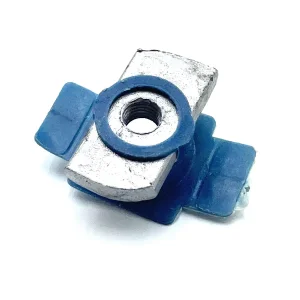
Engineered Fasteners, PV Clamps & Structural Mounting Hardware
Complete load-path hardware systems designed to interface with heavy concrete anchor installations and utility-scale solar arrays.
Frequently Asked Technical & Commercial Questions (FAQ)
Crucial insights for technical engineering leads, procurement managers, and international importers sourcing anchor bolts from China.