
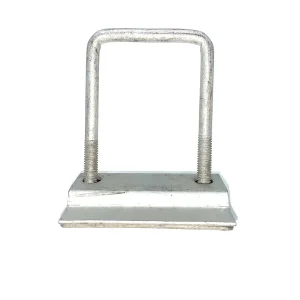
China High-Strength Double-Hole Pressure Plate for PV Mounting Systems
View Product Details
Explore our certified cold-forged and precision-machined portfolio, delivering verified torsional integrity across global energy arrays.
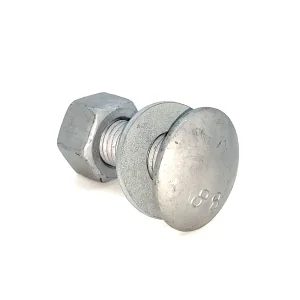
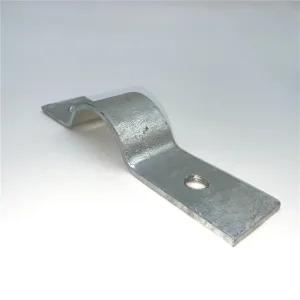
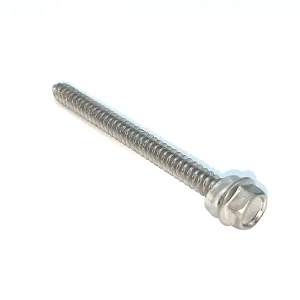
An authoritative analysis of fastener mechanics, transverse vibration mitigation, and how China's precision manufacturing hub in Handan drives global supply chain resilience.
In high-vibration structural connections, standard hex nuts routinely suffer from harmonic self-loosening due to micro-movements along thread helix angles. The Serrated Flange Lock Nut (standardized under DIN 6923, ISO 4161, and ASME B18.16.4M) directly remedies this by integrating an integral circular flange characterized by directional, angle-engineered teeth. When torqued, these ramped serrations bite directly into the mating bearing surface, creating a dual-action mechanical locking profile.
This design generates a prevailing break-away torque that is typically 1.25 to 1.4 times greater than the installation seating torque. By removing the need for a separate spring lock washer or flat washer, joint integrity is multiplied while assembly labor costs fall by up to 40% across utility-scale operations.
| Locking Fastener Type | Vibration Endurance (Junker Test DIN 65151) | Assembly Speed | Temperature Resistance | Reusability & Life Cycle Cost |
|---|---|---|---|---|
| Serrated Flange Lock Nut (Youlong) | Superior (>2,000 cycles without preload decay) | Fastest (One-piece integrated structure) | High (-50°C to +400°C based on alloy) | High retention; minimizes inventory complexity |
| Nylon Insert Lock Nut (Nyloc) | Moderate (Subject to polymer shear fatigue) | Moderate | Low (Fails above 120°C / degradation under UV) | Non-reusable; polymer tears after 1-2 torques |
| Standard Hex Nut + Split Washer | Poor (High risk of washer fracture & flattening) | Slow (Two components required) | Medium (Corrosion accelerates washer failure) | Low; washer prone to permanent deformation |
| All-Metal Prevailing Torque Nut | Good (Deformed thread friction) | Moderate (High run-on torque required) | High (-50°C to +500°C) | Moderate; potential galling on stainless threads |
Technological advancement is driving transformation across materials science, surface passivation, and automated robotic installation.
Traditional zinc electroplating is rapidly giving way to high-performance zinc flake coatings (Geomet, Dacromet) and Zinc-Nickel (Zn-Ni) electroplating. Offering over 1,500 hours of neutral salt spray testing (ASTM B117) without white rust, these finishes eliminate hydrogen embrittlement risks in ultra-high tensile Grade 8.8 and 10.9 steel.
Large-scale solar trackers and automotive assembly plants are introducing automated pneumatic and robotic nut runners. High-precision serrated flange nuts with strictly controlled chamfer concentricity and consistent friction coefficients (μ = 0.12 - 0.15) ensure zero cross-threading and uninterrupted robotic feed line uptime.
Global regulatory frameworks including EU RoHS, REACH, and CBAM (Carbon Border Adjustment Mechanism) require verifiable carbon accounting and non-toxic chromate passivation (Cr3+ or trivalent only). Our Handan manufacturing hub optimizes low-waste multi-station cold heading to slash energy footprints per metric ton.
Fastener durability demands matching metallurgy and surface coatings directly with operational ambient dynamics.
Subjected to extreme thermal cycling (ΔT > 45°C between day and night) and high wind shear in regions such as the Middle East, Nevada, and Northwest China. Serrated flange nuts prevent cyclic tension loss across anodized aluminum rails and hot-dip galvanized steel ground frames, maintaining permanent clamping torque.
Marine environments characterized by ISO 9223 C5-M/CX corrosion conditions require marine-grade A4 (AISI 316) stainless steel or high-thickness hot-dip galvanized carbon steel flange nuts. Used alongside isolating gaskets, they halt both electrolyte-driven salt spray deterioration and galvanic rail degradation.
Applied extensively across heavy-duty commercial truck chassis, suspension linkages, and agricultural machinery. Serrated flange nuts resist constant tri-axial shock loads, stopping critical bolt relaxation under road harmonic vibration without relying on messy chemical threadlockers.
Bridging raw steel metallurgy, precision cold-forming, and rapid port logistics into an integrated supply network.
Sourcing brackets, bolts, washers, and nuts from fragmented sub-vendors creates assembly mismatches and logistical confusion. Handan Youlong delivers a single-source ecosystem where serrated flange nuts are manufactured and tested side-by-side with aluminum profiles, brackets, and high-tensile carriage bolts.
Every cold-headed production run undergoes rigorous statistical process control (SPC): optical sorting for pitch integrity, hardness checking (Rockwell/Vickers), automated optical dimension screening, destructive tensile pull testing, and 1,000+ hour continuous salt spray verification.
With an annual processing capacity exceeding tens of thousands of metric tons and deep integration within Yongnian's dedicated steel ecosystem, our production facilities reliably support 500MW+ utility projects with on-schedule phased container deliveries to Europe, the Americas, and APAC.
Advancing from static passive components toward intelligent, traceable, and self-monitoring fastening hardware.
Embedding micro-engraved 2D DataMatrix codes or integrated passive tags on heavy industrial flange bodies to provide instant torque, material grade, and production lot data directly via smartphone scanners.
Deploying micro-encapsulated organic-inorganic hybrid coatings with self-healing corrosion inhibitors that automatically seal minor surface abrasions inflicted during high-speed torque installation.
Pioneering cold-formed Grade 10.9 & 12.9 micro-alloy steels treated with boron and vanadium to elevate proof stress while shaving weight across aerospace structures and next-gen electric vehicle platforms.
Correlating ultrasonic clamp preload testing during multi-spindle automated factory assembly with long-term cloud structural health monitoring across offshore wind towers and suspension bridges.
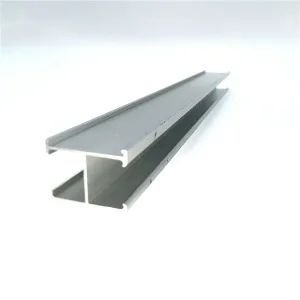
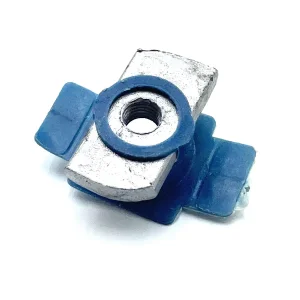
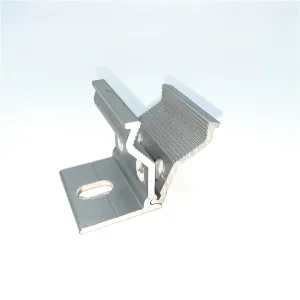
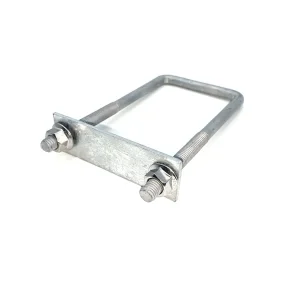
Integrate our precision structural clips, extruded aluminum rails, socket bolts, and specialized industrial hardware.
In-depth responses covering procurement feasibility, mechanical specifications, installation practices, and quality standards.
Unlike standard hex nuts that rely entirely on friction generated along the thread flanks, a Serrated Flange Lock Nut features a wide circular base with precisely oriented, unidirectional angular serrations. During tightening, these teeth slide smoothly over the mating surface. However, when backing off under vibration or cyclic shear, the teeth dig directly into the clamped material, increasing breakaway torque by 25% to 40% over tightening torque.
While they retain thread tensile strength upon removal, their locking teeth subtly cold-work and gouge the immediate mating surface during the initial torquing cycle. Subsequent installations on that exact damaged surface provide slightly diminished breakout resistance. For mission-critical infrastructure such as solar tracking linkages and wind turbine brackets, installing fresh hardware is standard practice to guarantee full torque retention.
Yes, but surface hardness must be taken into account. When steel teeth bite into softer aluminum (such as 6005-T5), they provide excellent anti-loosening and bridge electrical bonding pathways by piercing the non-conductive anodized layer. However, across oversized or long slots, non-serrated flange nuts paired with separate hardened washers or specialized torque limiters may be preferable to prevent localized aluminum distortion.
Our Handan manufacturing facility produces metric and imperial serrated flange lock nuts conforming directly to DIN 6923, ISO 4161, EN 1661, and ASME B18.16.4M. Property classes span Carbon Steel Class 8, Class 10 (hardened), and austenitic stainless steel grades A2-70 (AISI 304) and A4-80 (AISI 316), complete with full 3.1 EN 10204 material inspection certificates.
For high-tensile property classes (Grade 10 and above), our electroplating procedures include strict, standardized hydrogen de-embrittlement baking at 200°C–220°C for 4 to 8 hours immediately following the acid pickling and electro-galvanizing phases. Alternatively, we provide non-electrolytic zinc flake coatings (such as Geomet or Dacromet), completely eliminating chemical acid bath exposure and preventing hydrogen uptake.