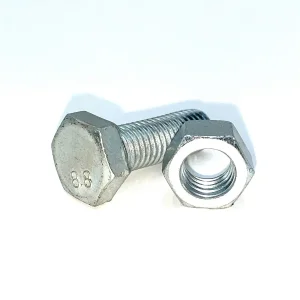
Featured Industrial Hardware Portfolio (Part I)
Direct factory-manufactured structural mounting components, anchor units, and precision-machined clips engineered for harsh outdoor environments.
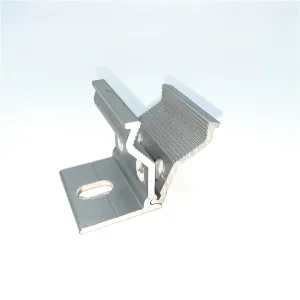
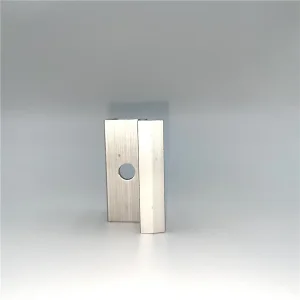
Solar PV Clip Lock Aluminum Clips for Metal Roof Installation - No Drilling Required
Explore Details
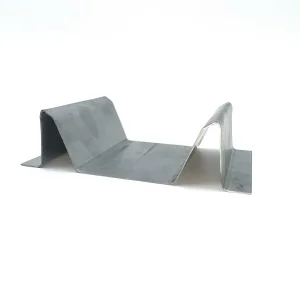
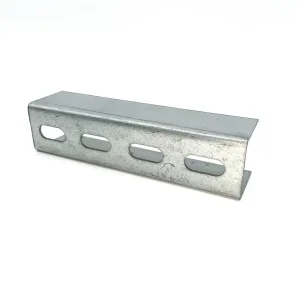
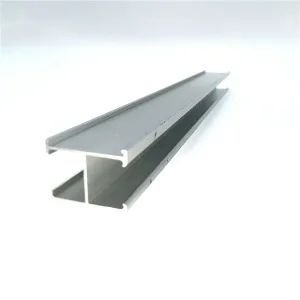
M-Type Aluminum Water Channel for Solar PV Mounting Systems – Durable & Corrosion-Resistant
Explore Details
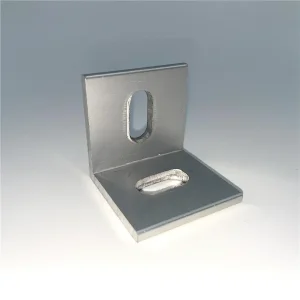
Understanding the Engineering Mechanics of Rawlplug Sleeve Anchors
An in-depth metallurgical and mechanical evaluation of sleeve anchor systems for EPC contractors, civil engineers, and international procurement professionals.
In the vocabulary of global construction engineering, the term "Rawlplug Sleeve Anchor" (or sleeve-type mechanical expansion bolt) designates a mission-critical pre-assembled anchoring mechanism engineered to secure heavy fixtures to solid masonry, cracked and uncracked concrete, structural brickwork, and prestressed slabs. As international civil engineering standards shift toward extended lifecycle guarantees (exceeding 25 to 50 years in renewable energy infrastructure), global procurement teams are no longer searching merely for standard threaded rods. They demand rigorous verification of shear-to-friction transfer curves, expansion cone metallurgical yield limits, expansion sleeve wall tolerances, and anti-corrosion barrier coatings.
Primary Mechanical Premise: A sleeve anchor functions via controlled displacement-expansion kinetics. Tightening the threaded hex nut or screw pulls the conical mandrel inward, forcing the cylindrical split sleeve outward against the perimeter of the drilled borehole. The resulting 360-degree radial compressive stress engages the compressive strength of the concrete substrate, creating a mechanical interlock capable of resisting static deadweights, cyclic wind uplifting, dynamic seismic oscillations, and thermal expansion fatigue.
Substrate Mechanics
Engineered specifically to accommodate micro-fissures in C20/25 to C50/60 concrete. The calibrated cold-rolled carbon steel or austenitic stainless sleeve expands uniformly without fracturing friable masonry walls, ensuring maximum pull-out capacity ($N_{Rk,p}$) under high prestress torque.
Tolerance Uniformity
Manufactured in Handan's state-of-the-art cold-forging centers with micron-grade CNC tooling. Wall thickness variance of the expansion jacket is constrained within $\pm 0.04$ mm, completely eradicating single-point stress concentration during borehole wedging.
Seismic Dissipation
Features an integrated collapse zone along the sleeve's corrugated flutes. This dampens cyclic shear loading during seismic events (Category C1/C2 performance ratings) and prevents sudden brittle cleavage of the high-tensile core bolt.
Global Search Intent Mining & Strategic Sourcing Requirements
How tier-1 EPC contractors, solar mounting fabricators, and international distributors evaluate Chinese rawlplug sleeve anchor manufacturers.
Modern international supply chain managers no longer treat expansion anchors as generic bulk commodities. When engineers from North America, Europe, Australia, and the Middle East query search engines for "China Rawlplug Sleeve Anchor Factories", their implicit semantic intent encompasses a complex validation rubric:
Batch Traceability
EPC compliance mandates full material heat traceability from blast furnace to finished fastener. Mill Test Certificates (MTC) conforming to EN 10204 3.1 must document exact chemical composition (Carbon, Manganese, Chromium, Nickel, Molybdenum) and destructive mechanical stress test reports.
Surface Metallurgy
Whether deployed in desert solar plants with daily thermal cycling or nearshore marine environments, fasteners must resist micro-cracking and hydrogen embrittlement. Electro-galvanizing (8–12µm), Hot-Dip Galvanizing (HDG $\ge 45\mu$m, ASTM A153), and high-grade Sherardizing are evaluated rigorously.
Total Landed Cost
With maritime container shipping rates fluctuating, procurement teams calculate landed cost per megawatt ($/MW). Handan's concentrated industrial ecosystem minimizes domestic inland freight and optimizes packing density, yielding up to a 22–35% direct cost advantage compared to Western domestic hubs.
Custom Engineering
Off-the-shelf sleeves frequently fail custom architectural bracket constraints. Sourcing directors favor factories offering in-house rapid die modification, customized expansion slit counts (2, 3, or 4 slits), and specialized head styles (countersunk, hex flange, eye bolt, hook bolt).
High-Stakes Application Scenarios & Substructure Integration
Where Handan Youlong's heavy-duty anchors provide structural stability across extreme global conditions.
1. Utility-Scale Solar PV & Rooftop Ballasted Racks
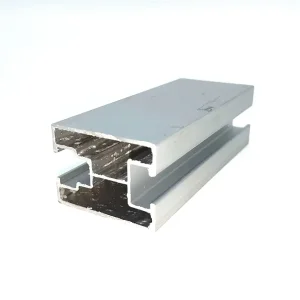
In ground-mount solar arrays, concrete foundation piers and precast ballast blocks serve as the vital resistance point against catastrophic wind uplift. Rawlplug sleeve anchors secure post baseplates, 3040 reinforced aluminum guide rails, and purlin connectors directly into concrete footings.
- Withstands cyclic harmonic micro-vibrations induced by wind buffeting across wide solar panel tables.
- Stainless Steel 304 / 316 alloy options prevent galvanic cell reactions when contacting aluminum base brackets via insulating EPDM/PA66 washers.
- Compact edge-distance tolerances allow installation near the edges of precast concrete ballast blocks without corner spalling.
2. Offshore Subsea Substations & Coastal Wind Farms
Coastal environments classify under ISO 12944 Category C5-M (Marine Extreme). Standard zinc-plated fasteners suffer catastrophic oxidation within 18 months.
- High-molybdenum AISI 316 / 316L (A4-70 / A4-80) sleeve anchors provide exceptional resistance against chloride pitting and crevice corrosion.
- Proprietary multi-stage passivation removes free iron traces from the cold-heading process, guaranteeing structural integrity in salt spray fog tests exceeding 2,000 continuous hours.
- Secure electrical cable trays, nacelle hydraulic equipment, and platform perimeter railings.
3. Heavy Industrial Facilities, Craneways & Vibratory Machinery
Overhead crane tracks, robotic gantry arms, and stamping presses transmit immense combined dynamic shear and tensile loads into factory foundations.
- Class 8.8 and 10.9 high-strength carbon steel sleeve anchors provide high proof load capabilities without irreversible elongation.
- Corrugated expansion sleeves bite deep into dense aggregates, maintaining clamping torque under severe low-frequency vibrations.
- Flush-mount countersunk head variations allow heavy wheeled forklifts and AGVs to traverse fixture edges without snagging anchor heads.
4. Seismic Retrofitting, Tunneling & Infrastructure Enclosures
In deep tunnel segments, highway acoustic barriers, and seismic retrofit brackets, sleeve anchors are subjected to complex multidirectional shockwaves.
- Engineered deformation sleeves absorb shockwaves through plastic displacement, dampening peak instantaneous shear stresses on structural concrete.
- Fire resistance rating testing (R30 through R120) verifies that the anchor retains sufficient residual load capacity during vehicle fires inside tunnels.
- Certified for post-installed rebar and heavy steel column anchoring in seismic zones C1 and C2.
Technical Matrix: Sleeve Anchors vs. Wedge & Chemical Systems
Direct comparative engineering data assisting project managers in selecting the optimal anchoring mechanism.
| Performance Dimension | Rawlplug Sleeve Anchor | Through-Bolt Wedge Anchor | Chemical Injection Anchor | Heavy-Duty Shield Anchor |
|---|---|---|---|---|
| Borehole Sensitivity | Low (Tolerates $\pm 0.5$mm) | High (Strict bit gauge required) | Extremely High (Dust-free critical) | Medium |
| Edge Distance ($c_{min}$) | Moderate ($5 \times d$) | Large ($8 \times d$ required) | Minimal ($3 \times d$) | Large ($7 \times d$) |
| Installation Speed | Immediate full load capacity | Fast | Slow (Requires cure time 1-24h) | Moderate |
| Substrate Compatibility | Solid Concrete, Solid Brick, Hollow Block | Solid Uncracked Concrete Only | Solid/Hollow Substrates (w/ sleeve) | Dense Stone and Concrete |
| Removal / Disassembly | Flush surface removable | Cannot be removed without grinding | Permanent stud | Partially removable |
| Temperature Window | -40°C to +120°C | -40°C to +150°C | Resin degrades above +50°C | -40°C to +100°C |
| Material Efficiency | High load-to-cost ratio | High tensile strength | High cost per installation hole | Moderate cost |
Technological Roadmap & Metallurgy Horizon (2025–2035)
How intelligent manufacturing, novel nano-coatings, and sensor integration are redefining the industrial anchor sector.
Lean Duplex & Ultra-High Strength Alloys
Migration toward Lean Duplex Stainless Steels (e.g., 2101, 2304) and high-boron quench-and-temper carbon steels. Yield strengths are boosted to >900 MPa while reducing costly nickel content, maximizing strength-to-weight performance for long-span floating solar anchoring.
Graphene-Infused Zinc-Nickel Electroplating
Eliminating hexavalent chromium and hazardous cadmium, advanced multi-layer Zn-Ni nano-coatings integrated with exfoliated graphene sheets yield continuous salt-spray resistance surpassing 3,000 hours with negligible hydrogen embrittlement susceptibility.
RFID & Acoustic Preload Sensor Bolts
Integration of micro-piezoelectric ultrasonic sensors and passive RFID tags directly inside the bolt head. Structural health monitoring systems (SHM) can remotely query fastener clamping torque without manual torque-wrench verification across thousands of PV brackets.
Parametric BIM & Cloud Finite Element Data
Every anchor geometry, thread pitch, and expansion coefficient is indexed as native Autodesk Revit and Tekla parametric objects. Structural engineers simulate dynamic earthquake response directly against factory finite element analysis (FEA) profiles.
The Strategic Power of the Handan Yongnian Fastener Industrial Hub
Why Yongnian District in Hebei Province manufactures over 55% of China's fasteners and dominates international industrial supply chains.
Clustered Raw Material Integration
Yongnian’s proximity to Hebei’s primary steelmakers (such as HBIS Group) guarantees immediate daily deliveries of prime cold-heading quality (CHQ) wire rod—including ML08Al, Q235B, 10B21, 35K, and 45# carbon steels, alongside certified stainless 304 and 316 coiled wire. Fastener factories operate without the extensive raw material transport delays common in inland assembly hubs.
Full Automation & Cold-Forging Precision
Modern Handan factories have transitioned from manual punch-press operations to multi-station progressive cold-forging machines. High-speed multi-stage heading formers produce sleeves and mandrel cones at rates exceeding 150 pieces per minute per machine with tight concentricity tolerances.
International Certification, Quality Control & Field Assurance
Comprehensive verification standards ensuring seamless compliance across global regulatory jurisdictions.
Mechanical Pull-Out Testing
Calibrated computer-controlled hydraulic tensile testing rigs verify uncracked concrete pull-out capacity ($N_{Ru,m}$) and cracked concrete performance. Load-displacement curves verify continuous ductile yielding rather than sudden catastrophic anchor pull-out.
Salt Fog & Environmental Testing
Operating cyclic corrosion chambers in accordance with ASTM B117, ISO 9227, and Kesternich SO2 acid condensation standards. Routine audits ensure batch stability across electro-zinc, yellow dichromate, Dacromet, and hot-dip finishes.
Full Audit Documentation
Comprehensive pre-shipment documentation packs accompany every sea container: 3.1 chemical inspection sheets, torque verification certificates, optical sorting dimensional reports, Certificate of Origin (CO/Form E/Form A), and complete customs clearance documentation.
Engineering & Procurement FAQ: Sleeve Anchors
Direct technical answers addressing substrate physics, installation parameters, metallurgy, and shipping logistics.
What distinguishes a Rawlplug Sleeve Anchor from a standard wedge anchor (through-bolt)?
While both are mechanical expansion fasteners, their expansion geometry and substrate suitability differ considerably. A wedge anchor expands only via a small clip near the base, exerting intense concentrated radial stress; it is suitable strictly for high-strength, uncracked concrete. In contrast, a sleeve anchor features a continuous cylindrical sleeve extending along the majority of the bolt shank. When torqued, this sleeve expands across a significantly larger surface area. This broader load distribution reduces peak compressive stress on the substrate, enabling reliable fastening in medium-strength concrete (C20/25), solid brickwork, precast masonry panels, and certain dense hollow-core blocks where a wedge anchor would cause structural fracturing.
How does Handan Youlong control torque-tension relationships and prevent over-expansion?
Torque-tension consistency is governed by strict dimensional control of the cone taper angle (typically between $12^\circ$ and $15^\circ$) and the friction coefficient of the threads and conical mandrel. Our automated stamping lines employ high-precision progressive dies to guarantee consistent sleeve slit depth and flute geometry. In addition, our automated coating lines use anti-friction wax emulsions where required, ensuring that rated installation torque ($T_{inst}$) translates smoothly into calibrated axial pre-tension rather than dissipating into rotational thread friction.
Which material grade should be selected for utility-scale solar PV mounting structures?
For standard inland ground-mount arrays or rooftop installations situated in ISO 9223 corrosion categories C1 to C3, Class 8.8 hot-dip galvanized carbon steel (HDG) or AISI 304 (A2-70) stainless steel is widely specified. When securing aluminum guide rails (such as our 3040 reinforced profiles), EPDM or nylon insulating washers must be fitted to isolate the stainless steel bolt head from the aluminum surface, preventing galvanic corrosion. For coastal desert or nearshore projects (categories C4 and C5-M), AISI 316 (A4-70 or A4-80) is required to protect against airborne marine chloride pitting.
Can Youlong produce customized sleeve anchors according to OEM engineering drawings?
Yes. Our in-house tooling facility supports OEM customization of sleeve length, outer diameter, expansion segment count, wall thickness, and head configurations (including Hex Nut, Hex Flange Nut, Countersunk Flat Head, Dome Nut, Hook Bolt, and Eye Bolt variations). We can tailor the collapse and expansion zones to match non-standard embedment depths or specific fixture thicknesses ($t_{fix}$), delivering finished prototype samples within 7–10 working days alongside structural validation test reports.
What are the recommended hole drilling and cleaning procedures to guarantee nominal pull-out values?
Boreholes must be drilled perpendicular to the substrate using a calibrated hammer drill bit conforming to ANSI B212.15 or ISO/DIN standards. The hole depth must exceed the anchor embedment depth ($h_{nom}$) by at least one full anchor diameter to provide space for debris. Crucially, residual concrete dust must be evacuated using a compressed air nozzle and wire brush technique (minimum twice blown, twice brushed). Residual dust acts as an unwanted friction buffer, reducing mechanical interlock and potentially lowering holding force by up to 25%.
Featured Industrial Hardware Portfolio (Part II)
Discover our high-tensile bolts, structural connectors, water channels, and specialized mounting hardware.