Heavy-Duty Foundation Anchors & Structural Components
Engineered for high-mast lighting, structural framing, and renewable arrays with complete shear, tensile, and environmental certification.
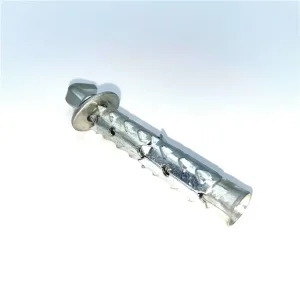
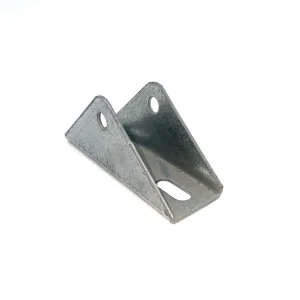
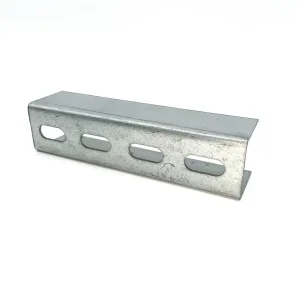
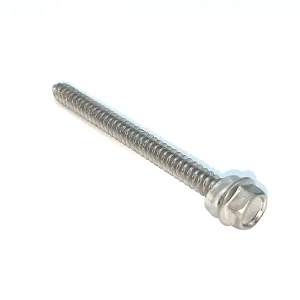
Engineering Anchor Bolt Integrity in Modern Municipal & Energy Grids
In-depth structural breakdown of wind shear dissipation, dynamic cyclical fatigue, and chemical passivation in utility-grade installations.
In modern roadway illumination, architectural mast deployment, and utility infrastructure, light pole anchor bolts serve as the definitive structural interface between the vertical superstructure and the subterranean concrete footing. Far from being simple threaded rods, foundation anchors must withstand multidirectional dynamic moments: continual wind flutter, seismic shear vectors, vehicle-induced vibrational harmonics, and high overturning bending moments. As urban lighting designs accommodate heavier smart-city telecommunication payloads, including 5G microcell transmitters and surveillance pods, the structural threshold demanded of anchor bolt systems has increased exponentially.
A failure at the foundation interface is catastrophic. Anchor bolt fatigue typically propagates beneath the base plate along the thread roots, where notch stress concentrations peak under reversed cyclic wind loading. Engineering standardizations such as ASTM F1554 (Grades 36, 55, and 105) and EN 1993-1-8 (Eurocode 3) define strict ductility, yield-to-tensile ratios, and notch toughness criteria. China’s advanced manufacturing ecosystem, centered in global fastener hubs like Handan, has evolved beyond commodity output into high-precision structural steel metallurgical manufacturing, meeting these strict global mechanical mandates with validated tracing and testing.
Metallurgical Chemistry
Carefully calibrated carbon, manganese, and micro-alloy compositions ensure optimal cold-impact toughness and structural ductility without embrittlement.
- ASTM F1554 Grade 55 & 105 alloy compliance
- Charpy V-Notch testing down to -20°C/-40°C
- Controlled sulfur and phosphorus limits (<0.025%)
Thread Rolling vs. Cutting
Continuous-grain cold-rolled threads provide work-hardened root fillets, delivering up to 30% higher fatigue resistance compared to traditional machined threads.
- Interrupted grain flow elimination
- Class 2A / 6g thread fit standards
- Superior surface finish mitigating notch cracks
Corrosion Passivation
Coating integrity determines lifecycle economics. Advanced hot-dip galvanization and sherardizing prevent galvanic loss in harsh outdoor conditions.
- ASTM A153 Class C Hot-Dip Galvanizing (85μm+)
- 1,000+ hour neutral salt spray endurance
- Zinc-Nickel & Geomet non-electrolytic barriers
Integrated Engineering Solutions Across Infrastructure Verticals
Cross-disciplinary mechanical anchoring tailored to extreme physical topographies and varying regional building codes.
Highway & Arterial Lighting
Highways experience turbulent wake buffeting from heavy freight vehicles along with exposure to de-icing salts. We supply pre-assembled cage clusters with ductile J-bolt or headless plate configurations that preserve foundation alignment under repeated cyclical impact loading.
Utility-Scale Solar & Carports
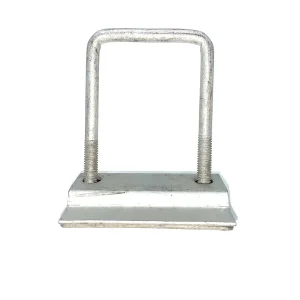
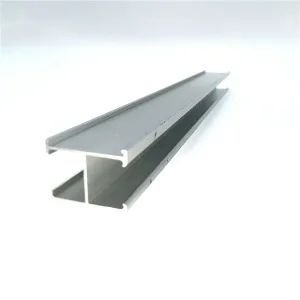
Mounting solar canopies and track systems requires zero vertical uplift tolerance. Our foundation fasteners, paired with heavy double-hole pressure plates and 3040 guide rails, maintain clamping force across extreme ambient temperature shifts from -30°C to +60°C.
Coastal, Marine & Wind Energy
In high-salinity C5 marine environments, standard hardware can suffer rapid pitting. We engineer duplex stainless steel anchors and multi-stage epoxy/galvanic barriers that isolate dissimilar metals, preventing structural breakdown across decades of salt-mist exposure.
| Engineering Standard | Material Designation | Minimum Yield Strength (MPa / ksi) | Tensile Strength Range (MPa / ksi) | Primary Application Environment |
|---|---|---|---|---|
| ASTM F1554 Gr. 36 | Low-Carbon Structural Steel | 250 MPa / 36 ksi | 400 - 550 MPa / 58 - 80 ksi | Standard street lighting, urban low-mast posts |
| ASTM F1554 Gr. 55 | High-Strength, Low-Alloy Steel | 380 MPa / 55 ksi | 517 - 586 MPa / 75 - 95 ksi | Highways, sign bridges, overhead catenary posts |
| ASTM F1554 Gr. 105 | Quenched & Tempered Alloy Steel | 724 MPa / 105 ksi | 862 - 1034 MPa / 125 - 150 ksi | High-mast stadium lighting, maritime crane towers |
| ISO 898-1 Class 8.8 | Medium Carbon Quenched/Tempered | 640 MPa / 92.8 ksi | 800 - 1000 MPa / 116 - 145 ksi | International utility infrastructure, civil engineering |
| BS EN ISO 3506-1 A4-80 | Austenitic Stainless (AISI 316) | 600 MPa / 87 ksi | 800 MPa / 116 ksi | Offshore, near-shore coastal solar arrays & docks |
Supply Chain Resilience & Precision Automated Manufacturing
Combining the metallurgical capacity of Yongnian—China's fastener capital—with automated multi-station cold-forming and intelligent QC.
Upstream Steel Integration
Direct supply arrangements with primary domestic steel mills guarantee full heat traceability, tight chemical composition control, and consistent billet pricing.
Automated Cold Forging
Multi-station high-speed formers deliver consistent thread and shank tolerances without micro-voids, running at high output for large orders.
Optical Sorting & Laser Profiling
High-resolution vision sorting tables evaluate thread pitch, concentricity, and diameter on every single bolt, helping eliminate defects before packaging.
Global Export Logistics
Positioned close to Tianjin and Qingdao ports, our logistics setup provides flexible FOB, CIF, or DDP delivery with complete export documentation and sea-worthy crating.
Smart Fastening, Digital Twins & Decarbonized Metallurgy
Adapting infrastructure anchoring to withstand intensifying extreme weather events and support integrated structural health monitoring.
IoT-Enabled Smart Anchors
We are actively prototyping anchor bolt heads integrated with passive RFID strain sensors and piezoelectric nodes. These components allow highway inspection teams to assess bolt tension without manual torque-checking, helping prevent looseness along vibration-heavy transit corridors.
High-Entropy Anti-Corrosive Alloys
To reduce reliance on heavy zinc-bath electro-coatings, our materials roadmap incorporates micro-alloyed weathering steels and chrome-free nano-composite finishes. These treatments yield thinner, scratch-tolerant barriers designed for high-salinity marine environments.
Scope 3 Carbon Tracking
In step with global Carbon Border Adjustment Mechanism (CBAM) standards, our facilities are moving toward electric arc furnace (EAF) scrap feeds and localized photovoltaic power, supplying verifiable low-embodied-carbon credentials with every export shipment.
Localization Support, Quality Documentation & Global Procurement
Complete traceability and full regulatory compliance designed to streamline EPC submittals and pass rigorous third-party audits.
EN 10204 Type 3.1 Certification
Every shipment comes with an authenticated Mill Test Certificate (MTC) documenting chemical melt heat analysis, tensile strength, yield points, elongation, and Charpy impact values.
Regional Code Adaptation
Whether projects require UNC/UNF imperial threading for the Americas, ISO Metric for Europe and Asia, or AS/NZS standards for Oceania, our tooling produces precise thread geometries tailored to local codes.
Pre-Assembly & Kitting
To cut jobsite labor costs, anchor bolts can be pre-assembled into rigid cages with alignment templates, leveling nuts, and structural washers, ready for direct concrete pouring.
Frequently Asked Questions (FAQ) for Engineering Teams
Technical guidance covering thread rolling dynamics, galvanizing tolerances, fatigue behavior, and OEM submittal requirements.
Why is ASTM F1554 preferred over standard A307 or A36 for pole foundations?
ASTM F1554 is explicitly formulated for structural anchor bolts embedded in concrete foundations. Unlike general structural steels, F1554 Grades 36, 55, and 105 define specific notch toughness, weldability parameters, and mandatory elongation rates, ensuring the assembly reliably absorbs wind-induced overturning moments without brittle failure.
How do you maintain nut fit on hot-dip galvanized threads?
Hot-dip galvanizing adds 45 to 85 microns of zinc to the thread profile. To preserve smooth engagement without galling or binding, mating structural hex nuts are tapped oversize in accordance with ASTM A563 standards. The bolt threads remain true, ensuring structural capacity is maintained after zinc immersion.
Can you provide custom anchor bolt configurations from client CAD drawings?
Yes. Our CNC bending, cold-heading, and automated cutting lines support custom anchor shapes including 90-degree bent J-bolts, L-bolts, hooked foundations, and straight rods with welded load plates. All dimensions, hook lengths, and thread run-outs are produced to client drawing specifications.
What measures prevent hydrogen embrittlement in Grade 105 anchor bolts?
High-tensile steels above 1,000 MPa (such as Grade 105 or Class 10.9) can be vulnerable to hydrogen embrittlement if acid pickled before galvanizing. We mitigate this through blast cleaning (mechanical descaling) rather than acid pickling, followed by temperature-controlled baking cycles when plating to ensure safety.
Precision Fastening & Heavy Mounting Solutions
Explore our complete catalog of PV mounting clamps, high-tensile hardware, and foundation stabilization systems.