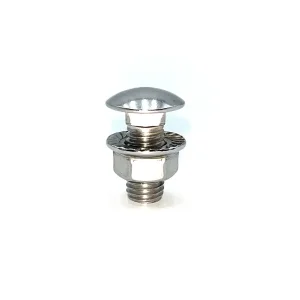
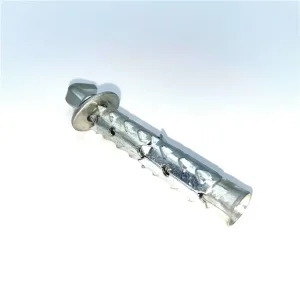
High-Integrity Photovoltaic & Structural Fastening Systems
Heavy-duty, weather-resistant hardware manufactured to meet rigorous outdoor mechanical load constraints and corrosive atmosphere standards.
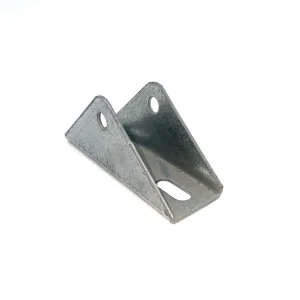
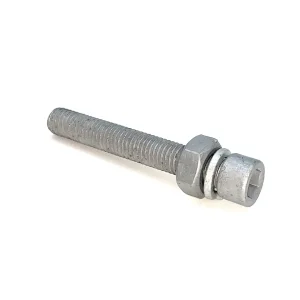
The Metallurgical & Mechanical Superiority of Hot Dipped Galvanizing (HDG)
A comprehensive examination of iron-zinc diffusion metallurgy, shear strength retention, and microstructural bonding in heavy industrial fasteners.
In modern structural engineering, civil infrastructure, and renewable energy deployment, mechanical fasteners represent the single most critical structural failure point if surface protection fails. Hot-dip galvanization (HDG), governed internationally by standards such as ASTM A153/A153M Class C, ASTM F2329, ISO 1461, and EN ISO 10684, provides metallurgical cathodic protection distinct from sacrificial electroplating or organic barrier coatings. Rather than simply adhering via mechanical bonding, molten zinc at temperatures ranging from 440°C to 465°C triggers an inter-diffusion reaction with the iron matrix of carbon and alloy steels, forming a multi-tiered metallurgical alloy sequence.
This sequence consists of four distinct microstructural phases: the Gamma ($\Gamma$) inner layer (75% Fe, 25% Zn, hardness up to 340 DPN), the Delta ($\delta_1$) compact layer (90% Zn, 10% Fe, highly columnar hexagonal crystallization), the Zeta ($\zeta$) monoclinic layer (94% Zn, 6% Fe), and the outermost Eta ($\eta$) free zinc layer (100% Zn, ductile and malleable). This gradient structure ensures that the inner alloy layers are often harder than the base carbon steel itself, granting hot-dipped galvanized bolts unrivaled resistance to abrasive transport damage, gouging during high-torque power driving, and mechanical impact during site staging.
Cathodic & Barrier Dual Protection
Even when a zinc coating is gouged down to raw substrate steel, zinc's lower electrochemical potential (-0.76V vs. standard hydrogen electrode) drives preferential oxidation, continuously forming basic zinc carbonate film passivation that prevents sub-surface creeping corrosion.
Thread Clearance & Tapping Tolerances
Hot-dip zinc deposits typically add 45 µm to 85 µm of nominal radial thickness. Leading Chinese factories execute specialized over-tapping on internal threads (6AX or 6AZ tolerance class per ISO 965-5 or ASTM A563 oversize tapping allowances) to avoid site thread galling.
Controlled Hydrogen De-Embrittlement
High-tensile Grade 8.8, 10.9, and ASTM A325/A490 structural bolts undergo strictly monitored mechanical blast descaling or controlled flash-acid pickling followed by mandatory post-pickling baking at 190°C–220°C to eliminate hydrogen-assisted stress rupture.
Why Sourcing from China's Handan/Yongnian Fastener Cluster Yields Global Advantage
Decentralized manufacturing cannot match the operational speed, upstream steel access, and integrated testing facilities concentrated in northern China's industrial corridor.
Located in Hebei Province, the Yongnian District of Handan is globally recognized as the "Fastener Capital of China", representing over 55% of the nation's total commercial fastener output. Sourcing hot-dipped galvanized bolts directly from mature factory clusters provides international EPC contractors, bulk distributors, and OEM assemblers with unmatched supply stability and cost-efficiency advantages that fragmented regional producers cannot replicate.
The cluster ecosystem integrates immediate upstream procurement of premium hot-rolled wire rods (Q235B, 35K, 45#, 40Cr, 35CrMo, 42CrMo) directly from surrounding state-owned steel conglomerates (such as HBIS Group and Xingcheng Special Steel). This localized material flow collapses raw billet transport lead times from weeks to hours, dampens international raw-material volatility, and provides continuous heat-lot traceability down to ladle refining metallurgy.
Vertically Integrated Galvanizing
Rather than trucking fasteners out to third-party sub-contract platers, top Handan manufacturers operate dedicated high-velocity centrifuge spin-dip lines, ensuring immediate post-quench passivation and uniform thread valley zinc clearance without lumping.
Multistage Multi-Station Cold Heading
High-speed 5-station and 6-station multi-stage cold formers allow high-volume production of DIN 931, DIN 933, ASTM A307, A325, and customized carriage or flange bolts with unbroken metallurgical grain flow, elevating ultimate tensile thresholds.
Comprehensive Export Documentation
Exporting facilities provide full EN 10204 3.1 Inspection Certificates, Charpy V-Notch impact testing reports, salt-spray chamber documentation (up to 1,500 hours C4/C5 durability ratings), and third-party inspection verification (SGS, TÜV, BV).
Macro Industry Trends Driving the High-Performance Fastener Market
Technological disruption, environmental compliance, and high-load civil engineering requirements are elevating expectations for galvanized hardware worldwide.
The global structural fastener landscape is experiencing profound transformations driven by the rapid scaling of renewable energy installations, utility grid modernizations, and stringent lifecycle carbon assessments. Standard commercial galvanized hardware is increasingly displaced by specialized, high-yield alloy formulations engineered to thrive in aggressive C4 and C5 corrosive environments over multi-decade operational horizons.
Zinc-Aluminum-Magnesium Alloys
The rise of Zn-Al-Mg (ZAM) micro-alloyed baths offering self-healing cut-edge protection and 3x–5x the corrosion barrier life of standard pure zinc in coastal and ammonia-rich environments.
Automated Laser Sorters
100% optical sorting systems utilizing high-resolution CCD cameras and eddy current testing to eliminate dimensional anomalies, head cracks, and thread flash down to <20 PPM defect rates.
Smart Torque Assemblies
Direct Tension Indicators (DTIs) and integrated tension-control (TC) twist-off bolts (ASTM F1852/F2280) gaining preference to guarantee specified pre-load clamp force without manual torque checks.
Closed-Loop Eco-Galvanizing
Installation of regenerative flux filtration, automated fume-enclosure hoods, and waste-acid recovery systems across Chinese factories aligning with international ESG procurement standards.
Mission-Critical Application Scenarios: Performance in Demanding Climates
From alkaline desert photovoltaic fields to offshore wind substations, hot dipped galvanized structural fasteners guarantee structural load integrity.
Utility-Scale Photovoltaic Systems
Large tracking arrays and fixed ground-mount solar plants endure extreme temperature cycling, high diurnal wind shear, and prolonged ground-level humidity. HDG foundation anchor bolts, torque tube splice bolts, and rail connector assemblies maintain clamping pre-load over a 25- to 30-year asset life without rust weeping.
High-Voltage Power Transmission Towers
Lattice steel transmission pylons operating in coastal, mountain, and subtropical corridors demand step bolts and structural assembly fasteners conforming to ASTM A394 and ISO 1461. HDG coatings resist micro-fretting corrosion caused by continuous aerodynamic conductor oscillation.
Heavy Civil, Bridges & Industrial Sheds
Pre-engineered metal buildings (PEMB) and road overpasses utilize high-tensile EN 14399-4 / DIN 6914 system assemblies. Hot dipped galvanized friction-grip connections preserve tight structural slip coefficients while sealing joints against atmospheric moisture ingress.
Global Procurement Standards & Mechanical Grade Matrix
A precision comparison of international technical standards applied during manufacturing, hot-dip zinc plating, and structural verification.
| Standard / System | Common Grades | Tensile Strength (MPa) | Yield Strength (MPa) | Applicable HDG Specifications | Primary Industrial Sector |
|---|---|---|---|---|---|
| ISO / DIN Standard | Class 4.8, 8.8, 10.9 | 400 – 1040 MPa | 320 – 940 MPa | ISO 10684 / ISO 1461 | Global Structural Steel, PEMB & Rail |
| ASTM Heavy Hex | A307, A325, A490, A449 | 414 – 1035 MPa | 250 – 895 MPa | ASTM A153 Class C / ASTM F2329 | North American Heavy Civil & Energy |
| Transmission Tower | ASTM A394 Type 0, 1 | 415 – 825 MPa | 230 – 585 MPa | ASTM A153 / CSA G164 | Substations, Pylons & Telecom Towers |
| Preloaded Bolting | EN 14399-3 / 4 (HV/HR) | 800 – 1000 MPa | 640 – 900 MPa | EN ISO 10684 / EN 14399-1 | European Wind, Bridges & High-Rises |
| Photovoltaic Hardware | DIN 933 / DIN 603 (A2/A4, HDG) | 500 – 800 MPa | 210 – 640 MPa | ISO 1461 / Custom 55µm+ | Solar Tracker, Carport & Roof Arrays |
Macro Supply Chain Solutions: Mitigating Multi-Metal Assembly Risks
Holistic engineering support for international buyers managing complex interface hardware across varied metallurgical substrates.
A recurrent vulnerability in multi-component engineering—particularly in utility photovoltaic installations—is the direct mechanical coupling of disparate metals, such as extruded anodized aluminum rails (6005-T5/6063-T6) fastened via carbon steel hot-dip galvanized hardware, or 304/316 stainless brackets torqued against zinc-coated structural purlins. Under continuous exposure to electrolytic moisture films (condensate, rain, marine salt mist), severe galvanic corrosion occurs if cathode-to-anode surface area ratios and electrochemical potential differentials are neglected.
As an integrated engineering partner, top Chinese fastener facilities provide turnkey bundled kit configurations engineered to isolate interfacial boundaries. Supply capabilities include factory pre-assembly of EPDM insulating washers, nylon isolation sleeves, Dacromet-coated auxiliary hardware, and Delta-Seal post-galvanizing topcoats that break electrical continuity, preserving both the aluminum profile structural integrity and the zinc cathodic reservoir indefinitely.
Custom Kitting & Color-Coding
Pre-bagged and boxed bolt sets (bolt, oversized HDG nut, F436 hardened washer, anti-galvanic shim) labeled with QR-coded assembly zones, slashing job site sorting labor by up to 35%.
Torque-Tension Calibration
Complete nut-lubrication engineering (water-soluble wax or molybdenum disulfide coatings applied to HDG internal threads) maintaining consistent nut factors ($K = 0.12 - 0.18$) for predictable tensioning.
Strategic Port Staging
Consolidated container stuffing via Tianjin or Qingdao deepwater ports, with heavy wooden-pallet banding and moisture-barrier shrink-wrapping ensuring arrival without sea-freight white rust oxidation.
Frequently Asked Questions: Technical Engineering & Factory Direct Sourcing
Authoritative answers addressing thread mechanics, metallurgical specifications, and logistical controls for international fastener sourcing agents.
How do Chinese factories handle thread clearance after applying heavy hot-dip galvanizing?
What specific protocols prevent hydrogen embrittlement in high-strength bolts (Grade 10.9 / ASTM A490)?
What is the expected salt spray test life versus actual outdoor service lifespan for HDG bolts?
How does Handan Youlong Fastener maintain uniform torque-tension relationships on hot-dip galvanized assemblies?
Can Chinese fastener manufacturers produce customized head styles and non-standard shank lengths?
What are the minimum documentation and quality verification packages provided per export order?
Precision Structural Hardware, Mounting Accessories & Fasteners
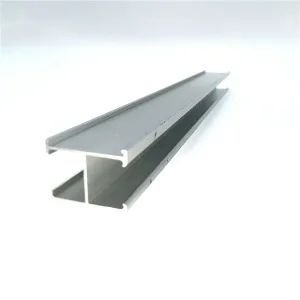
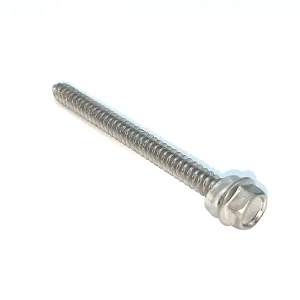
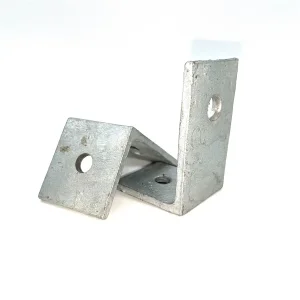
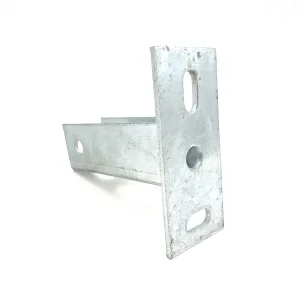
A full array of specialized solar brackets, self-drilling screws, carriage bolts, and expansion anchors designed to complete your heavy engineering installations.