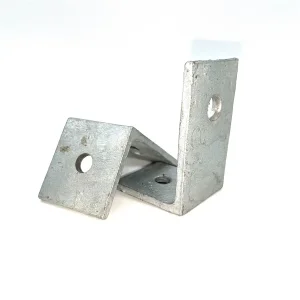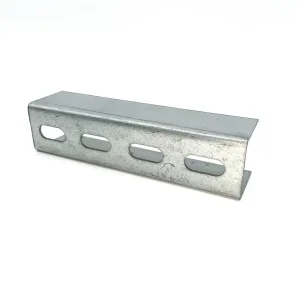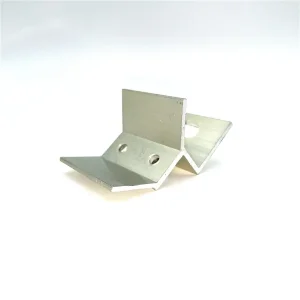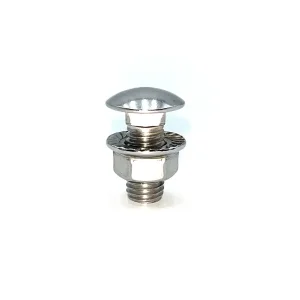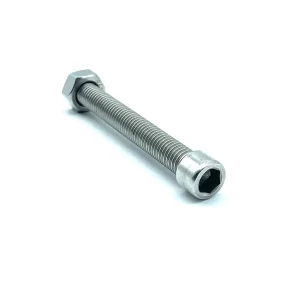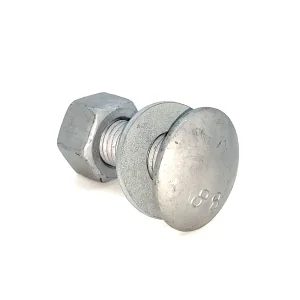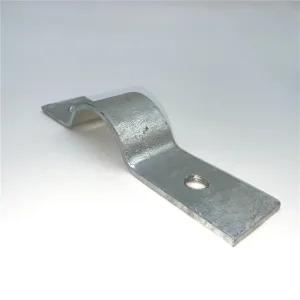
Bracket Fixing
Heavy-Duty Stainless Steel PV Mounting Hoop for Round Pipe & Bracket Fixing
Buy Heavy-Duty PV Hoop
Engineered to deliver high tensile yield, corrosion resistance, and verified clamping stability under harsh dynamic loads. Explore factory-direct high-precision fasteners tested for mission-critical assemblies.
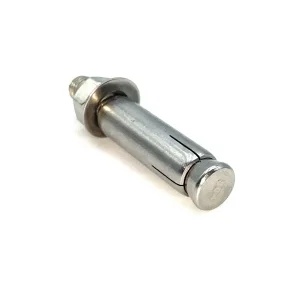
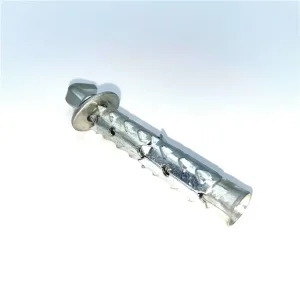
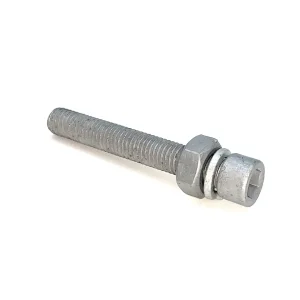
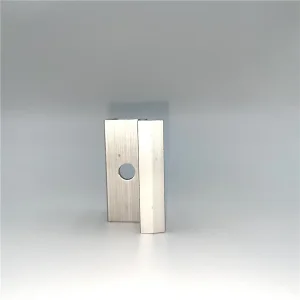
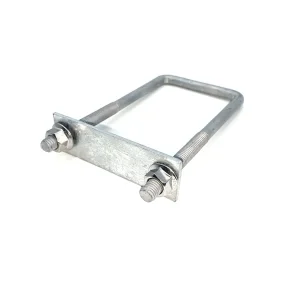
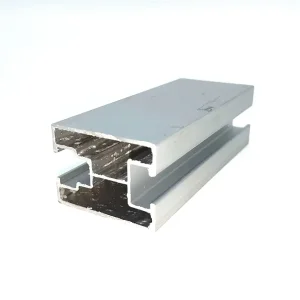
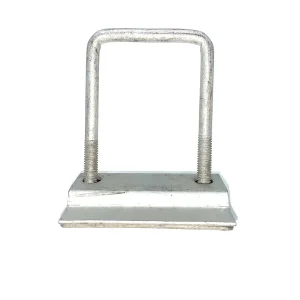
Grade 8.8 bolts represent the indispensable structural foundation of modern mechanical engineering, civil infrastructure, and global decarbonization mega-projects.
Under international standard ISO 898-1, the mechanical designation "8.8" provides precise metallurgical performance guarantees: an ultimate nominal tensile strength of 800 MPa (with a minimum break point of 800–830 MPa) and a nominal yield strength ratio of 80% (yielding at least 640 MPa). This structural resilience avoids brittle failure under dynamic cyclic stress.
The global structural fastener market is experiencing double-digit growth propelled by utility-scale renewable energy (solar PV racking, tracker systems, and wind turbine anchor rings), bridge reconstruction, and modular steel buildings. Global EPC contractors prioritize standardized ISO metric threading and verifiable traceability over low-cost commodity screws.
Unlike lower carbon steels (Grade 4.8 or 6.8), Grade 8.8 fasteners undergo continuous quenching and tempering (Q&T). This thermal treatment produces a fine tempered martensite or bainite microstructure, providing maximum fatigue resistance and eliminating shear elongation risks under variable wind and seismic loadings.
Why leading multinational engineering firms source structural Grade 8.8 bolts directly from Handan Youlong Fastener in Yongnian District—the Fastener Capital of China.
Yongnian District in Handan, Hebei Province accounts for more than 55% of China's total fastener production output. This localized concentration creates an unmatched industrial synergy that cannot be replicated elsewhere:
Raw Material Proximity: Direct, automated steel coil supplies (such as SWRCH35K, 10B21, ML40Cr) from adjacent premier steel mills (Handan Steel, Xingtai Steel) ensure verifiable chemistry, consistent drawability, and elimination of long-distance logistical markups.
End-to-End Vertical Integration: From multi-station high-speed cold headers and automated thread rollers to continuous protective-atmosphere mesh-belt heat treatment lines and automated HDG/Dacromet dipping tanks—every production phase occurs within a 5-kilometer operational radius.
While European or North American manufacturing facilities battle extended tool-change backlogs and high energy overheads, our automated production plants run high-output shifts with custom die-making in days, compressing project delivery schedules by 30% to 50%.
| Production Feature | Youlong Handan Factory | Conventional Suppliers |
|---|---|---|
| Cold Heading Capability | Multi-station automated high-speed headers (M6 to M36) | Single-die or outsourced heading |
| Heat Treatment | Controlled atmosphere mesh-belt furnace with real-time temperature telemetry | External commercial batch heat treatment |
| Traceability & Marking | Grade 8.8 + Manufacturer Head Stamp ("YL") + Batch ID | Inconsistent head stamps |
| Salt Spray Resistance | Up to 1,500+ hrs (Geomet / HDG ISO 10684) | Basic electro-galvanizing (72-96 hrs) |
| Quality Control Protocol | 100% optical sorting + proof load verification + destructive tensile testing | Random manual caliper checks |
Ensure structural safety compliance by comparing raw material chemistry, heat treatment parameters, and mechanical threshold criteria for Grade 8.8 fasteners.
| Steel Grade / Base Alloy | Carbon (C)% | Manganese (Mn)% | Chromium (Cr)% | Boron (B)% | Recommended Size Range | Target Mechanical Strengths |
|---|---|---|---|---|---|---|
| AISI 1035 / Carbon Steel 35# | 0.32 – 0.38 | 0.60 – 0.90 | ≤ 0.25 | - | M6 to M16 (Short lengths) | Tensile: 800 MPa | Yield: 640 MPa |
| 10B21 Boron Steel | 0.18 – 0.23 | 0.70 – 1.00 | ≤ 0.20 | 0.0008 – 0.003 | M8 to M24 (Cold-formed) | Tensile: 830 MPa | Impact ≥ 30J |
| 40Cr / AISI 5140 Alloy Steel | 0.38 – 0.45 | 0.50 – 0.80 | 0.80 – 1.10 | - | M20 to M64 (Heavy Structural) | Tensile: 850–900 MPa | Yield: 720 MPa |
| 35CrMo / AISI 4135 Alloy | 0.32 – 0.40 | 0.40 – 0.70 | 0.80 – 1.20 | - | M24 to M100+ (High Temp/Wind) | Tensile: 900+ MPa | High Fatigue Limit |
The nominal tensile stress area (As) is determined by thread pitch and diameter according to ISO 898-1: As = 0.7854 × (d - 0.9382P)². Grade 8.8 bolts are engineered to endure full proof loads up to 580 MPa without permanent residual elongation.
Proper torque transmission is governed by friction coefficients (μ). Under standard friction conditions (μ = 0.14 for zinc-plated, μ = 0.10 with wax/lubricant), tightening torque (T) follows T = K × d × F, preventing structural joint separation or fatigue unthreading.
Grade 8.8 bolts retain design load-bearing capacity between -50°C and +200°C. For sub-zero arctic installations, 40Cr low-alloy variants are verified via Charpy V-notch testing to guarantee toughness at -40°C.
From solar tracker torque tubes in corrosive coastal deserts to vibrating wind turbine towers, Grade 8.8 bolts sustain dynamic mechanical shear and bending stresses.
Utility-scale single-axis trackers demand high fatigue resistance. Grade 8.8 bolts connect drive brackets, slewing drives, and purlin rails, enduring sustained gust buffetings and torsional oscillation over a 25-year operational lifespan.
ISO 10684 HDG / GeometSpecified in beam-to-column and truss-to-column connections under EN 14399 and ASTM standards. Grade 8.8 structural sets (bolt, nut, washer) prevent joint slip through calibrated pre-tension friction grip.
EN 15048 Non-PreloadSecuring ladder systems, yaw bearings, transformer mountings, and secondary nacelle frames where continuous dynamic cyclic vibration and harmonic resonances require vibration-proof prevailing-torque locking nuts.
Dacromet / Trivalent ZincEmployed in earthmoving equipment, crushers, conveyor assemblies, and railway rolling stock subjected to severe shock loads, shear stress, and rough operational conditions without bolt loosening.
Grade 8.8 / 10.9 AlloyAtmospheric exposure without specialized metallurgical coatings causes galvanic and oxygen-cell corrosion. We engineer surface coatings to match project design lives.
Bolts are submerged in molten zinc bath at 440°C–460°C, producing an intermetallic iron-zinc alloy layer. Coating thickness ranges from 45 μm to 85 μm, delivering cathodic sacrificial protection that survives 30+ years in rural and industrial atmospheres.
Non-electrolytic dip-spin application of micro-layer zinc and aluminum flakes bonded in an inorganic matrix. Highly favored for coastal solar and automotive engineering because it eliminates acid pickling and hydrogen embrittlement hazards.
High-tensile fasteners (≥ 800 MPa) exposed to electroplating processes absorb atomic hydrogen during acid wash. Our factory enforces mandatory de-hydrogenation baking at 200°C–220°C for at least 4 to 8 hours within 4 hours post-plating.
Overseas procurement directors, QA/QC leads, and structural inspectors must verify these key technical checkpoints before authorizing fastener bulk releases.
Every production lot processed through Handan Youlong undergoes documented validation according to ISO 3269 sampling plans:
We safeguard global contractors from customs disruptions, structural audits, and insurer disputes by providing transparent project dossiers with every dispatch:
How the structural fastener industry is evolving to meet digitalized structural health monitoring and carbon border adjustment mechanisms (CBAM).
In response to the EU CBAM (Carbon Border Adjustment Mechanism) and ESG frameworks, Youlong is transitioning toward raw steel drawn from Electric Arc Furnaces (EAF) powered by renewable electricity, reducing embedded CO₂ per tonne of bolts by up to 45% compared to blast-furnace routes.
For critical offshore wind turbines and long-span highway bridges, piezo-electric acoustic ultrasonic sensors and integrated RFID chips are embedded directly inside bolt heads. This enables wireless remote monitoring of residual clamping force, preventing sudden joint failure without manual re-torquing.
Traditional manual packaging is replaced by high-speed multi-camera 360-degree laser optical sorting machines. Capable of inspecting 600 pieces per minute, these systems detect thread burrs, pitch deviations, and microscopic surface fissures, guaranteeing PPM defect rates below 50.
In-depth responses to critical questions asked by structural engineers, EPC procurement executives, and international distributors.
According to ISO 898-1, the first digit signifies 1/100th of nominal tensile strength in MPa, and the second digit indicates 10 times the ratio of yield to tensile strength:
Grade 8.8: 800 MPa tensile, 640 MPa yield strength. Fabricated from medium carbon steel or boron steel, quenched and tempered. Offers optimal ductility (12% elongation) and lower susceptibility to hydrogen embrittlement. Ideal for general structural, solar PV mounting, and civil infrastructure.
Grade 10.9: 1000 MPa tensile, 900 MPa yield strength. Fabricated from alloy steels (like 40Cr, 35CrMo). Applied in high-shear structural steel connections and automotive chassis.
Grade 12.9: 1200 MPa tensile, 1080 MPa yield strength. Highly stressed mechanical connections, but sensitive to stress corrosion cracking; typically restricted to indoor oiled applications.
Hydrogen embrittlement occurs when atomic hydrogen diffuses into high-strength hardened steel during pickling in hydrochloric acid or electroplating. At Youlong, we deploy two primary countermeasures:
1. Process Avoidance: We strongly advocate for Zinc Flake (Geomet/Dacromet) coatings for outdoor projects. Zinc flake is a mechanical/chemical dip-spin process that requires no acid pickling and zero electro-deposition currents, completely eliminating hydrogen uptake.
2. Mandatory De-hydrogenation Baking: When electro-galvanizing is requested, parts are transferred into continuous baking ovens within 4 hours of plating, held at 200°C–220°C for 4 to 8 hours to allow trapped hydrogen to effuse out safely. Pre-stressed wedge testing confirms zero delayed fracture.
DIN 933 vs. DIN 931: DIN 933 specifies fully threaded hexagonal head bolts, whereas DIN 931 specifies partially threaded hex bolts with an unthreaded shank (grip length). Partially threaded bolts offer higher shear resistance across the solid unthreaded body.
DIN vs. ISO Standards: ISO 4014 (partial thread) and ISO 4017 (full thread) are international revisions of DIN 931 and DIN 933. While most diameters share identical dimensions, sizes M10, M12, M14, and M22 feature differing across-flats width (wrench size s): for example, M10 is 17mm under DIN but 16mm under ISO; M12 is 19mm under DIN but 18mm under ISO. Youlong manufactures to both standards with explicit tooling verification.
Direct contact between bare carbon steel and extruded aluminum (6005-T5 / 6063-T6) triggers galvanic corrosion in moisture-rich atmospheres because aluminum acts as a sacrificial anode to steel.
To safely connect Grade 8.8 bolts with aluminum profiles, two industry practices must be observed: 1) Specify Hot-Dip Galvanized or Dacromet/Geomet coatings, which mitigate galvanic potential differentials; 2) Utilize non-conductive dielectric barrier isolating washers (EPDM or heavy-duty UV-stabilized nylon) under the bolt head and washer to sever electrical contact between dissimilar metals.
An authentic EN 10204 3.1 inspection certificate must be issued by the manufacturer's authorized quality representative who is independent of the manufacturing hierarchy. It must state: 1) Cast/Heat number matching raw steel coil; 2) Quantitative chemical spectrometry percentages; 3) Mechanical test findings (tensile strength, yield point, elongation %, reduction of area, Charpy V-notch Joules); 4) Heat treatment parameters (quenching temperature, medium, and tempering temperature); 5) Batch tracking code embossed on the physical carton and bolt head.
For standard metric inventory specifications (e.g., DIN 933 / DIN 931 in M8–M24 HDG or zinc-plated), our MOQ is typically 500 to 1,000 pieces per size, or 1 pallet (approx. 1 metric tonne total). For custom lengths, specialized alloys (40Cr, 35CrMo), or bespoke OEM stamped brackets, standard MOQ begins at 3 to 5 tonnes. Standard production lead times run between 15 to 25 calendar days, with immediate container loading accessible from Tianjin Port (280 km from our Handan plant).
Explore additional high-strength fasteners, stainless connection brackets, carriage bolts, and precision hardware direct from Youlong factory production lines.