
Featured Precision Fastener & Racking Components
Engineered to work seamlessly alongside captive cassette assemblies across heavy-duty industrial mounts, photovoltaic racking profiles, and electrical cabinets.
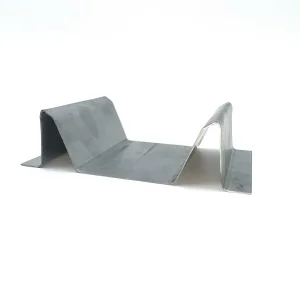
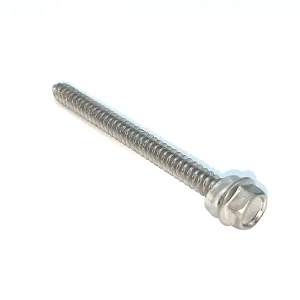
Buy High-Quality Stainless Steel Self-Drilling Screws from China Factory
View Details
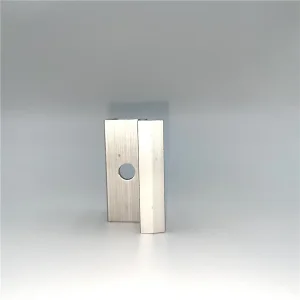
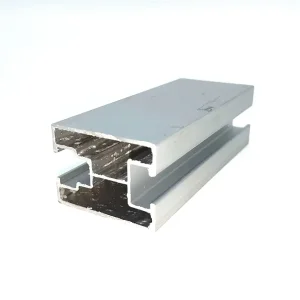
Best High-Strength 3040 Reinforced Aluminum Guide Rail for Solar PV Systems
View Details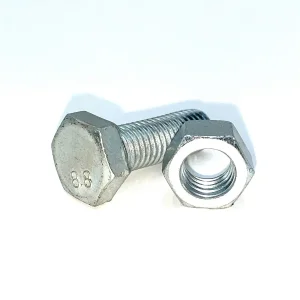
Buy High-Strength Hex Bolt from China Factory Reliable Fastening Solutions
View Details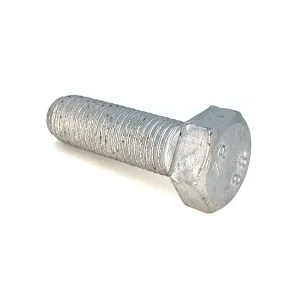
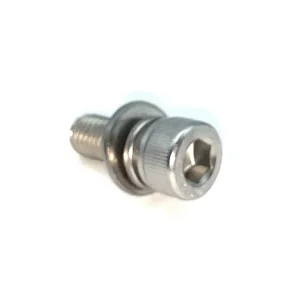
Best Stainless Steel Hex Socket Combination Bolt Suppliers, Companies
View DetailsThe Metallurgical and Protective Supremacy of Dacromet Cassette Nuts
Demystifying why Dacromet (zinc-aluminum flake dispersion coating) combined with captive cage geometries has become the de facto international benchmark for mission-critical assemblies.
Elimination of Hydrogen Embrittlement
Traditional electrolytic galvanizing involves acidic pickling and cathodic electrodeposition, driving nascent hydrogen atoms deep into the crystalline lattice of heat-treated 65Mn spring steel cages. Under static clamping tension, this causes catastrophic delayed fracture. Dacromet processing relies on mechanical shot blasting and non-electrolytic dip-spin baking at ~300°C, guaranteeing absolute immunity against hydrogen-induced stress failures.
Self-Healing Passivation Barrier
The microstructure of Dacromet consists of overlapping flakes of zinc and aluminum bound by a chromate matrix. When the outer layer is scratched or mechanically abraded during cage insertion into perforated square holes, sacrificial zinc galvanic action actively deposits insoluble zinc oxides across the exposed iron substrate, suppressing rust creep even past 1,000 hours of ASTM B117 salt spray exposure.
Floating Captive Clearance Dynamics
A cassette nut (commonly known as a cage nut or captive nut) encapsulates a threaded core within a resilient spring steel cage with dual retaining wings. The internal nut floats by 0.8mm to 1.6mm in both X and Y axes, absorbing cumulative stamping tolerance stack-ups on server racks, automotive subframes, and solar tracking rails without cross-threading.
| Performance Metric | Electro-Galvanized Cage Nut (Zinc Clear) | Hot-Dip Galvanized Nut (HDG) | Dacromet Cassette Nut (Grade 8 / 65Mn) |
|---|---|---|---|
| Neutral Salt Spray Resistance (ASTM B117) | 48 – 96 Hours (White rust < 24h) | 300 – 500 Hours (Uneven thread pooling) | 720 – 1,500+ Hours (Zero red rust) |
| Hydrogen Embrittlement Risk | Severe risk on spring steel clips without 8h de-embrittlement baking | Moderate-to-high risk due to acid pickling stages | Zero Risk (Non-electrolytic dry coating chemistry) |
| Thread Pitch Clearance & Fit | 6H / 6G standard fit compliant | Requires excessive overtapping, reducing shear capacity | Ultra-thin 5–8 µm coating preserves 6H tolerance precision |
| Thermal Stability Rating | Degrades above 120°C (Zinc melts at 419°C, loses passivation) | High, but surface scaling occurs at 200°C | Stable up to 300°C continuous operating temperature |
| Galvanic Isolation vs Aluminum | High galvanic voltage differential creates accelerated pitting | Zinc sacrificial layer depleted rapidly in marine environments | Aluminum flakes in matrix neutralize galvanic cell potential |
The Chinese Manufacturing Ecosystem: Industrial Clustering & Scalability
How concentrated supply chain clusters in Hebei and Zhejiang provinces drive unmatched cost efficiencies, raw material control, and accelerated lead times for international purchasers.
Vertical Upstream Wire-Rod Integration
Situated within China’s specialized fastener manufacturing hubs (such as Yongnian, Handan, and Haiyan), factories have direct pipeline access to tier-1 steel mills providing high-purity SWRCH10A cold-heading wire and 65Mn spring steel strip coils. This geographic proximity eliminates multi-tier intermediate logistics markups, delivering stable raw material pricing and rapid continuous production cycles.
Automated Progressive Stamping & Assembly
Modern Chinese tier-1 suppliers utilize high-speed multi-stage progressive stamping presses coupled with proprietary automated cage-forming and nut-insertion machinery. Operating at up to 120 pieces per minute per line, optical laser sensors check thread pitch presence, clip wing symmetry, and retention elasticity in real time, virtually eliminating manual assembly defects.
High-Capacity Closed-Loop Plating Lines
To adhere to stringent ecological and dimensional standards, leading facilities operate fully closed-loop computerized dip-spin Dacromet and Geomet processing centers. Controlled centrifugation guarantees uniform micro-thickness without thread clogging or pool accumulation inside the female metric threads (M4, M5, M6, M8, M10, and M12).
Compliance, QA Verification, and Localized Support Framework
Eliminating procurement friction through rigorous mill certification, environmental mandates compliance, and customized inventory buffers.
RoHS & REACH Compliance
Modern international contracts necessitate non-electrolytic coatings strictly devoid of hexavalent chromium (Cr6+). Chinese manufacturers provide full Cr-free Dacromet, Geomet, and Delta-Protekt documentation, certified via SGS and TÜV testing reports according to EU Directive 2011/65/EU and Regulation (EC) No 1907/2006.
EN 10204 Type 3.1 Traceability
Every dispatch batch is backed by comprehensive Mill Test Certificates detailing chemical spectroscopic analysis of both cage (65Mn / C67S) and nut body (Class 8 / Class 10 carbon steel), heat-treatment Rockwell hardness (HRC 42–48 for clips, HRC 22–32 for nut cores), and proof-load tensile destruction data.
Vendor-Managed Inventory (VMI)
To shield overseas buyers from maritime shipping spikes, established Chinese suppliers offer regional safety-stock warehousing and bonded logistics hub consolidation across key European, North American, and Southeast Asian industrial corridors, facilitating JIT (Just-In-Time) production lines.
Engineered Custom Packaging
Standard export configuration entails heavy-gauge sealed polybags, double-corrugated outer cartons rated for humid container shipping, and fumigated euro-standard wooden pallets wrapped in heat-shrink moisture barrier film, designed for direct automated warehouse barcode scanning.
Engineered Application Sectors
Captive nut installations thrive where single-sided rear access is blocked, structural vibration is intense, and chemical or coastal corrosion would destroy standard hardware.
19-Inch Data Center & Telecom Racks
Mounting heavy server blades, high-voltage PDUs, and fiber patch panels inside server cabinets requires tool-less snap-in M6 Dacromet cassette nuts. In data center cooling zones using direct outdoor air economizers, Dacromet halts galvanic oxidation between aluminum upright rails and steel fasteners while maintaining continuous grounding conductivity.
Photovoltaic Tracker Systems & Inverter Skids
Single-axis solar trackers endure continuous torsional wind buffeting. Assembling sensor brackets, cable conduit clips, and central torque tube joints utilizes captive M8/M10 Dacromet cassette nuts snapped into pre-punched galvanized purlins. The self-lubricating fluoropolymer within Dacromet prevents thread galling during rapid pneumatic tooling installation.
Automotive Chassis & Commercial EV Platforms
Electric commercial vehicles incorporate enclosed box chassis rails where inner nuts cannot be accessed with holding wrenches. Dacromet cassette nuts snap into rectangular frame stamping apertures, resisting extreme thermal road salt spray, winter de-icing chemicals (calcium chloride), and underbody gravel impingement without loosening or degrading.
Industry Trends: Smart Fasteners & Sustainable Metallurgy
The transition toward intelligent manufacturing, green chemistry, and automated robotic installation is revolutionizing the global cassette nut sector.
Self-Piercing & Grounding Claws
Modern electrical balance of system (BOS) codes require zero-resistance equipotential bonding. Emerging cassette designs integrate stamped conical grounding claws into the 65Mn spring wings. Upon bolt torque engagement, these claws cleanly bite through thick powder coatings or anodized aluminum oxide films, delivering certified electrical continuity without secondary grounding straps.
Low-VOC Nano-Composite Coatings
Next-generation green Chinese manufacturing lines are actively shifting toward fourth-generation waterborne silicate/zinc-aluminum nano-coatings. By lowering curing temperatures from 320°C to 240°C and cutting volatile organic compound (VOC) emissions to near zero, these facilities achieve ultra-low product carbon footprints (PCF) demanded by European ESG criteria.
Robotic Feeder Compatibility
Automated manufacturing demands that cassette nuts are fed seamlessly via automated vibratory bowl feeders and pneumatic end-of-arm tooling on robotic workcells. Tighter outer cage stamping dimensions (±0.05mm) ensure non-interlocking geometry during high-speed bulk feeding, eliminating automated assembly line jams.
Frequently Asked Questions (FAQ) for Global Procurement Officers
Direct technical answers addressing thread dimensional tolerances, clip retention parameters, and supply chain logistics.
What are the key technical differences between Dacromet and hot-dip galvanizing for cassette nuts?
How do you calculate the correct panel thickness and hole size for cage nut clip retention?
Are Dacromet-coated fasteners fully compliant with European RoHS and REACH environmental regulations?
What are the standard Minimum Order Quantities (MOQ) and production lead times for custom sizes?
High-Strength Structural & Machinery Fastening Line
Complementary structural assemblies, clamps, bracket connectors, and hex fasteners directly sourced from Chinese manufacturing hubs.


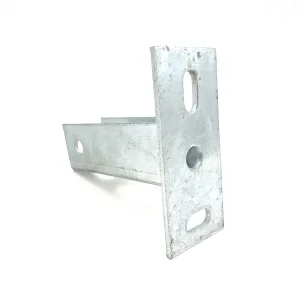
Best High-Strength Aluminum Alloy Solar PV Mounting Base China Suppliers
View Details
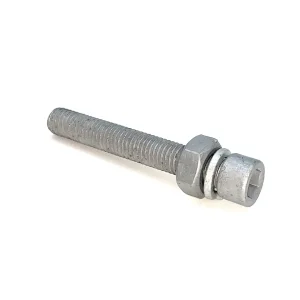
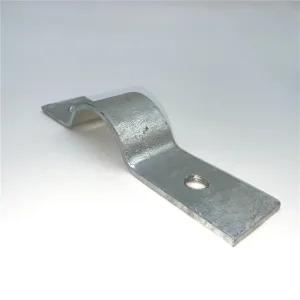
Best China Heavy-Duty Stainless Steel Hoop for Solar PV Mounting Round Pipes
View Details