
Featured Industrial Structural Fasteners & Connectors
Manufactured from high-grade alloy and stainless steels in Handan's premier metallurgical cluster, delivered directly to international EPC contractors and heavy civil engineering projects.
Chemical Grouting Bolts: Structural Mechanics & Load Transfer
Unlike friction-based mechanical expansion anchors, chemical grouting bolts rely on uniform micro-interlocking adhesion between the steel rebar, resin matrix, and fractured rock substrate, eliminating expansive burst stress.
Radial Stress Dissipation
Mechanical rock bolts generate point-load radial outward stresses that frequently crack weak bedrock, weathered limestone, or unreinforced concrete foundations. Chemical grouted systems distribute dynamic shear stress smoothly along the entire bonded anchor length (Lb), drastically minimizing localized shear concentrations.
Hermetic Micro-Crack Sealing
When polymer resin cartridges (vinyl ester, epoxy acrylate, or pure epoxy) are rotated and mixed by the bolt's chamfered tip, the thixotropic grout is forced into surrounding rock micro-fissures under hydraulic pressure. This prevents groundwater ingress, corrosive acidic migration, and long-term hydrogen embrittlement.
Ultra-Fast Gelation & Pre-Tensioning
Modern two-component chemical capsules achieve 90% tensile capacity within 10 to 30 minutes even at ambient temperatures of 5°C to 20°C. This allows immediate installation of bearing plates and pneumatic pre-stress tightening to prevent early-stage strata convergence in high-speed tunnel excavation.
Engineering Insight: Critical Edge Distance & Embedment Depth
Under ETAG 001 and EN 1992-4 design criteria, chemical grouting anchor bolts reduce the critical edge distance (Ccr,N) to only 1.0–1.5 times the effective embedment depth (hef), compared to 2.5–3.0 times for mechanical wedge bolts. This makes chemical anchoring essential for thin-walled concrete columns, parapet retrofits, and ballastless track foundations.
China Supply Chain Advantages: Handan Yongnian Fastener Belt
Handan Youlong Fastener operates at the epicenter of the world's largest precision cold-forging and steel processing base, achieving unmatched economies of scale, metallurgy traceability, and rapid volume fulfillment.
Direct Mill Steel Sourcing
Located adjacent to Hebei's primary steel hot-rolling mills, we procure certified structural billeted steels (20MnSi, 40Cr, Q355B, 304/316L, and ASTM A193 B7) with raw material price volatility buffered by continuous strategic raw stockpiles.
Continuous Heat Treatment
Our automated mesh-belt quenching and tempering lines achieve exact martensitic structure transformation, guaranteeing consistent 8.8, 10.9, and 12.9 property classes with high yield ratios (Rp0.2/Rm > 0.8) and Charpy V-notch impact toughness exceeding 27J at -20°C.
Automated Cold Thread Rolling
Threads are rolled rather than cut, ensuring uninterrupted grain flow lines that elevate fatigue endurance limits by up to 35%. Thread profiles (metric coarse, fine, or left-hand high-pitch for quick spin) conform strictly to ISO 965 and DIN 13-1 tolerances.
Surface Coating Resilience
Our in-house hot-dip galvanizing baths (ASTM A153 / EN ISO 1461), mechanical zinc plating, and thermal diffusion sherardizing apply uniform 45µm–85µm zinc layers delivering over 1,500 hours of neutral salt spray (ASTM B117) resistance without white rust formation.
Global Procurement Matrix: Compliance & Verification
International mining consortiums, rail agencies, and civil contractors require uncompromising compliance with EOTA TR029, ACI 318, and BS 7861-1. Here is how Youlong qualifies every consignment.
ETA & CE Approval Framework
Tested under EAD 330499-00-0601 (bonded fasteners for use in concrete), chemical grouting studs undergo qualification for cracked vs. non-cracked concrete, dynamic seismic performance categories C1 and C2, and creep under sustained tensile loading.
Batch Metallurgy Inspection (MTR)
Every export lot includes full Mill Test Certificates complying with EN 10204 Type 3.1. Spectrometric optical emission testing confirms carbon, manganese, phosphorus, sulfur, and chromium contents to avoid brittle failure modes.
Rigorous On-Site Pull-Out Testing
Chemical bolts are factory-tested with automated hydraulic hollow-ram cylinders up to 1,000 kN to record precise displacement curves (slip vs. load), confirming failure occurs via steel rupture rather than resin-interface de-bonding.
| Resin Matrix Chemistry | Curing Time (20°C) | Bond Strength (τRk,ucr) | Temperature Operating Window | Recommended Strata / Substrate | Primary Compliance Standard |
|---|---|---|---|---|---|
| Pure Epoxy (1:1 / 3:1) | 12 – 24 Hours | 18 – 24 MPa | -40°C to +80°C | Diamond-cored holes, submerged concrete, heavy machine bases | ETA-05, ACI 355.4 |
| Vinyl Ester (Styrene-Free) | 30 – 45 Minutes | 14 – 18 MPa | -40°C to +120°C | Seismic retrofits, overhead rock bolting, damp environments | EAD 330499 C1/C2 |
| Epoxy Acrylate (Fast Setting) | 20 – 30 Minutes | 11 – 15 MPa | -20°C to +80°C | Precast façade anchoring, structural steel purlin fixing | EN 1504-6 |
| Polyurethane Grout Foam | 1 – 3 Minutes | 5 – 8 MPa | -10°C to +60°C | Active water ingress, fractured fault zones, coal mine face stabilization | BS 7861-1 |
Global Industry Trends: The Future of Chemical Bolting
Geotechnical engineering is moving toward higher installation speed, real-time stress sensing, and zero volatile organic compounds (VOCs) to satisfy tightening international sustainability mandates.
Self-Drilling Chemical Hollow Anchors (SDA)
Integrating the drill bit, hollow threaded hollow steel bar, and grout conduit into a single continuous rod. The chemical grout is pumped directly through the bore while drilling, slashing subterranean cycle times in collapsing silt or fractured metamorphic rock where casing installation would otherwise stall progress.
Smart Fiber-Optic Sensing Rock Bolts
Embedding Fiber Bragg Grating (FBG) optical cables down the central longitudinal core of the high-tensile bolt. As tunnel walls deform under squeezing pressure, micro-strain variations are transmitted optically to surface telemetry stations, giving EPC engineers early-warning detection of impending rock bursts or roof delamination.
Low-Emission Bio-Based Resins
Replacing carcinogenic styrene and petroleum catalysts with plant-based vinyl ester resins. These green formulations satisfy LEED v4.1 interior air quality standards for closed metro tunnel construction while maintaining high glass transition temperatures (Tg > 105°C) and resistance to alkaline concrete pore water.
Field Engineered Scenarios & Geotechnical Case Applications
From deep soft-rock mining drifts to high-speed railway slab anchors, Youlong chemical grouting products provide decisive anchoring security in demanding environments.
Underground Mining Strata
Deployed in deep coal mining longwall roadways and hard-rock gold drifts. Full-column resin encapsulated rebar bolts lock bedding planes together into a monolithic composite beam, arresting bed separation and rib sloughing under high hydrostatic overburden pressure.
Subsea & Metro Tunneling
Used for cross-passage canopy pipe-roof anchoring and TBM segment ring connections. High corrosion-resistant stainless steel (AISI 316 / Duplex 2205) chemically bonded rods neutralize aggressive chloride ions in saline subsea groundwater, avoiding crevice pitting.
High-Speed Rail Track Bed
Fastens ballastless track slabs to reinforced concrete bridge decks or bedrock substructures. Capable of enduring 10 million cycles of high-frequency dynamic shear fatigue created by 350 km/h train axle impacts without resin debonding or bolt pre-load relaxation.
Renewable PV Ballast Anchors
Engineered for rocky mountain solar farms and concrete rooftop ballast mounts. Chemical post-installed threaded rods eliminate expansive spalling on thin concrete roofs while securing tracker torque tubes against gale-force cyclonic uplift forces.
Frequently Asked Questions (FAQ) for Civil Engineers & Buyers
Clear, definitive technical answers addressing resin chemistry, installation requirements, drill-hole tolerances, and container export logistics.
Mechanical expansion bolts transfer load by concentrating friction via a metal collar pressed against the hole wall. This produces high radial outward splitting stresses that prohibit use near edges or in cracked concrete. Chemical grouting bolts bond the full embedment length with an adhesive resin matrix, eliminating point stresses and allowing close edge spacings with superior fatigue resistance.
Borehole cleanliness is critical. Drilling dust acts as a separator, drastically lowering bond capacity. According to EOTA standards, holes must undergo the "2x Compressed Air > 2x Steel Brush > 2x Compressed Air" cycle. Uncleaned holes can lose 40% to 60% of their characteristic bond strength (τRk).
Standard polyester and epoxy-acrylate systems degrade in submerged or diamond-cored holes due to smooth bore surfaces and water interference. For flooded holes or subsea work, our pure epoxy and marine-grade vinyl ester injection mortars are certified for saturated concrete, underwater installation, and diamond-cored substrates (with roughening tools).
Two-component resin capsules (glass vials or foil sausage packs) typically have a shelf life of 12 to 18 months from the manufacturing date when stored in cool, dry conditions between +5°C and +25°C away from direct sunlight. Storing capsules above 35°C accelerates polymerization and reduces available curing time on site.
We supply chemical anchor studs in Grade 4.8, 5.8, 8.8, 10.9, and 12.9 carbon steel, ASTM A193 B7 alloy steel, and stainless steel grades AISI 304 (A2-70), 316 (A4-80), and Duplex 2205. Surface finishes include electro-galvanized (5-12µm), hot-dip galvanized (45-85µm), zinc-nickel alloy plating, and multi-layer fluorocarbon anti-corrosion coatings.
Yes. We specialize in custom OEM engineering. We customize length (up to 6,000mm), diameter (M8 to M64), chamfered chisel cutting points (45° double-bevel for capsule shredding), depth mark indentations, external hex drives, and matched spherical leveling nuts/bearing plates according to your project blueprints.
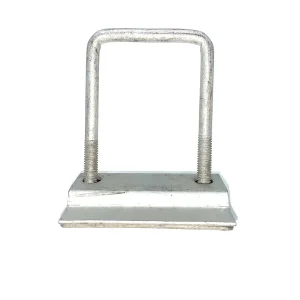
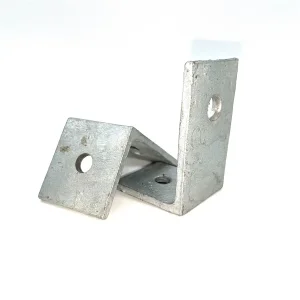
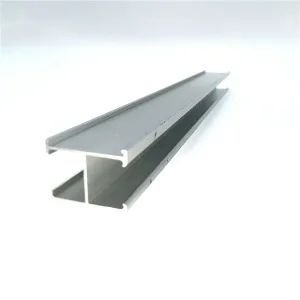
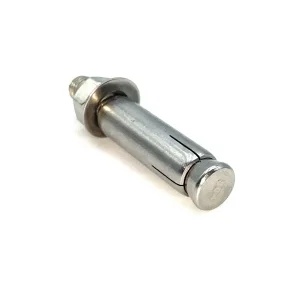
Foundation Accessories, Expansion Anchors & Fasteners
Tested alongside our primary chemical grouting range to complete full structural load paths from ground foundation to frame mounting.
Initiate Factory-Direct Chemical Anchor Inquiries
Submit your borehole diameters, embedment depths, seismic design classes, or custom drawings. Our senior fastener engineers will prepare calculated bond capacities, resin consumption metrics, and a formal commercial quotation within 24 hours.