Engineered Solar Mounting Hardware & Precision Anchor Fasteners
Precision structural fasteners, chemical anchor bolt components, and PV mounting bases engineered for seismic loads, wind resistance, and extreme ambient exposure.
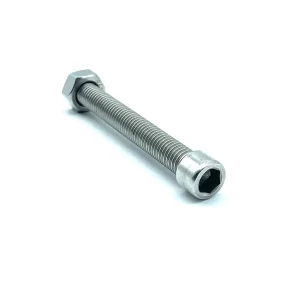
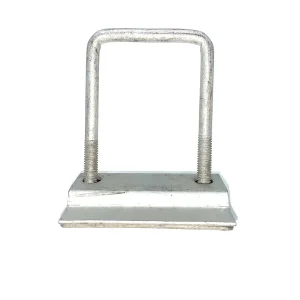
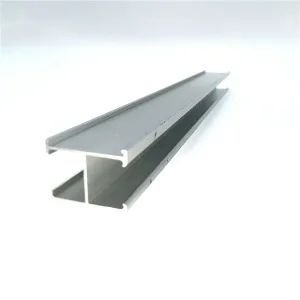
Global Commercial & Industrial Status of Chemical Fixing Anchors
Evaluating bonded post-installed anchor systems versus mechanical expansion bolts in heavy construction, bridge engineering, and seismic retrofit applications.
Expansion-Free Load Transfer
Unlike traditional mechanical wedge or sleeve anchors that rely on frictional radial pressure, chemical fixing anchors transfer tensile and shear forces via 100% surface bonding. This zero-expansion stress allows structural engineers to specify reduced edge distances and tight anchor-to-anchor spacing in cracked and uncracked concrete (C20/25 to C50/60).
Seismic C1 & C2 Qualification
Global infrastructure standards (ETAG 001 TR049, EN 1992-4, and ACI 355.4) demand dynamic resistance under cyclic seismic activity. Pure epoxy resin systems and vinyl ester injection mortars prevent micro-fracturing along concrete fissures during earthquakes, securing heavy curtain walls, railway crash barriers, and utility solar arrays against pull-out failure.
Extreme Environmental Resistance
From arctic freeze-thaw cycles (-40°C) to high-temperature desert installations (+80°C), bonded anchoring eliminates hollow voids where moisture accumulates. This air-tight seal prevents moisture ingress into boreholes, protecting high-tensile threaded studs (Grade 8.8, SS304, SS316, and duplex 1.4462) from galvanic corrosion and hydrogen embrittlement.
Why Source Chemical Anchoring Systems from Handan, China?
Capitalizing on the world's most concentrated industrial fastener ecosystem for rapid prototyping, lower raw material volatility, and unmatched high-tonnage output.
Complete Supply Cluster
Located in Yongnian District, Handan City (China's Fastener Capital), our facility integrates upstream high-grade carbon steel rod drawing, multi-station cold heading, CNC thread rolling, and automated heat treatment within a 5-kilometer radius, drastically reducing internal logistic lead times.
Cost Efficiency & Tooling Control
Vertical integration yields a 20% to 35% cost advantage over European and North American distributors. Our dedicated tooling workshop enables rapid customized thread geometry, chamfered tips, and hex-drive heads for high-speed pneumatic and hammer-drill installation.
Stringent QA & Testing Labs
Equipped with 1000-hour neutral salt spray (NSS) test cabinets, universal tensile stress verification rigs, and metallurgical spectrometers, we verify proof loads, yield strengths, and corrosion coatings (HDG ISO 10684, Dacromet, Sherardizing) batch after batch.
Engineering Application Scenarios Across Global Terrains
Critical mechanical and chemical anchor configurations adapted for renewable power stations, marine logistics terminals, and civil infrastructure.
Utility-Scale Solar PV Arrays
Securing ground-mounted purlins and ballast brackets onto concrete sleeper beams. High sustained tension resistance resists upward wind suction loads while eliminating structural spalling in high-salinity coastal solar farms and arid desert expanses.
Civil & Commercial High-Rise
Post-installed rebar connections and curtain-wall bracket fixings. Chemical anchor studs provide zero-shrinkage bonding for structural glass facades, overhead elevator guide rails, and heavy MEP ventilation ducting suspended from aged concrete decks.
Heavy Machinery & Rail Tracks
Anchoring dynamic equipment subject to intense continuous vibration, including gantry crane rails, vibrating screens, and CNC machine bases. Epoxy mortars disperse vibration dampening evenly across deep concrete embedment depths.
Engineering Comparison: Chemical vs. Mechanical Anchors
Direct technical parameter evaluation for engineering teams determining base connection matrices.
| Performance Metrics | Chemical Fixing Anchors (Epoxy / Vinyl Ester) | Mechanical Expansion Anchors (Wedge / Sleeve) | Structural Advantages |
|---|---|---|---|
| Load Transfer Mechanism | Chemical cohesion & mechanical micro-interlock | Radial mechanical friction against hole wall | Zero concrete expansion stress |
| Edge Distance & Spacing | Ultra-compact edge spacing allowable (≥ 4.0 × d) | Requires generous edge distance (≥ 8.0 × d) | Allows anchoring near slab edges/corners |
| Cracked Concrete Capability | Approved with high-performance pure epoxy | Approved only for dedicated seismic-grade wedges | Maintains pullout resistance under dynamic fissuring |
| Dynamic & Vibration Load | High dampening; fatigue-resistant adhesion | Susceptible to torque relaxation & slippage | Optimal for crane rails and solar tracking motors |
| Waterproof / Borehole Sealing | Hermetic sealed joint preventing water ingress | Hollow annular gap enables water pooling | Prevents rebar corrosion within base structure |
| Available Material Grades | Carbon Steel 5.8/8.8, SS304 (A2-70), SS316 (A4-80) | Carbon Steel zinc plated, SS304, SS316 | Flexible tensile resistance according to structural load |
Industry Trends & Global Procurement Strategic Demands
Key vectors shaping corporate sourcing decisions among international distributors and EPC contractors.
Standardized Certification Demands
Overseas buyers require full documentation tracking. Deliveries must feature mill test certificates (EN 10204 3.1), documented pull-out test data, ETA-compliant shear capacities, and REACH / RoHS compliance for chemical injection packaging.
Turnkey Bill of Materials (BOM)
Procurement teams are moving away from fragmented vendors. They seek singular manufacturing hubs capable of delivering chemical capsule glass vials, dual-barrel injection cartridges, threaded studs, nylon sleeves, and matching structural brackets in unified shipments.
Stricter Anti-Corrosion Longevity
Driven by 25-year service life warranties in solar power and civil bridges, standard electro-galvanizing is increasingly superseded by Hot-Dip Galvanizing (55-85 μm) and Marine-Grade Stainless Steel (1.4401 / 1.4404) across high C4/C5 atmospheric zones.
Frequently Asked Questions: Chemical Anchoring Technology
Direct engineering and logistical insights for structural specialists, site supervisors, and procurement directors.
What is the key difference between chemical glass capsules and injection mortars?
Chemical glass capsules contain pre-measured vinyl ester or acrylic resin with a hardener tube inside, ideal for repetitive, uniform single-hole stud installations using a rotary hammer drill. Injection cartridges (pure epoxy or vinylester) allow variable embedment depths, larger boreholes, and post-installed rebar fixing in complex civil projects.
How does borehole cleaning affect the ultimate tensile capacity of chemical anchors?
Borehole cleaning is critical. Uncleaned drill dust forms an unbonded barrier between the concrete substrate and resin, reducing ultimate bond pull-out strength by up to 60%. Best practices follow the "2× Blow, 2× Brush, 2× Blow" standard using oil-free compressed air and steel wire brushes.
Can chemical anchors be installed in water-filled boreholes or damp concrete?
Yes, provided the resin formulation is certified for damp or submerged substrates. Pure epoxy resins and specialty modified vinyl esters cure reliably in wet concrete. Always consult the manufacturer's Technical Data Sheet (TDS) for extended curing times required under wet conditions.
What surface coatings are recommended for outdoor chemical anchor studs?
For mild indoor applications, electro-galvanized zinc (5-8 μm) is sufficient. For outdoor solar infrastructure, road barriers, and industrial facilities, Hot-Dip Galvanizing (HDG) per ISO 10684 or stainless steel grade 304 (A2-70) is recommended. For coastal marine environments (C5 category), stainless steel grade 316 (A4-80) or duplex stainless steel is necessary.
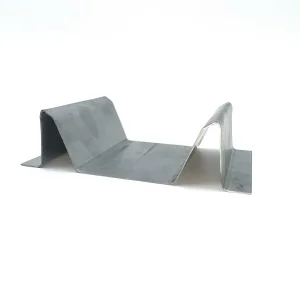
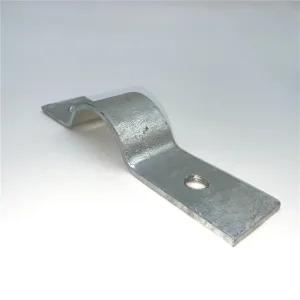
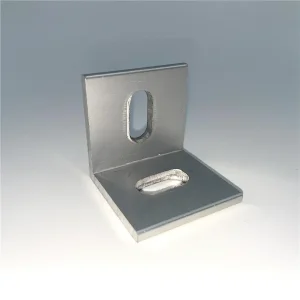
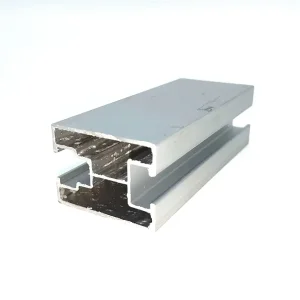
Comprehensive PV Mounting & Chemical Anchor Hardware System
Heavy-duty aluminum guide rails, drainage channels, reinforcement pipes, and side clamps manufactured to rigid ISO structural standards.