
High-Integrity Photovoltaic Mounting Brackets & Structural Hardware
Explore our high-performance solar mounting rails, brackets, and structural connectors manufactured under strict ISO dimensional tolerances and verified by intensive metallurgical testing.
The Global Solid Anchor Fastener Landscape in Modern Infrastructure
From gigawatt-scale utility solar installations to seismic-resistant high-rise substructures, solid anchor fasteners form the critical transfer load path between superstructures and reinforced concrete foundations.
Global Market Valuation & CAGR
The global construction fastener and heavy-duty structural anchoring market has expanded past $38 billion, driven primarily by utility-scale renewable energy buildouts, industrial facility modernizations, and global grid expansion projects. With solar PV mounting structures and wind turbine bases requiring tens of millions of high-tensile connection points annually, demand for certified solid anchor hardware maintains an aggressive 6.2% compound annual growth rate through 2032.
Mechanics of Load Transfer
Unlike light-duty chemical adhesive capsules or plastic plugs, solid mechanical anchor fasteners—including wedge expansion anchors, undercut bolts, and drop-in sleeves—rely on precision-engineered outward expansion or mechanical interlock against the internal borehole diameter. Clamping force generates immediate frictional resistance against axial pull-out forces and dynamic horizontal shear loads, ensuring zero curing delay on fast-track commercial jobsites.
Seismic & Cracked Concrete Demands
Modern structural codes, such as Eurocode EN 1992-4 and ACI 318 Chapter 17, enforce stringent compliance guidelines for tension-zone concrete. Solid anchors deployed in modern energy corridors must withstand cyclic crack openings up to 0.8 mm during seismic events or extreme thermal cycles. This demands cold-formed high-ductility carbon alloys and marine-grade austenitic stainless steel that resist brittle fracture under heavy cyclic fatigue.
Why Sourcing from Handan Yongnian Yields Unmatched Global Competitive Advantage
Located in Hebei Province, Yongnian District is universally recognized as the "Fastener Capital of China." Sourcing solid anchor fasteners directly from this industrial ecosystem unlocks decisive supply chain benefits for EPCs and global distributors.
Upstream Raw Material Proximity
Yongnian sits adjacent to northern China's premier steel and aluminum refining clusters. Handan Youlong Fastener commands immediate, uninterrupted access to virgin cold-heading quality (CHQ) wire rods (including 10B21, 20MnTiB, 35CrMo), high-purity 6005-T5/6063-T6 aluminum alloys, and high-nickel austenitic stainless steels (304 and 316). Raw material procurement cycles are measured in hours rather than weeks, completely insulating project schedules from volatile steel spot-market delivery halts.
High-Speed Multi-Station Tooling
Our workshop houses high-tonnage automated multi-station cold heading machines, continuous mesh-belt carburizing heat treatment lines, and computer-controlled stamping/punching centers. By transitioning from traditional multi-step turning to high-speed cold extrusion, our production rates reach hundreds of precision bolts per minute per line. Structural grain alignment along the fastener core remains fully uninterrupted, elevating ultimate tensile strength and dynamic yield margins significantly above standard turned parts.
Eco-Park Surface Finishing
Yongnian's regional centralized environmental plating and galvanizing industrial parks allow continuous, certified surface coating. Whether your bill of materials specifies 85μm hot-dip galvanizing conforming to ASTM A153/ISO 1461, Dacromet/Geomet flake zinc coatings for zero hydrogen embrittlement risk, or 25μm architectural clear anodization for extruded aluminum rails, every coating is applied in monitored facilities compliant with international environmental criteria.
Comparative Fastener Typology & Load Verification Matrix
Selecting the appropriate solid mechanical anchor system requires balancing ultimate tensile capacity, concrete edge distances, shear cone boundaries, and environmental corrosivity classes.
| Anchor / Fastener Category | Working Load Mechanism | Base Substrates | Common Materials & Finishes | Typical Failure Modes | Primary Industrial Application |
|---|---|---|---|---|---|
| Heavy-Duty Wedge Anchor | Mechanical friction via one-piece expanding clip into borehole wall | Solid uncracked & cracked concrete, hard natural stone | Carbon Steel (HDG / Zinc Plated), SS304, SS316 | Concrete cone breakout, steel tension failure, borehole slippage | Solar racking baseplates, structural steel column footings, crane rails |
| Heavy Expansion Sleeve Bolt | 360° tubular sleeve deformation distributing lateral pressure along shank | Standard concrete, solid masonry brickwork, dense block | Grade 8.8 High-Tensile Steel, Class A2-70 Stainless | Sleeve splitting, edge blowout on shallow margins | Tunnel utility bracketry, equipment skids, HVAC structural frames |
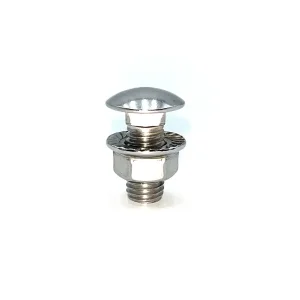
| Reinforced Cold-Formed Carriage Bolt | Torque preloading with integrated square antirotation shoulder | Extruded aluminum channels, slotted purlins, timber/steel frames | Austenitic SS304 / SS316, Dacromet Coated Carbon Steel | Thread stripping under excess torque, shank shear overload | Solar panel purlin assembly, tracker torque tube mounting, facade brackets |
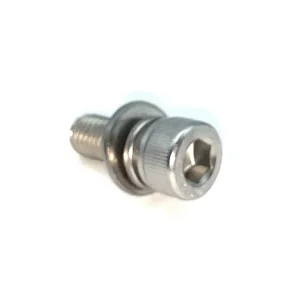
| Pre-Assembled Hex Socket Combo Bolt | Controlled clamping load with integral captive spring & flat washers | T-slot extruded aluminum rails, angle splices, ground clips | A2-70, A4-80 Precision Stainless Steel | Torque relaxation under continuous wind vibration | Photovoltaic module mid/end clamp fastening, inverter racking enclosures |
| Cast-In Anchor Bolt (J / L / Welded Stud) | Direct mechanical interlock beneath rebar cage prior to concrete pour | Reinforced monolithic concrete pile caps and foundations | Q235B, Q355B, ASTM F1554 Gr 36 / 55 / 105 | Deep foundation yield, rebar bond slip, anchor pull-through | Wind turbine ring bases, utility transmission towers, mega-scale solar trackers |
Mission-Critical Applications of Heavy-Duty Anchoring Hardware
Engineered hardware that maintains its structural integrity through severe wind loads, cyclic seismic forces, and aggressive chemical atmospheres across diverse global geographies.
Utility-Scale Photovoltaic Arrays
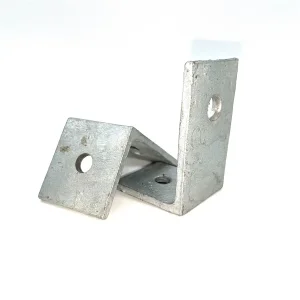
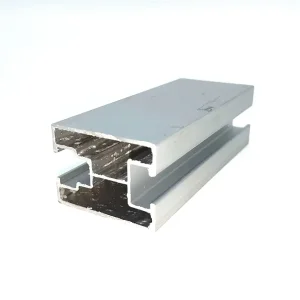
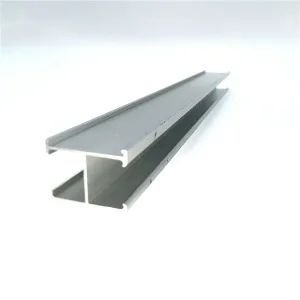
Ground-mounted solar farms and rooftop PV arrays represent one of the most demanding environments for fastener consistency. Arrays face severe aerodynamic uplift forces during storm events while enduring 25+ years of continuous thermal expansion and contraction. Handan Youlong's reinforced 3040 aluminum rails, paired with stainless steel angle brackets and concrete expansion anchors, maintain permanent clamping pressure while preventing galvanic galvanic degradation between dissimilar metals.
Wind Power Nacelle & Substructure Jointing
Wind energy applications subject bolted assemblies to dynamic harmonic vibrations and massive multi-directional shear stresses. High-strength anchor studs and foundation cage assemblies anchor the turbine base into deep mass-concrete footings. Within the nacelle and tower internals, pre-assembled combination fasteners with vibration-proof spring washers secure electrical conduit trays, access platforms, and yaw motor mounts against structural loosening.
Heavy Commercial Civil Infrastructure
In highway viaducts, railway tunnels, and heavy industrial plant expansions, solid mechanical anchors are relied upon to mount safety barriers, high-voltage cable brackets, and heavy overhead ducting. The structural integrity of these anchor points is safeguarded by tight dimensional tolerances that prevent borehole wall crush while optimizing the effective embedment depth ($h_{ef}$) for maximum load extraction.
Global Enterprise Sourcing Architecture: Mitigating Risk & Total Cost of Ownership
Purchasing solid fasteners at scale requires rigorous verification across metallurgical composition, coating thickness, and destructive pull-out testing to prevent costly field failures.
Chemical & Spectrometric Verification
Every wire rod batch undergoes optical emission spectrometry (OES) to verify that Chromium, Nickel, Molybdenum, and Carbon content strictly aligns with AISI 304/316 or ASTM grade standards, eliminating risk of substandard re-melted scrap steel.
Accelerated Salt Spray Testing
To assure outdoor life in marine and high-sulfur zones, components are subjected to neutral salt spray testing (ASTM B117 / ISO 9227) up to 1,000+ hours with zero red rust appearance, verifying the continuity of galvanized, anodized, or passivated layers.
Hydraulic Pull-Out & Tensile Testing
In-house computerized universal testing machines (UTM) verify yield point, ultimate tensile strength ($R_m$), and elongation at break ($A$), while hydraulic field pull-out rigs confirm exact anchor capacity in standard concrete test slabs.
Traceability & MTR Documentation
Full 3.1 Material Test Reports (EN 10204 3.1) accompany every shipping container. Unique heat lot numbers are stamped on bolt heads and packaging cartons to ensure total traceability throughout the project lifecycle.
Frequently Asked Questions: Solid Anchor Fasteners & Solar Mounting Hardware
Direct technical answers to the most common structural, metallurgical, and international logistics questions submitted by EPC contractors, structural engineers, and procurement directors.
What is the fundamental engineering difference between solid mechanical anchor fasteners and chemical adhesive anchors?
Solid mechanical anchors (such as heavy-duty wedge or sleeve expansion bolts) generate holding capacity instantly through physical outward friction or mechanical undercutting against the concrete borehole. They require no temperature-dependent chemical curing time, emit zero volatile organic compounds (VOCs), and are immediately load-bearing upon torquing. Chemical adhesive anchors rely on resin bonding to transfer shear stress along the hole depth; while suitable for close-edge or unreinforced masonry installations, chemical systems require strict borehole cleaning and extended curing times that can slow rapid outdoor solar installation.
How do you eliminate galvanic corrosion when pairing stainless steel fasteners with extruded aluminum PV mounting rails?
When austenitic stainless steel (SS304/SS316) touches aluminum in the presence of an electrolyte (moisture or coastal salt air), the aluminum acts as an anode and undergoes galvanic corrosion. We prevent this by integrating ultraviolet-stabilized non-conductive isolating washers (EPDM, polyamide, or specialized nylon), applying specialized organic dielectric fluoropolymer anti-galling coatings to stainless bolts, or utilizing high-grade anodized aluminum interfaces that provide high electrical impedance across the contact surface.
Why is hot-dip galvanizing (HDG) preferred over standard electro-galvanizing for outdoor foundation anchor bolts?
Standard electro-galvanizing produces a thin zinc layer (typically 5 to 12 microns) that offers minimal barrier protection under outdoor weathering, often breaking down within 1 to 3 years. Hot-dip galvanizing (complying with ASTM A153 or ISO 1461) immerses the cleaned steel into molten zinc at ~450°C, creating a metallurgical iron-zinc alloy diffusion layer topped with pure zinc, achieving 45 to 85+ microns thickness. This metallurgical bond provides robust sacrificial cathodic protection, extending service life beyond 25 to 50 years even in harsh C3 to C4 soil and atmospheric conditions.
What testing procedures are conducted to ensure zero hydrogen embrittlement in high-strength anchor bolts?
Hydrogen embrittlement is a catastrophic failure mode affecting high-tensile steel (hardness exceeding 32 HRC or Grade 10.9+) exposed to atomic hydrogen during acid pickling or electroplating. We eliminate this through mechanical blast cleaning instead of aggressive acid washing, followed by an immediate de-embrittlement baking heat treatment at 200°C–220°C for a minimum of 4 to 8 hours post-coating. Alternatively, we utilize non-electrolytic zinc flake coatings (such as Dacromet or Geomet) which are completely non-acidic and free from hydrogen generation.
Can Handan Youlong manufacture custom mounting brackets and cold-headed bolts based on structural engineering drawings?
Yes. In addition to our standardized catalog of PV rails, clamps, and anchors, over 40% of our capacity is dedicated to custom OEM production. Our in-house tooling workshop designs custom stamping dies, cold-heading tooling, and extrusion profiles based on AutoCAD/SolidWorks files. We provide rapid tooling turnaround, initial sample inspection reports (ISIR/PPAP Level 3), tensile testing verification, and batch production scaling within 15–20 days from drawing sign-off.
What is the importance of borehole diameter and cleaning depth when setting solid expansion anchor bolts?
Mechanical wedge and expansion sleeves are precision-engineered to expand against a strictly calibrated hole diameter. Drilling with worn drill bits or oversize tolerances reduces outward lateral radial friction, lowering ultimate pull-out values by up to 50%. Furthermore, concrete dust left inside the hole acts as a friction-reducing lubricant and prevents full embedment depth ($h_{ef}$). We mandate drilling with certified ANSI/DIN carbide bits and cleaning via blow-brush-blow cycles to ensure full holding performance.
Precision Bolts, Bases, and Heavy Fastener Components
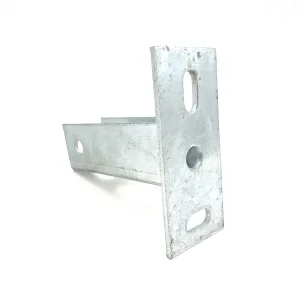
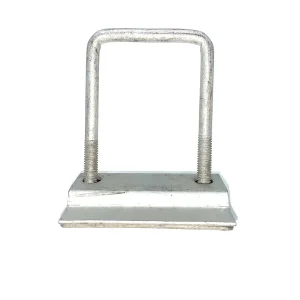
Complete your structural assembly with factory-direct carriage bolts, heavy purlin connectors, mounting bases, and high-strength pressure plates engineered to withstand severe weather loads.
Accelerate Your Fastener Procurement Pipeline
Collaborate with Handan Youlong's metallurgical engineers and technical sales directors. Request material test certifications, submit structural project drawings for custom quoting, or schedule direct factory container shipments.