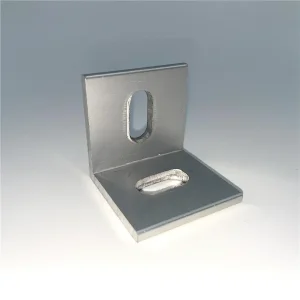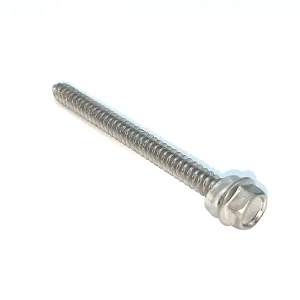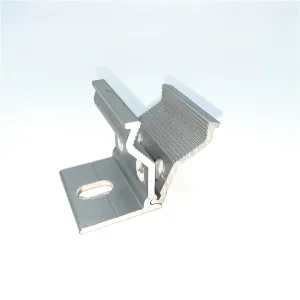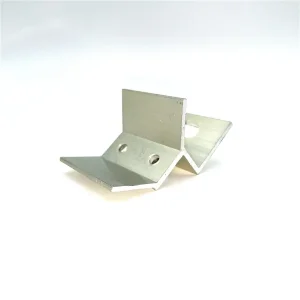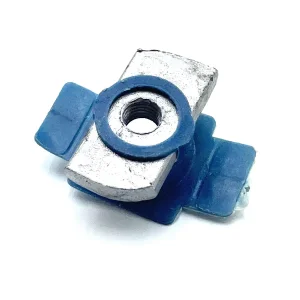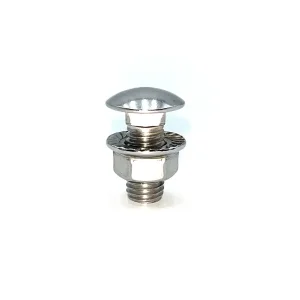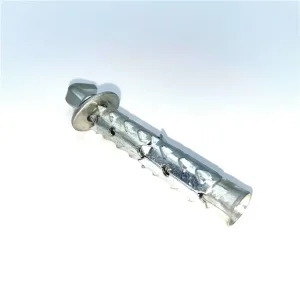
Best Heavy-Duty Fish Scale Expansion Bolt - High-Strength Carbon Steel
View Specification
Explore high-strength manufacturing hardware and structural fixtures calibrated to extreme industrial tolerances, certified for renewable energy installations and high-stress mechanical frameworks.
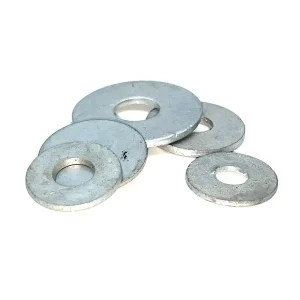
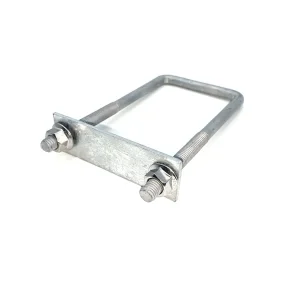
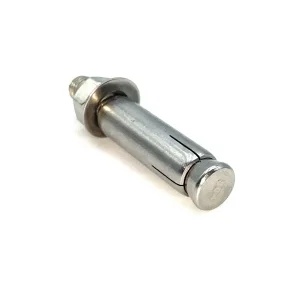
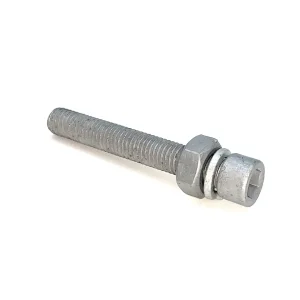
In the high-stakes domain of microscopic metal removal, pneumatic engraving, micro-milling tool dressing, and horological detailing, geometric tool-edge integrity determines end-product yield. The Dual Angle Sharpening Fixture represents an indispensable kinematic jig designed to eliminate micro-chatter, face deviation, and angular inconsistencies during manual or semi-automated tool sharpening.
Controls graver clearance (relief angle) from 0° to 90° with Vernier dial precision. Ensures repeatable contact between high-speed steel (HSS), tungsten carbide, or polycrystalline diamond (PCD) blanks and rotating diamond laps without heel runout.
Manages 360-degree rotational indexing with micro-detents at standard geometric presets (15°, 30°, 45°, 60°, 120°). Allows exact facet balancing across symmetric V-point, flat, round, and chisel-tip gravers with sub-arcminute repeatability.
Engineered with mirror-lapped magnetic bases or hardened brass reference glides. Neutralizes harmonic vibrations during contact with high-grit abrasive wheels, preventing micro-chipping on delicate carbide cutting edges.
The tooling and sharpening market is experiencing a profound transformation. As manual artisan crafts merge with automated CNC post-finishing and high-mix low-volume (HMLV) micro-machining, procurement requirements are shifting from artisanal tools to metrology-backed fixtures.
Traditional carbon-steel gravers have been largely superseded by ultra-fine-grained tungsten carbide (cobalt binder < 8%) and ceramic hybrids. These materials cannot be sharpened freehand without catastrophic micro-fractures; rigid dual-angle fixturing is technically mandatory.
Global luxury watch houses, aerospace instrument manufacturers, and custom firearm makers have institutionalized graver geometries. Fixtures must ensure that an operator in Geneva, Tokyo, or Cincinnati creates identical relief angles down to 0.01 mm.
B2B procurement executives are bypassing regional middlemen to contract directly with tier-1 tooling manufacturers in specialized industrial clusters capable of providing custom-anodized, branded, or modified dual-angle configurations at high volume.
Centering production in premier fastener, hardware, and precision machinery hubs (such as Handan, Yongnian, and eastern manufacturing corridors) provides distinct competitive moats that combine raw material dominance with automated Industry 4.0 workflows.
Integrated supply chains allow direct off-take of certified billet aluminum, stainless alloys (SUS304/316), and structural carbon steel, mitigating international material price swings and minimizing raw material transit times.
Multi-axis horizontal milling centers, automated wire EDM blanking, and automated coordinate measuring machines (CMM) ensure every fixture base, scale dial, and clamp collet satisfies DIN/ISO tolerances.
Immediate access to automated hard-anodizing, micro-bead blasting, PVD coating, and electro-plating facilities provides exceptional wear resistance without relying on external, slow-turnaround supply nodes.
Leveraging high-volume maritime logistics and mature customs documentation, factories maintain seamless end-to-end containerized export workflows across European, North American, and Asian trading zones.
Compare standard industrial parameters across precision tiers to support technical procurement, engineering audits, and supply line integration.
| Performance Criteria | Standard Workshop Tier | Industrial High-Precision Tier | Metrology-Grade OEM Tier |
|---|---|---|---|
| Primary Material | Die-Cast Aluminum Alloy | Aircraft-Grade 6061-T6 Billet Aluminum | Stainless 304 / Hardened Tool Steel (HRC 58) |
| Scale Indexing Resolution | 1.0° Increments (Screen Printed) | 0.5° Increments (Laser Etched) | 0.1° Vernier Dial / Optical Digital Detents |
| Collet Compatibility | Standard 1/8" (3.175mm) Square | Universal QC Graver Collar System | Modular Multi-Geometry (Round, Parallel, Flat) |
| Surface Finish & Wear Resistance | Standard Anodizing (10µm) | Hard-Coat Type III Anodize (50µm) | Micro-Lapped Hard Anodize + PVD Contact Points |
| Base Contact Architecture | Polished Aluminum Glide | Precision-Ground Brass Runner | PTFE-Infused Magnetic Reference Sled |
| Recommended Application | Hobbyist, Basic Jewelry Repair | Commercial Stone Setting, Hand Engraving | Industrial Micro-Machining, Horology Tooling |
A dual-angle fixture is fundamentally a kinematic geometry synchronizer. In precision manufacturing, the margin between high tool performance and catastrophic failure is measured in single microns.
Watch movement plates and bridges require immaculate 45° chamfers and mirror-polished bevels. Dual-angle fixtures guarantee absolute angular uniformity across customized carbide scrapers, avoiding facet gouging or asymmetrical edge reflection.
Currency plates, high-security stamping dies, and fine-art intaglio print matrices demand multi-faceted gravers capable of cutting micro-channels as narrow as 15 microns. Our fixture ensures zero axial wobble during facet honing.
In printed circuit board (PCB) micro-milling and medical component machining, miniature carbide cutters frequently experience tip blunting. A dual-angle fixture enables fast in-house reprofiling of primary and secondary relief planes, drastically lowering consumable overhead.
Detailed technical answers addressing mechanical compatibility, angular calibration, manufacturing lead times, and factory-direct OEM capabilities.
A precision-grade OEM dual-angle sharpening fixture provides fully cross-compatible geometric indexing, post heights, and collar diameters designed to operate with standard power hone systems. Industrial manufacturers utilize identical aerospace alloys (6061-T6 and 304 SS) and computer-guided laser calibration, delivering equivalent mechanical precision and repeatability at factory-direct pricing.
Heel drag occurs when the graver's secondary relief angle does not clear the curve of the metal workpiece. By independently locking the vertical elevation angle (e.g., 45° face) and the rotational azimuth (e.g., 15° side heel), the fixture generates crisp, flat micro-heels that allow clean chip curling and prevent work burnishing.
Yes. Although 1/8" (3.175 mm) square and 3/32" (2.35 mm) round shanks represent the global jewelry and engraving norm, our automated CNC tooling lines support bespoke collets, including 4mm metric rounds, parallel flat dies, and rectangular high-speed steel blanks.
Standard OEM samples and trial validation batches can ship within 5 to 7 business days. Custom laser-marked, custom-anodized, or private-label production runs generally start at an MOQ of 100 units, backed by comprehensive CMM dimensional inspection sheets and salt-spray test certificates.
Direct supply line solutions for high-performance structural anchoring, commercial bracketry, and precision-stamped fixtures engineered to ISO standard tolerances.