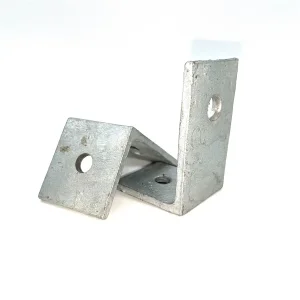
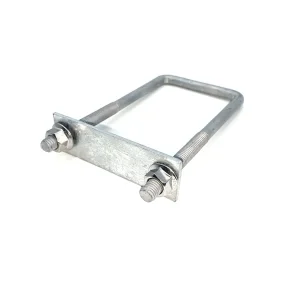
Primary Grounding Hardware & Structural Assemblies
Precision-machined stainless steel and extruded aluminum grounding infrastructure engineered to withstand mechanical load stress, cyclic vibration, and long-term electrolytic galvanic corrosion in demanding operating environments.
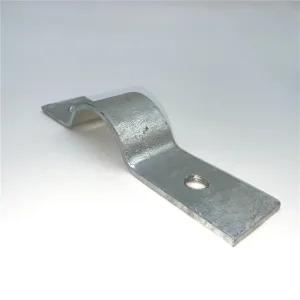
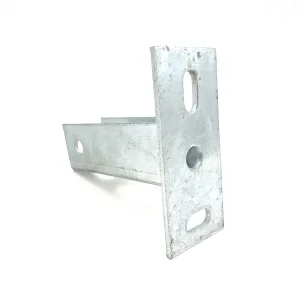
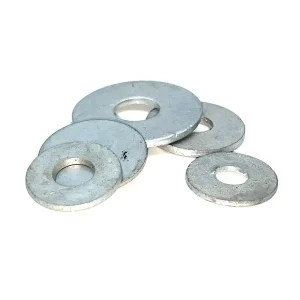
Global Enterprise Procurement Dynamics for Grounding Extension Systems
Modern multinational infrastructure projects demand fail-safe grounding paths, continuous ground return conductors, and integrated mechanical-electrical bonding systems. Procurement leaders are shifting from transactional purchasing to holistic, certified supply-chain partnerships.
Fault Current Dissipation & Arc Mitigation
Industrial ground extension conductors and grounding hardware must handle momentary short-circuit fault currents up to 25kA without mechanical degradation, thermal fusing, or contact resistance spikes. Global EPC specifications mandate robust cross-sectional mass and verified metallurgical integrity.
- UL 467 & IEEE 837 compliance for permanent grounding
- Low thermal expansion alloy formulations
- High short-circuit withstand rating (KA/sec)
Harsh Atmospheric & Soil Resiliency
From hyper-saline offshore wind collector farms to high-resistivity desert PV fields, ground extension cables and mechanical earthing points suffer extreme thermal cycling and electrochemical attack. Specifiers require C5-M marine-grade corrosion performance and UV-stabilized sheath compounds.
- 3000-hour salt spray endurance testing validation
- EPDM and fluoropolymer insulating gaskets
- Electrolytic passivated contact interfaces
Single-Source Total Load-Path Procurement
Procurement complexity escalates when structural mounting brackets, grounding conductors, and mechanical expansion fasteners are split across multiple vendors. Youlong Fastener solves this through full-stack manufacturing: unifying rails, ground clamps, and concrete anchors under one warranty.
- Elimination of galvanic incompatibility risks
- Consolidated bill of materials (BOM) logistics
- Factory-direct pricing from Yongnian manufacturing cluster
Integrated Grounding Architecture Across Critical Industries
How structural grounding extension hardware, bonding jumpers, and electrical grounding conductors interface within utility-scale solar arrays, mission-critical data infrastructure, and modular construction.
Utility & Commercial Solar PV Farms
In megawatt-scale solar arrays, every aluminum frame, structural rail, and inverter substation requires equipotential bonding. Ground extension assemblies bridge tracker torque tubes and static frames to earth grids, mitigating lightning induced surges and electrostatic voltage buildup.
- NEC Article 690.43 compliant bonding continuity
- Piercing teeth anodization-break ground washers
- Vibration-proof torque nuts for tracker pivot joints
Wind Turbine Generators & Subsea Transition
Nacelle rotation and blade static build-up necessitate heavy flexible ground extension assemblies and braided copper-tin ground leads that tolerate continuous torsional oscillation while carrying direct lightning discharge currents safely to the tower foundation anchor cage.
- Class 5 & Class 6 high-flex conductor cores
- Subsea grade 316 stainless steel termination clamps
- IEC 61400-24 lightning protection verification
Hyperscale Data Centers & Industrial Facilities
High-density computing racks, automated CNC workshops, and heavy manufacturing floors rely on signal reference grounding grids (SRGG). Low-impedance ground extension leads suppress high-frequency harmonic electromagnetic interference (EMI) and transient surges.
- Zero-halogen flame-retardant (LSZH) jacket barriers
- High-conductivity oxygen-free copper bonding cords
- TIA-942 telecommunications grounding compliance
| Application Scenario | Conductor Material | Hardware Clamp Grade | Corrosion Category | Max Current Surge | Standards Compliance |
|---|---|---|---|---|---|
| Coastal Solar PV Plant | Tinned OFC Copper / 16-25mm² | Stainless Steel 316 (A4-80) | ISO C5-M Marine | 15 kA / 100ms | IEC 62561-1, UL 2703, UL 467 |
| Inland Commercial Rooftop | High-Strand ETP Copper / 10-16mm² | Anodized AL6005-T5 + SS304 | ISO C3 Urban | 10 kA / 100ms | NEC 250, AS/NZS 5033 |
| Desert Utility Scale Tracker | Toughened Copper-Clad Steel (CCS) | Dacromet Carbon Steel 8.8 | ISO C4 Industrial | 25 kA / 100ms | IEEE 80, UL 467, ASTM B910 |
| Offshore Wind Collector Tower | Extra-Flexible Braided Tinned Wire | Super Duplex / SS316 Passivated | ISO CX Extreme | 40 kA / 200ms | IEC 61400-24, DNV-GL Offshore |
| Factory Modular Substation | Heavy Duty E-Cu Flexible Busbar/Cord | Hot-Dip Galvanized ISO 1461 | ISO C3-C4 | 20 kA / 100ms | EN 50522, GB 50169, IEEE 837 |
Technical Roadmap: Grounding Intelligence & Advanced Metallurgy
The convergence of smart telemetry, novel anti-corrosion barrier coatings, and tool-free quick-locking mechanics is redefining the performance benchmarks for commercial grounding assemblies.
Micro-Alloyed Nanocoatings & Cold-Flow Metallurgy
Traditional hot-dip galvanizing and electro-zinc plating face severe limits in acidic soils and ammonia-rich agrivoltaic sites. Next-generation grounding assemblies deploy Zinc-Nickel-Graphene hybrid coatings providing 5x salt-spray resilience while preventing zinc whisper micro-fracturing.
- Cold-flow resistant molecular bonded terminations
- Zero toxic chromium, RoHS & REACH compliance
- Self-healing sacrificial protective passivation
Active Telemetric Continuous Continuity Monitoring
Future-ready ground extension cord products are integrating passive RFID and conductive sensor threads within cable jackets. These allow non-destructive drone inspection or automated IoT monitoring stations to log loop ground impedance changes before catastrophic ground faults occur.
- Continuous resistance drift detection algorithms
- Contactless inspection via handheld scanner
- Integration with SCADA plant monitoring architecture
Tool-Free Ergonomic Cam-Lock Fastening
Labor shortages in global field construction demand faster mounting times. Our patented cam-lock grounding clips and spring-loaded grounding connectors reduce clamp positioning time from 45 seconds per module connection to under 8 seconds with verified tactile torque confirmation.
- Tactile click feedback verifying complete contact depth
- Elimination of torque wrench calibration overhead
- Over 70% installation labor time reduction
Global Regulatory Frameworks & Industrial Realities
Navigating the diverging jurisdictional standards across North America, Europe, Asia-Pacific, and Latin America ensures rapid project commissioning and statutory audit clearance.
North America (NEC, UL, OSHA)
In the United States and Canada, grounding and bonding systems fall under National Electrical Code (NEC) Article 250, Article 690 (PV), and UL 2703 / UL 467 listing criteria. AHJs (Authorities Having Jurisdiction) require certified factory markings on all earthing clips, grounding lugs, and bonding jumpers.
- Mandatory UL Listed bonding stamps on hardware
- Rigid adherence to solid copper equivalent sizing
- Documented fire classification interface safety
European Union (IEC, EN, CE, CPR)
European installations enforce strict adherence to IEC 60364-7-712 and lightning standard IEC 62305. Furthermore, cable sheathing for ground extension cords within industrial and commercial buildings must meet Construction Products Regulation (CPR) Euroclasses (B2ca, Cca) for low toxic fume emission.
- Harmonized CE / UKCA declaration of conformity
- Strict halogen-free (HF) cable jacket testing
- Equipotential bonding verification across sub-panels
APAC & Emerging Energy Corridors
Rapid industrialization across Australia, Southeast Asia, and the Middle East involves extreme environmental stressors: desert solar fields with abrasive windblown sand and tropical monsoon moisture. Buyers seek dual-rated hardware compliant with AS/NZS 3000, GB 50169, and DEWA regulations.
- Cyclone wind loading class certified rails and clamps
- High UV degradation index polymer components
- High temperature creep-resistant stainless bolts
Handan Youlong Quality Infrastructure & Technical Support
Located in Yongnian District, Handan City—widely celebrated as China's premier fastener industrial capital—Handan Youlong Fastener combines automated multi-stage cold forging, precision CNC machining, and fully traceable in-house testing laboratories.
Rigorous Laboratory Testing Protocol
Every production batch undergoes continuous random sampling and destructive testing: neutral salt spray (NSS) chamber testing for anti-corrosion verification, digital universal tensile testing for yield point confirmation, and micro-ohmmeter contact resistance sweeps.
- EN 10204 3.1 Mill Test Certificates with each lot
- Spectrochemical raw ingot composition verification
- Torque tension failure envelope profiling
Custom OEM Drawing Engineering
Standard off-the-shelf components often do not suit specialized rooftop profiles, bifacial PV panel heights, or seismic foundation concrete anchors. Our dedicated CAD/CAM engineering office reviews client structural blueprints within 24 hours, adjusting punch tooling and extrusion dies.
- Rapid 3D tooling prototyping within 72 hours
- Custom hole spacing, slot geometry, and serrations
- Engineered load calculation and finite element reviews
High-Volume Phased Export Logistics
Shipping over 300,000 tonnes of structural fasteners and PV hardware worldwide requires synchronized export logistics. We offer moisture-barrier ocean palletization, automated barcode lot tracing, and flexible phased container releases matched to your EPC installation schedules.
- FOB, CIF, DDP international customs documentation
- Vacuum desiccated sealed seaworthy crating
- Dedicated multi-lingual technical account teams
Frequently Asked Questions (FAQ) for Engineering & Procurement
Direct, authoritative answers addressing sizing, material compatibilities, regulatory compliance, and factory capabilities for ground extension cords and structural bonding hardware.
In solar power generation facilities, structural metal frames (such as aluminum guide rails and module clamp frames) are bonded together to form a continuous electrical ground pathway. Flexible ground extension assemblies and heavy-gauge bonding jumpers are bolted between discrete structural rows, across expansion joints, and down to the master earth electrode or concrete foundation anchor bolts. This ensures that any insulation failure, lightning discharge, or static buildup is instantly dissipated into the ground grid without exposing technicians to hazardous step-and-touch touch voltages.
Direct physical contact between copper conductors and aluminum mounting rails causes aggressive galvanic corrosion in humid or coastal environments due to the large electrochemical potential difference (~0.85V). To prevent this electrolytic breakdown, Youlong engineers specify tin-plated copper compression lugs, stainless steel grade 304/316 interface washers, or bi-metallic (Cu-Al) transition plates. Additionally, UV-resistant EPDM or neoprene insulating washers are used to mechanically decouple dissimilar metallic surfaces while dedicated piercing teeth ensure point-to-point electrical continuity through the anodized layer.
Conductor sizing is dictated by the upstream overcurrent protection device rating and prospective ground fault short-circuit currents, following NEC Table 250.122 or IEC 60364-5-54. In typical utility solar applications, minimum equipment grounding conductors range from 6 AWG (13.3 mm²) to 2 AWG (33.6 mm²) stranded bare or tinned copper for module-to-rail interconnections, scaling up to 1/0 AWG to 4/0 AWG for trunk connections to inverter grounding rings and transformer neutral pads.
Every production heat undergoes an end-to-end quality control protocol. First, raw ingots and coils undergo optical emission spectrometry (OES) chemical validation. Second, after stamping and cold heading, samples enter our computer-controlled tensile testing machines to measure proof load, yield strength, and elongation under ASTM F606/ISO 898 standards. Third, finished goods are subjected to 72 to 1000+ hours of continuous neutral salt spray (NSS) testing (ASTM B117) to verify zinc plating, Dacromet, or passivation integrity before dispatch.
Yes. Handan Youlong operates in-house tooling workshops, multi-station stamping lines, hot-forging presses, and multi-axis CNC machines. We routinely manufacture bespoke angle brackets, custom water channel rails, slotted base plates, and fish-scale expansion bolts to customer 2D/3D drawings (DWG, STEP, PDF). Our engineering team performs tolerance fit analyses and material recommendations within 24 to 48 hours of drawing submission.
For standard catalogue inventory (such as standard PV 3040 guide rails, stainless carriage bolts, and expansion anchors), MOQ starts at 5,000 to 10,000 units depending on size, with dispatch within 10 to 14 days. For custom stamped brackets, extruded aluminum sections, or customized ground extension hardware, pilot batch tooling takes 10 to 15 days, followed by mass volume rolling at rates up to 500 metric tonnes per month. Phased release schedules and partial container drops are supported.
Foundation Anchor Fasteners & Structural Hardware Systems
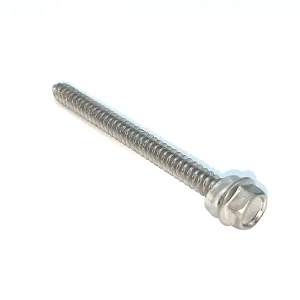
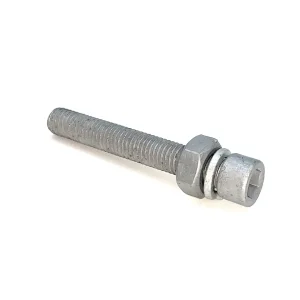
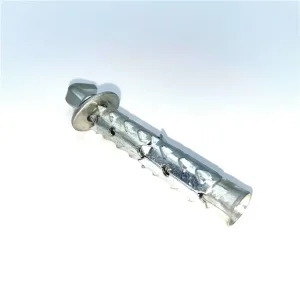
Heavy-duty expansion anchors, combination bolts, self-drilling screws, and pressure plates completing the mechanical load path from concrete sub-bases to module clamp arrays.