Primary Industrial Clamps, Plates & Fastener Components
Factory-direct mechanical interconnects, cross-purlin clamps, and high-strength hardware manufactured to precise dimensional tolerances for agricultural and solar infrastructure.
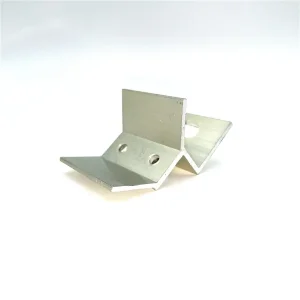
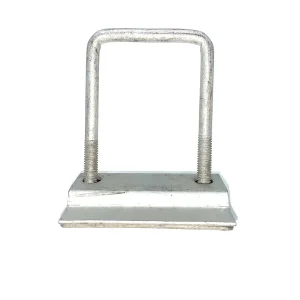
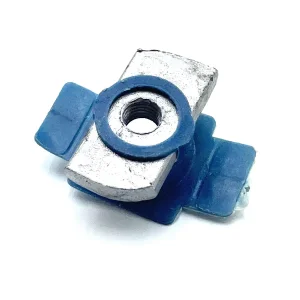
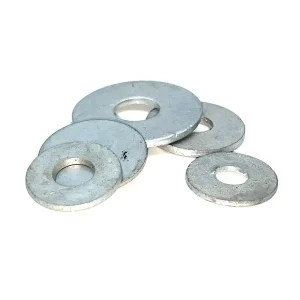
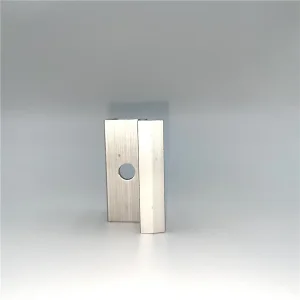
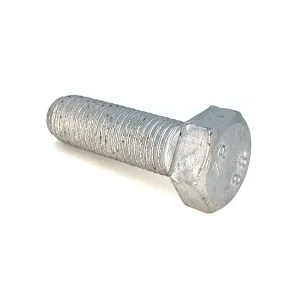
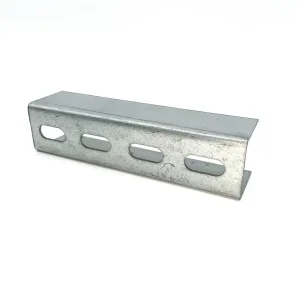
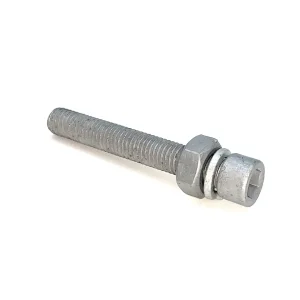
Global Industrial Landscape of Greenhouse Purlin Clamping Systems
Analyzing structural clamping mechanics in high-yield CEA installations, commercial Venlo spans, and utility-scale agrivoltaic hybrid envelopes.
Across the international horticulture and commercial agrivoltaic sectors, greenhouse purlin clamps represent the critical physical junction between primary load-bearing arches (gothic bows or trusses) and longitudinal purlins. Historically viewed as basic commodity stamping products, industrial-scale high-tunnel facilities, multi-span Venlo glasshouses, and photoselective agrivoltaic complexes have elevated these fasteners into high-precision structural components subject to stringent dynamic wind uplift, seismic shear, and heavy snow load calculations.
In mature agricultural markets across North America (specifically California, Ontario, and Mexico's Bajío agricultural corridor), Western Europe (the Westland cluster in the Netherlands, Almería in Spain), and the Asia-Pacific region, commercial growers are shifting toward automated vertical growing systems and integrated elevated solar canopies. This modern architecture transfers substantial supplementary suspended loads onto structural purlins—including LED grow-light fixtures, motorized blackout thermal screens, hydronic heating circuits, automated irrigation booms, and high-density monorail harvesting systems. Consequently, purlin clamps can no longer depend on friction-only stamping collars; they must deliver predictable slip resistance verified under cyclic dynamic loading.
Information Gain: The Shift from Destructive Drilling to High-Shear Clamping
Traditional agricultural frame fabrication relied on direct drilling and through-bolting to connect purlins to structural bows. Structural forensic analysis indicates that through-drilling introduces localized stress concentrations and micro-cracking while penetrating protective galvanized surface barriers, accelerating internal tubular rust by up to 400%. Modern engineering standards demand external compression clamping—utilizing contoured purlin brackets and wrap-around friction clamps that preserve parent steel integrity while matching or exceeding the shear capacity of through-bolted connections.
Handan Youlong Fastener Co., Ltd., based in the Yongnian industrial cluster—widely recognized as China's Fastener Capital—operates at the epicenter of this structural evolution. Integrating direct access to premier metallurgical cold-rolled coils, high-capacity progressive die stamping, continuous mesh-belt heat treatment, and automated hot-dip galvanizing lines, our engineering teams produce purlin clamping assemblies engineered to eliminate frame racking, bolt loosening, and premature atmospheric fatigue across diverse environmental conditions.
Controlled Environment Agriculture (CEA)
Multi-span high tunnels and automated sealed greenhouses operate under constant high humidity (RH 75–90%) and elevated carbon dioxide concentrations. Clamping mechanisms must guarantee zero surface oxidation and zero galvanic cross-contamination when joining tubular galvanized profiles with aluminum track accessories.
Dual-Utility Agrivoltaics (APV)
Agrivoltaic arrays integrate heavy glass-glass bifacial PV modules directly onto greenhouse superstructures. Purlin clamps serve as dual-load connectors transferring dynamic asymmetric wind gusts and snow loads down to the primary steel pile foundations without deformation.
Global Code Harmonization
Modern commercial greenhouse builders require certified conformance with structural building regulations including EN 13031-1 (Greenhouses: Design and Construction) and ASCE 7-22 structural load standards. Precision-stamped purlin clamps provide documented slip resistance and finite element verification.
Anatomy of High-Performance Purlin Clamps: Mechanics & Form Factors
A rigorous examination of clamp geometry, clamping force distribution, frictional coefficient calibration, and material yield parameters.
A greenhouse purlin clamp must accomplish two competing engineering objectives: provide absolute rotational rigidity to prevent structural racking under lateral cyclonic loads, while accommodating longitudinal thermal expansion and contraction of unbroken continuous purlins spanning up to 100 meters. Handan Youlong Fastener manufactures a comprehensive portfolio of purlin clamping geometries designed for tubular round arches, square hollow sections (SHS), rectangular hollow sections (RHS), and open C/Z purlin channels.
1. Cross-Connector Clamps (Purlin-to-Bow Orthogonal Clamps)
The cross-connector clamp is the workhorse of high-tunnel hoop house construction. Stamped from high-ductility structural carbon steel (grades Q235B or Q355B), the cross-connector wraps simultaneously around the convex outer diameter of the arch bow (commonly 1.315", 1.660", 1.900", or 2.375" OD pipe) and the perpendicular purlin (commonly 1.050" or 1.315" OD pipe). Our proprietary progressive tooling forms continuous stiffening ribs along the clamp flank, raising the section modulus and eliminating localized flange deflection during nut torqueing.
2. Parallel Compression Clamps & Splice Sleeves
For end-wall frameworks, gutter-to-purlin transitions, and solar mounting sub-railing, parallel clamps align two longitudinal steel tubes in parallel planar contact. Fitted with high-tensile Grade 8.8 carriage bolts or stainless steel socket combinations, these clamps provide high clamping force without pinching or ovalizing thin-walled structural tubing (wall thicknesses from 1.2 mm to 2.5 mm).
3. Heavy-Duty Universal Two-Piece Saddle Clamps
In heavy snow zones and commercial Venlo glass structures, two-piece cast or stamped saddle clamps encircle both structural members completely. Fastened with opposing hex-head bolts and anti-vibration serrated flange locknuts, saddle clamps achieve mechanical locking with laboratory-proven slip resistance exceeding 12.5 kN along both axes.
| Clamp Category | Compatible Bow OD | Compatible Purlin OD / Profile | Standard Material | Corrosion Protection | Mean Slip Resistance (kN) |
|---|---|---|---|---|---|
| Lightweight Hoop Cross Clamp | 1.315 in (33.7 mm) | 1.050 in (26.9 mm) | Cold-Rolled Carbon Steel Q235B | Electro-Galvanized (12–15 µm) | 3.8 kN |
| Commercial Gothic Cross Clamp | 1.660 in (42.4 mm) | 1.315 in (33.7 mm) | Structural Carbon Steel Q235B / Q355B | Hot-Dip Galvanized (≥ 55 µm) | 7.2 kN |
| Heavy Snow Multi-Span Saddle | 1.900 in (48.3 mm) | 1.660 in (42.4 mm) / 1.900 in | Structural Low-Alloy Q355B | HDG ISO 1461 (≥ 65 µm) | 12.5 kN |
| Square-to-Round Hybrid Connector | 50 mm × 50 mm SHS | 32 mm / 40 mm Round Tube | Pressed Carbon Steel / Aluminum 6005-T6 | HDG / Anodized (≥ 15 µm) | 9.4 kN |
| Marine / Coastal Agrivoltaic Clamp | Custom / Universal | Solar PV Aluminum Rail / Unistrut | Austenitic Stainless Steel 304 / 316 | Passivated / Electro-Polished | 14.0 kN |
Localized Engineering Applications & Environmental Stress Profiles
Optimizing mechanical purlin connections across micro-climates, from high-wind coastal greenhouses to corrosive organic agricultural envelopes.
Coastal Typhoon & Hurricane Corridors
Greenhouse installations in coastal East Asia, the Gulf Coast of North America, and Caribbean islands encounter dynamic wind uplift speeds reaching 140–160 km/h. Standard clamps fail when dynamic buffeting shears thin collar tabs. Our heavy-gauge hot-dip galvanized cross-clamps employ reinforced structural gussets and Grade 8.8 carriage bolts, absorbing dynamic harmonic oscillations without micro-slipping or structural deformation.
High Snow Load & Sub-Zero Mountain Belts
In Northern Japan, Scandinavia, and Northern Canada, static snow loads can exceed 150 kg/m². When snow accumulates on greenhouse roofs, downward vertical force transfers directly through the purlins into the clamps. If clamps deform, purlins bow inward, leading to catastrophic frame collapse. Youlong saddle clamps utilize Q355B high-yield structural steel with high low-temperature impact toughness down to -40°C.
Corrosive Organic CEA & Fertilizer Mists
Modern intensive hydroponic, aeroponic, and fertigation systems disperse fine mists containing high concentrations of nitrogen, potassium, and phosphorus salts. Inside sealed greenhouses, condensation creates a continuous micro-corrosive film. We supply purlin clamps electroplated with thick zinc alloys or stamped from SS304/SS316 austenitic stainless steel, mitigating stress-corrosion cracking and premature bolt binding.
Technology Roadmap: Metallurgy, Protective Coatings & IoT Smart Hardware
From traditional electro-galvanizing to self-healing Zinc-Aluminum-Magnesium (ZAM) alloys and real-time structural load-sensing clamps.
The engineering roadmap for agricultural fastening components is undergoing rapid modernization driven by lifecycle sustainability, robotic greenhouse installation, and extreme weather resilience. Our R&D division in Handan works alongside metallurgical research institutes to implement four technological breakthroughs:
Zinc-Aluminum-Magnesium (ZAM) Coatings
Transitioning from standard post-stamping hot-dip galvanizing to continuous strip-coated ZAM steels (Zn-6% Al-3% Mg). ZAM provides self-healing galvanic protection across sheared stamp edges, delivering 4–5 times the corrosion resistance of traditional galvanized coatings under ammonia-rich agricultural environments.
Finite Element Stress Optimization
Using 3D FEA stress mapping to redesign clamp radii, transitions, and ribbing. By redistributing clamping pressure uniformly across the tubular contact zone, our clamps eliminate pipe indentations that compromise the load-carrying capacity of structural arches.
One-Snap & Tool-Free Quick-Lock Systems
Developing spring-loaded and toggle-latch purlin clamps that snap securely onto arches prior to final bolt torquing. This innovation reduces field installation labor by up to 45%, providing significant cost savings on multi-hectare commercial greenhouse projects.
Telemetry-Integrated Load-Sensing Clamps
Integrating miniature piezoresistive strain sensors and wireless telemetry directly into critical ridge-purlin clamps. These smart clamps provide real-time alerts when dynamic snow or wind loads approach elastic limits, enabling proactive structural management.
Macro-Level EPC Supply Chain Solutions & Quality Assurance Protocols
A vertically integrated supply model from Handan Youlong Fastener that mitigates project risk, stabilizes procurement lead times, and enforces strict QA standards.
For international EPC contractors, greenhouse manufacturers, and agricultural supply chain distributors, procurement vulnerability rarely arises from component design alone; it stems from material inconsistencies, coating thickness variations, and shipment delays. Handan Youlong Fastener operates an integrated quality management system compliant with ISO 9001:2015, ensuring complete traceability from raw hot-rolled coils through to final container dispatch.
Certified Metallurgical Traceability
Every coil of high-tensile structural steel is certified with Mill Test Reports (MTRs) documenting carbon equivalents, yield point, ultimate tensile strength, and elongation percentage. Random spectrometer spot-checks ensure raw materials match customer specifications.
In-House Environmental Testing Labs
We perform accelerated continuous salt spray corrosion testing (ASTM B117 / ISO 9227) on every manufacturing batch. Hot-dip galvanized coatings undergo electromagnetic thickness gauge verification to ensure adherence to ISO 1461 requirements (≥ 55–65 µm mean thickness).
Global Logistics & Container Optimization
Located in Handan near Tianjin and Qingdao deep-water ports, Youlong provides optimized bulk export packaging. Pre-kitted, barcode-labeled, anti-rust vCI-lined cartons simplify on-site logistics for multi-hectare agricultural installations.
Frequently Asked Questions: Engineering, Materials & Sourcing
In-depth answers to the most common engineering and procurement questions regarding greenhouse purlin clamps and structural hardware.
What are the key structural distinctions between cold-stamped cross-clamps and cast saddle clamps?
Cold-stamped cross-clamps are formed from high-ductility carbon steel sheets (typically Q235B or Q355B with thicknesses ranging from 2.0 mm to 3.5 mm). They offer high cost-efficiency, low self-weight, and balanced elasticity, making them suitable for standard hoop houses and high tunnels. Cast ductile iron or drop-forged saddle clamps provide superior mass, section thickness, and torsional rigidity. They are engineered for utility-scale Venlo commercial glasshouses and heavy snow zones where clamp shear failure could trigger progressive frame collapse. In addition, cold-stamped clamps absorb dynamic wind buffeting without brittle fracture, whereas cast clamps deliver high slip resistance under extreme static downward loads.
How do you calculate proper tightening torque to avoid tube deformation?
Tightening torque is governed by bolt grade, thread diameter, surface friction coefficient, and the yield strength and wall thickness of the connected structural tubing. For standard greenhouse structural pipe (wall thickness 1.5 mm to 2.0 mm) utilizing M8 Grade 8.8 hot-dip galvanized carriage bolts, recommended installation torque is 18 to 22 N·m. Torquing beyond 28 N·m risks crushing the hollow profile wall, causing localized ovalization that reduces pipe compressive capacity by up to 35%. Using calibrated electric torque tools with auto-shutoff is recommended to maintain uniform clamping force across the greenhouse frame.
How is galvanic corrosion prevented when connecting aluminum solar rails to galvanized steel purlins?
Direct mechanical contact between aluminum (anodic potential approximately -1.66V) and zinc-coated carbon steel (-0.76V to -1.05V) can induce accelerated galvanic corrosion in humid or conductive environments. To eliminate electrolytic bridge formation, Handan Youlong provides three protection methods: (1) Pre-installed UV-stabilized EPDM or nylon isolation pads that physically separate the dissimilar metals; (2) Thick organic barrier coatings or fluorocarbon (PVDF) surface treatments on the clamping contact face; and (3) Clamps manufactured directly from austenitic stainless steel (grade 304 or 316) paired with non-conductive isolating washers, providing long-term structural integrity in coastal agrivoltaic projects.
Why is Hot-Dip Galvanizing (HDG) preferred over standard Electro-Galvanizing (EG)?
Electro-galvanizing provides a thin zinc layer (typically 5 to 12 µm) that offers modest indoor corrosion protection but degrades within 12 to 24 months in humid greenhouse environments. Batch hot-dip galvanizing per ISO 1461 / ASTM A123 immerses cleaned steel into molten zinc at 450°C, producing a series of metallurgically bonded zinc-iron alloy layers topped with pure zinc. This process yields a durable protective barrier with minimum average thickness exceeding 55 to 65 µm. This coating provides cathodic (sacrificial) protection that resists scratching and wear during shipping and assembly, maintaining structural integrity for 20+ years in C3/C4 agricultural environments.
Can Handan Youlong produce custom OEM purlin clamps to architectural drawings?
Yes. Approximately 40% of Youlong's production capacity is dedicated to custom OEM and ODM manufacturing. Operating in-house mold design and tooling facilities, we engineer custom progressive stamping dies, stamping fixtures, and CNC bending programs from client CAD/BIM drawings or physical samples. Our engineering team reviews draw depth, bend radii, and hole spacing to optimize mechanical strength and minimize scrap, delivering production tooling and validated PPAP/first-article samples within 15 to 21 working days.
What quality documentation is provided with wholesale export shipments?
Every commercial container shipped from Youlong is accompanied by a Quality Dossier containing: (1) Raw Material Mill Test Certificates (MTR) per EN 10204 Type 3.1 verifying chemical composition and tensile elongation; (2) Batch Dimensional Inspection Reports covering hole tolerances, thickness, and profile contouring; (3) Salt Spray Test Certification (ASTM B117 / ISO 9227); (4) Zinc Coating Thickness Verification Logs; and (5) Certificate of Origin and export clearance documentation.
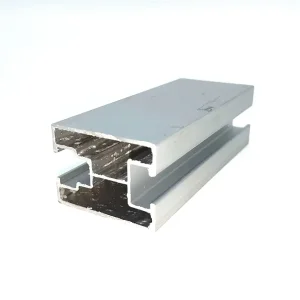
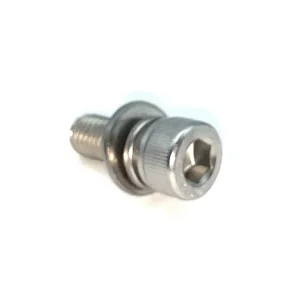
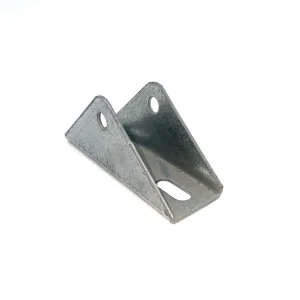
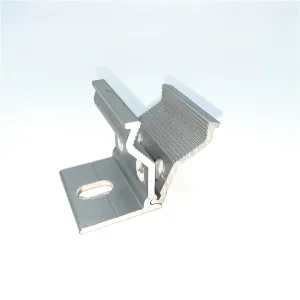
Reinforced Guide Rails, Precision Bolts & Purlin Connectors
Complete your structural envelope with certified heavy-duty aluminum rails, carbon steel purlin splices, and vibration-resistant combination fasteners.