Direct Sourcing Catalog
Precision Fasteners & PV Mounting Anchors
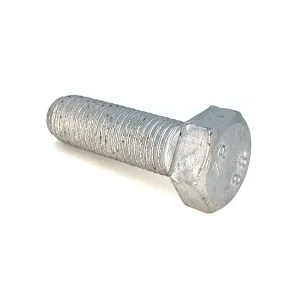
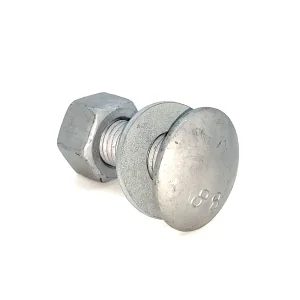
Direct factory configurations manufactured to high metallurgical tolerances. Explore our certified inventory of galvanized bolts, carriage fastenings, and heavy-duty structural fixings.
Market Intelligence
Global Enterprise Procurement Landscape for Galvanised Hardware
Across international engineering procurement, logistics warehousing, utility installations, and industrial construction, standard commercial hardware no longer meets the stringent durability quotas established by modern asset managers.
Supply Chain De-Risking & Tier-1 Traceability
Global tier-1 EPCs and distributors are shifting away from fragmented trading intermediaries. Modern supply mandates require complete traceability from raw billet melt chemistry to molten zinc immersion bath certificates. Ensuring documented EN 10204 3.1 certification eliminates critical structural failure liability.
C3–C5 Corrosive Environment Resilience
Industrial doors, coastal storage facilities, agricultural enclosures, and perimeter security perimeters operate under persistent microclimates with elevated humidity and saline atmospheric loading. Hot-dip galvanised door bolts with coatings exceeding 85 microns (610 g/m²) are crucial to prevent mechanical seizing.
TCO Rationalization Over CapEx
Enterprise buyers evaluate hardware on a Total Cost of Ownership (TCO) methodology. Premature failure of sub-spec fasteners creates cascading operational bottlenecks, door sagging, emergency maintenance calls, and breach-of-security risks far eclipsing initial hardware procurement expenditures.
Engineering Deep Dive
Metallurgical Architecture & Galvanic Protection Principles
Understand how hot-dip galvanisation creates an intermetallic bond offering cathodic self-healing protection that electro-plated hardware cannot duplicate.
The Fe-Zn Intermetallic Alloy Layers
Unlike surface paints or thin electro-deposited zinc (5–12 µm), true thermal hot-dip galvanising submerges high-tensile carbon steel into a bath of molten zinc at 450°C (842°F). This triggers a metallurgical diffusion process forming four distinct crystallographic zones:
- Eta (η) Layer: Outer 100% pure zinc layer offering initial impact lubricity and high ductility.
- Zeta (ζ) Layer: Monoclinic crystal layer composed of 94% Zn and 6% Fe, structurally harder than the underlying base steel.
- Delta (δ) Layer: Hexagonal intermetallic zone providing outstanding shear barrier protection.
- Gamma (Γ) Layer: Ultra-thin atomic metallurgical bond fused directly into the structural carbon substrate.
Cathodic Protection & Cut-Edge Self-Healing
In industrial door installations, bolts experience aggressive mechanical friction, sliding abrasive wear, and tool impingement. When scratches penetrate the protective coating down to bare steel, zinc’s position on the galvanic series makes it an active sacrificial anode.
Electrons flow preferentially from the surrounding zinc to the exposed iron, causing insoluble zinc hydroxycarbonates to precipitate across the fissure. This effectively seals the abrasion and neutralizes creeping sub-surface rust before pitting corrosion can compromise structural bolt integrity.
| Performance Characteristic | Commercial Electro-Galvanized Bolt | Hot-Dip Galvanized Bolt (HDG) | Stainless Steel (Grade 304/A2) | Duplex Coated (Zinc + Polymer) |
|---|---|---|---|---|
| Typical Coating Thickness | 5 – 12 Microns | 55 – 100+ Microns | Homogeneous Metal (Passivated) | 25 – 45 Microns |
| Bond Nature | Mechanical Electro-adhesion | True Metallurgical Fe-Zn Alloy | Austenitic Solid Solution | Mechanical & Organo-Chemical |
| Neutral Salt Spray (ASTM B117) | 48 – 96 Hours to Red Rust | 1,000 – 2,500+ Hours | 1,500 – 3,000+ Hours (Non-saline) | 1,200 – 1,800 Hours |
| Abrasion & Gouge Resistance | Poor (Easily Scratched) | Exceptional (Harder than Steel) | Moderate (Prone to Galling) | Moderate to Low |
| Corrosion Class (ISO 12944) | C1 – C2 (Dry Indoor Only) | C3 – C5 (Marine, Industrial, Open) | C3 – C4 (Stress Corrosion Risk in Cl-) | C3 – C4 |
Capacity Benchmarks
Industrial Scale & Verification Metrics
Empirical output performance derived from advanced automated cold heading, continuous hot-dip lines, and computerized tensile inspection.
300,000+
Metric Tonnes Shipped
Heavy structural hardware deployed across high-stress global installations.
100+
International Clients
Direct supply to EPCs, government ministries, and tier-1 distributors.
>2,000
Salt Spray Salt Hours
Verified under ASTM B117 standards without primary base-metal oxidation.
10+
Years Engineering
Clustered in Handan Yongnian, the global capital of precision fastening.
Sectors & Applications
Macro Solutions Across Core Global Infrastructures
Heavy-duty galvanized door bolts and matched fastening hardware function as the final critical link in diverse structural systems.
Commercial & Heavy Industrial Warehousing
Automated distribution hubs and distribution logistics facilities operate thousands of high-cycle fire doors, roll-up gates, and loading dock access barriers. Constant shock loading and mechanical vibration demand Grade 8.8 structural carriage and bolt mechanisms that resist cyclic thread loosening.
Solar PV Enclosures & Inverter Sub-Stations
Utility-scale ground mount solar farms require thousands of localized security gates, inverter cabins, and battery energy storage system (BESS) shelters. Deployed in open arid deserts or coastal wetlands, our fasteners guarantee zero lock freeze-ups or galvanic seizure over 25-year operational horizons.
Agricultural & Livestock Bulk Facilities
Livestock barns and fertilizer processing storage expose door ironmongery to aggressive airborne ammonia, uric acid, and methane gases. Regular commercial fasteners fail within 12 months in these spaces. Heavy hot-dip galvanised door bolts form a stable zinc carbonate protective film that preserves gate integrity.
Technology Horizon
Engineering Roadmap: The Next Era of Galvanised Fasteners
Continuous R&D investments are driving innovation across advanced alloys, robotic centrifugation, and carbon-neutral production methodologies.
Phase 1: Precision Centrifugation
High-Speed Dynamic Thread Clearance
Automated variable-frequency spinning immediately following molten extraction removes excess zinc clogging from male bolt threads, delivering exact mating fit without weakening post-tap machining.
Phase 2: Zinc-Aluminum-Magnesium
Next-Gen Zn-Al-Mg Ternary Coatings
Integrating 3% aluminum and 1.5% magnesium into the bath creates a protective barrier that outperforms pure zinc up to 4-5 times in aggressive coastal chloride environments.
Phase 3: Digital Twin QA
Automated Optical & Eddy Current Sorting
High-speed 360-degree machine vision and magnetic flux leakage systems verify coating uniformity, detect subsurface micro-cracks, and eliminate hydrogen embrittlement risks.
Phase 4: Green Steel Fastening
Decarbonized Circular Production
Utilizing hydrogen-reduced green rod feedstock and closed-loop waste acid reclamation systems to supply verified Environmental Product Declaration (EPD) hardware for LEED and BREEAM developments.
Global Regulatory Assurance
Localized Standards & Comprehensive Export Compliance
Eliminate customs clearance delays and engineering pushback with pre-tested hardware certified directly to global fastener benchmarks.
North American Building Codes
Full conformity with ASTM A153/A153M (Standard Specification for Zinc Coating on Iron and Steel Hardware) and ASTM F2329 for threaded fasteners. Sizing profiles support standard UNC coarse thread engagements and comply with heavy timber IBC code brackets.
European Union CE & EN Directives
Fully compliant with EN ISO 1461 (Hot dip galvanized coatings on fabricated iron and steel articles) and EN 14399 / EN 15048 structural bolting assemblies. Supported by comprehensive Declaration of Performance (DoP) dossiers and RoHS non-toxicity guarantees.
Supply Hub Logistics & Packing
Containerized shipments are secured in moisture-barrier hermetic poly-bags within seaworthy multi-wall corrugate cases, palletized and shrink-wrapped with corner guards to prevent ocean transport scuffing, white rust oxidation, or handling damage.
Frequently Asked Questions
Technical & Commercial Procurement Inquiries
Authoritative guidance for structural engineers, project estimators, and cross-border hardware importers.
1. Why choose hot-dip galvanized door bolts over zinc electroplated options?
Zinc electroplating produces a thin cosmetic coating (rarely exceeding 12 microns) that easily flakes under bolt friction, resulting in red rust within months when exposed outdoors. Hot-dip galvanization creates a genuine metallurgical bond of 55 to over 85 microns. This delivers superior resistance to weather and abrasive wear, along with cathodic protection that actively shields the base metal if cut or scratched.
2. How do you prevent thread galling and clearance seizure on thick galvanized threads?
Due to the substantial thickness of hot-dip zinc layers, standard thread tolerances are insufficient. In accordance with ISO 965 and ASTM A563, female mating nuts are tapped oversize after galvanizing, or male threads are pre-cut undersize prior to immersion. Combined with high-speed centrifugal clearing, this maintains smooth thread engagement while preserving full corrosion resistance.
3. Can galvanized bolts be used alongside aluminum door frames or solar mounting profiles?
Yes, but direct metal-to-metal galvanic coupling should be managed carefully. Zinc and aluminum have relatively close electrochemical potentials, making galvanized steel far safer with aluminum than bare carbon steel. However, in aggressive C4/C5 coastal environments, using non-conductive dielectric isolation washers (such as EPDM or UV-stabilized nylon) is standard best practice to prevent accelerated aluminum degradation.
4. What documentation is supplied with bulk container exports?
Each shipment includes certified Mill Test Certificates to EN 10204 3.1, detailing raw chemical composition (C, Mn, Si, P, S), core tensile and yield strengths, elongation percentages, magnetic coating thickness verification, and neutral salt spray test logs. Third-party inspections from SGS, TÜV, or BV can be arranged upon request prior to vessel departure.
5. What is the typical production and delivery lead time for custom OEM bolts?
Standard high-runner metric and imperial SKUs are stocked for dispatch within 7 to 10 days. Custom OEM orders requiring proprietary cold heading dies, custom neck geometries, or non-standard coating thicknesses typically require 15 to 25 days for tooling setup, mass forging, batch galvanization, and QA release.
Complete Fastening Portfolio
Specialty Structural Components & Fixings
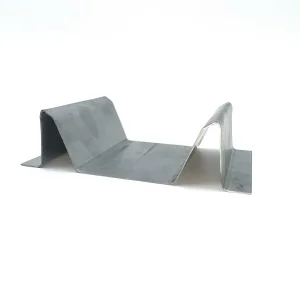
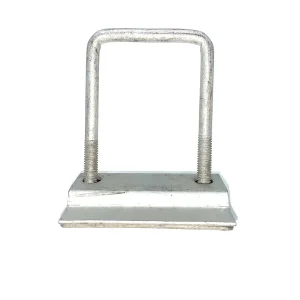
Explore our full line of mounting hardware, heavy hex anchors, side clamps, and concrete fixings engineered for demanding industrial builds.