
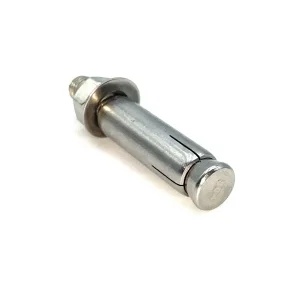
Direct Factory Inventory
Certified Heavy-Duty Fasteners & Structural Anchors
Engineered for subterranean ground support, concrete base anchoring, and high-load solar civil infrastructure. Each assembly undergoes rigorous tensile, torque, and salt spray testing prior to factory dispatch.
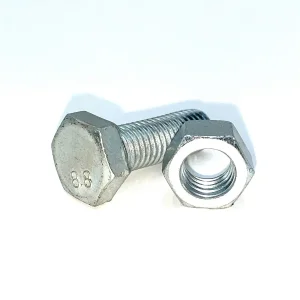
Best High-Strength Hex Bolt Suppliers in China - Durable Factory-Made Carbon Steel for Reliable Fastening Manufacturer, Factory
View Technical Specs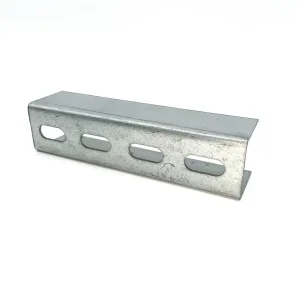
China Durable Solar PV Mounting Purlin Connector - High Strength, Adjustable, Anti-Corrosion | China Suppliers and Factory Manufacturers, Suppliers
View Technical Specs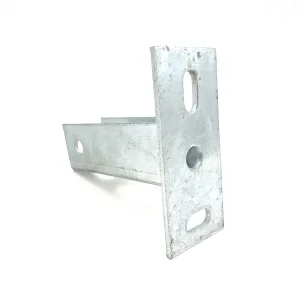
Best Solar PV Mounting Aluminum Alloy Base Manufacturers, Companies
View Technical Specs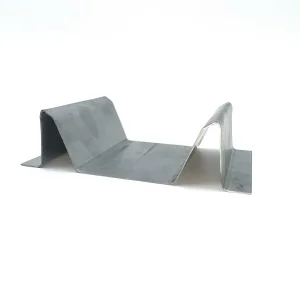
Best China Suppliers M-Type Aluminum Water Channel for Solar PV Mounting Systems – Durable, Corrosion-Resistant Factory Product Suppliers, Company
View Technical Specs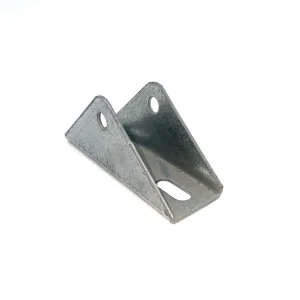
China China Factory Premium Three-Hole Mounting Connector for Solar PV Systems – Top Suppliers for Reliable Assembly Companies, Products
View Technical Specs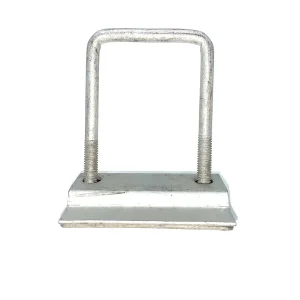
Best China Suppliers Factory High-Strength Double-Hole Pressure Plate for Solar PV Mounting Systems Factories, Product
View Technical Specs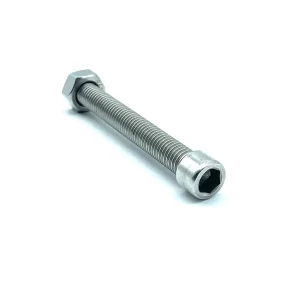
China High-Strength Stainless Steel Hex Socket Cap Screw - China Suppliers Factory for Machinery & Construction Supplier, Company
View Technical Specs
Engineering White Paper Section 01
Geotechnical Rock Bolting Mechanics: Expansion Shell vs. Passive Reinforcement
In hard rock mining, underground civil excavations, and deep tunneling, ground control engineers must resolve immediate rock-mass relaxation. Expansion shell rock bolts serve as an indispensable active reinforcement technology, transforming discontinuous, fractured strata into a self-supporting compressive rock arch.
The Active Pre-Stress Principle and Wedge Expansion Kinetics
Unlike passive dowels or rebar grouted bolts which require surrounding rock mass displacement before mobilizing load resistance, an expansion shell mechanical rock bolt provides immediate active clamping force upon installation. When torque is applied to the hex nut at the rock face, the threaded bar rotates relative to the internal wedge plug.
This relative displacement forces the tapered wedge downward into the internally grooved bail-held leaves. The radial force (Fr) generated by the expansion shell leaves penetrates the rock borehole wall, overcoming local rock compressive yield strength and forming an ultra-rigid mechanical interlock. This generates an instantaneous tension load (T0), typically ranging from 40 kN to 120 kN depending on rebar grade and torque efficiency.
Radial Expansion Contact Area
Serrated leaf profile engineered for 32 mm, 35 mm, 38 mm, and 42 mm boreholes
Torque-Tension Coefficient Ratio
Calibrated factor k = 0.002 to 0.0025 m⁻¹ ensuring predictable load conversion
Immediate Face Clamping Force
Prevents initial joint separation and bed detachment within minutes of blasting
Immediate Support Value
In deep underground development, the speed of support cycle determines excavation advance rates and heading safety. Resin curing requires ambient temperature stabilization and 15–45 minutes of set time; mechanical expansion rock bolts achieve 100% rated design holding capacity instantly without chemical dependency.
- ✓ Zero chemical shelf-life degradation
- ✓ Unaffected by sub-zero Siberian or high Andean temperatures
- ✓ Permits subsequent post-grouting for permanent longevity
Global Sourcing & Commercial Trade
Macro-Industrial Dynamics: Underground Mining & Heavy Civil Demands
As open-pit resources decline globally, hard rock mining is accelerating transitions toward deep underground methods including block caving, sub-level stoping, and room-and-pillar operations. Simultaneously, civil rail tunnels and hydropower pump-storage caverns demand millions of linear meters of high-capacity rock bolting products annually.
North America & Australasia
In jurisdictions governed by MSHA (Mine Safety and Health Administration) and Australian Work Health and Safety (Mines) regulations, expansion shell rock bolts must satisfy stringent ductile strain limits and guaranteed pull-out resistances (minimum 120–180 kN for M20/M24 assemblies).
- Compliant with ASTM F432 roof support standards
- AS/NZS 4671 structural steel verification
- High demand in deep Nevada gold and WA nickel/lithium shafts
Latin American & African Corridors
High-altitude Andean copper porphyry developments (Chile, Peru) and deep South African gold/platinum reefs require cost-optimized, rapid-deployment ground support systems with robust resistance to variable rock qualities and seismic energy emissions.
- Resistance to sudden rockburst dynamic shock loads
- Corrosion coatings for saline groundwater ingress
- Direct sea-freight logistics to Antofagasta, Callao, and Durban
European & Middle East Mega Projects
Hydroelectric pumped storage plants, high-speed rail tunneling (Alpine base tunnels, Balkan corridors), and GCC infrastructure necessitate expansion rock bolts compliant with EN 14490 (Soil Nailing) and EN 1537 (Ground Anchors) with documented 50-year design life calculations.
- Duplex galvanization and epoxy encapsulation
- EN 10204 3.1 chemical & physical certification
- Standardized compatibility with automated jumbo drilling booms
Geomechanical Selection Matrix
Comparative Analysis of Underground Ground Support Fasteners
Procurement engineers must balance immediate holding power, chemical curing constraints, seismic absorption, and lifetime installation costs. This matrix illustrates how mechanical expansion shell rock bolts contrast against alternative bolting technologies.
| Rock Bolt System | Load Mechanism | Initial Tensioning Speed | Rock Mass Suitability | Seismic & Dynamic Capacity | Cost per Linear Meter |
|---|---|---|---|---|---|
| Mechanical Expansion Shell Bolt | Point anchor friction & mechanical wedge bite | Instant (Immediate torque) | Hard to medium-hard competent rock (RMR > 45) | Moderate; expandable with ductile washer packs | Lowest TCO / Highly Economical |
| Fully Resined Threaded Rebar | Full-column chemical bonding along rebar ribs | Delayed (15–45 min chemical set) | Fractured, laminated, soft to medium rock | High shear resistance along borehole length | Moderate to high (Resin capsule overheads) |
| Friction Stabilizer (Split Set) | Radial elastic spring friction against hole wall | Instant (Direct percussive push) | Mildly broken ground, low stress stopes | High yielding displacement along fault planes | Low; susceptible to aggressive acid mine corrosion |
| Inflatable Swellex Type Rock Bolt | High-pressure hydraulic expansion into jagged profile | Instant (High-pressure water pump) | Variable, highly fractured or squeezing ground | Good energy absorption during moderate squeezing | High (Specialized hydraulic pump required) |
| Self-Drilling Anchor (SDA) Hollow Bar | Simultaneous sacrificial bit drilling & pressure grouting | Delayed (Cement grout cure required) | Collapsing gravels, weathered faults, soil nailing | Rigid composite anchor body once fully set | Premium (Consumable drill bits and grout plant) |
Site-Specific Solutions
Localized Field Application Scenarios
Real-world geotechnical performance relies heavily on rock mass classification (Bieniawski’s RMR, Barton’s Q-system), groundwater pH, and opening geometry. Below are standard field scenarios where expansion shell rock bolts deliver optimal structural reliability.
Underground Mine Drift & Heading Development
In rapid drill-and-blast cycles, mechanical rock bolts are installed immediately after ventilation clearance. Operators drive jumbo rigs to install 1.8 m to 2.4 m bolts with spherical-seat bearing plates, actively securing the newly opened back and sidewalls against key-block fallout.
Key Benefit: Cycle time reduction of up to 35% compared to chemical cartridge grouting.
Hydropower Cavern & Penstock Shaft Pinning
Large-span powerhouse caverns encounter stratified joint planes with high in-situ horizontal stresses. Expansion shell bolts provide primary rock tie-back to prevent planar slab failure. Post-grouting tubes can be attached for cementitious sealing, converting the anchor into a permanent fixture.
Key Benefit: Deep anchor anchorage verification via calibrated torque-wrench readout on-site.
Civil Transportation Portals & Deep Open Cuts
Highway rail tunnels and steep road cuts frequently encounter massive blocky formations requiring pattern reinforcement. Expansion bolts act as tensile stitches across unstable joint patterns, fastening high-tensile wire mesh to intercept dislodged rock debris before it reaches the roadway.
Key Benefit: High resistance to weathering and wind turbulence under hot-dip galvanization (HDG).
Quality & Metallurgy Governance
Localized Support, Certification Protocols & Metallurgical Compliance
Failure of rock mass support mechanisms poses catastrophic life-safety risks. Our factory operations in Handan enforce continuous material tracking from ladle metallurgy to final threading, adhering strictly to global standards.
Stringent ASTM F432 & International Standards
All expansion shell rock bolts, wedge plugs, spherical washers, and bearing plates are manufactured to satisfy or exceed ASTM F432 Standard Specification for Roof and Rock Bolts and Accessories.
- Tensile Yield Strength: Grades 40, 60, and 75, with minimum elongations above 12% for superior plastic energy dissipation.
- Expansion Shell Ductile Iron: Bail leaves cast from ASTM A536 ductile iron (Grade 65-45-12) to resist brittle fracture under intense radial pressures.
- Plate Bending Capacity: Hemispherical or dished washers engineered to accommodate drill-hole misalignments up to 15 degrees without premature bolt shearing.
Traceability & In-House Laboratory Testing
Buyers receive complete EN 10204 3.1 Mill Inspection Certificates matching unique heat numbers stamped onto every pallet.
- Hydraulic Pull-Out Testing: On-site proof loading calibration exceeding 180 kN verifying wedge engagement without leaf slip.
- Salt Spray Testing (ASTM B117): Hot-dip galvanization validated past 1,000+ hours without red rust for aggressive C4/C5 saline mine environments.
- Cold Heading & Thread Rolling: Rolled (never cut) threads ensuring uninterrupted metal grain flow and enhanced fatigue life.
R&D Horizons
Technical Roadmap: Next-Generation Ground Control Fasteners
As the mining sector shifts toward electrification, automated continuous mining, and ultra-deep resource extraction (exceeding 2,000 meters depth), rock reinforcement products are undergoing rapid technological evolution.
Smart IoT Load-Sensing Smart Bolts
Embedding fiber-Bragg grating (FBG) or MEMS wireless strain gauges within hollow-core expansion bolts enables real-time rock mass deformation tracking. Remote sensors transmit micro-strain shifts directly to mine safety SCADA software, alerting operators to impending ground collapses prior to visual fracturing.
High-Energy Dynamic Yielding Mechanics
Deep seismic events produce shock waves that rupture standard rigid bolts. Novel hybrid expansion assemblies integrate internal sliding throttles or wave-form ductile shanks capable of absorbing over 30 kJ to 50 kJ of seismic impact through controlled plastic yield, keeping the drift perimeter intact.
Duplex Zinc-Flake & Nano-Ceramic Coatings
Acid mine drainage (AMD) with pH values below 3.0 rapidly degrades traditional hot-dip galvanization. The development of micro-layered zinc-aluminum-magnesium (ZAM) and cathodic ceramic coatings extends bolt operational lifespans beyond 100 years without toxic VOC emissions during subterranean installation.
Factory Portfolio (Part II)
Precision Structural Fasteners, PV Brackets & Connectors
High-strength mounting clamps, water drainage profiles, reinforced guide rails, and specialized stainless fasteners manufactured in Yongnian District, Handan City.
Best Durable M-Type Aluminum Water Channel for Solar PV Systems - China Suppliers and Factory for Effective Rainwater Drainage Supplier, Products
View Technical Specs
China China Factory Premium Three-Hole Mounting Connector for Solar PV Systems - Top Suppliers for Reliable Outdoor Installations Suppliers, Products
View Technical Specs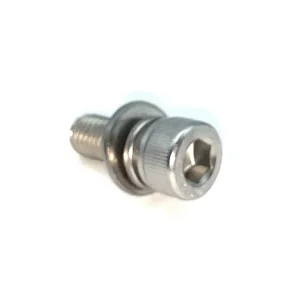
Buy China Stainless Steel Hex Socket Combination Bolt Suppliers - Corrosion Resistant Factory Direct Fasteners Manufacturer, Companies
View Technical Specs
China Premium Aluminum Side Clamps for Solar Panels - China Suppliers & Factory for Rooftop & Ground Mounting Systems Companies, Products
View Technical Specs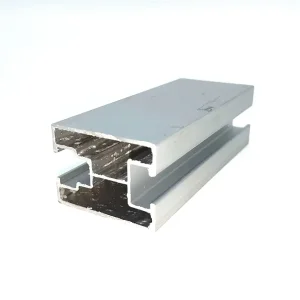
China High-Strength 3040 Reinforced Aluminum Guide Rail for Solar Panels - Trusted China Suppliers & Factory Solutions Companies, Products
View Technical Specs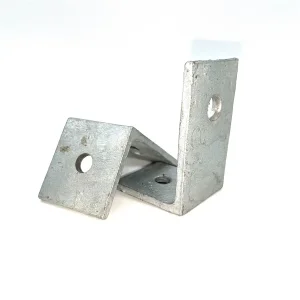
Buy China Suppliers Factory Heavy-Duty Stainless Steel PV Angle Bracket for Solar Mounting Systems Suppliers, Company
View Technical Specs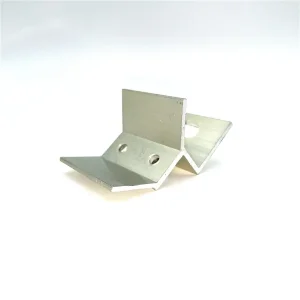
China China Suppliers Factory Trapezoidal Metal Roof Clamp for Solar PV Installation – High-Strength, No-Drill Design Supplier, Companies
View Technical Specs
Buy China Stainless Steel Hex Socket Combination Bolt Factory - Anti-Loosening & Corrosion-Resistant, Quick Installation Suppliers Factories, Products
View Technical Specs
Procurement Knowledge Base
Frequently Asked Questions: Expansion Shell Rock Bolts & Supply Chain
Detailed technical guidance for ground engineering consultants, mine procurement executives, EPC project managers, and structural fastener importers.
What are the exact mechanical components comprising a full expansion shell rock bolt assembly?
A complete industrial expansion shell rock bolt assembly consists of four critical engineered elements:
1. Tension Rod / Rebar Shank: A high-tensile solid steel bar (usually hot-rolled steel bar B500B, ASTM Grade 60, or 40Cr alloy steel) threaded on one or both extremities.
2. Expansion Shell & Tapered Wedge Plug: Two to four serrated outer leaves made of ductile cast iron or stamped high-yield carbon steel held together by a spring bail wire, encasing an internally threaded conical wedge.
3. Bearing / Domed Face Plate: A stamped structural steel plate (typically 150×150 mm or 200×200 mm, 6–10 mm thick) that contacts the rock perimeter to transfer tension load.
4. Spherical Washer & Heavy Hex Nut: Hardened spherical seat washer accommodating angular hole misalignment up to 15 degrees, locked into place by a high-strength hex nut.
How does borehole diameter tolerance impact the holding capacity of expansion shells?
Drill bit tolerance is the single most vital factor in mechanical anchor performance. An undersized hole prevents the expansion shell from reaching its design anchoring depth, while an oversized hole prevents the leaf teeth from adequately biting into the borehole perimeter before the internal wedge reaches maximum travel. Our expansion shells are engineered with specific radial travel profiles:
• 32 mm Shell: Nominal borehole 32–34 mm
• 35 mm Shell: Nominal borehole 35–37 mm
• 38 mm Shell: Nominal borehole 38–41 mm
Worn drill bits that deviate by more than +3 mm will lead to premature leaf slippage during torque tensioning.
• 32 mm Shell: Nominal borehole 32–34 mm
• 35 mm Shell: Nominal borehole 35–37 mm
• 38 mm Shell: Nominal borehole 38–41 mm
Worn drill bits that deviate by more than +3 mm will lead to premature leaf slippage during torque tensioning.
What is the relationship between applied torque and developed tension load?
The mathematical correlation is expressed via the torque-tension equation: T = k · d · F, where T is installation torque (N·m), d is nominal bolt diameter (m), F is axial bolt tension (N), and k is the torque friction factor. For standard dry black steel threads, k typically ranges from 0.20 to 0.25. Under factory wax lubrication or hot-dip galvanization with anti-seize paste, k drops to approximately 0.14–0.16. For an M24 Grade 60 rock bolt, applying 250–300 N·m of calibrated pneumatic or hydraulic torque typically mobilizes 80 to 110 kN of pre-stress clamping tension across the rock plate.
Can expansion shell rock bolts be used for permanent support, or are they strictly temporary?
Expansion shell rock bolts are primarily deployed as primary, immediate support to safeguard miners during rapid excavation cycles. However, they can be readily upgraded into permanent support (50+ year design life) through two proven methods:
1. Post-Grouting Integration: Utilizing hollow-core rebar or installing an adjacent grout tube to inject non-shrink thixotropic cementitious grout along the full borehole length, completely encapsulating the anchor against moisture.
2. Heavy-Duty Protective Metallurgy: Specifying hot-dip galvanization (>85 μm zinc thickness according to ISO 1461) combined with epoxy coatings or switching to 316-grade stainless steel shanks for aggressive subterranean conditions.
How does the factory verify quality consistency across high-volume production batches?
Located in Yongnian District, Handan (China's Premier Fastener Industrial Hub), our facility implements a closed-loop quality management regime certified to ISO 9001:2015:
• Raw Material Intake: Optical emission spectrometry chemical analysis verifying C, Mn, Si, P, and S levels per steel heat.
• Thread Geometry: Continuous optical comparator and go/no-go ring gauge inspection of rolled thread pitch diameters.
• Destructive Pull Testing: Random lot samples tested in 600 kN computer-controlled universal tensile testing rigs to document yield point, ultimate tensile strength (UTS), and elongation percentage.
• Coating Adhesion: Cross-hatch adhesion and magnetic thickness gauge measurements on galvanized coatings.
What lead times, minimum order quantities (MOQ), and shipping terms are standard?
Standard production runs for catalog-dimension rock bolts (M16, M20, M24, lengths 1.2 m to 3.0 m) maintain an MOQ of 5 metric tons (or 1,000 assemblies). Custom forging or non-standard shell geometries require 10 metric tons. Typical dispatch timeframes are 15 to 25 days from contract signing. We regularly ship via Tianjin or Qingdao ports under FOB, CIF, or DDP terms, packed in fumigated steel-banded wooden crates or bundled pallets wrapped in weather-resistant poly-film.