
Certified Structural & Electrical Grounding Hardware (Set I)
Essential ground fault pathway hardware, mechanical structural clamps, and precision-forged galvanic bonding connectors manufactured to ISO & IEC electrical installation standards.
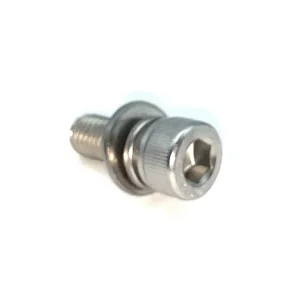
China Stainless Steel Hex Socket Combination Bolt - Factory Direct, Anti-Loosening, Corrosion Resistant
View Technical Specs
Premium Aluminum Alloy Side Clamp for Solar PV Panel Installation Companies, Product
View Technical Specs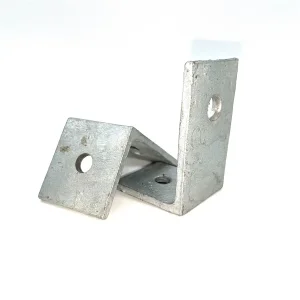
Best Solar PV Mounting Stainless Steel Angle Bracket Manufacturer, Products
View Technical Specs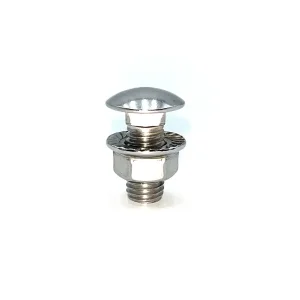
Buy High-Quality Stainless Steel Carriage Bolt - Factory Direct Fasteners for Construction
View Technical Specs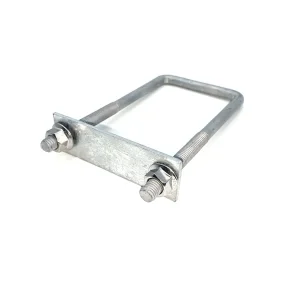
High-Strength Double-Hole Pressure Plate for Solar PV Systems - Factory Direct Supply
View Technical Specs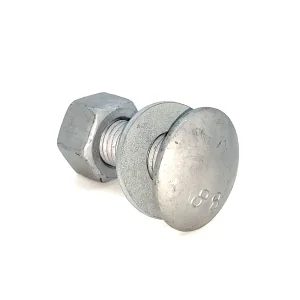
Heavy-Duty Hot-Dip Galvanized Carriage Bolt - Superior Corrosion Resistance For Heavy Grounding
View Technical Specs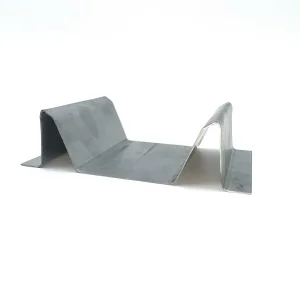
Durable M-Type Aluminum Water Channel for Solar PV Systems - Precision China Manufacturer
View Technical Specs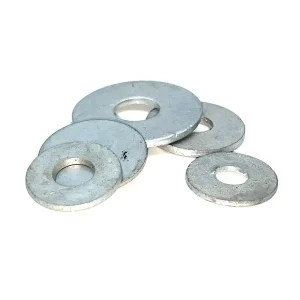
High-Quality Stainless Steel Flat Washer - Durable Factory Direct 304/316 Grounding Washers
View Technical SpecsGlobal Commercial & Industrial Landscape of Ground Fault Breakers
Analyzing the Convergence of Next-Generation Residual Current Devices (RCD), Micro-Arc Fault Interrupting Units, and High-Integrity Ground Fastening Ecosystems
In modern low-voltage electrical distribution networks and high-voltage renewable generation substations, the Wiring Ground Fault Breaker—commonly engineered as a Ground Fault Circuit Interrupter (GFCI), Residual Current Breaker with Overcurrent Protection (RCBO), or Ground Fault Relay (GFR)—represents the critical line of defense protecting human life, high-value industrial automation equipment, and photovoltaic arrays from hazardous leakage currents and thermal runaway events. Driven by stringent mandates such as NEC (National Electrical Code) Article 210.8, IEC 60947-2 (Annex B/M), UL 943, and EN 61009-1, modern commercial and industrial facilities can no longer rely on standard magnetic-thermal overcurrent circuit protection alone to clear low-magnitude, high-impedance ground faults.
A ground fault occurs when an unintended conductive path forms between an ungrounded phase conductor and an equipment grounding conductor (EGC), metallic conduit, mounting racking, or the physical earth. Because fault currents in high-resistance paths may register significantly below the standard thermal-magnetic trip threshold of a standard miniature circuit breaker (MCB) or molded case circuit breaker (MCCB)—frequently lingering between 30 mA and 5 A—they do not trigger immediate magnetic trip coils. Instead, these uncontrolled leakage currents generate localized arcing, degrading dielectric insulation, vaporizing metallic junction terminals, and igniting structural timber or combustible composite roof substrates. Consequently, tier-1 global engineering, procurement, and construction (EPC) conglomerates specify advanced ground fault breakers equipped with high-permeability nanocrystalline current transformers, ultra-fast electronic sensing modules, and precision-torqued mechanical grounding pathways that guarantee sub-30 millisecond trip operations.
Differential Current Sensing
Utilizes ultra-sensitive Zero-Sequence Current Transformers (ZSCT) capable of vectorially summing Phase (L1, L2, L3) and Neutral (N) currents to detect micro-ampere flux imbalances with high electromagnetic noise immunity.
Galvanic Ground Integrity
Electrical safety fails when structural bonding degrades. We engineer factory-matched stainless steel (304/316) and hot-dip galvanized fasteners that eliminate galvanic corrosion between copper conductors and aluminum racks.
High-Frequency Filtering
Advanced Type B and Type F ground fault trip electronics incorporate digital signal processing (DSP) to distinguish between benign high-frequency noise from VFD inverters and lethal DC/AC earth leakage currents.
Technical Compliance Insight: Ground fault circuit protection efficiency is fundamentally dependent on low earth loop impedance ($Z_s$). A high-spec breaker paired with poorly bonded aluminum rails, oxidised mounting clamps, or high-resistance expansion anchors will experience elevated touch potentials ($U_t > 50\text{V}$), violating IEC 60364-4-41 shock protection guidelines before the tripping coil can actuate.
China Fastener & Electrical Cluster Efficiency: Handan Precision Manufacturing
Unlocking Unmatched Scalability, Rigorous Metallurgical Quality, and Vertical Supply Chain Integration for Global OEMs
Located in the heart of Yongnian District, Handan City—widely recognized across international engineering sectors as the Fastener & Structural Hardware Capital of China—Handan Youlong Fastener Co., Ltd. bridges the critical technological link between high-precision circuit breaker housing mechanics and field-installed grounding arrays. Global electrical switchgear suppliers, switchboard fabricators, and renewable energy developers face intensifying margin compression alongside escalating liability standards. Navigating these opposing forces requires an agile, vertically integrated manufacturing partner capable of multi-station automated cold heading, continuous vacuum heat treatment, and computerized electrochemical surface passivation.
By leveraging Handan's deeply integrated supply chain ecosystem, our facility sources prime certified steel billets, high-grade 304/316 austenitic stainless wire, and electrical-grade 6005-T6 aluminum alloys directly from localized upstream primary smelters. This localized geographic concentration reduces domestic logistical transit times to near zero, shielding international procurement departments from global raw material volatility and delivering rapid tooling turnaround within 7 to 10 working days for custom OEM stamping plates, terminal busbar brackets, and tamper-resistant grounding hardware.
Engineering Application Scenarios Across Global Energy & Infrastructure
Engineered to Withstand Demanding Environmental Dynamics from High-Salinity Marine Platforms to High-Vibration Railway Substations
Utility-Scale Solar PV Farms
Mitigates blind DC residual currents generated across extensive PV string modules. Integrated with anodized aluminum rails and SS316 bonding plates to prevent localized fire hazards in C4/C5 desert and coastal solar installations.
Commercial EV Charging Hubs
High-power DC fast chargers (Level 3) generate complex mixed AC/DC leakage profiles. Requires Type B ground fault breakers with sub-6mA DC detection to protect users from dangerous chassis step potentials during charging cycles.
Industrial Automation & Robotics
Variable frequency drives (VFDs) and multi-axis servo controllers introduce harmonic distortions and high parasitic capacitive leakage. Our breaker trip profiles prevent nuisance tripping while preserving precise fault isolation.
Battery Energy Storage (BESS)
Containerized lithium-ion storage arrays operate with floating DC potentials. Continuous insulation monitoring and fast-acting ground fault interrupt relays rapidly de-energize battery racks to avert catastrophic thermal runaway.
Next-Generation Trends Shaping the Wiring Circuit Breaker Sector
Smart Solid-State Interrupters, Micro-Arc Waveform Analysis, and AI-Driven Predictive Insulation Maintenance
The global low-voltage circuit protection sector is undergoing its most radical transformation since the invention of the thermal-magnetic trip unit. As power electronics proliferate throughout every layer of commercial building infrastructure and industrial microgrids, legacy electromechanical breakers are evolving into intelligent, communicative edge nodes within the broader smart grid ecosystem.
1. Solid-State Circuit Breakers (SSCBs): By replacing mechanical contact arms and spring-loaded trip latches with wide-bandgap (WBG) semiconductors—such as Silicon Carbide (SiC) and Gallium Nitride (GaN) MOSFETs—solid-state ground fault breakers achieve interruption speeds under 5 microseconds. This virtually eliminates the electrical arc entirely, extending equipment lifespan indefinitely and preventing catastrophic switchgear arc flash explosions.
2. Waveform AI Edge Processing: Standard ground fault protection relies purely on root-mean-square (RMS) current magnitude thresholds. Modern intelligent breakers embed micro-digital signal processors running lightweight machine learning inference models. By sampling line current at 200 kHz, these smart breakers can differentiate between the benign current signature of an LED driver switching surge and the chaotic, high-frequency sputtering of a dangerous series or parallel micro-arc ground fault.
3. Dynamic Remote Diagnostics & IoT Integration: Industrial operators can no longer accept unmonitored passive components. Cutting-edge wiring ground fault breakers integrate Modbus-RTU, BACnet, and wireless Zigbee/Matter protocols. Continuous ohmic measurement of insulation resistance ($R_{iso}$) to earth enables facilities engineers to detect progressive moisture ingress, cable sheath abrasions, and terminal overheating days or weeks before an unexpected operational shutdown occurs.
Global Enterprise Procurement Specification Matrix
Engineering Parameters for Selecting Breaker Mechanisms, Trip Sensitivity, and Mechanical Fastening Classes
| Classification | Leakage Sensitivity ($I_{\Delta n}$) | Operating Characteristics | Standard Compliance | Ideal Hardware Pairing |
|---|---|---|---|---|
| Type AC Standard | 10mA / 30mA | Sinusoidal alternating currents only; instantaneous trip under 40ms. | IEC 61008-1 | Grade 8.8 Galvanized Carriage Bolts & Zinc Flat Washers |
| Type A Industrial | 30mA / 100mA / 300mA | Sinusoidal AC plus pulsating rectified DC residual currents up to 6mA. | EN 61009-1 | SS304 Socket Combination Bolts & Pre-Assembled Spring Washers |
| Type F Frequency Controlled | 30mA / 300mA | Multi-frequency leakage (10Hz–1kHz); resilient to 10ms transient surges. | IEC 62423 | Anodized Aluminum Guide Rails (3040 Profile) & EPDM Isolators |
| Type B EV & PV Grade | 30mA / 100mA / 500mA | Pure DC currents, smooth DC, high-frequency AC up to 100kHz. | UL 943 / IEC 60947-2 | Marine Grade SS316 Carriage Bolts, Angle Brackets & Lock Nuts |
| BESS Container Substation | Configurable 50mA–3A | Selective time-delay tripping ($0.1\text{s} - 1.0\text{s}$) with SCADA feedback. | IEEE C37.90 | Heavy-Duty Mechanical Concrete Expansion Anchors & Structural Plates |
High-Torque Mounting Hardware & Structural Protection Fasteners (Set II)
Critical mechanical load-bearing fasteners, reinforced aluminum guide rails, and precision-engineered pressure plates engineered for demanding industrial enclosures and solar ground arrays.
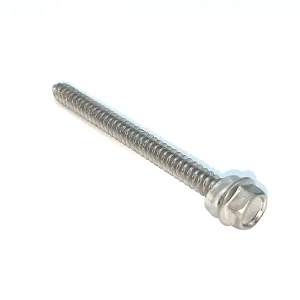
High-Quality Stainless Steel Self-Drilling Screws - Fast Installation and Superior Durability
View Technical Specs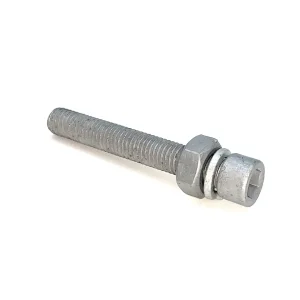
Best High-Strength Hex Socket Bolt - Durable Carbon Steel Industrial Fasteners
View Technical Specs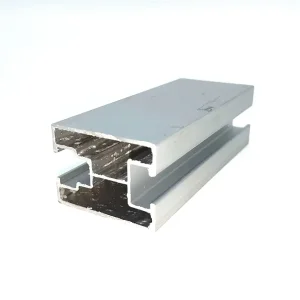
Buy High-Strength 3040 Reinforced Aluminum Guide Rail for Solar Mounting
View Technical Specs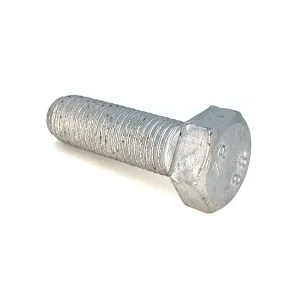
Heavy-Duty Hot-Dip Galvanized Hex Bolts - High Strength Fasteners From Leading Supplier
View Technical Specs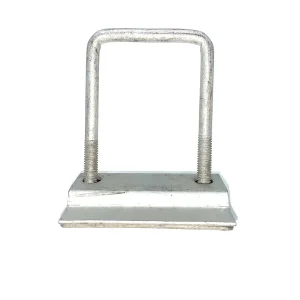
High-Strength Double-Hole Pressure Plate for Solar PV Mounting - Top China Supplier
View Technical Specs
Best Durable M-Type Aluminum Water Channel for Solar PV Systems - Effective Rainwater Drainage
View Technical Specs
China High-Strength Hex Socket Bolt - Durable Fasteners for Machinery & Construction
View Technical Specs
High-Strength 3040 Reinforced Aluminum Guide Rail for Solar PV Systems - Factory Direct
View Technical SpecsFrequently Asked Questions on Ground Fault Breakers & Grounding Systems
Exhaustive Engineering Answers Addressing Trip Sensitivities, Installation Standards, Ground Loops, and Material Specifications
What is the core difference between a standard MCB and a Wiring Ground Fault Breaker?
A standard Miniature Circuit Breaker (MCB) only detects overcurrents and dead short circuits (typically exceeding 10A to 63A) using bimetallic strips and magnetic solenoids. It cannot detect high-impedance earth leakages between 5mA and 500mA. A Wiring Ground Fault Breaker (GFCI/RCBO) monitors current vector summation across line and neutral conductors using a zero-sequence toroidal transformer, instantly tripping within 20–40 milliseconds whenever current leaks to earth, thereby preventing fatal electrocution and arc flash fires.
Why is structural fastener selection critical to ground fault circuit performance?
A ground fault breaker relies on an unbroken, ultra-low impedance return path back to the neutral-ground bonding point. If structural connections utilize non-conductive, oxidised, or mismatched metals that incur galvanic corrosion, resistance spikes dramatically. Under fault conditions, high loop impedance limits fault current, preventing the breaker from hitting its magnetic trip point and leaving metal enclosures energized at lethal voltages.
When must Type B ground fault breakers be specified instead of Type A?
Type A breakers only detect sinusoidal AC and pulsating rectified DC residual currents. In systems with three-phase inverters, uninterruptible power supplies (UPS), battery storage systems (BESS), and DC electric vehicle chargers, smooth pure DC leakage currents can saturate the magnetic core of a Type A device, blinding it to faults. Type B breakers incorporate specialized fluxgate cores and digital filtering to reliably detect pure DC and high-frequency currents up to 100 kHz.
How does Handan Youlong ensure salt-spray resistance in high-corrosion environments?
Our fasteners undergo rigorous passivation and surface coating protocols. Hot-dip galvanized bolts adhere to ISO 1461 standards with coating thicknesses exceeding 85 μm, delivering over 1,000 to 1,500 hours of continuous neutral salt spray (ASTM B117) exposure without red rust formation. Our austenitic 304 and 316 stainless steel components undergo ultrasonic cleaning and chemical passivation to guarantee complete surface passivity in harsh marine environments.
What causes nuisance tripping in commercial ground fault installations and how is it solved?
Nuisance tripping is primarily caused by long cable runs exhibiting high parasitic capacitance to ground, high-frequency harmonics from variable speed drives, or moisture accumulation inside junction boxes. Solutions include segmenting radial branch circuits, installing transient-resistant Type F or Type B breakers with integrated low-pass digital filters, and ensuring all mounting rails feature drainage channels (such as our M-type aluminum profiles) to prevent water pooling.
What is the standard breaking capacity requirement for industrial wiring ground fault breakers?
For residential distribution, an ultimate breaking capacity ($I_{cu}$) of 6 kA or 10 kA is customary. However, in heavy industrial substations, solar central inverter skids, and factory motor control centers, prospective short-circuit currents can easily surpass 25 kA to 50 kA. Industrial installations specify heavy-duty molded-case ground fault breakers rated at $I_{cu} \ge 36\text{ kA}$ or $50\text{ kA}$ at 400V/480V, backed by comprehensive type-test documentation.
Can Handan Youlong manufacture custom ground busbar fasteners and mounting plates?
Yes. Supported by automated progressive stamping presses, cold-forging heading machines, and precision CNC milling centers, we execute OEM/ODM manufacturing based on customer CAD/step drawings. We manufacture custom dimensions, hole patterns, serrated anti-rotation bases, and special plating finishes (such as tin, nickel, or silver plating) tailored for electrical busbar bonding and solar module framing.
How do isolating washers prevent galvanic corrosion between aluminum and steel?
Aluminum has an electrochemical potential of approximately -1.66V, whereas carbon steel sits around -0.44V. In the presence of moisture (an electrolyte), an active galvanic cell forms, rapidly oxidizing the aluminum rail or plate. Utilizing non-conductive EPDM or specialized high-density polymer isolating washers physically separates the metals, halting electron transfer while maintaining high mechanical clamping pressure.
What international export quality certifications do your manufacturing batches provide?
Every shipment dispatched from our Yongnian manufacturing hub is accompanied by comprehensive 3.1 Mill Test Certificates (EN 10204), chemical composition breakdowns, mechanical tensile and yield test reports, torque-tension test documentation, and salt spray corrosion test verification. We maintain strict compliance with ISO 9001 quality management systems and RoHS environmental standards.
What is the typical lead time and supply capacity for large container orders?
With cumulative shipments surpassing 300,000 metric tonnes, our facility is engineered for volume throughput. Standard metric catalog fasteners and aluminum PV rails are maintained in stock for immediate shipment within 3 to 5 business days. Custom cold-forged fasteners, stamped pressure plates, or specialized plating batches typically require 15 to 25 calendar days for a 20ft/40ft full container load (FCL).