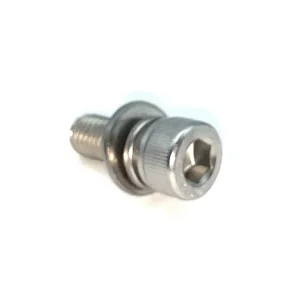
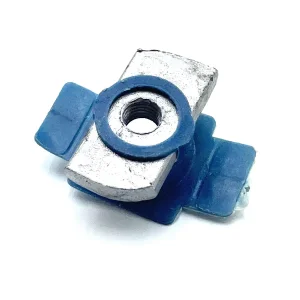
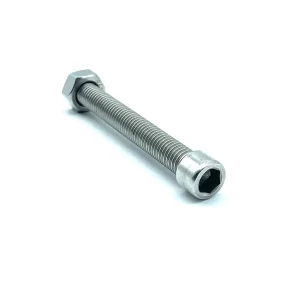
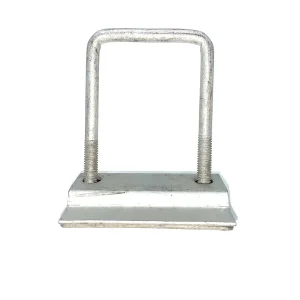
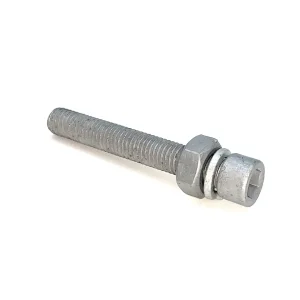
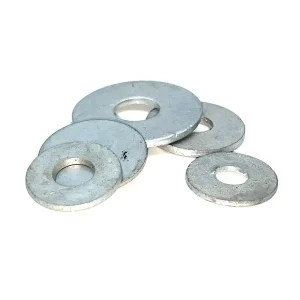
Precision Grounding & Mounting Fastener Selection
Engineered to handle severe lightning transients, fault currents, and atmospheric galvanic exposure across global commercial deployments.
Sub Panel Grounding Architecture: Science & Safety Compliance
A deep analysis into auxiliary electrode requirements, separating neutral and grounding buses, and avoiding fatal circulating ground loops.
In contemporary power distribution, photovoltaic microgrids, and high-voltage industrial enclosures, the proper integration of a sub panel ground rod (auxiliary grounding electrode) stands as one of the most rigorously evaluated electrical safety measures. Under standard National Electrical Code (NEC) guidelines—specifically NEC 250.32(A) and (B)—the necessity of driving an independent grounding electrode at a sub panel fundamentally hinges on whether the secondary distribution board is located within the same continuous physical building or serving a detached outbuilding, secondary manufacturing plant, or remote utility-scale solar PV combiner cluster.
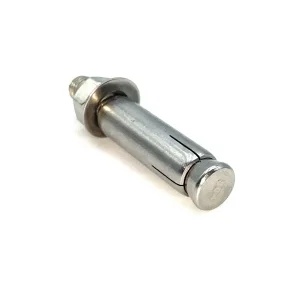
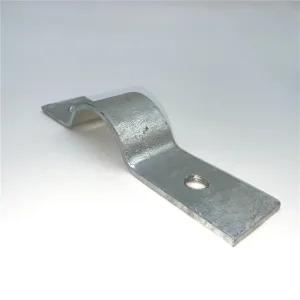
When an electrical feeder runs from a main distribution board to a detached workshop, agricultural pumping station, or remote commercial facility, soil potential gradients and atmospheric voltage transients make a dedicated earth reference mandatory. Ground rods installed at these sub panels provide a low-impedance path to earth, equalizing surface voltage gradients caused by lightning strikes, electrostatic discharges, and unintentional high-voltage phase contact. As leading manufacturers based in China's industrial fastener and hardware capital, Handan Youlong Fastener Co., Ltd. supplies the precision metallurgy, structural brackets, expansion anchors, and heavy-duty grounding electrodes needed to maintain reliable earth contact over 30+ year design lifetimes.
Fasteners & mounting systems delivered globally.
Compliance with NEC 250.53 earth electrode rules.
ASTM B117 tested for high-saline coastal soils.
Direct OEM & custom drawing production.
Why Sourcing Grounding Hardware from China Factories Excels
Combining heavy metallurgical infrastructure, vertically integrated electroplating, and direct port access to reduce procurement costs by 30-45%.
Integrated Raw Steel & Copper Ecosystem
Handan City is historically China's fastener epicenter. Youlong Fastener commands immediate upstream access to premium low-carbon structural steel (Q235B, AISI 1018/1045) and electrolytic cathode copper (99.9% purity), drastically reducing supply chain lag and transport premiums.
- Zero middleman markups on billet rolling
- Continuous drawing and precision straightening
- Immediate access to industrial tooling dies
Molecular Electro-Cladding Precision
Our production facilities utilize continuous automated molecular electro-deposition. Rather than fragile mechanical sleeves, our copper layer achieves a continuous, metallurgically bonded thickness exceeding 10 to 13 mils (254 to 330 microns), certified to endure extreme hammer driving without peeling.
- UL 467 & BS EN 62561-2 copper adhesion testing
- High tensile core strength (>600 N/mm²)
- Micro-crack-free roll-threaded drive studs
Scalable High-Volume Cold Forging & CNC
Equipped with high-speed multi-station heading units, automated stamping rows, and high-capacity hot-dip galvanizing baths, our factory comfortably processes multi-ton phased consignments for megawatt solar fields and transcontinental rail infrastructure.
- Tensile & shear load verification on every batch
- In-house salt spray corrosion chamber
- Turnkey OEM drawing compliance within 48h
Sub Panel Ground Rod Metallurgical Selection Guide
Compare conductivity, mechanical drive toughness, soil chemistry compatibility, and cost trade-offs across common rod formulations.
| Electrode Material Type | Standards Compliance | Conductivity vs Copper | Mechanical Drive Rigidity | Corrosion Resistance | Ideal Soil Conditions |
|---|---|---|---|---|---|
| Copper-Bonded Carbon Steel | UL 467 / IEC 62561-2 | Moderate-High (~20%) | Exceptional (High Carbon) | Excellent (30-40 yr design life) | Standard Loam, Clay, Sand, Neutral pH soils |
| Hot-Dip Galvanized Steel (HDG) | ASTM A153 / BS 729 | Moderate (~10%) | Very High | Good in Non-Acidic Earth | Rocky terrain, heavy alkaline soils (pH > 8.0) |
| Solid Stainless Steel (304 / 316) | EN 10088-3 / ASTM A276 | Low (~3.5%) | Outstanding (No Coating Loss) | Immune to Galvanic Cell Action | Marine intertidal, chemical plants, highly acidic soils |
| Solid Copper (Hard-Drawn) | ASTM B187 / BS 2874 | Maximum (100% IACS) | Low (Vulnerable to bending) | Superb but prone to theft/scrappage | Low-impedance telecommunications earth pits |
| Chemically Enhanced Earth Rod | IEEE 80 / NFPA 780 | Active Salt Leach System | Encased Tubular Assembly | Continuous Electrolytic Conditioning | High-resistivity solid rock, arid deserts, gravel sites |
When selecting ground rods for sub panel grounding systems, the primary design tradeoff is mechanical rigidity during driving versus electrical conductivity and electrochemical stability. In dense clay or rocky substrata, solid copper rods invariably mushroom or buckle under heavy pneumatic demolition hammers. Copper-bonded high-strength steel electrodes from Youlong integrate the sheer column strength of cold-drawn carbon steel with an electro-plated sheath of pure copper. The result is zero delamination during installation and an earth-dissipating interface that resists subsurface galvanic cell attacks between buried steel conduits and adjacent structural foundations.
Macro-Industry Solutions & Local Application Scenarios
How Youlong's hardware and grounding rod systems deliver safe equipotential bonding across demanding industrial settings.
Detached Commercial Workshops
For independent manufacturing bays, CNC annexes, and warehousing outbuildings, NEC 250.32 mandates a dedicated grounding electrode system. Utilizing two sub panel ground rods driven 6 feet apart guarantees path redundancy, protecting precision electronics from switching spikes.
Utility-Scale Photovoltaic Arrays
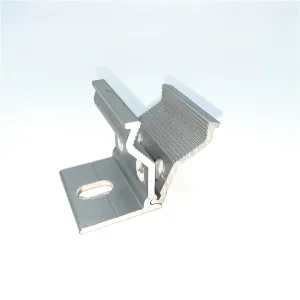
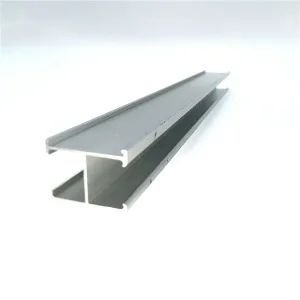
Combiner boxes and string inverter sub panels positioned throughout utility solar fields require robust local grounding. Youlong's reinforced aluminum guide rails, expansion anchors, and ground rods form an unbroken equipotential mesh to counter lightning induced surges.
Telecom & Edge Data Centers
Cellular base stations and remote fiber micro-distribution huts experience rapid transient rises during atmospheric electrical activity. Low-impedance sub panel ground rod pairs suppress ground potential rise (GPR) to protect high-frequency sensitive radio hardware.
Heavy EV Charging Infrastructure
DC Fast Charging plazas rely on high-amperage sub distribution panels. If insulation breaks down within a 350kW charger, our solid bonded grounding rods and stainless expansion anchors ensure instantaneous tripping of upstream ground-fault protective relays.
Global Enterprise Sourcing, Inspection & Compliance
Meeting the strict documentation criteria of EPC contractors, government infrastructure tenders, and cross-border project logistics.
EN 10204 Type 3.1 Certified MTRs
Every shipment is accompanied by complete mill test certificates covering heat numbers, carbon content, yield strength, copper purity, and plating thickness verification. Batch traceability ensures complete structural transparency for audit-heavy energy sectors.
Aggressive Corrosion Qualification
Certified in-house laboratories run continuous salt-fog testing (ASTM B117) and mechanical wrap tests (IEC 62561-2). Rod specimens are bent 180 degrees around a mandril to verify that the copper bond shows zero cracking, flaking, or delamination under stress.
Containerized Phased Project Logistics
Export packaging features heavy wooden pallets, custom rust-inhibiting VCI film wrapping, and heavy-gauge strapping capable of surviving multimodal sea shipping. We synchronize staggered container dispatches directly with EPC installation timelines.
Emerging Trends in Electrical Grounding & Soil Metallurgy
From active chemical dissipation to smart embedded IoT soil impedance sensors, discover where the industry is heading.
As microgrids, decentralized renewable energy plants, and high-frequency inverter systems expand, sub panel grounding is evolving rapidly beyond standard copper-plated rods driven arbitrarily into soil:
1. Transition to Electrolytic Chem-Rod Systems
In high-resistivity geographical zones such as rocky ridge-tops, volcanic islands, and arid regions where soil resistance exceeds 500 Ω-m, traditional 8-foot rods cannot achieve the standard 25-ohm threshold without exorbitant drilling footprint. Chemically self-conditioning earth electrodes—perforated copper or stainless pipes filled with hygroscopic mineral salts—gradually leach electrolytes into the surrounding soil mantle, drawing moisture out of ambient air and lowering baseline soil resistivity by up to 80% without manual salting.
2. IoT-Enabled Soil Impedance & Cathodic Monitoring
Large enterprise data centers and offshore wind substations increasingly demand live status tracking of their grounding grid integrity. Modern sub panel ground systems integrate smart telemetry clamps that continuously measure ground loop resistance, leakage current, and electrode mass loss through eddy-current spectroscopy, notifying operations centers prior to hazardous resistance spikes.
3. Graphene and Conductive Backfill Mortars
Standard bentonite clay slurries suffer from volumetric shrinkage and cracking during sustained heatwaves, severing contact between the ground rod and native earth. The adoption of carbon-based conductive backfill compounds (incorporating expanded graphite and metallurgical carbon) maintains an unyielding, zero-shrink volume around the electrode, preventing lightning flashover and dramatically shrinking earth grid resistance.
Frequently Asked Questions on Sub Panel Ground Rod Installations
Crucial code clarifications and best installation practices for electrical project managers and sourcing directors.
Does a sub panel in the same building require a ground rod?
No. Under NEC 250.32, if the sub panel is located within the exact same structural envelope as the main service panel, a dedicated ground rod is neither required nor recommended. Ground fault currents must return to the main panel via the Equipment Grounding Conductor (EGC)—such as an insulated copper wire or listed metal conduit. Adding an isolated ground rod inside the same building can introduce unsafe potential differences during lightning events.
Why must the neutral and ground buses be isolated at the sub panel?
Because the neutral conductor is a regular current-carrying conductor, bonding it to the chassis or grounding bus in a sub panel creates multiple parallel return paths for neutral current through the equipment grounding wires, metal conduit, and equipment frames. This dangerous condition causes continuous circulating current, energizing metal housings and posing severe electric shock and fire hazards.
When is a ground rod strictly mandatory for a sub panel?
A ground rod (or grounding electrode system) is mandatory whenever a sub panel is installed in a detached building or outdoor structure (such as a separate barn, remote machine shop, detached garage, or field-mounted solar combiner box), fed by a feeder from the main facility. This provides a direct path to earth for lightning and stabilizes local earth reference voltages.
Do I need one or two ground rods for an outbuilding sub panel?
Per NEC 250.53(A)(2), if a single driven rod electrode does not demonstrate an earth resistance of 25 ohms or less, it must be augmented by an additional electrode. Since field testing resistance with a fall-of-potential tester is often costlier than driving a second rod, engineering specifications standardly mandate two ground rods spaced at least 6 feet (1.8 meters) apart—with 10 to 12 feet spacing preferred for maximum dissipation efficiency.
What is the standard diameter and length of a commercial ground rod?
Standard UL 467 compliant copper-bonded ground rods typically have nominal diameters of 1/2 inch (12.7 mm), 5/8 inch (15.8 mm), or 3/4 inch (19.05 mm), with lengths of 8 feet (2.44 m) or 10 feet (3.05 m). The 5/8" x 8' or 5/8" x 10' configurations are by far the most ubiquitous sizes requested by international EPC contracts.
How does copper-bonded steel prevent galvanic corrosion compared to bare steel?
Bare carbon steel buried in moist soil oxidizes into iron oxide rapidly, shedding mass and losing ground contact. The outer 10-mil electro-deposited copper skin shields the steel core from electrochemical attack. Because copper has a higher electrode potential than iron, it remains cathodically stable in typical soils for decades, preserving low contact resistance.
Can Youlong manufacture customized ground rods and anchor hardware?
Yes. Handan Youlong Fastener specializes in custom cold forging, CNC machining, and electro-plating to customer blueprint specifications. We supply threaded coupling rods, pointed drive tips, specialized grounding clamps, and complete PV mounting hardware packages with full dimensional and salt-spray inspection certificates.
What tests does Youlong perform on export-grade ground rods?
We execute rigorous quality control checks in our Yongnian facility: ASTM B117 salt spray endurance testing, ASTM E8 core steel tensile tests, UL 467 copper adhesion bend tests (180-degree wrap without peeling), and eddy-current plating thickness cross-section verifications.
Precision Structural Fasteners & Mounting Components
Complete your balance of system (BOS) procurement with heavy-duty structural hardware manufactured to tight CNC tolerances.