Precision Grounding & PV Mounting Structural Systems
Engineered hardware ensuring structural integrity, galvanic compatibility, and continuous earthing paths across utility solar, industrial arrays, and heavy infrastructure.
Flex-Fatigue Cycles Tested
Loop Resistance Target
Salt-Mist Coastal Class
Global Cumulative Output
The Engineering Evolution of Spiral Earthing Cables & Dynamic Grounding Systems
Analyzing high-resilience coiled bonding jumpers in dynamic photovoltaic tracking systems, petrochemical earthing, automated manufacturing, and extreme climatic applications.
In contemporary industrial electrical design, structural grounding and equipotential bonding are no longer static, fit-and-forget considerations. As industrial plants transition toward high degrees of automation, dynamic solar tracking systems, robotic material handling, and large-scale battery energy storage systems (BESS), the requirement for uninterrupted electrical bonding across moving joints has become critical. The Spiral Earthing Cable—also engineered as coiled grounding jumpers, helical static discharge cables, or dynamic equipotential bonding leads—serves as the primary line of defense against high-energy fault currents, electrostatic discharge (ESD), and high-frequency atmospheric surge phenomena.
Historically, industrial plants utilized braided flat copper strips or standard stranded bare copper cables to connect articulated metal frames to main earth bars. However, field validation over the past two decades has revealed acute vulnerabilities: continuous mechanical oscillation, rotational tracking, and high cyclic torsion induce rapid work-hardening of standard copper strands. This micro-structural metal fatigue leads to premature strand breakage, progressive impedance escalation, and catastrophic arc-flash hazard during unmitigated ground-fault conditions. The emergence of specialized spiral earthing conductors, reinforced with thermo-mechanically set polyurethane (PUR/TPU) memory jackets and ultra-fine Class 5 or Class 6 high-purity electrolytic copper stranding, has resolved this operational bottleneck.
Dynamic Coiling Physics: Managing High-Frequency Lightning Surges vs. Inductive Reactance
A primary consideration in specifying spiral earthing conductors for renewable infrastructure is the balance between surge impedance and structural elasticity. While coiled conductors exhibit superior mechanical life cycles, the helical geometry introduces an inherent self-inductance ($L$). Under high-rate-of-rise transient conditions, such as direct cloud-to-ground lightning discharge ($10/350\,\mu\text{s}$ current impulses) or nearby electromagnetic induced pulses (LEMP), the inductive reactance ($X_L = 2\pi f L$) can produce a substantial transient voltage drop ($V = L \cdot di/dt$) along the conductor.
To mitigate this electrical phenomenon without compromising elasticity, Tier-1 manufacturing enterprises integrate counter-helical braiding configurations or optimized pitch-to-diameter aspect ratios ($P/D \approx 1.8 \text{ to } 2.4$). By utilizing high-density tin-plated or oxygen-free copper (OFC) cores with cross-sectional areas calibrated between $6\,\text{mm}^2$ and $50\,\text{mm}^2$, modern dynamic grounding assemblies maintain low surge impedance while ensuring continuous DC dissipation paths that suppress static accumulation in accordance with ATEX Directive 2014/34/EU and NFPA 77.
Engineering Comparison: Dynamic Grounding Technologies
Evaluating electrical, mechanical, and climatic performance parameters across dynamic bonding modalities for EPC specification and asset risk mitigation.
| Evaluation Parameter | PUR Spiral Earthing Cable | Flat Braided Copper Strap | Standard Stranded Jumper (PVC/XLPE) | Solid Copper/Steel Rod Bonding |
|---|---|---|---|---|
| Dynamic Flex Fatigue Life | > 100,000 Cycles (Zero strand severance) | 5,000 - 15,000 Cycles (Edge strand fracture) | < 3,000 Cycles (Severe work hardening) | Zero Dynamic Rating (Rigid static only) |
| Environmental Outer Jacketing | UV-Stabilized Halogen-Free Flame Retardant PUR / TPU | Bare / Tinned Copper (Unjacketed or Heat Shrink) | Standard PVC or Cross-linked Polyethylene (XLPE) | Hot-Dip Galvanized / Bare Mill Finish |
| Short-Circuit Capacity ($I^2t$) | High (Engineered to IEC 62561-2 standards) | Moderate to High (Risk of thermal bloom) | Standard (Subject to jacket melt under fault) | Extremely High (Bulk thermal mass) |
| Ozone & Hydrocarbon Resistance | Outstanding (DIN EN 60811-404) | Poor (Direct atmospheric particulate exposure) | Moderate (Plasticizer migration risk) | Corrosion Layer Formation Dependent |
| Terminal Crimp Pull-Off Force | > 2.5 kN (Cold-pressed double-dimple with adhesive seal) | Moderate (Susceptible to lug cracking) | Standard (Single crimp without environmental barrier) | Welded or Threaded Mechanical Fastener |
| Target Industrial Sector | Single-Axis Trackers, Wind Nacelles, AGVs, Tank Farms | Stationary Cabinet Doors, Switchgear Equipotential | Static Cable Trays, Permanent Building Steelwork | Substation Earthing Grid, Perimeter Rings |
China Factory 4.0: Supply Chain Resilience & Handan Industrial Cluster Advantages
Examining the vertical integration, material science capabilities, and automated quality infrastructure driving global renewable hardware supply security.
Vertical Cluster Synergies
Situated in Yongnian, Handan—the epicentre of China's structural fastener and metal processing industry—our ecosystem provides immediate access to precision steel drawing, automated cold heading, and specialized electroplating facilities within a 15-kilometer radius.
- Reduced raw material inventory lead-times
- Billet-to-fastener traceability via digital lot control
- Consolidated multi-component containerized freight
Industry 4.0 Robotic Assembly
Automated multi-axis winding, computer-controlled coiling heat treatment, and precision crimping workcells eliminate human variability. Every production lot undergoes continuous tension monitoring and dimensional laser scanning during coiling stabilization cycles.
- Automated terminal crimp pull-test verification
- Hermetic adhesive shrink-wrap thermal sealing
- Consistent memory-coil dynamic recoil force
Certified Metallurgy & Testing
Complete testing laboratory infrastructure executing accredited salt spray corrosion analysis (ASTM B117), micro-ohmmeter contact resistance evaluations, and high-frequency cyclical stress simulations ensure uncompromising international compliance.
- Standard 1,000-hour neutral salt spray validation
- Spectral chemical assay on SS304/SS316 batches
- EN 10204 Type 3.1 inspection certification
Global Industrial Deployment & Localized Use Scenarios
How specialized earthing hardware and structural mounting interfaces resolve extreme mechanical, thermal, and chemical challenges across global project sites.
Utility Solar Trackers
Continuous $\pm 60^\circ$ diurnal tracker rotation demands grounding cables that bridge torque tubes to stationary pile brackets without sagging, binding, or fatigue embrittlement in desert ambient temperatures ranging from $-30^\circ\text{C}$ to $+65^\circ\text{C}$.
Wind Turbine Nacelles
Nacelle yaw rotation and pitch control mechanisms generate constant dynamic movement. Coiled ground leads safely bypass non-conductive slewing bearing grease barriers, ensuring lightning discharge current channels directly down the steel tower.
Containerized BESS
Utility Battery Energy Storage Systems require flexible, compact equipotential jumpers across rack chassis, modular door hinges, and high-voltage DC disconnect switches, ensuring zero fire risk caused by static micro-arcing in unventilated compartments.
Petrochem ATEX Zones
Refineries, fuel loading gantries, and chemical solvent transferring terminals require ATEX/IECEx certified coiled static bonding reels with spark-free bronze or stainless clamps to eliminate explosive atmospheric discharges during mobile tank docking.
Engineering Questions: Dynamic Grounding & Mounting Systems
Detailed technical answers addressing cross-sectional calculations, galvanic isolation, coating durability, and international compliance verification.
The cross-sectional conductor area ($S$) is determined using the adiabatic thermal equation from IEC 60364-5-54: $S = \sqrt{I^2 \cdot t} / k$, where $I$ represents the maximum prospective fault current in amperes (RMS), $t$ denotes the disconnection operating time of the protective device in seconds, and $k$ represents the material factor (typically $k=143$ for PVC-insulated copper and $k=176$ for bare/PUR-jacketed copper). For tracker arrays, mechanical flex fatigue generally mandates a minimum mechanical baseline of $10\,\text{mm}^2$ (approx. 8 AWG) or $16\,\text{mm}^2$ (approx. 6 AWG), irrespective of purely thermal requirements.
Direct mechanical coupling between metallic copper ($E^\circ \approx +0.34\,\text{V}$) and aluminum ($E^\circ \approx -1.66\,\text{V}$) creates a galvanic potential exceeding $2.0\,\text{V}$, causing aggressive electrochemical corrosion of the aluminum substrate in moist or salt-laden environments. We resolve this by providing heavy electro-tin-plated copper lugs (minimum $8\text{--}12\,\mu\text{m}$ Sn coating thickness) or bimetallic friction-welded Cu-Al compression terminal lugs. Alternatively, 304/316 stainless steel serrated contact washers and insulating EPDM barriers are placed between dissimilar metals to maintain conductivity through piercing points while preventing surface electrolyte bridging.
Polyurethane (PUR / TPU ether-based) compounds are the industry standard for high-durability spiral grounding cables. Compared to conventional PVC, which experiences plasticizer leaching and cracking under intense ultraviolet irradiation, ether-based polyurethane exhibits zero micro-cracking during 2,000-hour accelerated QUV weatherometer testing (ASTM G154). Furthermore, PUR maintains flexible memory recoil characteristics across extreme thermal cycles ($-40^\circ\text{C} \text{ to } +90^\circ\text{C}$) and resists oil, microbial soil degradation, and mechanical abrasion from wind-blown desert sands.
Utility bankability and insurance verification require complete third-party test dossiers. These include: (1) Electrical continuity and resistance testing per UL 467 / IEEE 837; (2) Lightning current impulse testing ($10/350\,\mu\text{s}$) to IEC 62561-1 Class H ($100\,\text{kA}$); (3) Dynamic cyclic endurance certification (minimum 50,000 extension cycles without conductor degradation); (4) Salt spray corrosion certification according to ISO 9227 or ASTM B117; and (5) Mill test certificates to EN 10204 Type 3.1 certifying raw material chemical and mechanical compositions.
Heavy-Duty Mounting & Equipotential Fastener Infrastructure
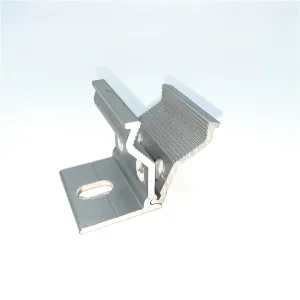
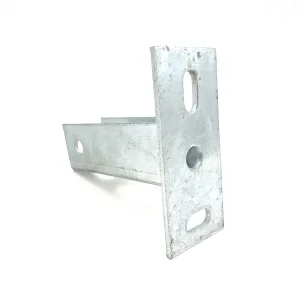
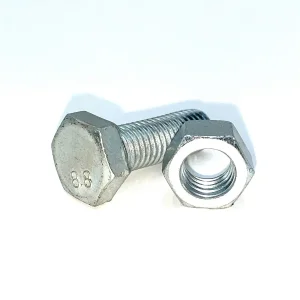
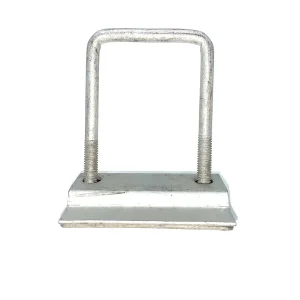
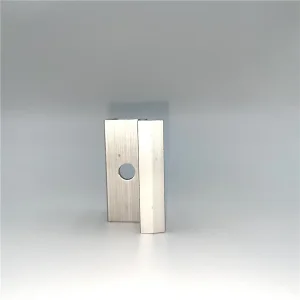
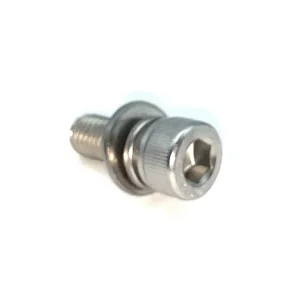
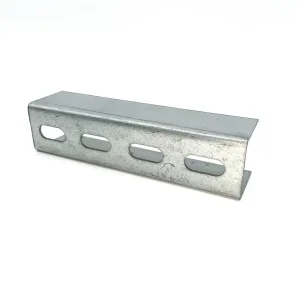
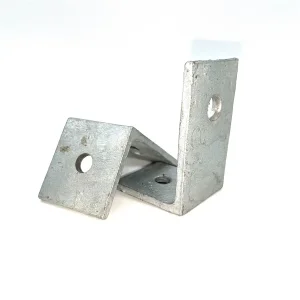
Direct factory supply of pressure plates, roof clamps, structural base foundations, and anchor expansion fasteners engineered for utility power plants and building systems.