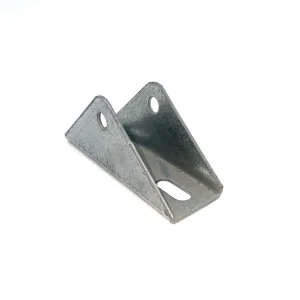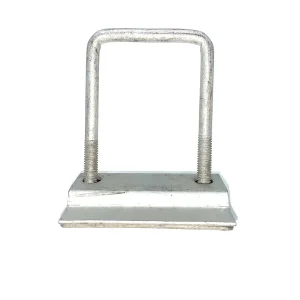
Buy High-Strength Double-Hole Pressure Plate for Solar PV Mounting - Top China Suppliers & Factory Suppliers, Companies
Explore Specification
Engineered for resilience, high-stress load distribution, and rapid rooftop deployment across residential, commercial, and industrial arrays.
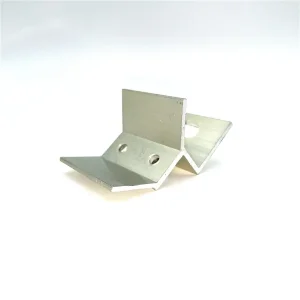
Analyzing the kinematic advantages, mechanical yield capacities, and structural economics of Single Adjustable Solar Hooks in next-generation photovoltaic installations.
In contemporary solar civil engineering, rooftop substructures act as the critical physical bridge transferring dead weights, extreme aerodynamic uplift, and snow loads from PV modules into the underlying building trusses. Traditional pitched tile roof installations historically depended on rigid, unibody hooks. However, structural audits have demonstrated that fixed mounting hooks routinely cause point-load stress concentrations, roof tile cracking, water ingress, and localized rail misalignment due to dimensional variances in roof battens and uneven rafters.
The Single Adjustable Hook has emerged as the definitive global standard to solve these failure vectors. Engineered with an integrated longitudinal or vertical adjustment slot, a single adjustable hook allows installers to compensate for rafter depressions and batten height variances (typically between 30mm to 55mm) with sub-millimeter precision. By isolating torque distribution across the baseplate while maintaining a rigid moment-resisting arm, these components eliminate tile cutting or destructive grinding, preserve weatherproofing integrity, and drastically reduce installation labor hours.
Fabricated from cold-rolled, work-hardened austenitic SUS304 / 1.4301 stainless steel, offering an ultimate tensile strength exceeding 520 MPa and exceptional plasticity without micro-fracturing under extreme cyclic buffeting.
Equipped with a micro-ribbed contact interface that bites mechanically under standard torque (12–15 N·m), preventing slip or downward deflection when heavy snow loads blanket the solar array in alpine or northern environments.
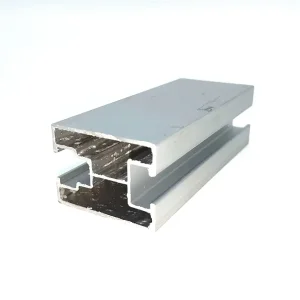
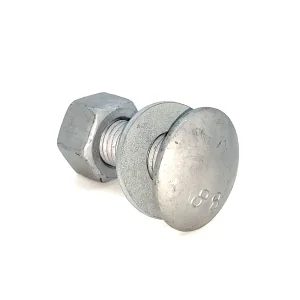
Engineered to integrate seamlessly with both lateral side-mount and top-mount aluminum guide rail profiles (such as 3040, 4040, and custom extrusion geometries) using standardized M8 / M10 T-bolts or carriage bolts.
International EPC contractors and tier-1 solar distributors enforce strict qualification criteria before clearing single adjustable hooks for multi-megawatt project portfolios.
Purchasing departments across the European Union, Australia, North America, and South America have migrated from transactional component procurement to rigorous system-level qualification. A failure in a single hook during a storm event can compromise an entire photovoltaic string, initiating catastrophic cascaded module dislodgment and invalidating commercial insurance policies.
Consequently, institutional buyers mandate testing against certified regulatory frameworks including EN 1991-1-4 (Eurocode 1: Actions on Structures), AS/NZS 1170.2, and UL 2703 (Mounting Systems, Mounting Devices, Clamping/Retention Devices, and Ground Lugs for Flat-Plate PV Modules). Key evaluation dimensions include:
| Evaluation Parameter | Technical Threshold / Benchmark | Engineering Significance | Audit Verification Method |
|---|---|---|---|
| Ultimate Tensile Uplift | ≥ 3.85 kN to 5.20 kN static load | Withstands vortex wind uplift along eaves and ridges | Universal Material Testing Machine (UTM) |
| Downward Compressive Limit | ≥ 4.50 kN before plastic deformation | Prevents hook deflection against roof tiles under snow | Vertical Servo Hydraulic Static Load Test |
| Lateral Shear Resistance | ≥ 2.20 kN along the slope axis | Mitigates seismic slippage and crosswind drift | Multi-axis dynamic shear stress jig |
| Corrosion Resistance (ISO 9227) | NSS ≥ 1,000 Hours / C4-C5 marine class | Ensures 25-year design operational lifecycle | Continuous Neutral Salt Spray Chamber |
| Alloy Composition Precision | Ni ≥ 8.0%, Cr ≥ 18.0%, C ≤ 0.07% | Prevents intergranular corrosion at weld/bend seams | Optical Emission Spectrometry (OES) |
Every shipment is linked to specific coil heat numbers with complete 3.1 Material Test Reports (MTR) verifying chemical matrix and yield limits.
Progressive stamping dies maintained within ±0.05 mm geometric deviation, eliminating field fitment friction on job sites.
Factory pre-packaged with pre-punched EPDM sealing grommets and high-grade timber lag screws to accelerate EPC crew throughput.
Optimized nestable packaging configuration providing up to 25% higher container volumetric loading efficiency for maritime shipping.
Capitalizing on the world's most concentrated fastener and structural hardware ecosystem in Yongnian, Handan, delivering unmatched scale and agile delivery.
In global structural manufacturing, geographic clustering delivers decisive competitive advantages in cost, lead time, and technical iteration speed. Yongnian District in Handan, Hebei Province, holds the undisputed title of "China's Fastener Capital", generating over 45% of the nation's total structural hardware volume. For international solar companies, partnering with a premier Handan manufacturer such as Handan Youlong Fastener Co., Ltd. transforms procurement efficiency.
Our intelligent factory operations converge raw material smelting access, automated high-tonnage progressive punching presses, specialized robotic laser-cutting cells, and in-house surface finishing lines within a tight industrial radius. This direct supply chain integration eliminates intermediate transport markups, protects against raw material price volatility, and compresses standard delivery lead times by 30% compared to fragmented regional producers.
Engineered flexibility across diverse global roofing substrates, seismic zones, and atmospheric corrosivity bands.
Curved ceramic and concrete barrel tiles present substantial elevation profiles. Our single adjustable hooks feature extended vertical throats and laterally offset mounting arms, allowing the anchor to snake seamlessly beneath the tile curve without tile-lip trimming or water-seal fracture.
Flat slate substrates require minimal clearance heights and ultra-low profile baseplates. The integrated sliding mechanism allows flush deck anchoring with lag screws while providing elevated rail leveling to accommodate subtle sub-roof sagging over aging rafter spans.
Coastal installations face severe atmospheric salt deposition combined with high-velocity wind buffeting. We provide optional marine-grade SUS316 / A4 alloy configurations with specialized nylon/EPDM galvanic isolation pads to prevent chemical degradation when pairing stainless hooks to aluminum rails.
Critical mechanical, metallurgical, and commercial inquiries answered by Youlong’s senior structural fastener engineering division.
Expand your installation efficiency with precision-formed guide rails, foundation anchor bolts, and rail connectors engineered to the same exacting standards.