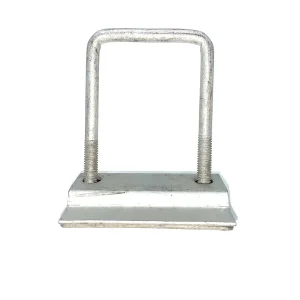
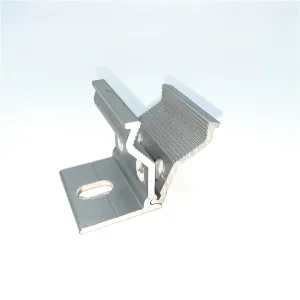
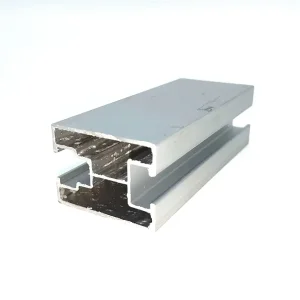
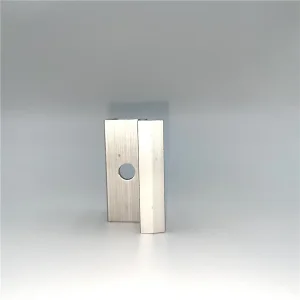
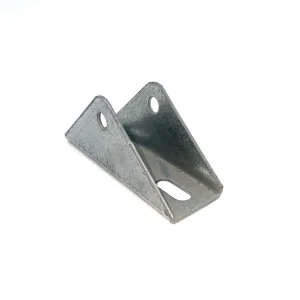
Featured Precision Mechanical Anchors & Solar Profiles
Precision cold-forged and extruded anchoring hardware manufactured under ISO 9001:2015 specifications, rigorously inspected for heavy industrial installations.

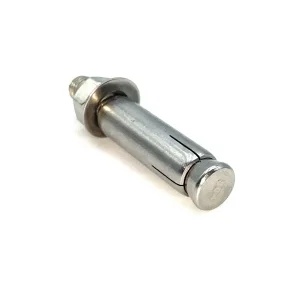

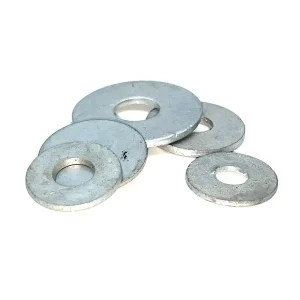

Global Commercial & Macro-Engineering Landscape
Evaluating structural anchoring dynamics across commercial infrastructure, utility renewable transitions, and heavy civil construction projects.
Supply Chain Resiliency & Cluster Advantages
Situated in Yongnian District, Handan City—recognized globally as the fastener manufacturing epicenter of China—our facility integrates upstream billet sourcing, continuous wire annealing, precision multi-stage cold forming, heat treatment, and specialized anti-corrosion plating within an immediate radius. This operational synergy eliminates cross-regional supply chain disruptions and compresses lead times for multi-megawatt project timetables.
Cracked Concrete & Seismic Dynamic Loads
Modern civil structures and wind farm substructures demand anchoring verified for cracked concrete zones under seismic acceleration categories C1 and C2. Our high-tensile carbon steel (Grades 8.8, 10.9) and austenitic stainless (304/A2, 316/A4) expansion anchors feature engineered expansion sleeves that self-adjust under cyclic micro-fissuring, counteracting shear fatigue and progressive pull-out failures.
Electrochemical Isolation in Hybrid Arrays
With utility solar plants incorporating lightweight aluminum racking (6005-T5) bolted directly to hot-dip galvanized or stainless steel anchor footings, galvanic corrosion represents a prime cause of catastrophic fastener shear. We manufacture tailored isolating washers, EPDM-backed load plates, and dacromet-coated mechanical anchors that prevent bimetallic corrosion across a 30-year operational service window.
Localized Engineering Support & Compliance Frameworks
Meeting rigorous regional structural mandates: Eurocode 2, ACI 318, AS 5216, and regional building standards through stringent laboratory verification.
North American Compliance (ACI 318 / ICC-ES)
For installations in the United States and Canada, our mechanical sleeve and wedge anchors are calibrated to comply with ACI 318 Chapter 17 anchorage provisions. We supply precise edge-distance, embedment depth, and spacing coefficients, ensuring structural PE stamps remain fully validated against breakout, pullout, and concrete pryout calculations.
European Union & CE Marking (EN 1992-4)
All expansion anchors supplied to the European market align with Eurocode EN 1992-4 design rules for structural connections in concrete. Full 3.1 Material Test Reports (MTRs) according to EN 10204 confirm chemical stoichiometry, Charpy V-notch impact toughness, and verified shear-yield behavior down to sub-zero Nordic operating environments.
Australia & APAC Cyclone Zones (AS/NZS 1170.2)
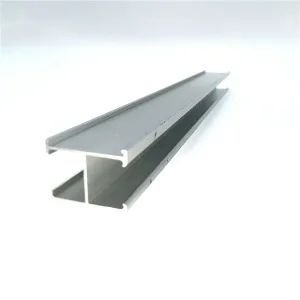
In Region C and Region D cyclonic territories across Australia and Oceania, wind upload forces generate massive dynamic uplift loads. Our reinforced aluminum guide rails (PV 3040) and high-load mechanical anchor bolts undergo full-scale cyclic uplift and static tensile stress-testing to satisfy AS/NZS 1170.2 and AS 5216 post-installed fastener standards.
Mechanical Fastener Engineering Specification Reference
Physical, chemical, and tension properties for utility-scale EPC specifying engineers.
| Anchor / Fastener Category | Material Metallurgy | Ultimate Tensile Strength (Rm) | Yield Strength (Rp0.2) | Surface Treatment / Corrosion Spec | Primary Industrial Application |
|---|---|---|---|---|---|
| Heavy Duty Expansion Bolt | Stainless 316 (A4-80) / 304 (A2-70) | 700 – 800 MPa | 450 – 600 MPa | Passivated / ASTM A380 | Marine concrete docks, solar foundations |
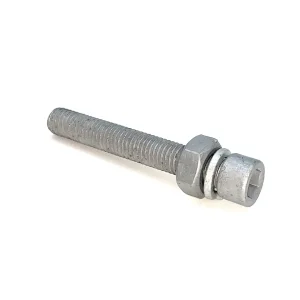
| High-Strength Hex Socket Bolt | Alloy Steel 40Cr / 42CrMo (Gr 10.9) | 1040 – 1220 MPa | 940 MPa | Geomet 500B / Dacromet 1000h Salt Spray | Heavy plant turbines, vibratory purlins |
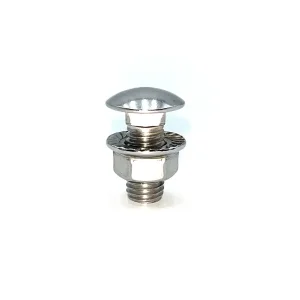
| Structural Carriage Bolt | Cold-Heading Carbon Steel Grade 8.8 | 800 – 830 MPa | 640 MPa | Hot-Dip Galvanized ≥ 65μm (ISO 1461) | Timber racking, solar frame splices |
| PV 3040 Reinforced Rail | Aluminum Alloy 6005-T5 / 6063-T6 | ≥ 260 MPa | ≥ 240 MPa | Clear Anodized ≥ 15μm (AA 15 / ISO 7599) | Rooftop ballast & open-field solar trackers |
| Trapezoidal Roof Clamping System | Extruded AL6005-T5 + EPDM Gaskets | ≥ 265 MPa | ≥ 245 MPa | Mil-A-8625 Anodized Coating | Direct sheet metal penetration-free mounting |
Macro Industry Application Scenarios
Engineered for extreme performance across specialized real-world environments.
Utility-Scale Photovoltaic Solar Fields
Ground-mounted single-axis tracking systems and fixed tilt solar structures transmit significant dynamic wind flutter down to pier foundations. Our mechanical anchor fasteners and purlin connectors are engineered with calibrated ductility, allowing the anchor assembly to absorb cyclic torsion without loosening or degrading concrete hole wall cohesion.
Wind Power Nacelles & Substructure Ties
Wind generator nacelles, tower internal climbing brackets, and electrical transformer yards experience high-frequency vibratory stresses. Grade 10.9 socket head bolts and cold-headed carriage assemblies maintain continuous pre-load clamping force, preventing micro-motion fretting corrosion and structural detachment.
Coastal, Marine & Desalination Facilities
In marine splash zones and coastal salt atmospheres (ISO 12944 Category C5-M), standard fasteners corrode rapidly. Our 316 (A4) grade stainless steel expansion anchors and non-drilling trapezoidal roof clamps resist pitting, crevice corrosion, and chlorine-induced stress corrosion cracking (SCC).
Technology Roadmap & Future Outlook
Leading structural hardware toward automated, high-strength, and low-carbon industrial manufacturing standards.
Multi-Station Cold Forging
Transitioning 100% of expansion anchor bolts to continuous multi-station cold formers, preserving grain boundary alignment and reducing micro-void vulnerabilities.
Eco-Friendly Inorganic Coatings
Replacing electroplating with hexavalent chromium-free zinc-flake and composite nano-coatings, passing 2,000+ hours in ASTM B117 salt spray tests.
Digital Clamping Verification
Developing direct tension-indicating washers and torque-limiting collars to deliver instant visual verification of correct pre-load tension during field assembly.
Circularity & Low-Carbon Steel
Integrating electric arc furnace (EAF) certified green steel feedstock to achieve environmental product declarations (EPD) for carbon-neutral civil projects.
Frequently Asked Technical Questions (FAQ)
Engineered responses addressing critical procurement, metallurgical criteria, and installation mechanics.
Wedge anchors exert radial expansion stress against a localized concrete depth, providing high shear and tension values in solid, uncracked concrete slabs. Sleeve anchors distribute the outward radial friction across a broader tubular cylinder, making them better suited for base materials of variable density, brickwork, or lighter concrete substrates.
Following pickling and electro-galvanizing procedures, all high-tensile fasteners undergo baking heat treatment within 4 hours at 200°C±10°C for a minimum of 8 to 24 hours. For critical infrastructure, we implement zinc flake or mechanical sherardizing processes that eliminate acid exposure and prevent hydrogen diffusion into the steel matrix.
Yes. We maintain in-house tooling, wire EDM, CNC turning, and automated stamping presses. We manufacture custom anchor profiles, non-standard threading pitches, extended embedment lengths, and specialized bracket connectors from CAD or STEP files with full dimensional inspection reports.
We supply matched fastener assemblies that incorporate non-conductive UV-stabilized EPDM flat washers, nylon isolation bushings, or Dacromet-coated fasteners. This physical and electrochemical barrier prevents electrical continuity between aluminum (anodic) and stainless/carbon steel (cathodic), stopping galvanic corrosion.
Every production lot is provided with an EN 10204 3.1 Certified Material Test Report (MTR) covering raw material heat chemistry, Rockwell/Vickers hardness tests, axial tensile and yield stress proofs, ASTM B117 salt spray corrosion logs, and coating thickness verification via magnetic inductive gauges.
Concrete dust left in drilled holes reduces the friction coefficient between the anchor expansion clip and the concrete substrate by up to 40%. Proper installation requires the standard "blow-brush-blow" procedure using compressed oil-free air and wire brushes to guarantee that full manufacturer-rated tensile load capacities are achieved.
Comprehensive Structural Hardware Catalog
Direct factory production lines for solar mounting frames, specialized clips, high-tensile sockets, and structural brackets.