
Featured Mechanical Anchors & Solar Fastener Assemblies

The Macroeconomic & Technical Landscape of Mechanical Anchoring
Shift to Post-Installed Fixings
Traditional structural civil engineering relied heavily on cast-in-place J-bolts or headed studs. However, modern fast-track construction schedules demand the architectural flexibility of post-installed mechanical anchors.
Mechanical wedge, sleeve, and undercut anchors provide instant load-bearing capacity without the curing latency associated with chemical anchoring systems, eliminating temperature dependency during winter concreting.
Cracked Concrete & Seismic Criteria
Under tension, concrete structures naturally form micro-fractures. European Technical Assessment (ETA Option 1) and American Concrete Institute (ACI 318 Chapter 17 / AC193) strictly govern mechanical anchor performance in cracked concrete.
Specialized expansion clips with independent movement mechanics expand dynamically into widening concrete cracks, preventing catastrophic sudden slippage under seismic C1 and C2 categories.
Renewable Energy Acceleration
The global push for utility-scale solar PV and onshore wind has multiplied anchor bolt consumption exponentially. PV ground mounts necessitate structural tie-down bolts capable of handling alternating wind uplift shears.
Suppliers must deliver fasteners manufactured with anti-corrosion barrier coatings capable of surviving 25 to 30 years in harsh outdoor, desert, and near-shore microclimates without structural fatigue.
The Handan Industrial Advantage: Scale, Metallurgy & Efficiency
Agglomeration Economy
Yongnian District in Handan City represents over 45% of China's aggregate standard fastener output. This localized concentration creates a compressed supply chain radius where steel billet drawing, automated heading, thread rolling, heat treatment, and surface finishing occur within minutes of each other.
Procurement teams achieve massive cost compression and rapid lead-time turnarounds impossible in fragmented manufacturing ecosystems.
Metallurgical Uniformity
From structural carbon steel (Grade 4.8, 8.8, 10.9) to austenitic stainless steel alloys (SS304 / SS316) and precipitation-hardened variants, in-house continuous mesh-belt heat treatment ensures consistent core hardness and case ductility.
Controlled quenching and tempering eliminate brittle shear failure vectors, ensuring mechanical anchor bodies exhibit predictable elongation prior to ultimate tensile rupture.
Quality Verification Testing
Youlong’s internal quality lab conducts rigorous lot-by-lot verifications according to ISO 898-1 and ASTM F1554 standards. Mechanical testing includes computerized hydraulic axial pull-out, direct shear fracture testing, optical dimensional gauging, and neutral salt spray testing (NSS) exceeding 1,000 hours.
Every shipment is accompanied by a rigorous EN 10204 3.1 Mill Test Certificate (MTC) detailing complete spectral chemical composition and mechanical properties.
Comparative Mechanical Anchoring Taxonomy
| Anchor Type | Working Principle | Load Capacity | Edge Distance Limits | Removability | Primary Industrial Applications |
|---|---|---|---|---|---|
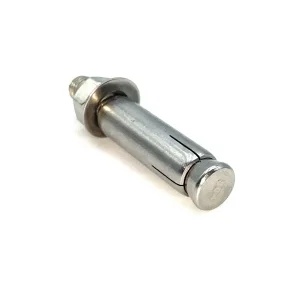
| Torque-Controlled Wedge Anchor | Expansion clip forced outward against borehole wall as conical mandrel is drawn up via nut tightening. | High Tensile & Shear | Moderate (High burst stress on thin edges) | Permanent (Stud remains projecting) | Structural steel columns, heavy industrial racking, solar ground mount baseplates. |
| Heavy-Duty Sleeve Anchor | Full-length cylindrical sleeve expands along entire borehole body, distributing radial contact pressure. | Medium-High | Better performance in softer masonry or porous concrete | Semi-removable (Flush head options) | Curtain wall brackets, HVAC equipment pedestals, retrofitting unreinforced masonry. |
| Undercut Mechanical Anchor | Mechanical interlock created by pre-undercutting or self-undercutting tool inside the concrete cavity. | Ultra-High (Seismic C2) | Minimal expansion stress; excels close to free concrete edges | Fully dismountable configurations | Nuclear power facilities, bridge seismic isolators, vibrating heavy manufacturing turbines. |
| High-Performance Concrete Screw | Hardened specialized thread cuts directly into the drilled concrete hole, achieving full interlock along shaft. | High Shear & Dynamic | Very low radial bursting force; tight center-to-center spacing | 100% Removable & Reusable | Tunnel utility trays, temporary formwork tie-backs, solar PV roof clamps and purlins. |
| Drop-In Internal Thread Anchor | Internal expander plug driven downward by manual/pneumatic setting punch to dilate slotted anchor shell. | Medium Tensile | Requires structural slab depth to prevent spalling | Threaded rod/bolt can be removed flush | Overhead MEP pipe hanging, fire sprinkler supports, industrial suspended ductwork. |
Localized Application Scenarios & Site Challenges
Utility-Scale Solar PV Farms
In ground-mounted utility arrays installed on concrete ballast pedestals or pre-cast foundations, anchor bolts encounter severe cyclical wind gusts. This creates high-frequency reversing loads (alternating upward suction and downward compression).
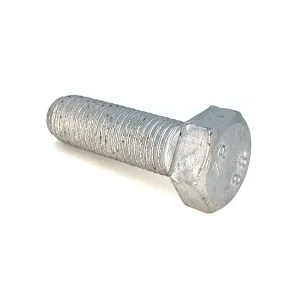
Hot-dip galvanized (HDG) wedge anchors combined with vibration-resistant serrated flange locknuts prevent structural loosening and foundation fatigue across a 30-year plant lifecycle.
Coastal & Offshore Substations
High relative humidity, airborne saline aerosol, and sulfur emissions require fasteners capable of withstanding ISO 9223 C4 and C5M corrosion classifications.
Marine-grade SS316 (A4-80) and 2205 Duplex stainless steel expansion anchors ensure complete immunity to chloride-induced pitting, intergranular corrosion, and hydrogen embrittlement in wind farm substations and tidal flood walls.
Vibrational Industrial Machinery
Heavy punch presses, forging equipment, and dynamic air compressors transfer severe dynamic resonance to concrete equipment pads. Standard friction anchors often degrade due to borehole smoothing caused by micro-fretting.
High-tensile Grade 10.9 undercut anchors establish a permanent physical keyway in the slab, securing the machinery against harmonic dislocation and rotational torque slip.
Next-Generation Trends Shaping the Fastener Industry
Intelligent Torque Verification
Human error during installation torque application is the #1 cause of mechanical anchor failure. New developments incorporate snap-off torque calibration caps and color-changing shear indicator collars that confirm structural clamping load visually.
Advanced Thin-Film Nanocoatings
Traditional hot-dip galvanizing produces thick, uneven zinc build-ups that require overtapping nuts. Modern multi-layer zinc flake (Geomet / Dacromet) and ceramic composite finishes provide ultra-thin 8-15µm barriers offering 1,500+ hours salt spray protection without thread jamming.
Low-Carbon Steel Metallurgy
Driven by the European Union Carbon Border Adjustment Mechanism (CBAM), top Chinese manufacturers are shifting toward Electric Arc Furnace (EAF) steel wire rod, drastically lowering the embodied carbon footprint per ton of structural hardware.
Automated Robotic Drilling & Setting
Large-scale modular construction projects are beginning to utilize autonomous robotic crawlers for drilling concrete slabs and torque-setting thousands of anchor bolts per day, requiring tighter concentricity and dimensional precision on every bolt blank.
Global Enterprise Sourcing Framework
1. Metallurgical Traceability
Ensure your supplier maintains continuous raw heat lot segregation. Demand an EN 10204 Type 3.1 inspection certificate validated by optical emission spectrometry (OES) testing verifying Carbon, Manganese, Chromium, and Molybdenum content to prevent substandard carbon alloys prone to brittle fracture under shear strain.
2. Hydrogen Embrittlement Relief
High-tensile fasteners (Class 8.8, 10.9, 12.9) exposed to acid pickling during hot-dip galvanizing or electroplating are highly susceptible to catastrophic delayed hydrogen embrittlement. Certified suppliers must enforce immediate post-plating thermal de-embrittlement baking (minimum 190°C–220°C for 4 to 8 hours).
3. Bimetallic Corrosion Mitigation
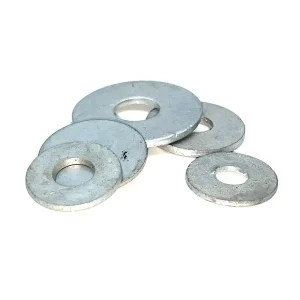
When installing solar PV aluminum alloy guide rails with stainless steel or carbon steel anchor fixings, galvanic corrosion can accelerate degradation in the presence of an electrolyte. Sourcing teams must bundle high-density EPDM or nylon insulating barrier washers to eliminate cross-metal electrical continuity.
Mechanical Anchor Bolt Engineering FAQ
Mechanical anchors exhibit five principal structural failure modes depending on geometry, base material strength, and load direction: (1) Steel Tensile Rupture (bolt body shears or snaps); (2) Concrete Cone Breakout (tensile load pulls out a conical concrete fragment); (3) Anchor Pull-Out/Slippage (anchor withdraws from the hole due to insufficient friction or borehole enlargement); (4) Concrete Edge Splitting (bursting force fractures the edge due to insufficient edge distance); and (5) Concrete Pryout (shallow anchors under shear rotate and pry out the concrete back-cone).
Concrete in tension zones (such as floor slabs under bending or structural cantilevers) experiences micro-cracking (up to 0.3mm wide) under service loads. Standard mechanical wedge anchors slip when a crack opens through the borehole, leading to total tension loss. Anchors certified for cracked concrete (ETA Option 1, ACI 318 AC193) possess specialized expansion clips that re-expand automatically when concrete expands, maintaining vital mechanical friction.
Residual drilling dust acts as microscopic ball bearings between the expansion clip and the concrete substrate. If the borehole is not thoroughly evacuated using compressed air and wire brushing, the expansion collar cannot bite into the concrete matrix, reducing calculated pull-out capacity by up to 40% and causing premature failure at loads well below design thresholds.
Hot-dip galvanizing (50-80µm zinc) provides excellent sacrificial cathodic protection in inland atmospheric environments (ISO 12944 C2-C3). However, in marine splash zones, chemical production plants, coastal solar installations, or humid sub-tunnels (C4-C5M), zinc dissolves rapidly. Austenitic stainless steel (SS304/A2 for wet urban settings, SS316/A4 for marine settings) forms a self-healing chromium oxide film that provides superior long-term resistance to acidic and saline pitting.
While tensile pull-out capacity is strictly proportional to the square of effective embedment depth (heff^1.5 according to the Concrete Capacity Design method), shear strength is primarily governed by steel bolt diameter and the concrete edge distance. However, shallow embedment under shear can trigger premature concrete pryout failure behind the anchor before the steel reaches its plastic shear limit.
Standard wedge and sleeve anchors cannot be reused because the expansion sleeve undergoes permanent plastic deformation and galling during installation torque setting. Attempting to reinstall an extracted wedge anchor compromises safety. Concrete screw anchors, however, can often be reused in temporary applications if thread wear is checked using a manufacturer-supplied cylindrical go/no-go ring gauge.
Complete Structural Fastening & Support Systems


Need Direct Factory Pricing & Custom Mechanical Anchor Tooling?
Partner with Youlong Fasteners in Yongnian, China. Leverage our high-speed automated multi-station cold formers, custom OEM stamping lines, and certified quality verification laboratories for your infrastructure and solar PV hardware supply chains.
Request Factory Quotation & Technical Catalog