
Featured Industrial Screws, Bolts & Structural Components (Part I)
Precision-machined fasteners rigorously tested to match ISO 10684, DIN 9021, and ASTM structural tolerances across heavy mechanical and renewable energy assemblies.
Engineering Foundations: Why Large Galvanized Washers Dictate Joint Integrity
In high-load mechanical, civil, and renewable infrastructure, bolted connections fail not primarily from tensile shaft fracture, but from bearing yield, contact stress concentration, and localized corrosion tunneling beneath the fastener head.
Compressive Stress Dispersion
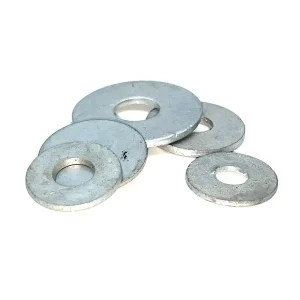
Standard washers offer minimal outer diameter (OD) coverage, leading to extreme localized surface pressures that exceed the compressive yield strength of clamped substrates—particularly timber, structural aluminum profiles, and low-yield steel plates. Large Galvanized Washers (e.g., DIN 9021, DIN 440, ASTM F436 Type 1 / Type 3 Large Format) expand the load-bearing footprint by up to 300%, mitigating embedment relaxation and clamp preload loss over multi-decade service life cycles.
Hot-Dip Galvanizing (HDG) Metallurgy
Unlike electro-galvanizing which yields fragile, micrometer-thin zinc skins (5–12 µm), industrial-grade hot-dip galvanizing per EN ISO 1461 and ASTM A153/F2329 forms a series of true metallurgical zinc-iron alloy layers (Gamma, Delta, and Zeta phases) harder than the parent structural carbon steel itself. Capped with an outer ductile Eta layer (100% Zn), this provides baseline coating thicknesses ranging from 55 µm to beyond 110 µm, ensuring complete cathodic cut-edge self-healing and total resistance to chipping.
Oversized Hole Bridging Reliability
Punching, torch-cutting, and thermal drilling on heavy civil steel columns and solar tracker pier assemblies frequently generate oversized, slotted, or misaligned structural bolt holes. Large diameter galvanized washers bridge substantial clearance gaps, establishing flat, parallel bearing surfaces that prevent eccentric bolt bending, uneven torque distribution, thread galling, and catastrophic joint pull-through under dynamic cyclic wind reversals.
| Standard Specification | Nominal ID Range | Outer Diameter (OD Ratio) | Coating Process Standard | Zinc Thickness Profile | Environmental Durability Rating |
|---|---|---|---|---|---|
| DIN 9021 (ISO 7093) | M3 to M36 | OD ≈ 3 × Bolt Diameter | Hot-Dip Galvanized / ISO 10684 | 50 – 85 µm Batch Centrifuged | C3 - C4 Industrial High |
| DIN 440 (ISO 7094) Heavy Timber | M5 to M42 | OD ≈ 3.5 – 4 × Bolt Diameter | EN ISO 1461 HDG Thermal Dip | 65 – 100 µm Heavy Coating | C4 - C5 Marine Exterior |
| ASTM F436 Type 1 Hardened Extra-Large | 1/2" to 3.0" | Heavy Pattern ASTM A325/A490 | ASTM A153 / ASTM F2329 Class C | 85 – 115 µm Alloy Bonded | C5-M Harsh Coastal & Offshore |
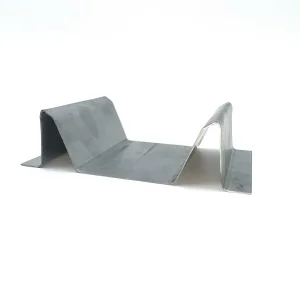
| Custom Pier Anchor Square Plates | M16 to M64 | Square Flat Stamped (100–300mm) | Continuous Dip Passivated | 80 – 120 µm Thick Structural | Direct Buried & Splash Zone |
Handan & Yongnian Fastener Capital: Supply Chain Superiority
Handan Youlong Fastener Co., Ltd. is positioned in the epicenter of the world's most concentrated industrial fastener ecosystem—Yongnian District, Handan, China. This strategic geography unlocks unrivaled operational, metallurgical, and economic benefits for international EPC conglomerates.
Upstream Raw Material Scale
Direct adjacency to major North China steel rolling complexes (such as Handan Iron & Steel Group) provides immediate mill-run access to premium hot-rolled coil (Q235B, Q355B, 45# carbon steel, and hardened spring alloy steels). Elimination of domestic freight overhead and middleman margins allows us to supply certified, defect-free coils at the lowest baseline price-per-tonne available globally.
Automated Heavy Stamping & Blanking
Our workshop houses automated multi-stage progressive stamping presses ranging from 160 to 630 metric tons. We punch, deburr, and chamfer large outer diameters (up to 200 mm OD and 12 mm thickness) with continuous precision, ensuring zero micro-burrs, laser-flat surface parallelism, and hole concentricity within ±0.15 mm tolerances per ISO 2768.
Eco-Centrifuged In-House HDG Lines
To combat excessive zinc buildup, rough tears, and inner diameter clogging typical in standard batch hot-dip galvanizing, Youlong utilizes high-speed automated thermal centrifugal spinning. The excess liquid zinc is ejected at 850 RPM immediately after withdrawal from the 450°C molten zinc kettle, yielding immaculate, uniform protective coatings that seat flush against bolt collars.
Future Trends: Evolution of Heavy-Duty Anti-Corrosion Technologies
As solar energy, offshore wind power, and civil transport structures extend required design operational life cycles from 20 years to 35–50 years, washer manufacturing is advancing rapidly beyond legacy methods.
Zinc-Aluminum-Magnesium (ZAM)
Continuous hot-dip ZAM alloy sheet processing is revolutionizing large washer production. Composed of Zn + 1.5–3% Al + 1.5–3% Mg, the magnesium ions generate a tightly bonded Simonkolleite protective film that dramatically suppresses zinc consumption, quadrupling corrosion resistance over standard pure zinc coatings in saline-ammonia agricultural environments.
Hydrogen Embrittlement Eradication
High-tensile structural washers (e.g., ASTM F436, DIN 6916 through-hardened to 38–45 HRC) are vulnerable to atomic hydrogen embrittlement if acid pickled prior to galvanizing. Cutting-edge factories now employ mechanical shot blasting combined with immediate post-dip de-embrittlement baking at 200°C–220°C for 4 hours, guaranteeing zero catastrophic micro-cracking under full tensile preload.
High-Speed Automated Optical Sorting
Global megaprojects cannot tolerate assembly downtime caused by dimensional out-of-roundness or stamped burrs. Next-generation production incorporates 360-degree laser-optical sorting machines, inspecting every washer at speeds of 600 pieces per minute. Internal diameter, concentricity, thickness, and flatness dish are automatically checked with sub-millimeter precision.
Green Low-Carbon Galvanizing
Under modern ESG frameworks and European CBAM carbon footprint regulations, Youlong utilizes closed-loop waste-acid recovery systems, electric kettle heating, and bio-scrubbed fluxing baths. This reduces the embedded carbon footprint of our galvanized hardware by up to 32% compared to conventional coal-fired regional galvanizing shops.
Localized Application Scenarios: Where Structural Washers Make the Difference
Examining real-world engineering environments where large outer diameter galvanized washers protect critical joints against structural failure and accelerated galvanic decay.
Solar Tracker & Pier Base Connections
Utility solar ground systems experience severe dynamic uplift forces generated by gusting winds acting on long module strings. Large galvanized washers (DIN 9021 or custom 80×80 mm square plates) sit under foundation anchor bolts on slotted flange brackets. They absorb intense cyclic shear, maintain torqued preload without bending, and prevent slot deformation that causes misalignment of tracker drive torque tubes.
Wind Turbine Foundation Anchor Cages
Multi-megawatt onshore wind turbines transfer massive bending moments to concrete gravity base foundations through embedded anchor cages. Grade 8.8 / Grade 10.9 foundation rods utilize extra-large, through-hardened ASTM F436 washers beneath the tensioning nuts. The galvanized surface resists groundwater seepage while ensuring even compressive stress distribution across embedment template rings.
Heavy Timber & Glulam Civil Engineering
Wood fibres have low perpendicular-to-grain bearing strength. Standard washers sink into timber joints upon bolt tightening, splitting structural chords and relaxing pretension. DIN 440 Extra-Large Washers spread the clamping force across a massive circular contact zone, accommodating natural timber moisture swelling and seasonal shrinkage without joint loosening.
Structural Steel Bridges & Girders
In friction-grip bolted joints governed by EN 1090-2 and AISC 360, slip-critical connections rely on exact bolt tension. Hardened large galvanized washers under the rotated nut eliminate galling against structural plate steel, protecting zinc primers and ensuring that applied wrench torque converts cleanly to axial clamping force rather than torsional frictional loss.
Harbor Piers, Docks & Marine Pilings
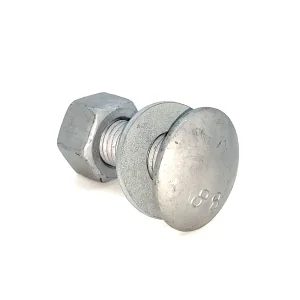
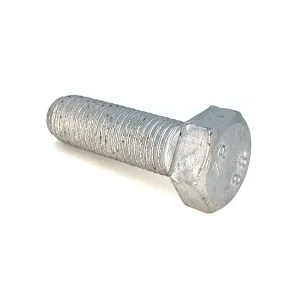
Direct marine splash zones present high salinity, chloride attack, and frequent mechanical impact. Heavy-gauge galvanized washers with >100 µm HDG coatings are paired with hot-dip galvanized timber carriage bolts and hex bolts on fender pilings, bulkheads, and pontoon hinges, withstanding C5-M marine exposure without blistering or sacrificial zinc exhaustion.
High-Voltage Substations & Transmission Towers
High electrical voltages create electromagnetic fields that induce localized thermal micro-expansions. Galvanized structural washers bridge cross-arm lattice holes, dissipate lightning energy through solid grounding continuity, and preserve clamping load under severe wind buffet conditions across remote transmission rights-of-way.
Macro Engineering Solutions: Load Distribution & Dissimilar Metal Isolation
Overcoming galvanic couple reactions, thermal expansion differential, and thread loosening across modern hybrid infrastructure projects.
Galvanic Decoupling in Solar Systems
Connecting galvanized steel posts to extruded aluminum mounting rails creates a severe galvanic cell when moisture enters. The standard reduction potential difference between aluminum (-1.66V) and zinc (-0.76V) / steel (-0.44V) triggers sacrificial oxidation of the aluminum. Youlong solves this by pairing large galvanized washers with UV-stabilized virgin EPDM or high-density polyamide isolation washers. This prevents electrical continuity while retaining the compressive stiffness of the heavy steel washer.
Torque Preload Retention Dynamics
Washers that are too soft undergo plastic dishing under high bolt preload (e.g., ISO 898-1 Class 8.8 or 10.9). Once dished, the contact radius narrows to a knife-edge against the bolt head fillet, causing stress riser notches and preload loss. Our heavy washers are manufactured with calibrated hardness (100 HV to 300 HV for standard, up to 45 HRC for hardened grades), maintaining flat planar geometry under 100% proof load tension.
Total Hardware Matching Assemblies
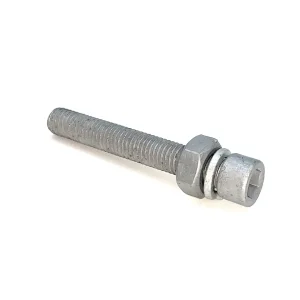
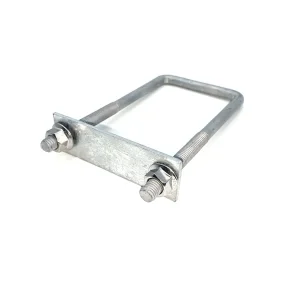
To eliminate field interface mismatches, Youlong provides complete certified fastener sets: hot-dip galvanized hex head or carriage bolts, heavy hex nuts tapped oversize per ISO 965-5 (6AZ) to clear the HDG zinc layer, and precision-matched large galvanized washers. Sourcing the entire load path from a single manufacturing facility ensures unified coating chemistry, matching batch traceability, and consistent torque-tension k-factors.
Global Procurement Criteria: What EPC Buyers Must Demand
Essential technical benchmarks for validating supplier quality, eliminating substandard hardware, and ensuring compliance across international construction tenders.
EN 10204 3.1 Material Test Reports (MTR)
Never accept generic commercial invoices as proof of quality. Every export shipment from Youlong is accompanied by a genuine 3.1 Mill Test Certificate detailing the steel heat number, spectral chemical composition (C, Si, Mn, P, S), core hardness tests (Rockwell or Vickers), and recorded zinc coating mass (g/m² per ISO 1460 magnetic induction measurements).
Accelerated Salt Spray Validation (ASTM B117)
We subject random production samples to continuous 5% neutral salt spray testing (NSS) per ISO 9227 / ASTM B117. Our HDG structural washers achieve over 720 to 1,500 hours without red rust (substrate oxidation), verifying the metallurgical integrity of the zinc-iron alloy barrier against severe outdoor conditions.
Containerized Export Packaging
Ocean transit in container hulls exposes steel fasteners to condensation and saltwater spray. Our components are packaged in heavy-duty 25 kg woven polyethylene bags or inner cardboard cartons, treated with VCI (Vapor Corrosion Inhibitor) desiccants, heat-shrink wrapped on fumigated ISPM-15 hardwood pallets, and bound with high-tensile steel banding for safe forklift handling.
Frequently Asked Technical & Sourcing Questions
Direct answers addressing dimensions, coating differences, zinc tolerances, and OEM production capabilities.
What is the key functional difference between a DIN 125, DIN 9021, and DIN 440 washer?
Why should EPC contractors specify Hot-Dip Galvanizing (HDG) over zinc electroplating?
How does Youlong prevent washers from sticking together or accumulating excess zinc lumps during HDG?
Can Youlong manufacture custom large washers, square anchor plates, and slotted washers to customer drawings?
What are typical factory production lead times and minimum order quantities (MOQ)?
Featured Industrial Screws, Bolts & Structural Components (Part II)
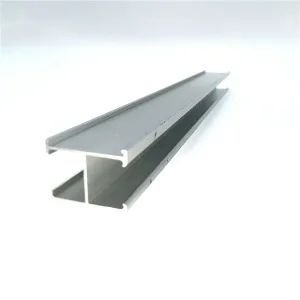
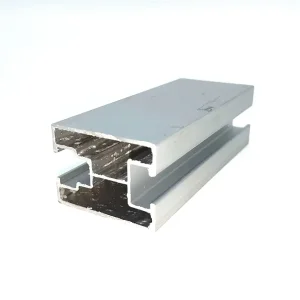
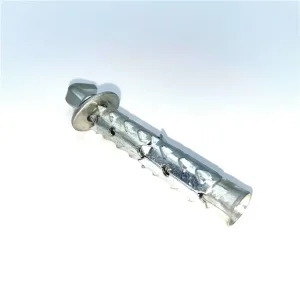
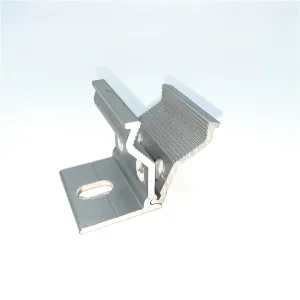
Heavy-duty anchor systems, hot-dip galvanized carriage bolts, and precision solar aluminum extrusions produced in Handan, China.
Accelerate Your Global Structural Hardware Procurement
Connect directly with Handan Youlong's metallurgical application engineers. Send your CAD drawings, engineering bill of materials (BOM), or zinc thickness requirements for an itemized factory direct proposal within 24 hours.