Industrial Core Solutions
High-Integrity Fasteners & Mounting Modules (Part I)
Certified anchor hardware, precision structural rails, and load-bearing expansion components engineered for high-stress tensile pull-out conditions.
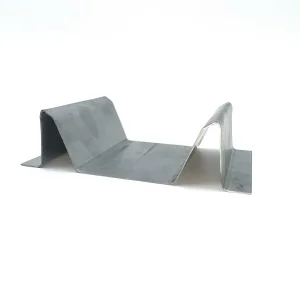
M-Type Aluminum Water Channel
View Product Detail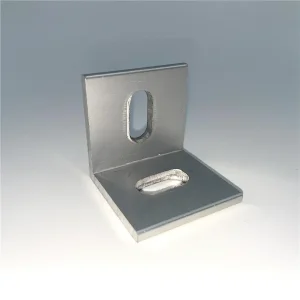
Solar PV Aluminum Angle Bracket
View Product Detail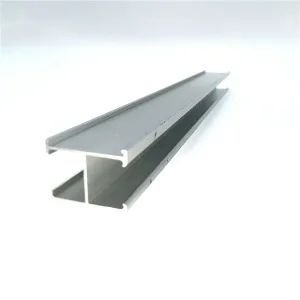
Solar PV 3040 Guide Rail
View Product Detail
Premium 3040 Extruded Rail
View Product Detail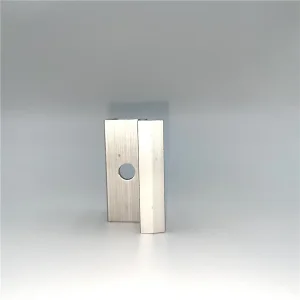
Premium Aluminum Side Clamps
View Product Detail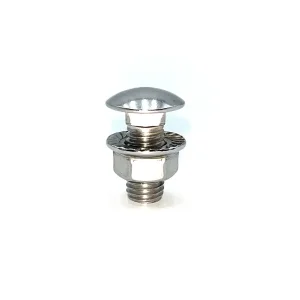
Stainless Steel Carriage Bolt
View Product Detail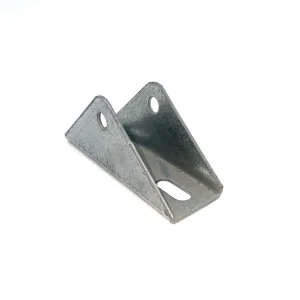
Three-Hole PV Mounting Connector
View Product Detail
Procurement Intelligence
Global Enterprise Procurement Dynamics for Anchor Bolt Installations
Analyzing structural integrity challenges, supplier consolidation, and total cost of ownership across utility-scale energy projects and civil infrastructure.
Severe Dynamic Load Mitigation
Modern engineering designs subject anchor bolts to multifaceted mechanical loads: sustained tension, concrete edge breakout shear, and dynamic seismic oscillation. Tier-1 enterprise contractors prioritize suppliers providing certified embedment depth ratios and verifiable ultimate tensile limits.
Metallurgical Chemistry & Passivation
Failure mechanisms often stem from pitting or stress-corrosion cracking rather than under-torqueing. Procurement teams specify ISO 3506-1 A4-70/A4-80 stainless steel or hot-dip galvanization with a minimum 85µm zinc barrier to prevent degradation in marine and chemical microclimates.
Supply Chain Resiliency & Origin Tracing
Fragmented procurement generates systemic vulnerabilities. Tier-1 buyers work with consolidated manufacturers capable of delivering end-to-end load path components—from concrete cast-in-place anchor rods to upper aluminum rails—backed by full heat-lot mill test certificates (EN 10204 3.1).
300K+
Metric Tonnes Exported
100+
International Enterprise Clients
C5-M
Severe Marine Anti-Corrosion
100%
Lot-Specific Tensile Verification
Kinematic Engineering
Macro-Industry Anchor Engineering & Installation Methodologies
Deploying specialized anchoring techniques tailored to concrete cracking profiles, high-vibration dynamic wind shear, and industrial heavy equipment foundations.
Cast-in-Place L/J-Bolts
Pre-pour anchoring offers the highest possible pullout resistance. Widely deployed in primary steel column footings, utility-scale substations, and high-rise core walls where high mechanical embedment prevents foundation cone pullout.
Post-Installed Mechanical Anchors
Wedge and heavy-duty expansion sleeves transfer tensile loads to concrete via friction and expansion collars. Standardized for concrete foundations, solar ballast installations, and industrial plant retrofits.
Adhesive & Chemical Capsule Anchors
Vinyl-ester or pure epoxy chemical anchors deliver stress-free anchorage without generating internal expansion pressure. Ideal for low-edge-distance connections, close bolt-spacing arrays, and cracked-concrete performance.
Prestressed Ground & Rock Anchors
High-tensile post-tensioned tendon systems designed to lock solar ground racking and retaining frameworks into unyielding sub-base geologies, mitigating seismic shear and high frost-heave forces.
Engineering Matrix
Anchor Bolt Structural Kinematics & Material Standards
Reference data for EPC civil structural engineers and project planners specifying structural steel connection hardware.
| Bolt Configuration | Material Class | Tensile Strength (MPa) | Yield Strength (MPa) | Corrosion Rating | Recommended Industrial Context |
|---|---|---|---|---|---|
| Heavy Duty Wedge Anchor | AISI 316 / A4-80 | 800 MPa | 640 MPa | ISO 9223 C5 Marine | Offshore platforms, coastal PV arrays, chemical wastewater facilities |
| Cast-in Foundation L-Bolt | ASTM F1554 Gr. 55 HDG | 517 – 655 MPa | 380 MPa | ISO 9223 C4 High | Utility transmission towers, primary structural steel frames, substations |
| Expansion Shield Anchor | AISI 304 / A2-70 | 700 MPa | 450 MPa | ISO 9223 C3 Medium | Commercial rooftop mounting, warehouse racking, secondary mechanical equipment |
| High-Tensile Threaded Stud | Alloy Steel 8.8 / 10.9 Zinc Flake | 800 – 1040 MPa | 640 – 940 MPa | 1,500-Hr Salt Spray | High dynamic fatigue wind turbine column bases, vibratory conveyors |
Future Trajectory
Anchor Bolt Engineering Roadmap: 2026–2035
Strategic advancements shaping the next era of industrial fastening, including automated torque-monitoring, self-healing coatings, and AI-driven lifecycle simulations.
Phase I: Immediate Horizon (2026–2028)
Smart IoT Embedded Load Cells
Integration of micro-strain transducers into high-tensile anchor head assemblies. Real-time telemetry notifies plant supervisors of tension loss, micro-loosening, and seismic shifts without requiring manual mechanical torque testing.
Phase II: Material Evolution (2028–2031)
Self-Healing Nanocomposite Barrier Layers
Replacing traditional sacrificial zinc dip coatings with graphene-reinforced, eco-compliant zinc-aluminum flake solutions. Provides micro-scratch seal recovery under 3,000+ hours of ASTM B117 salt spray exposure without hydrogen embrittlement risks.
Phase III: Digital Automation (2031–2035)
AI Concrete Embedment Twins
Finite element model integration connecting anchor batch telemetry directly to digital twins of concrete slabs. Enables automated remaining-useful-life (RUL) predictions under cyclic thermal expansions and extreme wind turbulence.
Industrial Clusters
Global Commercial Dynamics: The Yongnian Cluster Advantage
Why leading EPCs rely on vertically integrated production clusters to control costs, guarantee metallurgical consistency, and ensure on-time project execution.
Direct Access to Raw Steel
Yongnian District in Handan, China stands as the world's most concentrated fastener production center. Direct proximity to primary steel and billet manufacturers eliminates secondary freight markups, shields buyers from global spot fluctuations, and preserves tight raw chemistry control.
Automated Tooling & Cold Heading
High-speed multistation cold headers and precision thread rolling machines produce anchor bolts with unbroken metallurgical grain lines. This cold-worked grain boundary flow yields significantly higher shear and fatigue limits compared to machined alternatives.
Integrated Surface Treatment Ecosystem
Local industrial zoning integrates automated hot-dip galvanizing baths, mechanical zinc plating lines, and trivalent chromium passivation plants. This guarantees uniform protective layers, eliminates transport delays between finishing steps, and ensures dependable batch-to-batch quality.
Regulatory Rigor
Localized Engineering Support & Global Compliance Frameworks
Fulfilling multi-jurisdictional compliance codes to satisfy independent safety inspectors, project insurers, and institutional financiers.
ACI 318 & ETA Guidelines
Expansion anchor designs and embedment depths comply with American Concrete Institute (ACI) 318 Chapter 17 provisions for anchoring to concrete and European Technical Assessment (ETA) Option 1 for cracked-concrete integrity.
ISO 9001:2015 & Mill Traceability
Every dispatch lot includes verified EN 10204 3.1 inspection certificates documenting carbon equivalents, sulfur and phosphorus thresholds, core hardness (Rockwell C), and proof load tensile testing results.
Galvanic Corrosion Insulation Protocols
Comprehensive engineering submittal packages include engineered non-conductive sleeves, EPDM dielectric isolation pads, and nylon flat washers to halt bimetallic galvanic pathways between steel anchors and aluminum sub-rails.
Technical Clarifications
Engineering Questions & Practical Field Solutions (FAQ)
Addressing mission-critical concerns from civil installation crews, project engineers, and quality assurance inspectors.
What critical parameters dictate anchor bolt spacing and minimum concrete edge distance?
Edge distance and anchor spacing are primarily governed by the concrete breakout cone mechanics outlined in ACI 318 Chapter 17 and Eurocode 2 Part 4. When an anchor bolt is mechanically expanded or loaded in tension, compressive radial stress propagates through the surrounding concrete matrix at approximately a 35-degree angle. If the distance to a free concrete edge is less than 1.5 times the effective embedment depth (hef), the concrete breakout capacity degrades significantly, risking catastrophic edge blowout. Similarly, when adjacent anchors are placed closer than 3 times hef, their stress cones intersect, requiring a reduction in allowable tensile load. Proper engineering submittals should always calculate these group-effect interaction factors prior to on-site hole drilling.
How do you mitigate galvanic corrosion between stainless steel anchors and aluminum PV rails?
Galvanic corrosion occurs when two electrochemically dissimilar metals make physical contact in the presence of an electrolyte, such as humid air, rainwater, or salt spray. Stainless steel (with a potential around -0.08V to -0.18V) acts as a noble cathode, while aluminum alloy 6005-T5/6063-T6 (around -0.70V to -0.90V) serves as an active anode, accelerating the oxidation and degradation of the aluminum. To isolate this pathway, engineers specify heavy-duty EPDM isolation gaskets, non-conductive polyamide or nylon washers, and Dacromet-coated or zinc-nickel finished fasteners. These barrier solutions mechanically disrupt electrical contact, preventing anodic pitting across utility lifespans exceeding 25 to 30 years.
What are the key structural distinctions between cast-in-place and post-installed wedge anchors?
Cast-in-place anchor bolts (typically ASTM F1554 Grade 36, 55, or 105 rods with welded base plates or forged heads) are positioned within the reinforcement cage prior to pouring concrete. They achieve tensile hold through direct mechanical bearing of the embedded anchor head against the cured concrete mass, making them ideal for high-capacity column bases and heavy industrial machinery. Post-installed wedge anchors, conversely, are installed into diamond-drilled holes in hardened concrete. Tightening the bolt draws a tapered mandrel into an expansion clip, wedging it against the borehole wall. While post-installed systems offer flexible placement and simpler layout adjustments, they generate internal bursting stresses within the slab, making them more sensitive to edge distances and concrete cracking behavior.
Why is torque verification vital for expansion anchor pullout resistance?
An expansion anchor relies on installation torque (Tinst) to generate the initial tensile clamping force that draws the expansion cone into the clip, driving it outward into the concrete substrate. If the applied torque is too low, the expansion sleeve fails to bite securely into the borehole walls; under uplift or seismic loading, the anchor can slide through the clip and pull out smoothly. If over-torqued beyond manufacturer specifications, the anchor rod can exceed its yield point, strip concrete threads, or crack green concrete slabs. EPC contractors must require calibrated torque wrenches and record daily lot-specific torque audits across all field installation phases.
What testing documentation is mandatory for utility-scale solar project approval?
Utility-scale project developers and lender engineers require a complete quality audit dossier prior to issuing material sign-offs. This package must include: 1) EN 10204 Type 3.1 Material Test Certificates (MTC) showing optical emission spectrometry (OES) chemical breakdowns and mechanical tensile/yield data; 2) ASTM B117 salt spray chamber test logs confirming zero red rust formation across specified exposure intervals (e.g., 720 to 1,500 hours); 3) Third-party laboratory pull-out and shear load reports verifying cracked and uncracked concrete limits; and 4) Coating thickness verification certificates using magnetic or eddy-current gauges (confirming minimum zinc thickness per ISO 1461 or ASTM A153).
Industrial Core Solutions
High-Integrity Fasteners & Mounting Modules (Part II)
Explore heavy-duty expansion anchors, corrosion-resistant carriage bolts, pressure plates, and structural components built for long service lifespans.
Corrosion-Resistant Carriage Bolt
View Product Detail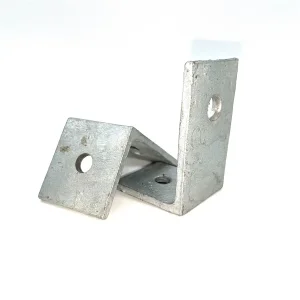
Heavy-Duty PV Angle Bracket
View Product Detail
Stainless Steel Solar Support Angle
View Product Detail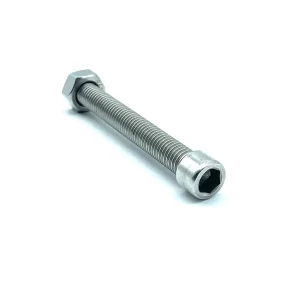
Hex Socket Head Cap Screw
View Product Detail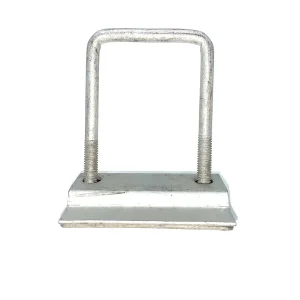
Double-Hole Pressure Plate
View Product Detail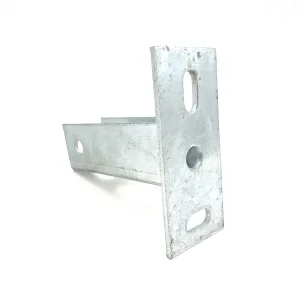
Solar Aluminum Alloy Base Support
View Product Detail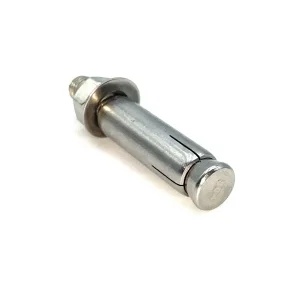
Stainless Steel Expansion Anchor Bolt
View Product Detail