
Precision Structural Hardware & PV Support Assemblies
Engineered to ISO, DIN, and ASTM structural tolerances with multi-climate protective electro-galvanized, hot-dip, and high-tensile passivations.
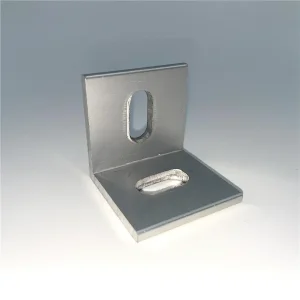
Best High-Quality Aluminum Alloy Angle Bracket for Solar PV Systems - China Suppliers & Factory Manufacturers
View Specifications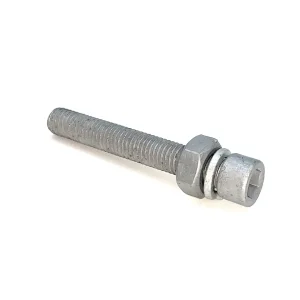
Best Hex Socket Bolt Manufacturer, Manufacturers
View Specifications
China High-Quality Aluminum Alloy Angle Bracket for Solar PV Mounting - Direct Factory Offers
View Specifications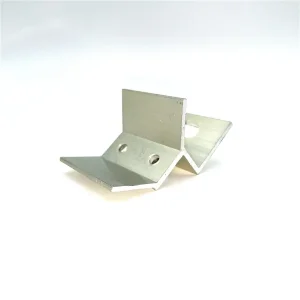
Best China Specialized Trapezoidal Metal Roof Clamp for Solar PV Installation – High-Strength
View Specifications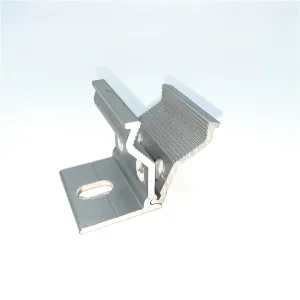
China Suppliers Factory Special Clip Lock Aluminum Clip for Metal Roof Solar PV Installation
View Specifications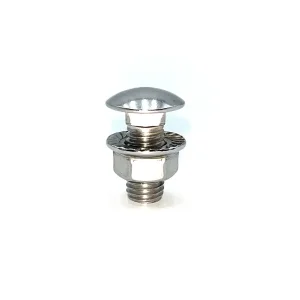
China High-Quality Stainless Steel Carriage Bolt Suppliers - Durable Factory Direct Fasteners
View Specifications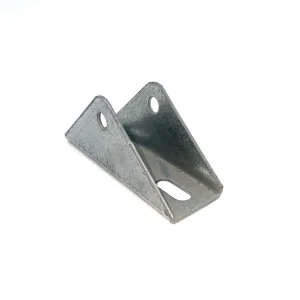
China Factory Premium Three-Hole Mounting Connector for Solar PV Systems – High-Strength Alloy
View Specifications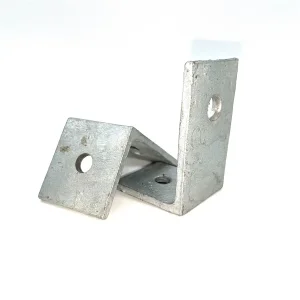
Best Heavy-Duty Stainless Steel Angle Bracket for Solar PV Mounting Connection Solutions
View SpecificationsEvolutionary Trends in Galvanized Metric Fastener Metallurgy
In modern industrial engineering, galvanized metric bolts—spanning M6 through M64 dimensional scales—serve as the foundational nexus of modern fixed infrastructure. As utility-scale solar arrays, offshore wind platforms, and high-speed rail lines migrate toward 30-to-50-year maintenance-free lifecycle targets, standard electro-galvanized finishes (5–12 µm) are no longer sufficient. Leading manufacturers are shifting to thermally diffused hot-dip galvanizing (ISO 10684) and advanced zinc-aluminum-magnesium alloy coatings.
Intermetallic Phase Growth
Hot-dip galvanizing produces a metallurgical bond comprised of Gamma, Delta, and Zeta iron-zinc intermetallic alloys topped by an Eta pure zinc layer. This crystalline fusion guarantees unmatched shear wear and abrasion resistance during automated pneumatic torquing.
C5-M Atmospheric Resilience
For installations in industrial petrochemical zones or splash-zone marine structures, advanced HDG metric bolts offer layer thicknesses exceeding 55 µm to 85 µm, resisting sulfur dioxide and chloride degradation through passive zinc hydroxychloride barrier shielding.
Embrittlement Mitigation
For high-strength Class 8.8, 10.9, and 12.9 metric fasteners, precision acid pickling protocols and mandatory 200°C hydrogen bake-out de-embrittlement baking eliminate subsurface micro-cracking vulnerabilities prior to structural load bearing.
Metric Fastener Passivation & Mechanical Integrity Matrix
A reference matrix comparing mechanical grades, standard tolerances, and environmental coating longevity under ISO 9223 classifications.
| Property Parameter | Property Class 4.8 / 5.8 | Property Class 8.8 (High Tensile) | Property Class 10.9 (Structural) | Marine Grade A4-80 (Equivalent) |
|---|---|---|---|---|
| Nominal Tensile (Rm) | 400 – 500 N/mm² | 800 – 830 N/mm² | 1000 – 1040 N/mm² | 800 N/mm² |
| Yield Point (Re / Rp0.2) | 320 – 400 N/mm² | 640 – 660 N/mm² | 900 – 940 N/mm² | 600 N/mm² |
| Recommended Zinc Coating | Electro-Galvanized (8–12 µm) | Centrifuged HDG (45–65 µm) | Sherardized / Spec HDG Baked | Passivated Austenitic Core |
| ISO 9223 Category | C1 to C2 (Indoor/Dry) | C3 to C4 (Coastal/Urban) | C4 to C5-I (Industrial Heavy) | C5-M (Offshore Splash) |
| Hydrogen Embrittlement | Negligible Hazard | Controlled Acid / Shotblast | Mandatory 4h Bake (190–220°C) | Immune (Austenitic Matrix) |
| Thread Clearance Tolerance | ISO 6g fit | Overtapped 6AZ / 6AX nuts | Overtapped 6AZ / 6AX nuts | Standard ISO 6g/6H |
Macro-Industry Fastener Deployment Frameworks
Addressing supply chain risks, dimensional tolerances, and multi-metal electrochemical reactions across diversified heavy industries.
Utility Photovoltaic Solutions
Mounting solar tracking frames and ground mounts requires continuous interaction between galvanized steel foundations and aluminum alloy racking rails (e.g., 6005-T6). Our specialized solutions integrate UV-stabilized EPDM and Delta-seal non-conductive isolators to definitively arrest bi-metallic galvanic voltage loops while sustaining extreme clamp loads under cyclonic gusts.
Wind Power Dynamic Torque
Substructure transition pieces and nacelle housings experience extreme alternating dynamic fatigue. We deploy Class 10.9 hot-dip galvanized metric structural studs accompanied by pre-lubricated matching high-profile DIN 6915 nuts, calibrated to precise tightening torque ranges that eliminate field thread galling during rapid hydraulic erection.
Civil Civil Engineering Anchor Sets
From precast tunnel segments to seismic highway barriers, anchoring into concrete slabs requires exact metallurgical elongation specs. Our metric expansion anchors and welded J/L anchor bolts leverage deep hot-dip coats compliant with ASTM A153 and EN ISO 1461, ensuring complete subterranean resistance against moisture and alkali attack.
Global Batch Traceability & Raw Material Control
Every industrial production batch originates from verified high-furnace billets with direct ladle analysis. We ensure total 3.1 Mill Test Certification (EN 10204) integrity, recording carbon equivalents (CEV), phosphorus, and sulfur fractions to enforce ductile yield resilience under sub-zero Arctic freeze stress tests.
Automated Centrifugal Spinning for Clean Thread Fit
The principal defect in generic hot-dip metric bolts is zinc pooling within internal socket pockets and thread roots. Our production floor uses high-velocity automated centrifuge spinning immediately after bath withdrawal (450°C), ejecting excess liquid zinc and assuring that mating metric nuts spin down smoothly without field re-tapping.
Metallurgical Roadmap: 2026–2030 Engineering Paradigms
The structural fastening landscape is transitioning rapidly in response to environmental mandates, carbon footprint tracking, and zero-defect automated assembly robotics.
Eco-Friendly Cr-Free Passivations
Full regulatory phasing-out of hexavalent chromium (RoHS / REACH compliance) has accelerated adoption of trivalent and organo-mineral passivates, providing clean production footprints without compromising barrier protection or torque tension consistency.
Digital Smart Fastening
Embedded RFID microdots and laser-etched 2D data-matrix codes on metric bolt heads enable instantaneous structural asset auditing via computer vision, cataloging historical batch chemistry and dynamic torque pre-loads on industrial construction sites.
Zinc-Magnesium Ternary Coatings
Continuous hot-dipped zinc alloys integrated with aluminum (1-3%) and magnesium (1-3%) generate self-healing cut-edge reactions where sacrificial patina quickly covers scratched metric surfaces, delivering 3x higher resistance than traditional pure zinc coats.
Frequently Asked Questions on Galvanized Metric Bolts
Authoritative technical clarification on standards, dimensional allowances, and field installation practices.
Why is hot-dip galvanizing preferred over standard zinc plating for metric bolts?
Standard zinc electroplating produces a thin cosmetic deposition (typically 5 to 12 microns) that easily fails under outdoor weather exposure within 12 to 24 months. Hot-dip galvanizing (HDG) creates a true multi-layered zinc-iron metallurgical bond ranging between 45 to 85+ microns, providing both a formidable physical barrier and sacrificial cathodic protection that preserves structural steel for decades.
How are pitch diameters handled so galvanized metric nuts fit freely?
Because hot-dip coatings add between 40 to 80 microns to thread flanks, metric bolt threads and mating internal nuts cannot both remain at standard ISO 6g/6H tolerances. Metric nuts are specifically tapped oversize after galvanizing (tolerance class 6AZ or 6AX), allowing smooth hand assembly while maintaining structural thread engagement and proof-load capacities.
What is the hydrogen embrittlement threshold for high-tensile metric bolts?
Hydrogen embrittlement poses severe risk on steel bolts with tensile strengths exceeding 1000 N/mm² (Class 10.9 and 12.9). During chemical acid descaling, nascent hydrogen atoms can diffuse into steel grain boundaries. Leading manufacturers eliminate this by replacing acid pickling with mechanical abrasive shot-blasting, combined with a mandatory oven de-embrittlement bake at 200°C within 4 hours of plating.
Can galvanized metric bolts be installed directly into aluminum mounting rails?
Direct contact between zinc and aluminum is acceptable in low-humidity environments (C1/C2). However, in coastal marine or humid open-air solar farms (C4/C5), moisture forms an electrolyte that accelerates galvanic corrosion of the zinc layer. We recommend installing an isolating non-conductive barrier, such as an EPDM or high-density polyamide washer, to prevent direct electrochemical contact.
Specialized Metric Combinations, Fasteners & Mounting Accessories
Continuous inventory of specialized stainless and galvanized hex socket assemblies, ergonomic wing nuts, and heavy purlin link brackets.
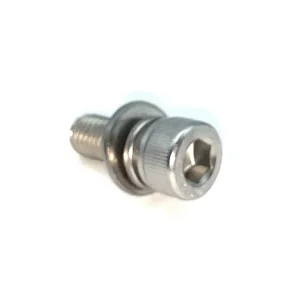
Best Stainless Steel Hex Socket Combination Bolt Suppliers, Companies
View Specifications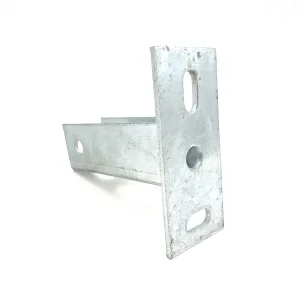
Best High-Strength Solar PV Mounting Aluminum Alloy Base - Reliable Support
View Specifications
Buy China Stainless Steel Hex Socket Combination Bolt Factory - Anti-Loosening
View Specifications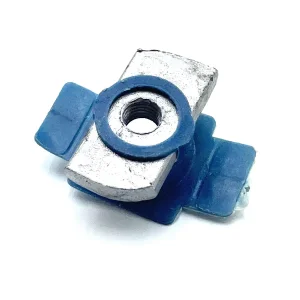
China Ergonomic Labor-Saving Plastic Wing Nut - Tool-Free Fastening
View Specifications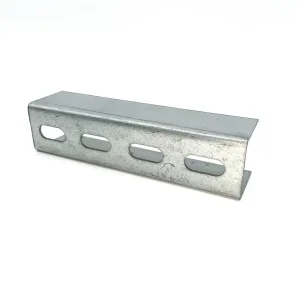
China Solar PV Mounting Purlin Connector Factories, Company
View Specifications
China Factory Stainless Steel Hex Socket Combination Bolt with Washer - Corrosion Resistant
View Specifications
Buy High-Quality Aluminum Angle Bracket for Solar PV Mounting - Reliable China Suppliers
View Specifications