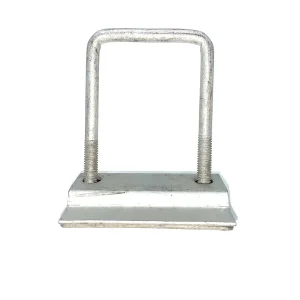
Featured Photovoltaic Hooks, Bolts & Structural Components
Direct-from-factory high-durability hardware built to withstand rigorous mechanical pull-out tests and extreme corrosion environments.
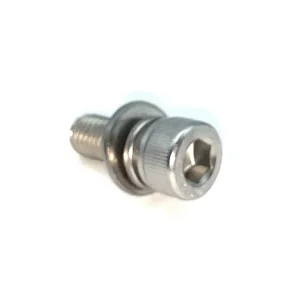
Buy China Stainless Steel Hex Socket Combination Bolt Factory - Anti-Loosening & Corrosion-Resistant
View Specifications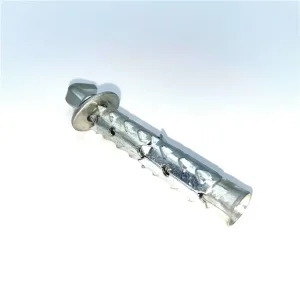
Buy Heavy-Duty Fish Scale Expansion Bolt - Anti-Slip Design from China Suppliers & Factory
View Specifications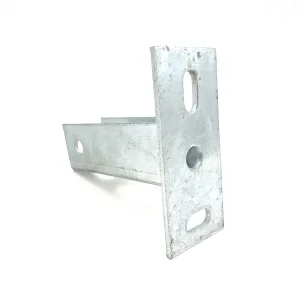
China High-Strength Aluminum Alloy Solar PV Mounting Base - Durable Support from China Suppliers
View Specifications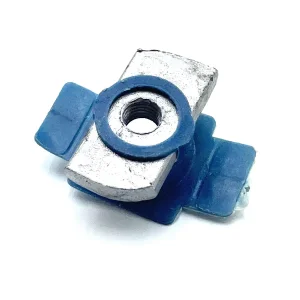
Buy Ergonomic Plastic Wing Nut from China Suppliers - Durable Hand-Tightenable Design
View Specifications
Best Stainless Steel Hex Socket Combination Bolt Suppliers, Companies
View Specifications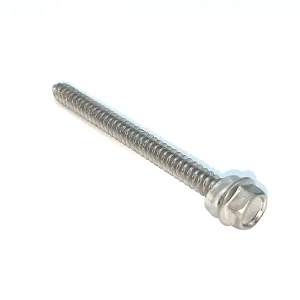
Buy High-Quality Stainless Steel Self-Drilling Screws from China Suppliers and Factory
View Specifications
Buy China Suppliers Factory Stainless Steel Self-Drilling Screws - Sharp Drill Point
View Specifications
China China Suppliers Factory Heavy-Duty Stainless Steel Angle Bracket for Solar PV Mounting System
View SpecificationsDouble Adjustable Hooks: The Mechanical Core of Solar Roof Mounting
When anchoring utility-grade photovoltaic arrays to residential tile, curved Roman tile, and commercial sloped roofs, horizontal and vertical adjustments are critical to compensating for roof unevenness and preventing micro-cracking in PV modules.
Dual-Axis Height & Lateral Tolerance
Structural settlement across old tile roofs introduces pitch deviations of up to 45mm. Double adjustable roof hooks utilize slotted dual-fastener tracks, allowing independent vertical arm adjustment (30-55mm) and lateral base plate alignment without disturbing rafter anchors.
Mechanical Fatigue & Uplift Integrity
In compliance with Eurocode 1 (EN 1991-1-4) and AS/NZS 1170.2 wind load standards, precision-stamped SUS304/SUS316 hooks provide maximum allowable tensile uplift loads exceeding 3.2 kN, neutralizing module vibration and fatigue failure.
Zero Water Infiltration Design
Double adjustable geometry enables precise tile overlapping. By maintaining 5-8mm of clearance above the lower tile curve, these brackets prevent point-load cracking during heavy snow drift while paired EPDM flashing creates an impervious seal.
Why Top EPCs Source Double Adjustable Hooks from China Factories
Capitalizing on the world's most concentrated industrial fastener base in Yongnian, Handan, Chinese manufacturers combine raw metallurgy, cold-forging automation, and localized finishing chains.
Yongnian Fastener Capital Ecosystem
Located at the epicenter of China’s fastener manufacturing cluster, our facilities benefit from daily rolling mills producing high-grade stainless coils (SUS304, SUS316) and structural steel (Q235B), reducing raw procurement cycles to less than 48 hours.
High-Speed Automated Progressive Stamping
Modern Chinese factories utilize multi-station progressive stamping dies (160T to 400T presses). A single integrated process completes uncoiling, piercing, slotted track punching, cold bending, and deburring with repeatable dimensional tolerances within ±0.2mm.
Unrivaled Cost-Efficiency at Scale
Vertical integration—from stamping to automated in-house acid pickling, passivation, and ultrasonic degreasing—removes third-party markups. Tier-1 buyers achieve 25% to 40% landed cost reductions compared to European or North American fabrication hubs.
Double Adjustable Hook vs. Fixed Hook Engineering Comparison
Selecting between fixed, single-adjustable, and double-adjustable hooks dictates structural installer efficiency and long-term roof envelope reliability.
| Evaluation Parameter | Fixed Tile Hook | Single Adjustable Hook | Double Adjustable Hook (Pro Matrix) |
|---|---|---|---|
| Vertical Adjustment Range | 0 mm (Rigid) | 20 mm – 35 mm (Arm Only) | 30 mm – 60 mm (Dual Arm & Base Track) |
| Lateral Adjustment Range | 0 mm | 0 mm (Fixed to Rafter Center) | 20 mm – 45 mm (Slotted Base Flange) |
| Tile Compatibility | Flat Concrete Tiles Only | Standard Pantiles / Clay Tiles | Roman, Spanish, Curved, & Irregular Slates |
| Labor Speed & Alignment | Slow (Requires Shimming/Grinding) | Moderate (Tile Trimming Needed) | Fast (Eliminates Shimming, Reduces Grinding 80%) |
| Tensile Yield Capacity | ~2.1 kN | ~2.6 kN | ≥ 3.5 kN (Reinforced Ribbed Geometry) |
| Material Specifications | SUS430 / Galvanized Steel | SUS304 | Austenitic SUS304 / Marine Grade SUS316 |
Engineered Solutions for Critical Climate & Architecture Zones
Deploying solar hardware across varying global geographics demands rigorous accommodation for wind-shear vortexes, snow deposition, and chemical corrosion.
Coastal & Marine Saline Corridors
In regions exposed to continuous salt spray (ISO 12944 Category C5-M), standard brackets fail within 5 years. Double adjustable hooks forged from molybdenum-bearing SUS316 with mirror passivation form a self-repairing chromic oxide film, guaranteeing 25-year structural resilience.
High Alpine & Heavy Snow Loads
Heavy snow packs exert simultaneous downward bending moments and lateral sliding shears. Reinforced double adjustable hooks with gusset-reinforced base angles support static downward loads exceeding 4.5 kN, isolating tile crowns from disastrous fracture points.
High-Velocity Typhoon Corridors
In coastal zones vulnerable to hurricanes (ASCE 7-22), micro-vortices cause cyclical bolt loosening. Integrating serrated flange locking hardware with dual-slot hook locks prevents torque relaxation under continuous 60 m/s aerodynamic buffeting.
International Procurement Audit: Verifying Tier-1 Hook Factories
Key quality-control methodologies for EPC supply chain managers and import distributors evaluating China-based fastener and hook producers.
Spectrometry Chemical Validation
Insist on on-site optical emission spectrometry (OES) reports verifying exact Ni (8.0-10.5%) and Cr (18.0-20.0%) alloy composition for SUS304 to prevent sub-grade scrap steel infiltration.
Destructive Mechanical Pull Tests
Hook prototypes must undergo hydraulic pull-out tensile testing until destruction. The yield point must meet or exceed structural engineering calculation sheets before container loading.
Continuous ASTM B117 Fog Testing
Evaluate full welded assemblies and cold-stamped corner bends under 1,000+ hours of neutral salt fog. Micro-cracking or red rust in the heat-affected zone indicates inadequate passivation.
Export Packaging Integrity
Fastener assemblies must be packed in double-corrugated seaworthy cartons, shrink-wrapped on non-fumigation ISPM-15 wooden pallets with corner protectors to survive prolonged sea transit.
Frequently Asked Questions: Double Adjustable Hooks
Direct answers to commercial and engineering questions asked by global solar racking importers.
Double adjustable hooks provide flexibility on both the vertical arm (height clearance above tile troughs) and horizontal base plate (lateral movement along roof rafters). This eliminates uneven module installations on bowed or settling roofs, prevents installer-induced tile cracking, and reduces on-site rafter mortising by up to 80%.
When stainless steel (SUS304/SUS316) connects directly to extruded aluminum guide rails (AL6005-T5), electrical contact in humid environments can accelerate galvanic corrosion. We supply UV-stabilized EPDM isolation pads, non-conductive polymer shims, or specialized zinc-flake-coated hardware to maintain electrical insulation and preserve structural integrity.
Standard commercial specifications feature base plate thicknesses of 4.0mm to 5.0mm and hook arms of 4.0mm. Under testing, these dimensions yield design uplift load values between 2.8 kN and 3.8 kN and compressive snow load capacities exceeding 4.2 kN, well within international building code thresholds.
Yes. Utilizing in-house tooling workshops, we can develop custom progressive stamping dies from CAD, STEP, or PDF drawings within 15 to 25 days. Customized hole spacing, widened base brackets, crank arm geometries, and pre-assembled hardware packages can be tailored to match local tile shapes across North America, Europe, or the Asia-Pacific.
With automated progressive stamping machines operating continuously in Yongnian, a typical 20ft container (approx. 35,000 to 45,000 hook assemblies) ships within 14-20 days following sample sign-off. High raw material inventories ensure lead times remain stable even during raw stainless coil market fluctuations.
Racking Rails, Structural Clamps & Fastener Assemblies
Precision fasteners and extruded PV hardware engineered to integrate seamlessly with our hook systems across global rooftop and ground projects.

China High-Strength Stainless Steel Hex Socket Cap Screw - Machinery & Construction
View Specifications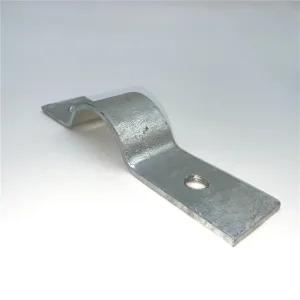
China China Suppliers Factory Heavy-Duty Stainless Steel Solar PV Mounting Hoop for Round Pipe
View Specifications
Buy Durable Solar PV Mounting Purlin Connector from China Factory - Reliable Suppliers
View Specifications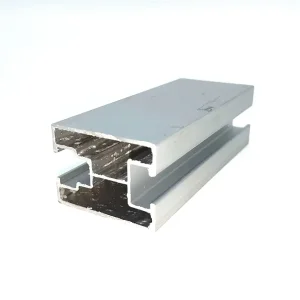
Buy PV 3040 Reinforced Aluminum Guide Rail Manufacturer, Factory
View Specifications
Buy China Suppliers High-Quality Solar PV Aluminum Alloy Angle Bracket - Durable and Lightweight
View Specifications
Best High-Strength Aluminum Alloy Solar PV Mounting Base from China Suppliers & Factory
View Specifications
Buy China Solar PV Aluminum Alloy Angle Bracket | Durable Photovoltaic Mounting Systems
View Specifications