
Featured Industrial Hardware & Tensioning Components
Precision engineered fastening mechanisms, anchor connections, and modular mounting hardware inspected for extreme climatic and mechanical stress tolerance.
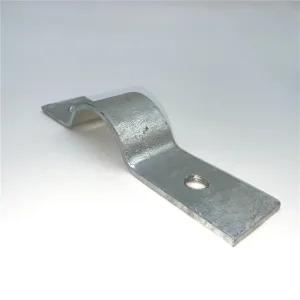
Stainless Steel Solar PV Mounting Hoop for Round Pipe & Bracket Fixing
Explore Product Specifications
Trapezoidal Metal Roof Clamp - High-Strength, Non-Penetrating
Explore Product Specifications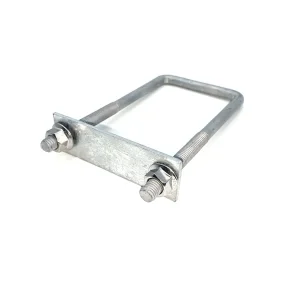
High-Strength Double-Hole Pressure Plate for Structural PV Systems
Explore Product Specifications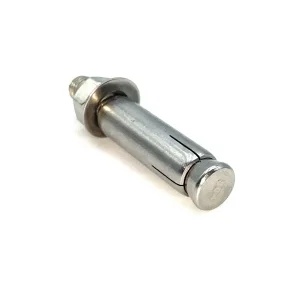
Heavy-Duty Stainless Steel Concrete & Masonry Expansion Anchor Bolt
Explore Product Specifications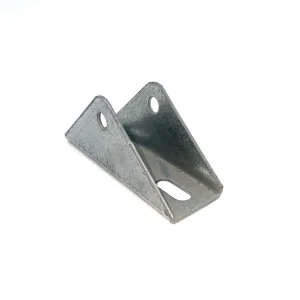
Aluminum Alloy Three-Hole Mounting Connector for Structural Splices
Explore Product Specifications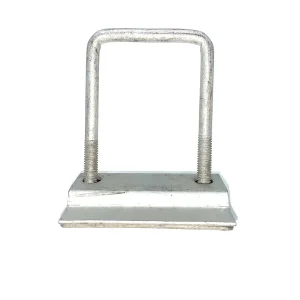
Heavy Tension Double-Hole Clamp Plate for Outdoor Array Racking
Explore Product Specifications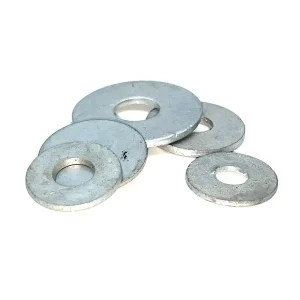
Precision Stainless Steel Flat Washers for Uniform Clamping Torque
Explore Product Specifications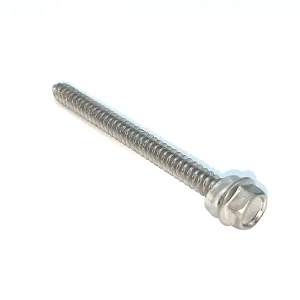
Stainless Steel High-Shear Self-Drilling Screws for Steel Channels
Explore Product SpecificationsMacro-Industry Engineering Solutions & Global Grid Dynamics
In high-voltage electrical grid architecture, telecommunication networks, and renewable power infrastructure, the dead end tension clamp (also referred to as an anchoring strain clamp) serves as the primary mechanical termination point bearing 95% to 100% of line tension.
HV/EHV Overhead Lines
Designed for high-voltage transmission lines (110kV to 750kV) carrying ACSR, AAC, or ACSS conductors. Clamps must withstand dynamic aerodynamic buffeting, aeolian vibration, and extreme mechanical static tension exceeding 120 kN without inducing mechanical conductor slip or crushing inner aluminum strands.
Optical ADSS & OPGW Terminations
All-Dielectric Self-Supporting (ADSS) and Optical Ground Wire (OPGW) systems require specialized helical preformed dead-end clamps. These distribute radial gripping stresses evenly across extended contact lengths, fully eliminating optical micro-bending losses and preventing signal degradation.
Utility-Scale Solar Racking
In utility solar farms and high-wind agrivoltaic layouts, structural dead-end tension cables and mechanical anchoring clamps secure long solar tracker torque tubes and cable suspension catenaries against uplift forces, preventing harmonic resonance during peak gusts.
Dead End Tension Clamp Structural Typologies
Choosing between bolted, wedge-type, compression, and preformed helical tension clamps requires strict adherence to conductor metallurgy, maximum working tension (MWT), and continuous thermal ampacity.
| Clamp Architecture | Applicable Cables / Conductors | Ultimate Tensile Strength (UTS) | Primary Material & Metallurgy | Governing Engineering Standard |
|---|---|---|---|---|
| Preformed Helical Dead End | ADSS, OPGW, Guy Wires, ACSR | ≥ 95% - 100% of Conductor UTS | Aluminum-clad Steel / Galvanized Wire | IEEE 1138 / IEC 61284 |
| Wedge-Type Strain Clamp | Aerial Bundled Cables (ABC), AAC | ≥ 90% of Rated Conductor Load | UV-Stabilized PA66 Polymer / High-Strength Forged Aluminum | NF C 33-041 / EN 50483 |
| Bolted Quadrant Strain Clamp (NLL Series) | ACSR, Copper, All-Aluminum Conductors | ≥ 65% - 85% Conductor Breaking Load | A356 High-Density Cast Aluminum / Ductile Iron | IEC 61897 / ANSI C119.4 |
| Hydraulic Compression Dead End | Heavy ACSR, ACSS, GAP Conductors (>220kV) | ≥ 95% Conductor Ultimate Strength | 99.5% Pure EC Aluminum Sleeve + Forged Steel Eye Core | IEC 61284 / BS 3288 |
| Guy Wire Dead End (Big-Grip) | Steel Strand Guy Wires for Utility Poles & Masts | 100% of Rated Guy Strand Strength | Class A / B Heavy Hot-Dip Galvanized High-Carbon Steel | ASTM A475 / ASTM A153 |
Grip Dynamics vs. Fatigue Creep
Bolted clamps rely on uniform torque applied via torque-limiting shear nuts to ensure continuous radial pressure. However, over decades under fluctuating atmospheric temperatures (-40°C to +80°C), thermal expansion rates between steel clamping bolts and aluminum bodies cause microscopic conductor relaxation. Preformed helical designs mitigate this through constant spring-elastic mechanical engagement.
Electrical & Thermal Conductivity
For energized line dead-ends carrying full current, junction electrical resistance must remain equal to or lower than an equivalent length of unspliced conductor. High-grade tension dead-end jumper terminals incorporate anti-oxidation paste infused with microscopic conductive nickel particles to preclude inter-crystalline galvanic corrosion.
Corona Discharge & RFI Shielding
At operational transmission voltages exceeding 220kV, abrupt hardware edges trigger corona ionization losses, ozone emission, and acoustic noise. Precision-engineered aluminum dead-end bodies feature smoothly radiused parabolic transitions and corona shielding rings tested in high-voltage pulse laboratories.
Global Sourcing Landscape & Supply Chain Evaluation
International utility operators and EPC procurement teams face complex supply risks across lead times, material traceability, and metallurgical standards. Here is how Tier-1 manufacturers compare with local fabricators.
Industrial Cluster Advantages (Yongnian)
Handan Youlong Fastener Co., Ltd. operates in Yongnian District, China's premier fastener and structural steel cluster. This geographic ecosystem yields instant access to high-purity aluminum ingots (A356, 6061-T6), automated continuous hot-dip galvanizing lines, and round-the-clock metallurgical testing centers, eliminating multi-tier subcontractor markups.
Full Load Path Sourcing Single-Point Liability
Procuring conductor dead-ends, anchor shackles, U-bolts, turnbuckles, and foundation bolts from disparate third-party jobbers introduces tolerance mismatches and voided structural warranties. Sourcing complete structural kits ensures single-point engineering validation and unified load certificates.
Buffer Stock & Phased EPC Delivery
Modern cross-border transmission corridor projects demand rolling container dispatches tied strictly to foundation pouring milestones. Factory-direct partners offer secure warehousing, barcoded packing crates, and bonded logistics corridors to maintain milestone reliability.
Geographic Environments & Regulatory Compliance
Overhead line hardware fails when standardized products are deployed into extreme regional microclimates without proper metallurgical modifications.
Desert & High-UV Arid Zones (MENA / Atacama)
Intense ultraviolet radiation degrades polymer wedges in generic ABC strain clamps within 3 years. For Middle Eastern and North African installations, UV-stabilized polyamide-66 reinforced with 30% glass fibers ensures zero brittle failure under sustained 60°C ambient ground heat and sandblast erosion.
Heavy Glaze Ice & Sub-Zero Conditions (Nordic / Canada)
Radial ice accumulation exceeding 30mm dramatically amplifies static dead-end loads while inducing low-frequency high-amplitude conductor gallop. Ductile iron cast clamps must meet Charpy V-notch impact toughness requirements at -40°C (≥ 27 Joules) to avoid catastrophic brittle fracture.
Marine Coastal & Offshore Islands (ISO 9223 C5-M)
Marine atmospheres demand hot-dip galvanizing per ASTM A153 with a minimum coating thickness of 86 μm (610 g/m²), or marine-grade high-purity aluminum alloys (AlMg3). Utilizing stainless steel 316 fastener sets with EPDM isolating washers completely isolates dissimilar electrical potentials.
International Regulatory Compliance
Full compliance with utility standards: ANSI C119.4 (North America), BS EN 50483 (European aerial bundled cable hardware), IEC 61284 (overhead lines), RETIE (Latin America), and SEC specifications (Saudi Electricity Company).
Engineering Roadmap: Smart Grids & Advanced Metallurgy
The future of line termination hardware focuses on autonomous monitoring, non-destructive drone installation, and ultra-light composite clamping alloys.
IoT-Integrated Strain Monitoring
Smart strain clamps embedded with passive surface acoustic wave (SAW) sensors communicate real-time tensile loading and operating temperature to SCADA control centers. This empowers transmission system operators to predict conductor ice-loading and dynamic line sag before clearance violations occur.
High-Entropy Light Alloys & Low Carbon
Developing carbon-neutral casting methodologies and next-gen silicon-magnesium aluminum formulations that lower component weight by 22% while providing a 35% gain in high-cycle fatigue threshold resistance under severe aeolian vibration.
Drone-Assisted Quick-Snap Architecture
To reduce high-risk lineworker hot-line maintenance, emerging tension clamp bodies feature self-locking wedge mechanisms compatible with aerial drone manipulator arms and robotic live-line installation tools, shortening power outage replacement windows from hours to minutes.
Engineering & Procurement FAQ
Common technical considerations for transmission line engineers, project managers, and quality inspectors sourcing dead-end tension clamps.
Industrial Fasteners, Specialized Clamps & Hardware Range
Explore additional precision manufactured products built in China's Fastener Capital for infrastructure, power distribution, and solar installation projects.
Stainless Steel Multi-Material Self-Drilling Fasteners
Explore Product Specifications
High-Strength Double-Hole Structural Pressure Retainer Plate
Explore Product Specifications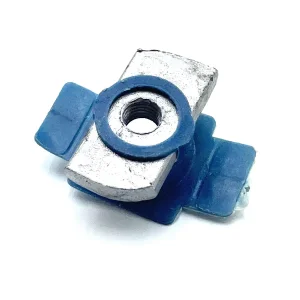
Tool-Free Non-Conductive Ergonomic Quick-Fasten Wing Nut
Explore Product Specifications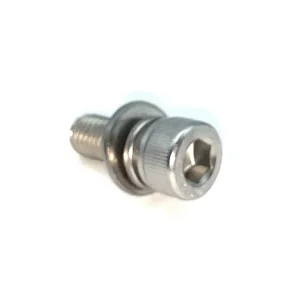
Stainless Steel Hex Socket Combination Bolt Assembly
Explore Product Specifications
Customized No-Drill Trapezoidal Metal Roof Racking Clamp
Explore Product Specifications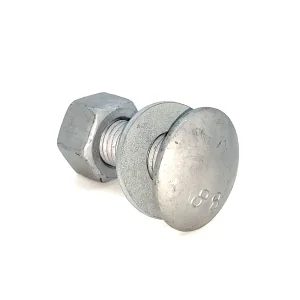
Heavy-Duty Hot-Dip Galvanized Anti-Rotation Carriage Bolt
Explore Product Specifications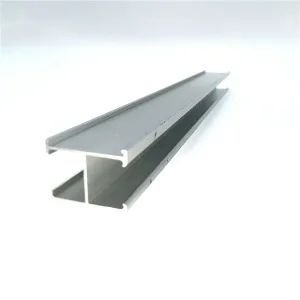
Heavy Extruded 3040 Aluminum Alloy Support Guide Rail
Explore Product Specifications