
High-Performance Chemical Anchoring & Structural Fasteners
Factory-direct structural expansion bolts, precision stainless fasteners, and photovoltaic mounting hardware compliant with international ISO/DIN engineering metrics.
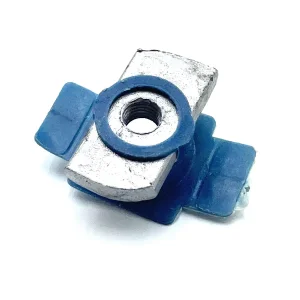
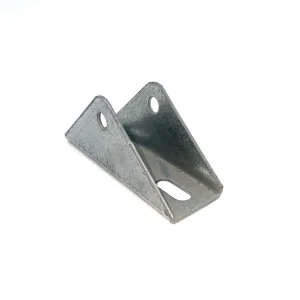
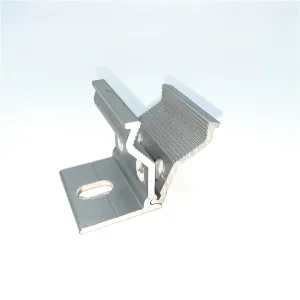
Chemical Anchoring Fasteners in Modern Heavy Construction
Unlike conventional expansion bolts that rely strictly on mechanical friction and hoop stresses, chemical anchor fasteners (bonded anchoring systems) transfer concentrated tensile and shear stresses uniformly along the full depth of embedment.
Elimination of Bursting Forces
Traditional mechanical anchors generate radial expansion forces that trigger spalling in thin-edge concrete or cracked structural members. Chemical anchor fasteners transfer stress via chemical adhesion and microscopic interlock, permitting ultra-close edge margins and minimal center-to-center spacing.
Deep Embedment Flexibility
Chemical injection systems allow engineers to adjust anchoring depth flexibly to suit custom structural load demands. From M8 threaded rods to massive M39 post-installed rebar connections, high-performance pure epoxy and vinylester compounds provide exceptional pull-out resistance.
Hermetic Borehole Sealing
Resin matrices fill every microscopic void within the drill hole, creating an impermeable barrier against water ingress, chemical leaching, and corrosive contaminants. This seal fundamentally eliminates moisture channeling into reinforced concrete slabs.
Resin Formulations vs. Mechanical Fixings: Technical Breakdown
Selecting the optimum chemical anchor requires evaluating cure kinetics, glass transition temperatures (Tg), seismic qualifications, and substrate moisture conditions.
| Resin / Fastener Class | Primary Resin Chemistry | Bond Strength (N/mm²) | Typical Gel / Cure Time | Optimum Operational Environment |
|---|---|---|---|---|
| Pure Epoxy (1:1 / 3:1) | Bisphenol-A / Polyamine | 18 - 28 N/mm² (High) | 30 min gel / 12 hrs full | Heavy-duty civil infrastructure, deep post-installed rebar, submerged/diamond-cored holes. |
| Vinylester (Styrene-Free) | Methacrylate Prepolymer | 14 - 22 N/mm² (Med-High) | 6 min gel / 45 min full | Rapid architectural retrofit, solar racking ballast, cold-weather installations down to -10°C. |
| Polyester Resin | Unsaturated Polyester | 8 - 14 N/mm² (Moderate) | 5 min gel / 30 min full | Secondary structural fixtures, solid masonry, hollow brick with perforated sleeves. |
| Mechanical Expansion Bolt | Carbon Steel / SS304/SS316 | Point Friction Limited | Instant Torque Load | Standard concrete foundations where edge distances and vibration fatigue are not primary design constraints. |
Critical Industrial Application Scenarios
Our chemical anchor fasteners and precision hardware operate in extreme civil, energy, and marine environments across 100+ global markets.
Utility-Scale Photovoltaic Systems
Large-scale solar trackers and ballast structures face high wind uplift and cyclic thermal loading. Chemical anchors secure base brackets into concrete foundation blocks with zero risk of vibration loosening, while stainless steel carriage bolts and clamps fasten guide rails with lasting stability.
Wind Power & Heavy Dynamic Machinery
Tower ring foundations and dynamic crane bases transmit high shear and overturning moments. Pure epoxy chemical anchoring prevents fatigue failures under continuous vibration, dampening dynamic pulses where traditional mechanical sleeves experience micro-slippage.
Bridges, Tunnels & Marine Transit
Overhead catenary anchors, emergency rail tracks, and splash-zone structural attachments require reliable chemical bonding. Combined with A4-70 / A4-80 316 stainless steel rods, these anchors withstand aggressive de-icing salts, sulfur dioxide, and continuous humidity.
Seismic Retrofit & Structural Strengthening
Seismic rehabilitation under Eurocode 8 or ACI 318 requires deep dowel drillings to anchor post-installed reinforcement bars. Our tested chemical anchors expand load transfer depth across beam-column connections, concrete jacketings, and shear wall retrofits.
Engineering Roadmap: High-Precision Metallurgical Manufacturing
From cold heading and high-speed CNC threading to multi-stage metallurgical quenching, our Handan production hub ensures uniform anchor performance across every lot.
Phase 1: Nano-Engineered Hybrid Resins
Formulating mineral-filled, silicate-modified vinylester polymers that increase fire resistance up to 4 hours (R120 criteria) while reducing high-temperature creep in structural anchor zones.
Phase 2: High-Tension Thread Geometries
Upgrading anchor stud geometry to reverse-buttress thread profiles. This design optimizes the contact angle against the cured resin matrix, redistributing concentrated shear loads down the hole depth.
Phase 3: Automated Quality Traceability
Integrating optical machine-vision dimension checking with automated torque and pull-out test benches. Every production run leaves our Yongnian facility backed by raw material analysis, tensile load certifications, and salt-spray corrosion data.
Structural Bolts, Anchoring Pins & Mounting Components
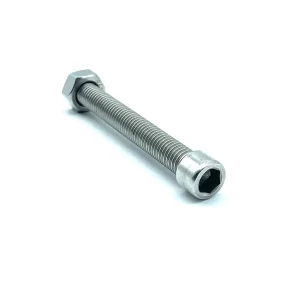
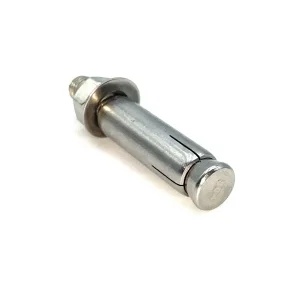
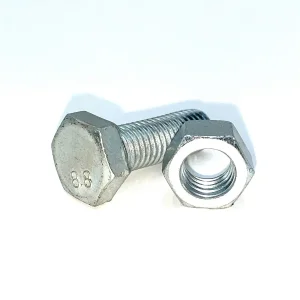
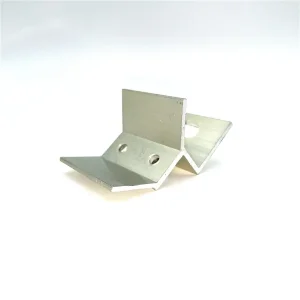
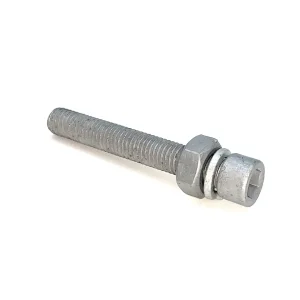
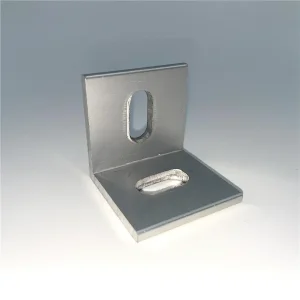
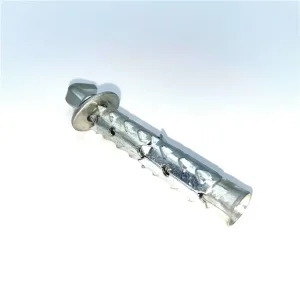
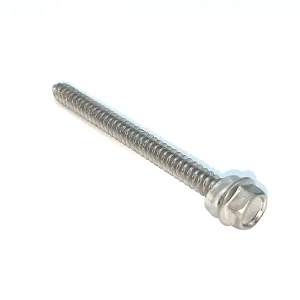
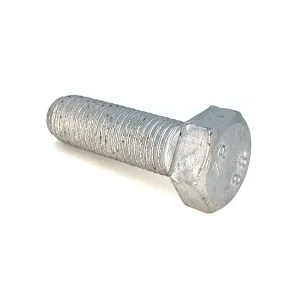
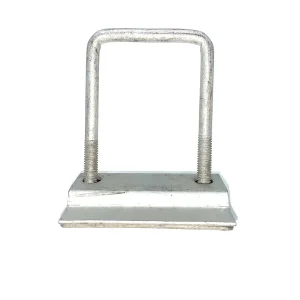
Explore our certified product line of hot-dip galvanized hex bolts, stainless self-drilling screws, and PV pressure plates engineered for long-term project reliability.
Step-by-Step Field Installation Protocol
A chemical anchor fastener's ultimate pull-out strength depends directly on hole-cleaning quality and installation precision. Follow this field workflow to prevent anchor slippage.
1. Calibrated Rotary Percussion
Drill to the specified depth perpendicular to the concrete face using carbide-tipped bits complying with ANSI B212.15 or ISO/DIN standards. Maintain constant drill speed to avoid oval borehole profiles.
2. Borehole Evacuation (2x2x2)
Residual dust reduces chemical adhesion by up to 60%. Blow out the hole twice using oil-free compressed air (>6 bar), brush with a calibrated steel wire brush twice, and blow out twice more until dust-free.
3. Static Mixer Injection
Extrude an initial test bead until the resin achieves a uniform color. Inject the mortar from the bottom up to prevent trapped air voids, filling roughly two-thirds of the hole volume.
4. Anchor Insertion & Curing
Insert the threaded rod using a steady twisting motion before gel time expires. Excess resin must ring the surface cleanly. Leave the anchor undisturbed for the full cure duration before applying torque.
Frequently Asked Questions
Essential technical insights for structural engineers, procurement leads, and international distributors.
What is the functional difference between chemical anchors and mechanical expansion bolts?
Can chemical anchors be installed in water-filled, wet, or diamond-cored holes?
How does ambient and substrate temperature influence resin curing?
What surface protection should be specified to prevent galvanic corrosion?
How does your factory ensure lot-to-lot traceability and quality control?
Need Custom Structural Anchor Specifications?
Work directly with our structural fastening engineers. We offer drawing reviews, pull-out load calculations, and OEM fabrication from Handan, China's Fastener Capital.