Industrial Structural Connectors & Anchors
Discover our primary selection of heavy-duty expansion hardware, PV mounting components, and high-tensile connection assemblies manufactured under stringent ISO 9001 quality frameworks.
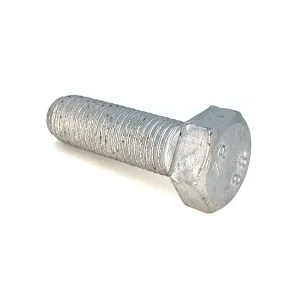
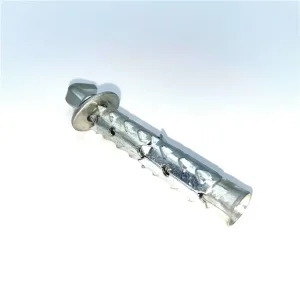
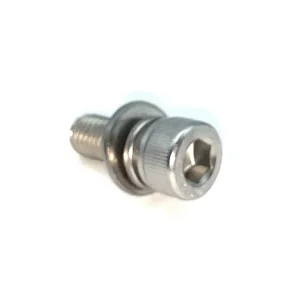


Global Commercial & Industrial State of 4x4 Post Base Connectors
A deep-dive technical evaluation of post base connectors across civil architecture, renewable energy racking, and industrial structural timber systems worldwide.
Standardization vs. Custom Tolerances
The global 4x4 post base connector market operates on precise dimensional dynamics. In North American framing, a nominal 4x4 post measures 3.5 inches by 3.5 inches (89 mm x 89 mm), whereas European, Australian, and industrial rough-sawn timbers require true 100 mm x 100 mm apertures. Leading Chinese manufacturers now deploy high-precision cold-forming and CNC laser profiling capable of holding tolerance bounds within ±0.2 mm.
Building Code Harmonization & IBC Compliance
Modern engineering demands compliance with the International Building Code (IBC Section 2304.6.8) and International Residential Code (IRC Section R317.1.4). These standards mandate structural connectors to incorporate an engineered 1-inch (25.4 mm) standoff distance, preventing moisture migration from concrete footings to wood end-grain, while resisting simultaneous vertical uplift, lateral shear, and axial compression.
Supply Chain Resiliency & Handan Cluster Advantage
With Handan (Yongnian) recognized as China's premier fastener and structural bracket manufacturing cluster, sourcing directly unlocks vertical cost efficiencies. Integrated steel coil sourcing, continuous progressive stamping, automated robotic seam welding, and local galvanizing facilities compress procurement lead times by up to 35% compared to non-integrated production hubs.
Technical Roadmap & Specification Comparison
Comparative analysis of post base connector architectures, load-path kinematics, and metallurgical grades designed for diverse industrial applications.
| Connector Architecture | Material & Thickness | Recommended Anchoring System | Ultimate Uplift Load (kN) | Lateral Shear (kN) | Best Application Environment |
|---|---|---|---|---|---|
| Cast-in-Place Standoff 4x4 Base | Q235B / 12-Gauge (2.7 mm) Hot-Dip Galv | Embedded J-Bolt or Deformed Bar (M12/M16) | 16.5 - 22.0 kN | 8.2 - 11.4 kN | New Concrete Foundation High wind load pergolas, solar carports. |
| Retrofit Flush Surface Base | Q345B Steel or SS304 / 11-Gauge (3.0 mm) | Heavy-Duty Concrete Expansion Bolt / Wedge Bolt | 12.8 - 18.2 kN | 6.4 - 9.1 kN | Existing Slabs Deck rebuilding, commercial timber patio retrofits. |
| Adjustable Standoff Base (Elevated) | SS316 Marine Grade or Powder-Coated HDG | Threaded Center Anchor Rod (M16 / M20) | 14.0 - 19.5 kN | 5.5 - 7.8 kN | Marine & Coastal Flood zones, sloping grade foundations, dock piers. |
| Concealed Structural Knife-Plate Base | High-Tensile Alloy Carbon Steel (5.0 mm plate) | Internal Steel Dowels + Base Expansion Fasteners | 24.0 - 32.5 kN | 12.5 - 16.0 kN | Mass Timber & Glulam Architectural exposed timber beams, pavilion columns. |
Mechanics of Downward Compression
When timber posts carry structural roofs, photovoltaic modules, or mezzanine floors, downward axial force is transferred through the base connector plate into the concrete foundation. Youlong connectors utilize reinforced bottom cold-ribbed stiffeners that prevent base dishing under sustained dead loads exceeding 35 kN, safeguarding timber end-grain against compressive fiber collapse.
Uplift Resistance & ASCE 7-22 Wind Loading
Wind gusts flowing over patio canopies or solar canopies create pronounced aerodynamic suction. Base connectors must transmit tension forces across lateral side-plates directly to through-bolts or structural screws. Testing to ASTM D1761 verifies that Youlong connectors withstand uplift exceeding 18 kN without fastener hole elongation or edge tear.
Lateral Shear & Moment Resistance
Conventional post bases act as pinned connections, offering low rotational stiffness. For installations without diagonal bracing, heavy-duty moment-resisting base connectors feature extended side-skirts (up to 150 mm) anchored by multiple high-tensile structural through-bolts, substantially curbing base deflection during seismic shake-table simulations.
Protective Metallurgy & Chemical Treatments
Engineering long-term durability in soil-contact, marine salt spray, and pressure-treated wood environments (ACQ / Copper Azole).
Hot-Dip Galvanizing (ASTM A123 / ISO 1461)
Our batch hot-dip galvanizing process immerses prefabricated connectors in molten zinc at 450°C (842°F). This metallurgical reaction creates a multi-layered iron-zinc alloy with an outer pure zinc shell exceeding 85 μm (600 g/m²). This barrier offers self-healing sacrificial galvanic protection essential for ground-level infrastructure.
Stainless Steel (AISI 304 & Marine AISI 316)
For coastal zones categorized under ISO 9223 C5-M, austenitic stainless steels provide unmatched pitting resistance. Grade 316 contains 2.0–3.0% molybdenum, creating an inert chromium-oxide passive layer that remains resilient against airborne chloride deposits, marine atmospheres, and high-tannin acidic timbers like redwood and western red cedar.
Zinc-Aluminum-Magnesium (ZAM) & E-Coating
Next-generation ZAM alloy coatings (featuring 3% magnesium and 11% aluminum) provide four to five times higher corrosion resistance than conventional galvanizing at equivalent thicknesses. Coupled with an electrodeposited epoxy primer and architectural UV-stable black matte powder topcoat, this finish delivers both striking aesthetics and rugged durability.
Global Application Scenarios & Civil Implementations
From utility-scale solar carports to commercial architectural boardwalks, examine real-world use cases where structural post bases safeguard critical framing joints.
Solar Carports & Agile PV Timber Structures
Hybrid photovoltaic installations often merge glue-laminated or treated timber support columns with overhead extruded aluminum rails. The 4x4 base connector anchors the system to elevated concrete traffic bollards, isolating structural wood from vehicle run-off and standing melt-water while resisting high cyclic wind suction acting on the PV arrays.
Residential Elevated Decks & Pergolas
In suburban construction across the United States, Canada, and Australia, elevated second-story deck structures require verified hold-down connections. Post base connectors isolate posts from foundation moisture, preventing fungal decay at the grain end, while resisting seismic ground motion and lateral rack caused by crowd movements.
Coastal Boardwalks & Marina Infrastructure
Intertidal boardwalks and wetland observation platforms face constant wetting and drying cycles. Standard zinc electroplating fails within months in these environments. Marine-grade AISI 316 stainless steel post bases withstand constant exposure to brackish water, high humidity, and marine algae without degrading or staining surrounding wood.
Supply Chain Excellence & Custom OEM/ODM Capabilities
Handan Youlong Fastener combines progressive stamping, automated tool design, and verified metallurgical sourcing to streamline cross-border structural hardware supply chains.
Bespoke Tooling & Prototyping
In-house tooling and die fabrication lines transform contractor 2D/3D CAD drawings (STEP, DWG) into physical production samples within 7 business days, facilitating rapid structural engineer sign-off and ICC-ES evaluation.
Full Batch Traceability
Every production run includes 3.1 Mill Test Certificates (MTC), complete chemical spectrometry (C, Mn, Si, P, S), and calibrated tensile/yield break curves. Connectors carry laser-etched heat numbers for structural compliance.
Complete Load-Path Hardware
Consolidate post bases with wedge expansion anchors, high-tensile carriage bolts, structural purlin connectors, and aluminum module clamps on a single shipping bill. Reduce container void-space and simplify port customs clearance.
Automated Robotic Welding
Automated robotic continuous welding stations deliver full-penetration fillet welds between connector cups and baseplates, eliminating micro-voids, cold laps, and spatter for uniform structural integrity under extreme stress.
Technology Roadmap: The Next Decade in Structural Connectors
Discover how advanced structural engineering, generative design algorithms, and smart industrial IoT are transforming traditional anchoring hardware.
Generative AI Topological Optimization
Engineers are leveraging finite element analysis (FEA) paired with generative algorithms to remove dead weight from structural brackets. By reinforcing only high-stress tension and compression vectors, next-generation 4x4 bases reduce steel usage by 18% while enhancing ultimate failure thresholds by up to 22%.
Integrated IoT Structural Strain Sensors
Critical infrastructure is adopting smart-connected baseplates equipped with passive piezoelectric micro-sensors. These sensors log post-seismic settling, continuous foundation uplift, and vibration frequencies, transmitting real-time structural health diagnostics directly to facility management platforms without external wiring.
Low-Carbon Electric Arc Furnace (EAF) Steels
With global procurement teams prioritizing Scope 3 emissions reductions, our manufacturing processes are transitioning to certified recycled scrap melted via green-powered Electric Arc Furnaces (EAF). This initiative reduces the embedded carbon footprint of our stamped structural brackets by over 58% compared to traditional blast furnace routes.
Frequently Asked Questions on 4x4 Post Base Connectors
Detailed answers for structural engineers, procurement managers, and commercial building contractors.
What is the exact dimensional difference between nominal 4x4 and rough-sawn post bases?
In standard North American surfaced dimensional lumber (S4S), a standard 4x4 wood post is dressed down to 3-1/2 inches by 3-1/2 inches (89 mm x 89 mm). Connectors engineered for nominal lumber feature an interior opening of approximately 3-9/16 inches (90.5 mm) to allow comfortable fitting without excessive play. In contrast, rough-sawn lumber, European planed timbers, and heavy industrial glulam posts measure a true 4.0 inches by 4.0 inches (100 mm to 102 mm). Sourcing the wrong opening size requires costly on-site timber shaving or leaves an unacceptable gap that weakens structural fastener bite. Youlong manufactures both standard nominal (89 mm) and full rough-sawn (100 mm) configurations.
Why is an integrated 1-inch standoff required by international residential building codes?
Under IRC Section R317.1.4 and IBC Section 2304.6.8, timber columns exposed to the weather or supported by concrete slabs that are in direct contact with the earth must have their end-grain elevated at least 1 inch (25.4 mm) above the finished slab. Concrete is naturally porous; it wicks moisture from the soil via capillary action. When timber rests directly on moist concrete without an elevated metal barrier, the capillary suction draws water deep into longitudinal wood pores, triggering premature dry rot and fungal decay. Standoff post bases incorporate a raised steel pedestal with built-in weep holes that guarantee drainage and airflow.
What concrete anchors should be paired with a 4x4 post base for maximum shear and uplift?
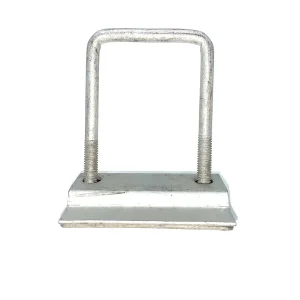
For fresh concrete pours, cast-in-place anchor bolts (such as M12 or M16 hot-dip galvanized J-bolts or threaded rods with heavy square washers) provide superior mechanical interlock. When installing post bases onto existing cured concrete, heavy-duty wedge expansion bolts (such as our high-strength carbon steel or stainless steel wedge anchors) or heavy-duty concrete screw anchors are recommended. Wedge anchors require a minimum embedment depth of 2-1/2 to 3-1/2 inches (64 to 89 mm) into sound 3,000+ PSI concrete to develop their rated pull-out strength of 18+ kN without edge blowout.
How do you eliminate galvanic corrosion when connecting steel bases to aluminum solar rails?
Galvanic corrosion occurs when dissimilar metals—such as carbon steel and aluminum—come into contact in the presence of an electrolyte like rainwater or salt spray. The aluminum acts as an anode and corrodes rapidly. To prevent this in hybrid solar carport framing, we supply non-conductive UV-resistant EPDM or nylon insulating barrier washers and neoprene gaskets that physically isolate aluminum mounting rails from galvanized or carbon steel structural brackets, preserving connection integrity over multi-decade spans.
What testing and factory certifications do you provide for structural engineering sign-off?
Every shipment from Handan Youlong Fastener is accompanied by certified EN 10204 Type 3.1 Mill Test Certificates verifying base metal chemical composition and mechanical yield/tensile thresholds. We perform calibrated random testing in our in-house laboratory, including ISO 9227 / ASTM B117 neutral salt spray corrosion tests (tested up to 1,500 hours for HDG and Dacromet finishes), weld penetration micro-etching, and hydraulic tensile/shear destructive testing to guarantee compliance with international EPC project parameters.
Heavy-Duty Mounting Fasteners & Connector Hardware
Explore our complete hardware line: purlin connectors, baseplates, structural angle brackets, and fasteners designed for utility-scale solar arrays and exterior timber engineering.