
Primary Structural Extrusions & Heavy Fastening Systems
Pre-engineered mounting profiles and hardware optimized for rapid site deployment across high-density commercial rooftops in Selangor and the Federal Territory of Kuala Lumpur.
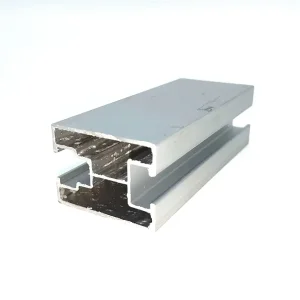
Kuala Lumpur C&I Heavy-Load 3040 Reinforced Aluminum Guide Rail
View Rail Specifications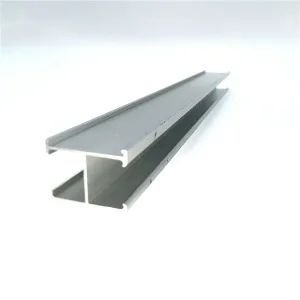
Standard 3040 Extruded Anodized Aluminum Alloy PV Guide Rail
View Rail Specifications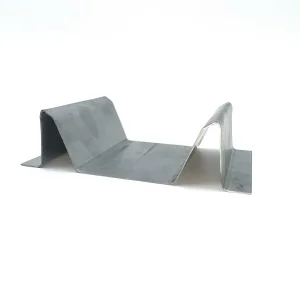
Monsoon-Engineered M-Type Aluminum Waterproof Gutter Drainage Channel
View Channel Details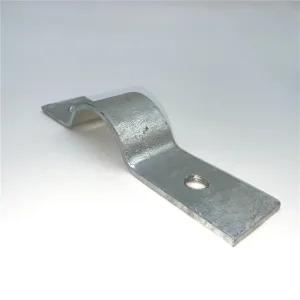
Marine Grade High-Torque Stainless Steel Pole Mounting Hoop Clamp
View Clamp DetailsNavigating Solar Mounting Infrastructure in Peninsular Malaysia
Kuala Lumpur, as the financial and commercial epicentre of Malaysia, is experiencing an aggressive shift toward commercial and industrial (C&I) photovoltaic retrofitting. Spurred by national sustainability mandates, high daytime commercial grid tariffs under Tenaga Nasional Berhad (TNB), and regulatory enhancements under the Net Energy Metering (NEM 3.0) and Self-Consumption (SELCO) programs, multi-megawatt rooftop installations have transitioned from peripheral green initiatives to essential corporate balance-sheet hedges.
However, the equatorial climatic conditions of the Greater Klang Valley represent an uncompromising testing environment for structural PV racking hardware. The region undergoes bimodal monsoonal patterns featuring extreme diurnal thermal cycling, high relative humidity exceeding 85% year-round, intensive UV radiation, and localized violent convection storms capable of producing sudden gust velocities reaching 30 m/s to 38 m/s.
These intense climatic variables mandate racking structures characterized by superior yield strength, meticulous galvanic isolation, and specialized aerodynamic ballast matrices that prevent roof structural damage while eliminating the risk of catastrophic array lifting or fastener galling.
NEM 3.0 & CGPP Regulatory Drivers
Aggressive corporate power purchase agreements (CPPAs) under the Corporate Green Power Programme require solar substructures capable of 25- to 30-year operational lifespans without structural fatigue.
Severe Monsoonal Microclimates
Sudden convective squalls across Petaling Jaya, Shah Alam, and downtown KL demand compliance with MS 1553 (Code of Practice on Wind Loading for Building Structure) wind uplift parameters.
Industrial Corrosive Environments
Close proximity to major arterial logistics corridors and industrial zones exposes installations to sulfur dioxide and airborne halides, elevating corrosive risk to ISO 12944 C4/C5 classifications.
Global Photovoltaic Structural Standards & China Factory Efficiencies
Bridging tier-one structural metallurgical engineering with the raw manufacturing scale of China’s fastener and aluminum extrusion hub in Handan, Hebei.
Yongnian Fastener Industrial Cluster
Strategically situated in Yongnian District, Handan City—China’s world-renowned fastener capital—providing immediate, vertically integrated supply loops for high-tensile cold heading, forging, stamping, and automated heat-treatment furnaces.
Rapid Tooling & Custom Extrusion
With an in-house tooling workshop, prototype custom rail profiles and seam clamps matching proprietary Malaysian metal roofing profiles (such as Lysaght Klip-Lok 406/700, Spandek, and Trimdek) can transition from CAD review to production within 7 to 10 days.
Multi-Stage Quality Gates
Continuous spectrometry for alloy composition verification, tensile load testers checking proof load thresholds, and optical sorting machines ensuring zero thread defects on critical torque-shear hardware.
The global utility-scale and C&I solar market has shifted from basic structural steel angle fabrication to sophisticated, finite element analysis (FEA) optimized aluminum and Zinc-Aluminum-Magnesium (ZAM) structural systems. Internationally, EPC contractors operate under tight Capex envelopes while balancing escalating project liability over 25-year performance warranties.
For Malaysian developers and international engineering firms executing installations in Selangor and Kuala Lumpur, our Handan manufacturing facilities eliminate middle-tier distributor premiums without sacrificing metallurgical rigor. Direct factory engagement enables rigorous customization of rail wall thicknesses, custom slotted hole pitches that accommodate non-standard purlin spacings, and pre-assembled hardware packaging that drives down on-site mechanical installation labor costs by up to 35%.
By leveraging high-speed automated extrusion lines, precision continuous stamping presses, and robotic tapping centres, we deliver millions of structural fasteners and hundreds of metric tons of anodized rails per quarter, meeting the precise project milestones demanded by high-stakes Malaysian solar infrastructure.
Structural Racking Solutions for Malaysian Roof Archetypes
Comprehensive metallurgical specifications, load distributions, and attachment methodologies engineered to address the specific building codes of Peninsular Malaysia.
| Roof Substrate / Archetype | Common Malaysian Applications | Recommended Mounting Profile | Fastening Methodology | Corrosion Shielding |
|---|---|---|---|---|
| Concealed-Fix Standing Seam (e.g. Klip-Lok 406, 700, Optima) |
Industrial warehouses in Shah Alam, logistics hubs in Bukit Jelutong, Klang factories | Non-penetrating anodized aluminum clamp with dual serrated rail interface | Direct clamping to standing seam via A2-70 / A4-70 stainless clamping bolts; zero roof skin penetration | ISO 9223 C4 EPDM isolating gaskets prevent galvanic interaction with Zincalume®/Colorbond® |
| Trapezoidal Metal Deck (e.g. Trimdek, Spandek, Corrugated) |
Commercial distribution centers, factory sheds, Subang manufacturing plants | Short rail direct-fix system or continuous 3040 reinforced guide rail spanning purlins | Self-drilling bi-metal screws with vulcanized EPDM bonded sealing washers into structural purlins | ISO 9223 C3/C4 15μm anodized film; mechanical zinc-tin coated screws |
| Reinforced Concrete Flat Roof (Cast-in-situ concrete slabs) |
High-rise commercial office towers in KL Sentral, Bangsar, Mont Kiara rooftops | East-West or South-facing aerodynamic ballasted console system or anchor-fixed tripod | Stainless steel expansion anchor bolts or precast concrete ballast blocks with heavy-duty rubber protection pads | ISO 9223 C3 Stainless Steel 304/316 expansion anchors, hot-dip galvanized base frames |
| Waterproof Solar Carport Substructure (Commercial parking lots) |
Shopping malls, corporate parks in Cyberjaya, transit-oriented park-and-ride facilities | Continuous M-Type extruded aluminum water gutter channels with integrated module framing | Structural bolt-and-nut assemblies connecting water channels to steel or aluminum secondary purlins | ISO 9223 C4/C5 Anodized clear/black finish; high-discharge water drainage capacity for monsoonal deluges |
Mitigating Tropical Thermal Expansion & Galvanic Electrolysis
One of the primary failure modes in equatorial solar engineering is improper compensation for thermal expansion. Under direct midday solar irradiance in Kuala Lumpur, aluminum rail surface temperatures routinely exceed 68°C, followed by abrupt cooling to 24°C during monsoonal downpours. The differential thermal expansion coefficient between aluminum rails (≈ 23 × 10-6 /K) and the underlying steel structure (≈ 12 × 10-6 /K) generates severe mechanical shearing stress on fasteners.
Our engineered PV 3040 guide rail and three-hole splice connectors incorporate longitudinal slotted expansion clearances every 12 to 18 meters of continuous array length. This allows controlled axial displacement while preserving structural rigidity under dynamic wind uplift forces.
Galvanic Corrosion Management in Humid Climates
Direct metallic contact between noble metals like austenitic stainless steel (SS304/SS316) and active aluminum alloys (AL6005-T6) in the presence of continuous ambient moisture acts as a short-circuited electrochemical cell, leading to accelerated pitting of the aluminum extrusion.
To ensure 25-year structural integrity, all our factory-supplied clamp assemblies, purlin connectors, and angle brackets include vulcanized EPDM isolation pads, non-conductive synthetic washers, and integrated grounding clips that allow compliant electrical bonding (IEC 61730-2) while maintaining galvanic isolation between dissimilar structural elements.
Emerging Industry Trends in Solar Mounting Technology
As the international photovoltaic market matures, the engineering demands placed on mounting systems are evolving rapidly. In high-density urban environments like Kuala Lumpur, three distinct technological shifts are reshaping procurement criteria:
- Integration with Ultra-High-Power Bifacial Modules: The transition to 600W+ and 700W+ bifacial modules has mandated racking profiles that eliminate backside shading on lower cells, increasing bifacial yield gains by up to 4.5% while supporting larger structural panel dimensions.
- Pre-Assembled “Click-In” Hardware Architectures: Escalating mechanical labor rates in urban Malaysia make field-bolting bottlenecks costly. Advanced rail systems featuring pre-loaded, spring-loaded channel nuts and snap-in mid/end clamps reduce installer man-hours per megawatt by more than 30%.
- Waterproof Carport & BIPV Infrastructures: As commercial developers in Greater KL monetize parking footprints, integrated M-Type aluminum water channels are replacing secondary corrugated sub-roofing, creating dual-function waterproof roofs with reduced total building weight.
Global Enterprise Procurement & QA/QC Protocols
International corporate off-takers, institutional financiers, and tier-one EPC contractors enforce strict quality verification before issuing purchase orders for overseas solar components. Sourcing directly from our facilities ensures adherence to standard multinational quality benchmarks:
- Mill Test Certificates (EN 10204 Type 3.1): Complete traceability from raw aluminum ingot batches (AL6005-T5/T6) to finished extruded profiles, verifying tensile strength, elongation, and yield stress.
- Salt Spray & Corrosion Testing: Validated under ASTM B117 standards for up to 3,000 hours without red rust or structural pitting, essential for Malaysia’s coastal industrial corridors.
- Third-Party Wind Tunnel Validation: FEA simulation models backed by physical wind tunnel testing verifying aerodynamic coefficients for high-rise building corners in accordance with AS/NZS 1170.2 and MS 1553 standards.
Engineered Clamping, Structural Angles & Interface Brackets
Complete secondary component ecosystem designed for seamless mechanical interlock, rapid electrical grounding, and robust load transmission.
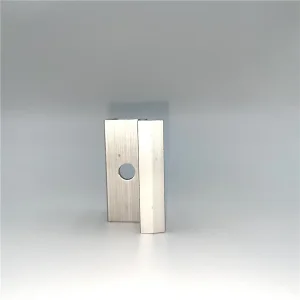
Precision Anodized Aluminum End / Side Clamp for 30-40mm Framed Modules
View Side Clamp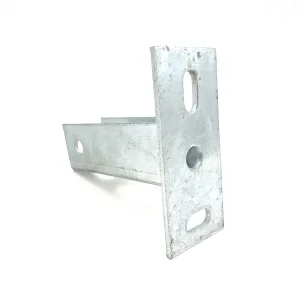
Heavy-Duty Flanged Aluminum Alloy Foot Base for Flat & Pitched Decks
View Base Bracket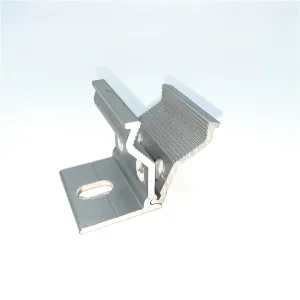
Klip-Lok 406/700 Compatible Non-Penetrating Aluminum Seam Roof Clamp
View Seam Clamp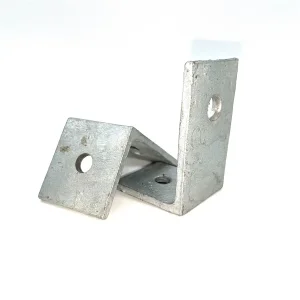
Heavy Stamped Marine-Grade 304/316 Stainless Steel Structural Angle Bracket
View Angle Bracket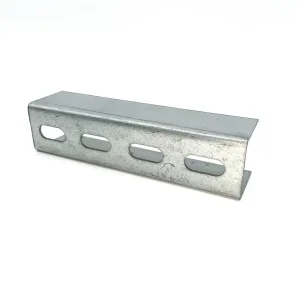
Structural Purlin Connector Clamp for Industrial C/Z Secondary Steel Members
View Purlin Clamp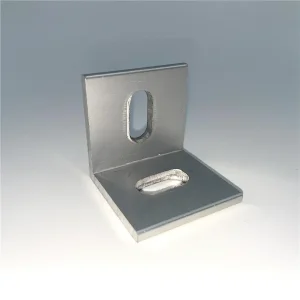
Multi-Angle Adjustable Aluminum Alloy Tilt Bracket for Flat Roof Arrays
View Tilt Bracket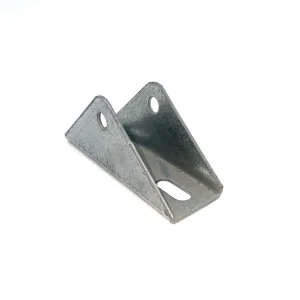
Three-Hole Structural Splice Connector for Continuous Rail Long-Span Joining
View Splice Plate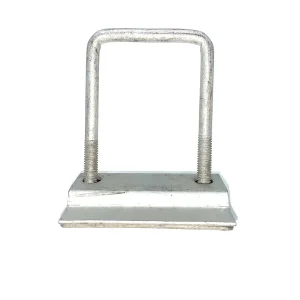
Reinforced Double-Hole Pressure Plate for High Wind-Zone Clamping
View Pressure PlateEngineering Questions for the Kuala Lumpur Market
Direct responses addressing wind loading codes, material metallurgy, export shipping logistics, and compatibility with Malaysian structural roofing profiles.
Are your systems compliant with Malaysian standard MS 1553?
Yes. Our engineering department executes static and dynamic structural calculations in full compliance with MS 1553 (Code of Practice on Wind Loading for Building Structure) and AS/NZS 1170.2. For projects in the Klang Valley, we calculate basic design wind speeds ranging from 32.5 m/s to 38 m/s, adjusting for building height, terrain category (typically Category 3 or 4 for downtown KL urban landscapes), and localized roof corner vortex suction pressures.
How do you guarantee watertightness on Klip-Lok standing seam roofs?
Our Klip-Lok aluminum standing seam clamps utilize a zero-penetration clamping mechanism. They secure directly to the raised rib of the standing seam using high-torque A2/A4 stainless clamping bolts with factory-torqued shear characteristics. Because there is zero perforation of the roof deck sheet, the original building envelope manufacturer warranty remains completely intact, eliminating the risk of water infiltration during tropical monsoonal downpours.
What is the typical ocean freight transit time from Handan to Port Klang?
Our manufacturing complex in Yongnian, Handan, feeds directly into Tianjin Port and Qingdao Port via direct container rail lines. The typical sea freight transit from northern China to Port Klang (Westport/Northport) is approximately 11 to 14 days on direct shipping lines. Standard container orders (FCL 20GP/40HQ) are dispatched from the factory within 10 to 15 days from technical drawing sign-off, ensuring smooth supply chains for EPC project schedules.
Can you supply custom anodizing thicknesses for coastal or chemical zones?
Standard architectural anodizing for C&I installations is AA10 (10μm). However, for commercial installations located in coastal microclimates (such as Port Klang, Klang industrial basins, or petrochemical zones), we regularly supply high-density clear or black architectural anodizing to AA15 (15μm) or AA25 (25μm) in accordance with ISO 7599, achieving over 3,000 hours of neutral salt spray testing under ASTM B117 standards.
Engineering Your Next Commercial Solar Project in Kuala Lumpur?
Connect directly with our structural engineering team for structural rail selection, custom roof clamp profiling, finite element structural calculations, or bulk factory-direct pricing for your Malaysian project.
Send Inquiry Now • Speak to Our Engineering Team