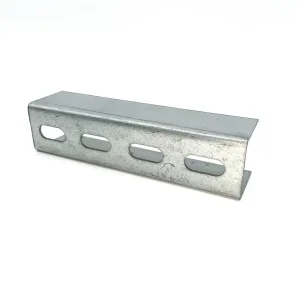
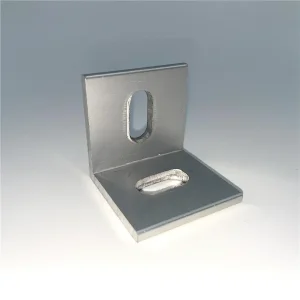
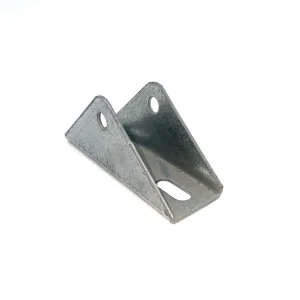
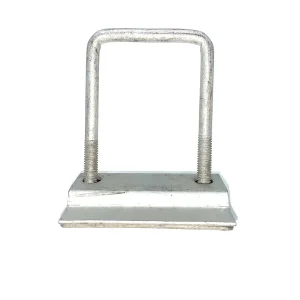
High-Integrity Photovoltaic Mounting Rails & Splicing Systems
Pre-engineered load-bearing profiles optimized for Eurocode 1 & Eurocode 9 compliance, providing exceptional uplift resistance and structural integrity across Ireland’s Atlantic coastal corridors.
Engineering Photovoltaic Racking for the Irish Renewable Surge
Ireland has transitioned from a solar frontier into one of Western Europe’s most dynamic photovoltaic markets. Propelled by the Renewable Electricity Support Scheme (RESS auctions), corporate Power Purchase Agreements (CPPAs) driven by Dublin’s data center clusters, and accelerated capital grants under the Targeted Agriculture Modernisation Scheme (TAMS 3), grid connections are surging toward the statutory 8 GW solar target by 2030.
However, the Republic of Ireland presents distinct structural engineering challenges that expose generic mounting systems to early failure. As an Atlantic island, Ireland experiences extreme wind loading profiles, persistent driving rain, and corrosive maritime moisture throughout its territorial footprint. Engineering balance of systems (BOS) for Ireland requires rigorous adherence to I.S. EN 1991-1-4 (Eurocode 1 Wind Actions) and I.S. EN 1999-1-1 (Eurocode 9 Aluminum Structures).
- Dynamic Atlantic Aerodynamics: Structural profiles with optimized section modulos designed to mitigate micro-vibrations, vortex shedding, and fastener shear under 100-year storm conditions.
- Dissimilar Metal Isolation: Integrated EPDM elastomeric barrier gaskets preventing electrolytic galvanic corrosion between zinc-plated purlins, aluminum rails, and austenitic stainless fasteners.
- Rapid Installation Architecture: Pre-assembled click-in clamp assemblies cutting on-site mechanical labor costs by up to 35% in high-wage Irish commercial construction markets.
Ireland Technical Load Specification Matrix
Our manufacturing engineering group in Handan calibrates raw metallurgy, extrusion wall thickness, and fastener thread geometries directly to Irish regional topography zones:
Macro Trends Shaping Solar Mounting Engineering & Procurement
Independent Power Producers (IPPs) and Tier-1 EPC contractors are demanding structural reliability that protects 30-year asset warranties while driving Levelized Cost of Energy (LCOE) to record lows.
Large-Format Bifacial Module Compatibility
Modern utility-scale solar relies heavily on M10 (182mm) and G12 (210mm) ultra-high-power bifacial modules exceeding 650W. Our mounting systems minimize underside shading on the rear glass sheet, optimizing albedo gain by 12–25% in overcast Irish diffuse light conditions while supporting mechanical loads up to 5400 Pa static snow and 2400 Pa dynamic wind uplift.
Bankability & International Code Certification
Financiers and technical advisory firms (e.g., DNV, TÜV Rheinland, Wood) evaluate racking bankability before approving debt syndication. Our structural components conform strictly to EN 1090-1 execution of steel and aluminum structures (CE marking), ISO 9001:2015, ISO 14001, and ISO 45001, providing non-recourse project finance eligibility for RESS participants.
Embodied Carbon & Scope 3 Supply Chain Transparency
Under the European Corporate Sustainability Due Diligence Directive (CSDDD) and Irish public procurement tenders, carbon accounting across manufacturing is mandatory. We provide audited Environmental Product Declarations (EPDs), low-carbon recycled aluminum extrusion sourcing, and complete metallurgical mill test certificates (MTC 3.1).
| Racking Component System | Material Specification | Yield Strength (ReH / Rp0.2) | Corrosion Protection | Typical Irish Application | Durability Warranty |
|---|---|---|---|---|---|
| Utility Ground Mount Posts | Q235B / Q355B Carbon Steel | 355 MPa | HDG EN ISO 1461 (>85µm) | Munster & Leinster Solar Farms | 25 – 30 Years |
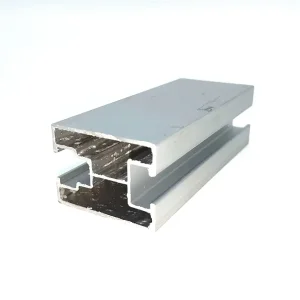
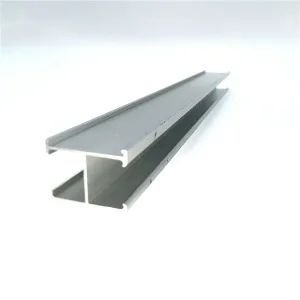
| Heavy Architectural Guide Rails | AL6005-T6 Extruded Alloy | 260 MPa | Anodized AA20 (≥20µm) ISO 7599 | C&I Trapezoidal & Flat Roofs | 25 Years |
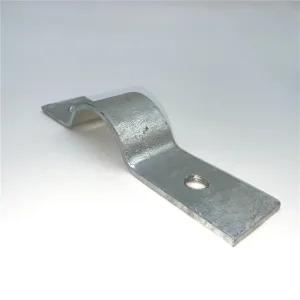
| Pre-assembled Mid & End Clamps | AL6005-T6 + SS304/A2 Hardware | 260 MPa | Clear / Black Anodized | Framed Solar PV Modules (30-40mm) | 25 Years |
| Marine Grade Bolting & Anchors | Austenitic SS316 / A4-70 | 450 MPa | Inherent Molybdenum Alloy Resistance | Coastal Atlantic Sites (<5km from sea) | 30 Years |
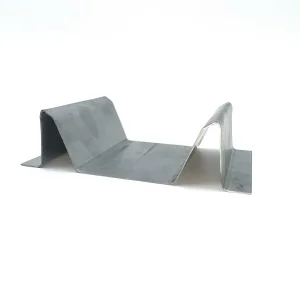
| Adjustable Tile / Slate Roof Hooks | 1.4301 (SS304) Stamped Steel | 230 MPa | Passivated Acid Wash Finish | Residential & Heritage Slate Roofs | 25 Years |
Smart Manufacturing & Global Export Scalability
Located in the historic fastener capital of Yongnian, Handan, our manufacturing ecosystem eliminates intermediate supply chain markups through full backward vertical integration—from raw ingot melting and continuous high-tonnage extrusion to robotic multi-axis punching and automated anodizing lines.
China Factory 4.0: Ensuring Delivery Certainty in an Unstable Global Market
Global supply chain volatility has severely impacted European solar construction schedules. Rising container rates, raw billet shortages, and port congestions mean that Irish EPCs cannot risk delayed delivery schedules when penalties under RESS milestone contracts accrue daily.
Handan Youlong Fastener leverages advanced Industry 4.0 production management systems to deliver unmatched cost efficiency and timeline reliability:
- Clustered Industrial Supply Chain: Situated at the nexus of China’s highest-grade steel plate and aluminum extrusion hubs, minimizing raw material procurement lead times to under 48 hours.
- Computer Vision Automated QC: Real-time automated optical inspection (AOI) verifying extrusion wall tolerances, hole punch concentricity, and thread pitch accuracy on every single lot.
- Project-Specific Batch Kitting: Racking assemblies are pre-labeled, barcoded, and pre-packaged by array or MW inverter blocks, slashing unboxing and staging time on Irish job sites.
Engineered for Ireland’s Specific Climate & Terrain Realities
From complex soft bogland soil ground-mount arrays to historical slate roofs and high-tech C&I data center microgrids.
Agricultural Farm Sheds (TAMS 3)
Irish dairy and livestock farms feature corrugated fiber cement and trapezoidal metal roofs subject to high ammonia vapors and coastal mist. Our non-penetrating clamping solutions and EPDM-sealed hanger bolts protect agricultural structural guarantees without voiding roof warranties.
Commercial Logistics & Data Centers
Greater Dublin and Mid-East hubs host mission-critical cloud infrastructure. Lightweight aerodynamic East-West ballasted systems (10° tilt) minimize roof load while maximizing rooftop power density, operating reliably under extreme suction vortices generated during winter gales.
Utility Solar in Glacial Till & Peatland
Irish soils range from stony glacial till in Wexford to high-organic acidic bogland in the Midlands. We supply dual-ramming C-piles, screw anchors, and concrete ballast shoes with heavy zinc-aluminum-magnesium (ZM) alloy coatings that resist deep acidic soil corrosion.
Frequently Asked Questions by Irish EPCs & Developers
Authoritative technical clarification on standards compliance, mechanical calculations, delivery schedules, and localized installation.
How do your mounting structures guarantee Eurocode 1 compliance in Ireland?
Our engineering division models every racking profile using finite element analysis (FEA) calibrated to Irish national annexes (I.S. EN 1991-1-4:2005+A1:2010). We compute site-specific fundamental wind velocity (vb,0), terrain roughness categories (Category II and coastal Category 0), and peak velocity pressure (qp) to ensure ultimate limit state (ULS) and serviceability limit state (SLS) safety factors.
What measures are taken to prevent galvanic corrosion in Atlantic coastal zones?
In high-salinity zones (ISO 9223 C4/C5 within 5 km of the Irish coastline), combining aluminum rails with galvanized or low-alloy steel fasteners creates severe galvanic couples. We supply high-grade austenitic stainless steel bolts (A4-70 / 1.4404 / 316) paired with integrated UV-stabilized EPDM isolation washers and DACROMET/GEOMET coated structural clips, creating an impervious barrier against electrochemical electrolyte exchange.
Can you provide factory-direct OEM production tailored to our specific structural drawings?
Yes. Over 65% of our international shipments consist of custom-engineered OEM extrusions and stamped bracketry. Our tooling center produces custom die sets within 10 to 14 days. We supply full prototype samples with metallurgical test reports, ultrasonic wall thickness verification, and dimensional coordinate measurement (CMM) before high-volume serial manufacturing begins.
What is the typical shipping transit time and logistical route to Dublin or Cork?
Cargo is dispatched directly from our Handan manufacturing facility to Tianjin Port or Qingdao Port via dedicated rail/road freight within 24 hours of container sealing. Ocean transit times to Dublin Port or the Port of Cork typically average 26 to 32 days via direct European feeder loops. We handle full container loads (20GP, 40GP, 40HQ) with heavy fumigated maritime skids and humidity-resistant shrink wrapping.
How does your factory support TAMS 3 compliance for Irish agricultural solar schemes?
Department of Agriculture, Food and the Marine (DAFM) specifications under TAMS 3 require agricultural solar installations to satisfy strict building regulation standards (S198 / S101). Our structural roof mounting systems come with complete structural engineer certification packages, fire safety classification (Class A non-combustible), and guaranteed snow/wind load verification ready for submission to grant verification inspectors.
What testing documentation is included with every commercial delivery batch?
Every commercial container arrives with an itemized Quality Dossier including: EN 10204 Type 3.1 Mill Inspection Certificates for chemical composition and mechanical tensile properties, anodizing thickness test reports (ISO 2360 eddy-current method), salt spray test certificates (ASTM B117 / ISO 9227), torque resistance reports, and Certificate of Origin documents for Irish Customs clearance.
Precision Structural Clamps, Purlin Brackets & Connectors
Engineered for swift mechanical mounting, standardized alignment, and zero-maintenance lifespan under challenging Atlantic field conditions.