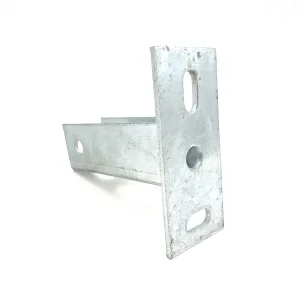
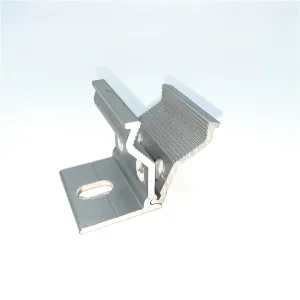
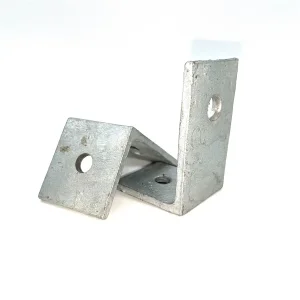
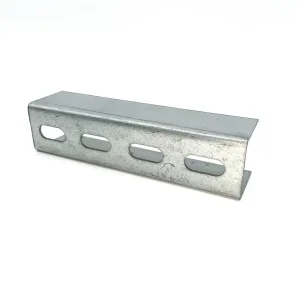
Precision extruded profiles and architectural drainage racking designed to withstand the Pacific marine fog layer, severe wind uplift, and building movement in high-density Bay Area sites.
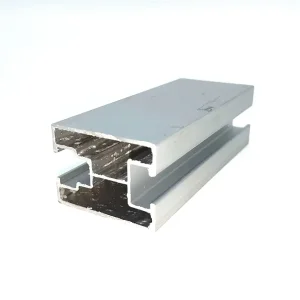
Buy PV 3040 Reinforced Aluminum Guide Rail Manufacturer, Factory
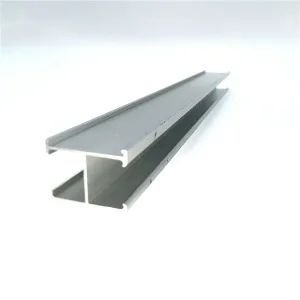
Best Solar PV 3040 Aluminum Alloy Guide Rail Company, Products
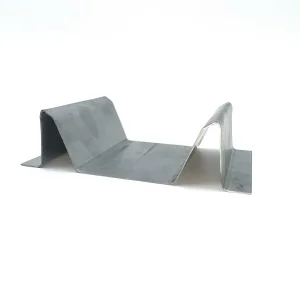
China Solar PV M-Type Aluminum Water Channel Manufacturer, Supplier
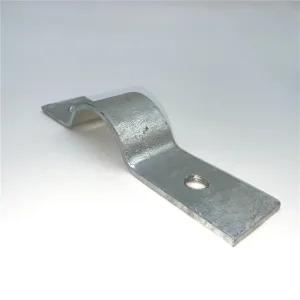
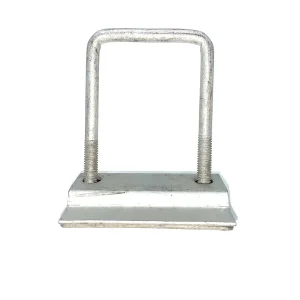
Buy Solar PV Mounting Stainless Steel Hoop Manufacturer, Companies
The City and County of San Francisco (CCSF) operates under one of the most rigorous green building codes in North America. Deploying commercial and industrial rooftop photovoltaic systems requires structural engineering calibrated to intense seismic hazard zones, historic building envelopes, and coastal salt-spray fog.
Under California’s Building Energy Efficiency Standards (Title 24, Part 6) and the San Francisco Better Roofs Ordinance (Environment Code Chapter 7), non-residential new construction and significant renovations must dedicate a designated percentage of solar roof zone to PV or solar thermal. Commercial facilities—from warehouse distributions along the Embarcadero and Hunters Point to high-density commercial assets in SOMA—require racking systems that deliver absolute compliance without exceeding structural dead loads.
Our photovoltaic racking solutions accommodate roof surfaces burdened by complex mechanical equipment (HVAC, chiller loops, exhaust plenums), ensuring optimized tilt angles (5° to 15°) that maximize energy production density while meeting strict San Francisco Fire Department (SFFD) perimeter pathways and smoke ventilation set-backs.
San Francisco sits at the confluence of the cold California Current and the warm interior Central Valley, resulting in the famous advection fog (the "Karl" marine layer) heavily laden with airborne ocean salts (chlorides). Unprotected structural aluminum and standard carbon steel fasteners suffer rapid galvanic and pitting degradation within 24 to 36 months of deployment.
To combat this ISO 9223 C4/C5 marine atmospheric corrosion, our structural systems utilize anodized AL6005-T6 with oxide film thickness reaching AA25 (≥ 25 μm) and structural fasteners precision-machined from austenitic AISI 316 (A4) stainless steel or coated with advanced zinc-aluminum-magnesium Dacromet finishes exceeding 3,000 hours in neutral salt spray test chambers (ASTM B117).
Located in close proximity to the active San Andreas and Hayward strike-slip fault networks, all mounting structures installed within the San Francisco jurisdiction must be engineered for extreme horizontal spectral acceleration parameters ($S_s \ge 1.50g$, $S_1 \ge 0.60g$). Ballasted rooftop arrays require validated wind-tunnel aerodynamic boundary testing (CPP or RWDI certified) integrated with seismic anchor tie-backs to prevent stick-slip displacement, membrane rupture, or resonance destruction during a maximum considered earthquake (MCE) event.
Every commercial solar deployment across the 49-square-mile San Francisco peninsula presents distinct spatial, envelope, and geotechnical hurdles. Our engineered racking lines are tailored to these specific architectural topologies.
Dominant across South of Market (SOMA), Mission Bay biotech clusters, and South San Francisco pharmaceutical hubs. Existing roofs feature Single-Ply TPO, EPDM, or built-up modified bitumen membranes where penetration must be avoided or strictly controlled.
Our ballasted framing utilizes computational fluid dynamics (CFD)-optimized aerodynamic deflectors. When point-load constraints on aging concrete or wooden decks prevent heavy ballast blocks, our non-penetrating clamps and mechanical thermal-weld structural anchors integrate seamlessly to transfer lateral seismic loads directly to structural purlins.
With Silicon Valley and San Francisco tech campuses leading the transition to clean vehicle fleets, surface parking lots are prime clean generation assets. Standard open-channel solar carports drip rainwater onto pedestrians and electrical charging pedestals.
Deploying our PV M-Type Aluminum Water Channel creates a 100% waterproof canopy envelope. Rainwater is collected along extruded module gutter joints and channeled directly into internal structural downspouts, creating an integrated dual-function clean power generation and EV charging shelter.
Commonly found in maritime logistics facilities near the Port of Oakland, South Bay industrial parks, and San Francisco air freight terminals. Direct roofing punctures void 20-year factory manufacturer watertight warranties.
Our calibrated aluminum standing seam clamps (utilizing round-point stainless grub screws) grip metal panel standing seams with zero panel puncture. Paired with our reinforced PV 3040 guide rails, the system provides high pull-out shear strength under San Francisco Bay wind gusts reaching up to 110 mph.
Direct physical, metallurgical, and structural engineering comparisons for solar mounting components deployed across the San Francisco microclimate gradient.
| Sub-Component | Material Grade & Metallurgy | Surface Treatment / Passivation | Design Standards & Certifications | Target SF Marine / Seismic Performance |
|---|---|---|---|---|
| Primary Guide Rails (PV 3040) | Extruded Aluminum AL6005-T6 (Tensile ≥ 260 MPa, Yield ≥ 240 MPa) | Clear Anodized Film ≥ 15–25 μm (Class 1 Architectural) | UL 2703, ASCE 7-22, CBC 2022 Chapter 16 | Zero deflection failure under 110 mph basic wind speed; high moment of inertia ($I_x, I_y$). |
| Waterproof Structural Channels | High-Strength Aluminum Alloy AL6063-T5 / 6005-T6 | Electrophoretic Coating or Anodized ≥ 20 μm | ASTM B221, Waterproof Joint Testing | 100% watertight carport sealing; internal run-off channels handle heavy atmospheric condensation. |
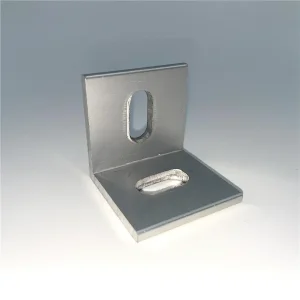
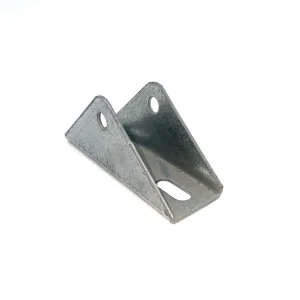
| Seismic L-Brackets & Angle Joiners | Austenitic Stainless Steel AISI 304 / 316 or Structural AL6005-T6 | Pickled & Passivated (ASTM A380) / Shot-peened | ICC-ES AC428, AISC 360-16 Structural Steel | High ductility ratio for Seismic Design Categories D, E, and F energy absorption during cyclic loading. |
| Module Fasteners & Mid/End Clamps | Stainless Steel A2-70 / A4-80 (AISI 304/316) + AL6005-T6 | Fluoropolymer Coated / Geomet / Anti-Galling Wax | DIN 912 / ISO 4762, UL 2703 Grounding Pins | Integrated serrated grounding pins eliminate separate copper wire jumpers, lowering field labor by 40%. |
| Concrete Anchor Bolts & Base Plates | Grade 8.8 / 10.9 Carbon Steel or SS316 Expansion Anchors | Hot-Dip Galvanized ≥ 85 μm (ASTM A153) or Sherardized | ACI 318 Appendix D (Cracked Concrete), ICC-ESR | High shear pullout retention in cracked seismic concrete slabs and heavy modular ballast pre-cast blocks. |
Balancing aggressive Tier-1 structural reliability with tight utility and commercial budgets requires end-to-end manufacturing agility. Based in Yongnian, Handan City—internationally recognized as China’s fastener capital—our plant directly converts raw metallurgical feedstocks into turnkey solar hardware.
Our strategic location inside Hebei’s metallurgy industrial core delivers immediate access to raw primary aluminum ingots and high-tensile steel rod coils. Bypassing tertiary commodity distributors allows us to insulate EPC contractors and developers from global commodity volatility.
With an annual raw processing throughput surpassing 50,000 metric tons and total structural shipments exceeding 300,000 tons worldwide, we offer unprecedented price predictability for large-scale utility and C&I projects targeting California's commercial clean energy programs.
Our modern workshop houses 15 automated multi-station cold-heading formers, 2,500-ton hydraulic extrusion presses, continuous inline anodizing tanks, and high-speed multi-axis CNC punching centers. Our tooling accuracy maintains tolerances within ±0.15mm.
This extreme manufacturing consistency guarantees that every rail splice connector, M-Type water channel, and clamp aligns instantly on job sites without reaming, re-drilling, or manual adjustment, slashing installer labor overhead across high-cost California prevailing-wage projects.
Quality control is not an afterthought; it is embedded in the metallurgical journey. From incoming spectrometer chemical melt analysis to electronic universal tensile load testing and Rockwell hardness verification, every production lot is tracked by heat number.
Continuous neutral and cyclical salt fog testing confirms coating integrity for demanding Pacific coastal deployment. Comprehensive mill test certificates (MTC compliant with EN 10204 Type 3.1) and complete metallurgical test dossiers accompany all maritime shipping manifests.
The clean energy transition is characterized by global supply-chain shifts, rising module physical formats, and stringent local grid interconnection mandates.
The global PV industry has rapidly transitioned toward n-type TOPCon and Heterojunction (HJT) dual-glass modules exceeding 2.3 × 1.1 meters in surface area. While these high-power modules drive lower Levelized Cost of Energy (LCOE), their immense physical sail area generates intense torsional and uplift forces under turbulent wind conditions.
Furthermore, dual-glass bifacial panels require mounting rails with minimal under-module structural shading to unlock the 10% to 25% albedo yield gain from reflective commercial TPO white roof membranes. Our structural rails provide wide-span mechanical clearance, specifically verified through FEA finite element modeling to eliminate rear-side micro-cracking and current hot-spots under cyclic load conditions.
For project developers across California, navigating domestic content bonuses under the Inflation Reduction Act alongside global sourcing requirements demands strategic supply-chain partners. Racking sub-assemblies must maintain rock-solid traceability, transparent country-of-origin documentation, and structural flexibility.
We assist California EPCs with transparent logistical customs documentation, rapid ocean transit schedules via Port of Oakland or Port of Long Beach, and tailored intermediate hardware kits. By combining high-value precision aluminum and stainless hardware from our primary factory with local balance-of-system engineering, developers achieve optimal cost structures without violating federal procurement rules.
Our ongoing research and development initiatives focus on three foundational pillars designed to future-proof photovoltaic installations through 2030 and beyond.
While anodized aluminum remains the gold standard for rooftop C&I projects, high-load utility ground mounts and elevated canopies are moving toward advanced ZAM-coated steel (Zn-6%Al-3%Mg). This revolutionary ternary alloy coating exhibits an active self-healing mechanism: when scratched, cut, or drilled on site, sacrificial zinc hydroxide and magnesium carbonate precipitates migrate across sheared edges to seal exposed steel cores, delivering over 40 years of maintenance-free service life in corrosive marine fog environments.
As commercial rooftops integrate with microgrid management software, our engineering labs are piloting structural clamp assemblies equipped with micro-strain and vibration IoT telemetry sensors. These embedded sensors provide real-time alerts regarding abnormal structural deflection, fastener preload torque relaxation, and seismic displacement events, enabling asset managers to transition from reactive physical maintenance to automated, data-driven preventative structural health management.
To support San Francisco's target of net-zero greenhouse gas emissions by 2040, embodied carbon within building materials is under intense scrutiny. We have accelerated our low-carbon circular aluminum line, utilizing hydropower-smelted virgin material blended with ≥ 40% certified post-industrial recycled billets, slashing Scope 3 cradle-to-gate carbon intensity below 4.5 kg $CO_2$e per kg aluminum, fully backed by third-party Environmental Product Declarations (EPDs).
Obtaining building and electrical permits from the San Francisco Department of Building Inspection (SF DBI) requires rigorous third-party PE stamped calculation packages and adherence to California codes.
We provide complete structural calculation sets, anchor pullout analyses, and wind tunnel testing reports verified by registered California Professional Engineers (PE). Our documentation aligns directly with the City and County of San Francisco’s specialized local amendments to the California Building Code (CBC 2022 / 2025 updates) and ASCE 7-22 Minimum Design Loads for Buildings and Other Structures.
All mounting rails, module mid/end clamps, and bonding hardware maintain comprehensive certification under UL 2703 (Standard for Mounting Systems, Mounting Devices, Clamping/Retention Devices, and Ground Lugs for Use with Flat-Plate Photovoltaic Modules and Panels). Furthermore, our systems integrate seamlessly into UL 3741 tested arrays, fulfilling National Electrical Code (NEC 2020/2023 Article 690.12) rapid shutdown compliance without bulky auxiliary per-module electronics.
Factory-direct structural brackets, base mounts, purlin joiners, and panel pressure plates engineered for long-term mechanical equilibrium in seismic environments.
China Solar PV Panel Aluminum Side Clamp Manufacturers, Suppliers
Best Solar PV Mounting Aluminum Alloy Base Manufacturers, Companies
Best Solar PV Mounting Stainless Steel Angle Bracket Manufacturer, Products
Best Solar PV Aluminum Alloy Angle Bracket Manufacturer, Supplier
Best Solar PV Three-Hole Mounting Connector Factory, Product
Buy Solar PV Double-Hole Pressure Plate Manufacturer, Supplier
Authoritative engineering, logistical, and material answers for EPC estimators, structural engineers, and solar procurement teams.
Connect with our technical application engineers for comprehensive structural profiles, custom CAD drawings, factory-direct volume pricing, and complete UL 2703 test submittals.