
Featured PV Mounting Rails & Framing Hardware
Precision extruded aluminum alloys and marine-grade stainless hardware fabricated to optimize span efficiency, structural deadweight, and thermal endurance for industrial commercial roofs across Ho Chi Minh City.
-
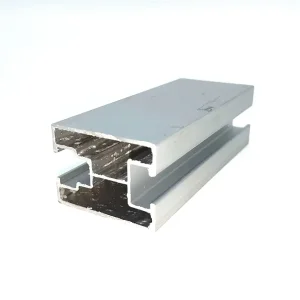
Ho Chi Minh Industrial PV 3040 Reinforced Aluminum Guide Rail
Buy PV 3040 Reinforced Aluminum Guide Rail Manufacturer, Factory
-
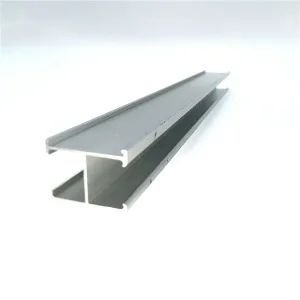
High-Tensile Solar PV 3040 Aluminum Alloy Guide Rail System
Best Solar PV 3040 Aluminum Alloy Guide Rail Company, Products
-
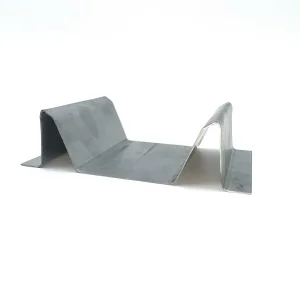
Monsoon Drainage Solar PV M-Type Aluminum Water Channel
China Solar PV M-Type Aluminum Water Channel Manufacturer, Supplier
-
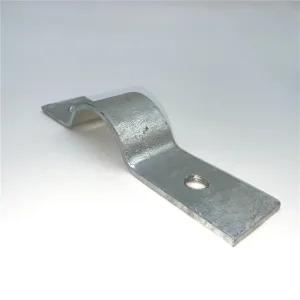
Heavy-Duty PV Mounting Stainless Steel Structural Hoop
Buy Solar PV Mounting Stainless Steel Hoop Manufacturer, Companies
Solar PV Engineering Reality in Ho Chi Minh City & Southern Vietnam
An engineering analysis of meteorological, structural, and regulatory parameters governing commercial & industrial (C&I) rooftop and ground installations in Greater Ho Chi Minh City.
PDP8 & Self-Consumption Directives
Vietnam's National Power Development Plan VIII (PDP8) strongly prioritizes distributed rooftop solar, incentivizing industrial parks such as Tan Thuan, Hiep Phuoc, and Linh Trung to deploy self-generating, self-consuming PV structures with zero grid feed-in risk.
Tropical Monsoon & Typhoon Wind Loads
Ho Chi Minh City experiences intense Southwest monsoons and peripheral tropical storms. Structural mounting systems must endure cyclic wind loads reaching design speeds up to 160 km/h (Wind Zone IIB), requiring finite element-verified rail extrusions.
ISO 9223 C4/C5 Coastal-Industrial Salinity
Proximity to the East Sea, brackish rivers (Saigon & Dong Nai), and high humidity creates severe atmospheric corrosivity. Standard galvanized coatings fail prematurely; anodized aluminum (≥15µm) and SUS304/SUS316 fasteners are imperative.
Global Industry Landscape & Technological Evolution
Transitioning from rudimentary framing to engineered, load-responsive mounting architectures designed for high-efficiency bifacial and ultra-large-format PV modules.
The global solar photovoltaic mounting systems sector has migrated far beyond commoditized steel fabrications into advanced structural metallurgy. With utility-scale modules exceeding 650W to 700W+ (M10 and G12 wafer standards), the mechanical surface area subjected to dynamic wind pressure and micro-crack-inducing flutter has increased by more than 35%. In high-irradiance equatorial and sub-tropical territories like Ho Chi Minh City, southern Vietnam, the structural mounting matrix represents the primary guarantor of Levelized Cost of Energy (LCOE) stability over a 25- to 30-year operational horizon.
Structural Metallurgy: AL6005-T5 vs. Galvanized Steel Dynamics
Modern rooftop mounting infrastructure predominantly leverages AL6005-T5 and AL6063-T6 extruded aluminum alloys. Compared to traditional hot-dip galvanized carbon steel (HDG), structural aluminum provides a strength-to-weight ratio superior by an order of magnitude. In Vietnam’s southern industrial hubs—such as Binh Duong, Dong Nai, and Long An surrounding Ho Chi Minh City—existing pre-engineered steel buildings (PEBs) typically exhibit finite surplus dead-load margins (often capped between 12 to 18 kg/m²). Implementing lightweight aluminum guide rails (such as our PV 3040 reinforced series) reduces system dead load to under 10.5 kg/m² including 72-cell double-glass modules, eliminating the necessity for costly building structural retrofits.
| Engineering Parameter | AL6005-T5 Architectural Alloy | Standard Q235B Carbon Steel (HDG) | Technical Relevance for Ho Chi Minh City |
|---|---|---|---|
| Tensile Strength (Rm) | ≥ 260 MPa | 370 - 500 MPa | High yield modulus prevents plastic deformation during monsoon gusts. |
| Yield Strength (Rp0.2) | ≥ 225 MPa | ≥ 235 MPa | Provides immediate elasticity under dynamic pressure cycling. |
| Density & Deadload | ~ 2.70 g/cm³ | ~ 7.85 g/cm³ | Preserves PEB structural warranties across factory rooftops in Tan Binh & VSIP. |
| Corrosion Mechanism | Dense Al₂O₃ passive film + 15µm Anodizing | Zinc sacrificial coating (65-85µm) | Aluminum does not exhibit red rust pitting under tropical humidity and rainfall. |
| Thermal Expansion (α) | 23.4 × 10⁻⁶ / K | 12.0 × 10⁻⁶ / K | Thermal slot design mitigates shear stress between fastener joints and purlins. |
Engineering Rule of Thumb: In high-humidity coastal zones with an average ambient temperature of 32°C and relative humidity exceeding 80%, using uninsulated dissimilar metals induces severe galvanic acceleration. Fastener specifications in Ho Chi Minh City must utilize EPDM isolation pads or isolating nylon washers whenever SUS304/SUS316 bolts interface directly with anodized aluminum profiles.
Localized Application Scenarios in Southern Vietnam Industrial Clusters
Ho Chi Minh City’s industrial geography dictates three primary commercial photovoltaic deployment vectors, each requiring specialized mechanical interfaces:
- Trapezoidal & Corrugated Metal Roofs (Industrial Parks): Widely deployed across Saigon Hi-Tech Park (SHTP) and Tan Thuan EPZ. These profiles benefit directly from standing seam or penetrative mini-rail mounting systems with closed-cell EPDM waterproof sealing to eliminate roof leaks during torrential tropical downpours.
- Standing Seam Klip-Lok Profiles: Predominant on modern logistics warehouses (e.g., Cat Lai Port logistics nodes). Penetration is strictly prohibited to maintain manufacturer envelope warranties. Calibrated aluminum seam clamps (such as Clip Lock fixtures) transfer torsional uplift loads directly to the sheet metal ribs via friction locking.
- Flat Concrete Rooftop Ballasted Systems: Common on commercial multi-story commercial facilities in District 1, District 7, and Thu Duc City. Ballasted aluminum triangle brackets with stainless steel chemical expansion anchors provide wind deflection without membrane compromise.
Engineering Roadmap: 2025–2030 Mounting Architecture Evolution
Aero-Acoustic Profiling
Micro-ribbed guide rail channels designed via computational fluid dynamics (CFD) to shed laminar vortex streets and mitigate structural vibration during monsoons.
Integrated Waterways
Next-generation M-Type aluminum water channels that replace metal roofing entirely, providing 100% waterproof drainage for factory carports and industrial facilities.
Zinc-Aluminum-Magnesium
Transitioning ground-mount support pillars to ZAM self-healing coatings (Zn-Al-Mg), offering 3-5x the corrosion resistance of standard HDG in acid-sulfate soils.
Pre-Assembled Hardware
Rapid-engagement spring nuts, pre-torqued clamps, and click-in splice bars cutting EPC field installation hours across Vietnam by up to 40%.
Full Load-Path Mounting Engineering Solutions
From micro-level fastener shear resistance to macro-level array foundation anchors, our turnkey manufacturing ecosystem guarantees load-path continuity.
Turnkey Rooftop Racking
End-to-end BOM generation including custom-length guide rails, heavy-duty purlin connectors, and vibration-proof locking nuts tailored to the exact purlin spacing (typically 1.2m to 1.5m) of Vietnamese industrial steel buildings.
Waterproof Solar Carport Systems
Utilizing integrated M-type and W-type structural aluminum drainage channels that collect and divert monsoon precipitation, converting factory parking bays into dry, high-yielding clean energy generation assets.
High-Strength Anchor Bolt Integration
Factory-matched anchor bolts, chemical studs, and stainless steel expansion hardware manufactured under ISO 9001 quality controls in Handan, ensuring certified pull-out values into C20/25 to C35/45 concrete grades.
Engineering a Solar Installation in Ho Chi Minh City?
Collaborate directly with our technical team for custom static wind load calculations, BOM structural optimization, and direct factory pricing.
Industrial Clamps, Connectors & Structural Hardware
Engineered for seamless mechanical interoperability with standard PV profiles, standing seam metal roofs, and structural purlins across Ho Chi Minh City solar assets.
-
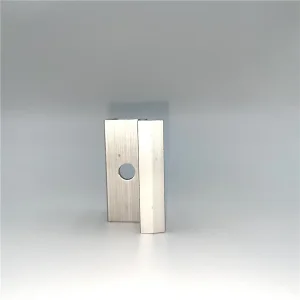
Solar PV Panel Aluminum Side Clamp Assembly
China Solar PV Panel Aluminum Side Clamp Manufacturers, Suppliers
-
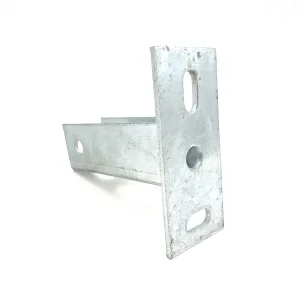
Structural PV Mounting Aluminum Alloy Foot Base
Best Solar PV Mounting Aluminum Alloy Base Manufacturers, Companies
-
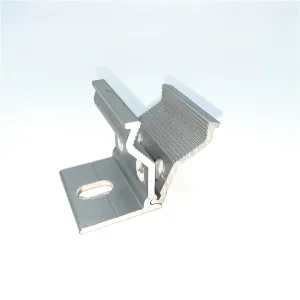
Non-Penetrative Clip Lock Aluminum Roof Clamp
-
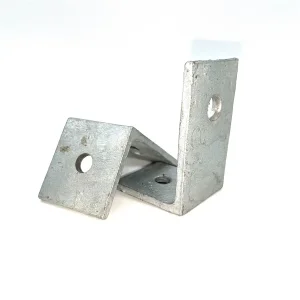
Corrosion-Proof Stainless Steel L-Angle Bracket
Best Solar PV Mounting Stainless Steel Angle Bracket Manufacturer, Products
-
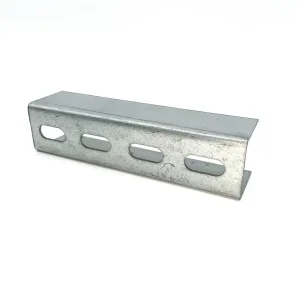
High-Load Solar PV Mounting Purlin Connector
-
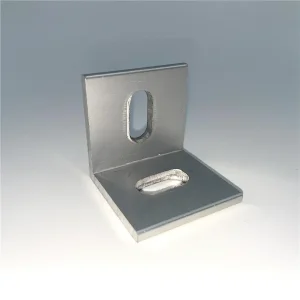
Precision Aluminum Alloy Triangular Angle Bracket
Best Solar PV Aluminum Alloy Angle Bracket Manufacturer, Supplier
-
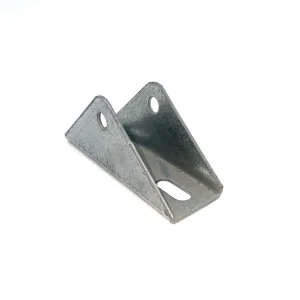
Three-Hole Splice Joint Mounting Connector
Best Solar PV Three-Hole Mounting Connector Factory, Product
-
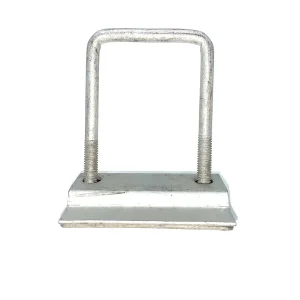
Heavy-Gauge Double-Hole Pressure Plate Clamp
Buy Solar PV Double-Hole Pressure Plate Manufacturer, Supplier
Frequently Asked Engineering Questions (FAQ)
Comprehensive engineering inquiries from EPC contractors, structural designers, and developers operating in Ho Chi Minh City and the southern provinces of Vietnam.