
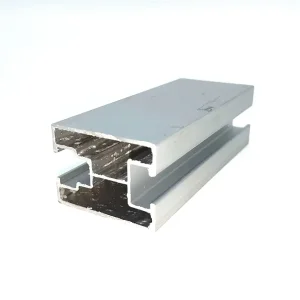
Primary PV Structural Components Serving Ethiopia
Verified structural configurations deployed across utility solar parks and institutional C&I rooftops in Addis Ababa, Dire Dawa, and regional industrial parks.
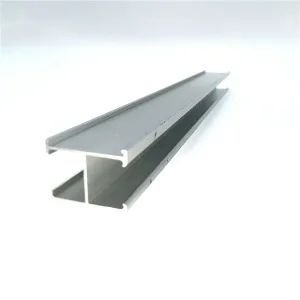
Solar PV 3040 Heavy-Duty Aluminum Rail System (Ethiopian Highlands)
Best Solar PV 3040 Aluminum Alloy Guide Rail Company, Products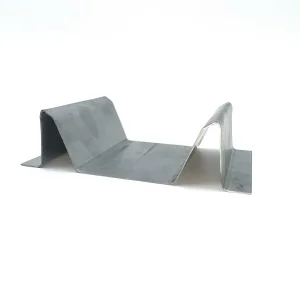
Ethiopia Agri-PV M-Type Aluminum Drainage Channel Racking
China Solar PV M-Type Aluminum Water Channel Manufacturer, Supplier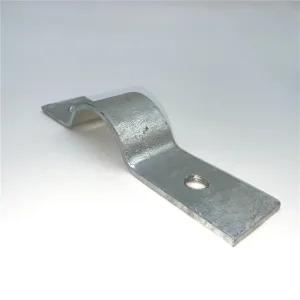
Stainless Steel Pole Mounting Hoop (Ethiopia Telecommunications)
Buy Solar PV Mounting Stainless Steel Hoop Manufacturer, CompaniesIndustrial Dynamics: Photovoltaic Deployment in Ethiopia
Strategic engineering analysis covering grid diversification, the National Electrification Program 2.0 (NEP 2.0), and extreme geological factors in East Africa.
The Energy Transition Horizon
While Ethiopia's generation capacity is anchored by the Grand Ethiopian Renaissance Dam (GERD) and monumental hydropower assets, hydrological variability poses distinct risks during dry seasons. Under NEP 2.0 and the 10-Year Development Plan, solar energy serves as the essential counter-cyclical balancer. Utility tenders under the Scaling Solar initiative demonstrate Ethiopia's push to harness its world-class direct normal irradiance (over 2,100 kWh/m²/year), mandating structures that withstand intense UV degradation.
Geological & Climatic Challenges
Deploying photovoltaic systems across the Ethiopian geography requires addressing extreme soil and thermal conditions. The Great Rift Valley presents seismic shifts, expansive vertisol clays that cause structural displacement, and corrosive alkaline dust. In the Afar depression, ambient temperatures exceed 45°C with severe thermal shock cycles. Handan Youlong's mounting assemblies utilize cold-formed high-yield steel and anodized AL6005-T5 with enhanced wall thickness to resist micro-cracking and wind-lift loads.
Industrial Off-Grid & Mini-Grids
Over 55% of the Ethiopian population remains disconnected from the central grid. Rapidly growing agro-processing industrial parks (such as Hawassa, Bole Lemi, and Kilinto) and off-grid coffee washing stations are aggressively deploying solar hybrid systems to bypass transmission deficits. Structural mount longevity is critical: pre-assembled fastener configurations allow swift field deployment in remote woredas without requiring specialized welding apparatus.
| Deployment Zone (Ethiopia) | Predominant Environmental Risk | Structural Metallurgy Recommended | Fastener / Coating Standard | Target Service Life |
|---|---|---|---|---|
| Afar & Somali Lowlands | High Ambient Heat, Abrasive Dust, Alkaline Soil | Pre-Galvanized Q355B Steel / Anodized AL6005-T5 | Hot-Dip Galvanized ≥ 85μm / SS316 (A4) | 30+ Years |
| Addis Ababa & Highlands (2,300m+) | Intense UV Radiation, Highland Rain Downpours | Extruded Aluminum PV 3040 Rail Profile | Stainless Steel 304 (A2) with EPDM Washers | 25+ Years |
| Rift Valley Corridor (Hawassa / Mojo) | Expansive Black Cotton Clay, High Thermal Swell | Helical Ground Screws + Adjustable Bracket Base | Zinc-Nickel Plated High Tensile Anchor Bolts | 25+ Years |
| Commercial & Agro-Industrial Parks | Trapezoidal Sheet Roofs, High Vibration | Rail-less / Mini-Rail Direct Clamp Assemblies | Self-Drilling Bimetal Fasteners with EPDM Seals | 25+ Years |
Technical Roadmap: Engineering Next-Gen Mounting Hardware
Addressing the shifting paradigm toward large-format bifacial modules, higher wind-load tolerances, and automated structural health tracking.
Phase 01: Engineering
Bifacial Yield Optimization
Mounting geometry customized with zero-backside shading on lower purlins and M-type channels, raising Ethiopian highland albedo power generation by 8-15%.
Phase 02: Metallurgy
High-Silicon Zinc Coatings
Implementation of Zinc-Aluminum-Magnesium (ZAM) structural coating formulations that self-heal micro-fractures caused by sand abrasion in eastern dry corridors.
Phase 03: Installation
Tool-Free Rapid Locking
Integration of pre-torqued three-hole splice connectors and clip-lock aluminum clamps to cut field labor costs by 40% across remote Ethiopian microgrid zones.
Phase 04: Durability
Aeroelastic Damping
Dynamic damping brackets engineered to mitigate aeroelastic flutter on long-span utility tracker systems exposed to rift-valley valley-draft winds.
Comprehensive Solar Hardware Components Serving Ethiopia
Complete structural hardware lineup: end clamps, mid clamps, base brackets, angle brackets, and heavy purlin adapters available for international bulk supply.
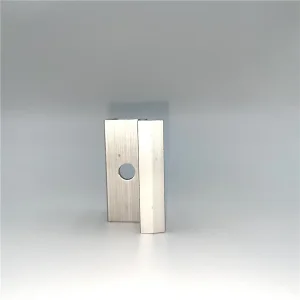
Ethiopia Utility Solar Panel Aluminum Side Clamp
China Solar PV Panel Aluminum Side Clamp Manufacturers, Suppliers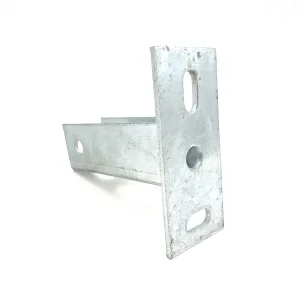
Reinforced Aluminum Alloy Foundation Base Mount
Best Solar PV Mounting Aluminum Alloy Base Manufacturers, Companies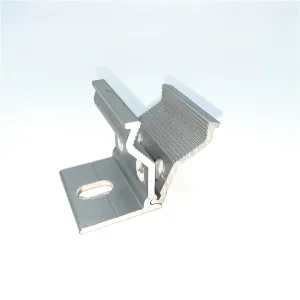
Kliplok Standing Seam Non-Penetrative Metal Roof Clip
China Solar PV Clip Lock Aluminum Clip Factories, Company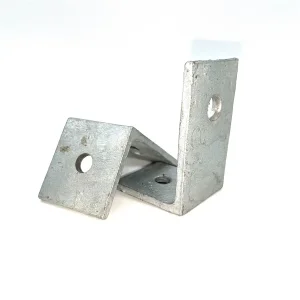
Stainless Steel Heavy-Duty Solar Angle Bracket
Best Solar PV Mounting Stainless Steel Angle Bracket Manufacturer, Products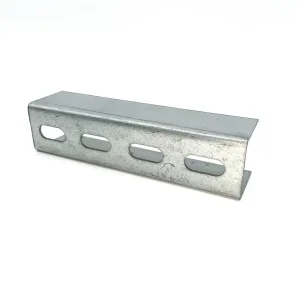
Structural C/Z Purlin Solar Mounting Connector
China Solar PV Mounting Purlin Connector Factories, Company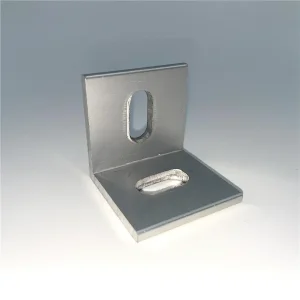
Adjustable Aluminum Alloy Tilt Angle Bracket
Best Solar PV Aluminum Alloy Angle Bracket Manufacturer, Supplier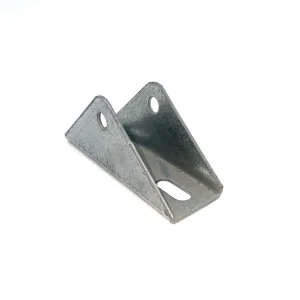
Three-Hole Structural Splice Connector Bar
Best Solar PV Three-Hole Mounting Connector Factory, Product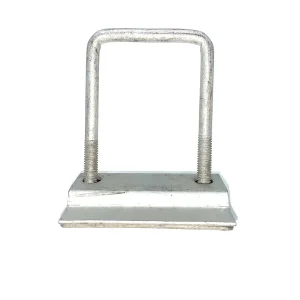
High-Torque Double-Hole PV Module Pressure Plate
Buy Solar PV Double-Hole Pressure Plate Manufacturer, SupplierFrequently Asked Questions: Ethiopian PV Mounting Operations
Direct answers for EPC engineers, international developers, and procurement authorities sourcing solar hardware into Ethiopia and the greater Horn of Africa.
What mounting systems are ideal for the expansive "Black Cotton" soil in Ethiopia?
Expansive vertisol ("Black Cotton") soil across the central Ethiopian highlands swells significantly during the wet season and shrinks cracking during dry spells. For ground-mount installations, standard ramming piles can experience differential displacement. Handan Youlong recommends deep-seated helical screw foundations or elevated concrete ballast pads anchored with stainless steel expansion bolts and flexible angle brackets that accommodate minor subterranean shifting without causing glass strain on the modules.
How do your aluminum guide rails prevent galvanic corrosion when coupled with steel purlins?
When our AL6005-T5 aluminum guide rails interface with structural carbon steel or galvanized purlins, electrochemical potential differences can accelerate galvanic corrosion in humid or high-condensation environments. We provide pre-fitted UV-stabilized EPDM isolation pads and nylon isolating washers with our stainless steel bolt sets (SS304/SS316) to establish a comprehensive non-conductive barrier, fully compliant with IEC 61215 and ISO 9223 C3-C4 criteria.
Can Handan Youlong supply custom-engineered brackets tailored to Ethiopian logistics corridors?
Yes. Inland freight from the Port of Djibouti into Modjo Dry Port or regional Ethiopian project sites requires optimized container packing densities and high structural packing integrity. Our factory produces nested rail extrusions, knocked-down modular angle brackets, and standardized fastener kits packed per string or table. This reduces logistics volume by up to 28% and speeds up site distribution across regional microgrid sites.
What wind load and seismic load ratings do your mounting components carry?
Our PV 3040 guide rails, stainless steel angle brackets, and clamp assemblies are certified for wind speeds up to 60 m/s (216 km/h) and snow loads up to 1.4 kN/m², substantially exceeding the maximum gust velocities recorded across the Rift Valley. In accordance with Eurocode 8 and Ethiopian Building Code Standards (EBCS), all connectors provide ductile yield capacity sufficient to absorb Zone 4 seismic acceleration values.
What is the lead time and quality certification process for bulk container orders?
Production lead times for utility-scale shipments (5-20 MW) average 15 to 25 days from our Yongnian manufacturing complex. Each batch is subjected to tensile rupture verification, coating thickness gauge tests, and 1,000-hour salt spray certification. We provide comprehensive mill test certificates (MTC), third-party SGS/BV inspection documentation, and Ethiopian Conformity Assessment Enterprise (ECAE) compliance dossiers.
Deploying Solar Projects in Ethiopia or East Africa?
Consult our structural engineers for custom load calculations, Bill of Materials (BOM) optimization, and factory-direct export proposals.