
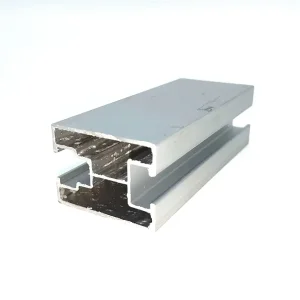
Tunis Rail Profile
High-durability structural racking, marine-grade aluminum profiles, and certified anti-corrosive anchoring hardware engineered for Mediterranean coastal humidity, Saharan thermal variance, and utility-scale installations across North Africa.
Extruded aluminum rails, drainage channels, and high-tensile brackets specifically optimized to withstand the intense solar radiation (GHI >1,900 kWh/m²) and aggressive saline atmospheres of Greater Tunis and Gulf of Gabès projects.
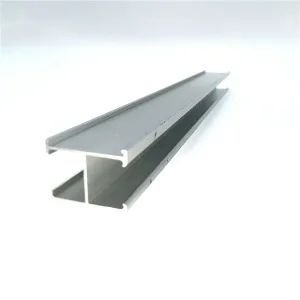
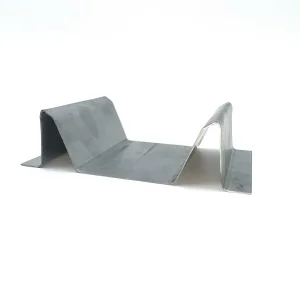
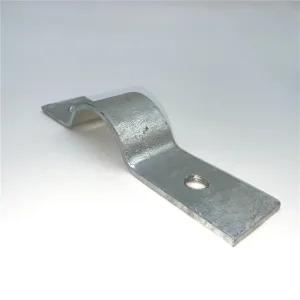
As the Republic of Tunisia accelerates toward its "Plan Solaire Tunisien" (PST) goal—targeting 35% of national electricity generation from renewables by 2030 (amounting to 3,800 MW of installed solar capacity)—structural mechanical integrity becomes the primary determinant of long-term Return on Investment (ROI).
The economic landscape of Greater Tunis is marked by high electricity tariffs for industrial consumers, prompting a rapid surge in self-consumption photovoltaic systems under the Medium-Voltage (MT) regulatory framework. Industrial parks situated across Charguia, Ben Arous, and Ariana are retrofitting corrugated metal, standing-seam, and concrete rooftops with commercial & industrial (C&I) solar arrays.
However, local engineering procurement managers face severe structural challenges: high ambient chloride levels carried by Mediterranean breezes degrade standard electro-galvanized brackets within 3 to 5 years. Concurrently, solar developers executing concession tenders under the Ministry of Industry, Mines and Energy require verified EN 1090-1 and ISO 1461 structural conformity to secure international development bank (EBRD, IFC, KfW) project financing.
Globally, the solar mounting sector is transitioning from generic steel fabrications to integrated aerodynamic structures designed through aero-elastic wind tunnel simulations. The rapid expansion of large-format n-type TOPCon and heterojunction (HJT) bifacial modules—often exceeding 2.4 meters in length—has rendered traditional clamp designs obsolete due to micro-cracking and frame deformation during dynamic gusting.
A comparative evaluation of material behavior, protective finishes, and fastening methods under northern Mediterranean coastal conditions versus central/southern sub-Saharan environments in Tunisia.
| Geographical Zone (Tunisia) | Environmental Stress Vectors | Recommended Rail & Structural Alloy | Fastener Grade & Isolation Method | Structural Compliance Criteria |
|---|---|---|---|---|
| Coastal Industrial Belt (Tunis, Radès, Bizerte, Sousse) |
Chloride-laden sea spray, industrial SO2/NOx exhaust, relative humidity >75%, thermal cycling. | AL6005-T6 Clear Anodized Film Thickness ≥15μm (Class 15) |
SUS316 (A4-70) with integrated UV-stabilized EPDM isolation washers to prevent galvanic corrosion. | Eurocode 1 (EN 1991-1-4) Wind Loads up to 130 km/h; ISO 9223 C4/C5 Corrosion Resistance. |
| Inland Agricultural Plains (Kairouan, Sidi Bouzid, Zaghouan) |
Moderate humidity, pesticide aerosols, seasonal high wind gusts, alluvial soil settling. | Q355B / ZAM Steel Hot-Dip Galvanized ≥85μm or Zinc-Alu-Mag coating (ZM310) |
SUS304 (A2-70) or Dacromet-coated high-tensile carbon steel Grade 8.8. | Eurocode 3 (EN 1993-1-1); Soil mechanics verification for driven ramming piles or ground screws. |
| Southern Pre-Saharan & Desert (Tozeur, Tataouine, Kebili, Gafsa) |
Extreme UV index, ambient temps reaching 50°C, abrasive sandblasting, violent Sirocco winds. | Heavy Anodized AL6063 High-tensile structural profiles with open drainage contours |
SUS304/SUS316 with specialized anti-galling thread coatings (Molykote) to prevent sand lockup. | Dynamic wind load certification to 150 km/h; Sand accumulation shedding geometry (>20° tilt). |
Direct physical contact between copper, carbon steel, and extruded aluminum guide rails induces severe galvanic action in humid Mediterranean climates. Our structural systems implement vulcanized EPDM gaskets and non-conductive composite shims to ensure complete electrical potential isolation across 25 operating years.
Thermal expansion cycles in Tunis vary from 4°C in winter to 48°C peak ambient in mid-summer, causing structural racking to expand up to 1.2 mm per linear meter. Our three-hole mounting connectors and slotted purlin clamps incorporate engineered slip joints that absorb kinetic stress without shearing anchor bolts.
Airborne silica particles deposited during southern wind patterns frequently seize mechanical fastener tracks. Our proprietary 3040 guide rails feature self-scouring inverted internal grooves that divert sand particles down internal drainage paths, preserving clamp retorquing capabilities during operations & maintenance.
Tailored structural designs deployed across high-density industrial hubs, remote agricultural water-pumping projects, and commercial rooftop infrastructures.
Tunisia's textile and olive processing sectors carry heavy refrigeration and loom electric loads. Most facilities feature trapezoidal corrugated steel roofs with limited dead-load margins. Our direct-to-seam aluminum standing-seam clamps eliminate roof penetrations entirely, guaranteeing water-tightness and rapid ballast-free installation.
With deep groundwater aquifer pumping critical to date palm and olive cultivation, off-grid and micro-grid solar installations are indispensable. Our heavy-duty ground-mount configurations feature elevated clearance (up to 1.8 meters) to keep sensitive bifacial panels above tractor spray, sheep grazing, and wind-drifted surface sand.
Commercial headquarters in Les Berges du Lac and Tunis-Carthage international corporate districts are maximizing shaded parking areas. Utilizing our patented M-Type Aluminum Water Channel, parking canopies double as clean power generators and 100% waterproof drainage gutters during autumn storm downpours.
Precision-manufactured side clamps, base fixtures, angle brackets, and splice connectors engineered for fast assembly, electrical grounding bonding, and structural permanence under North African climate demands.
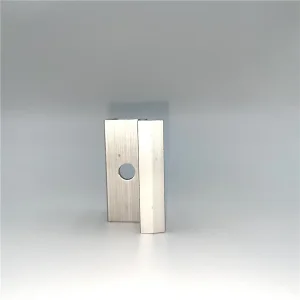
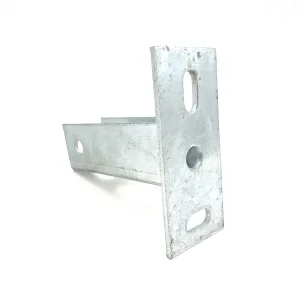
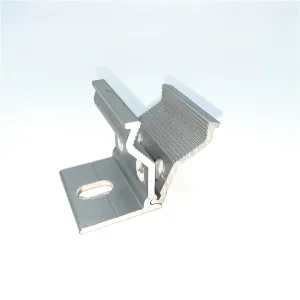



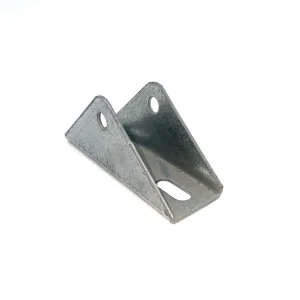
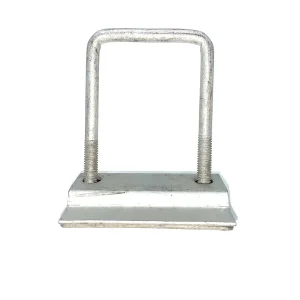
Ensuring financial bankability through standardized laboratory validation, batch traceability, and metallurgical stability.
Every shipment destined for Mediterranean ports such as Radès or Sfax undergoes neutral salt spray (NSS) chamber testing exceeding 1,000 hours for anodized profiles and 1,500 hours for stainless hardware without red rust generation or pitting corrosion initiation.
Structural aluminum alloys are extruded strictly to AL6005-T6 temper specifications, delivering minimum tensile strength of 260 MPa and yield strength of 240 MPa. Clamps and rails are destructive-tested to guarantee factor-of-safety margins exceeding 1.5 under peak wind loads.
To fulfill international lender audit requirements (IFC Performance Standards, KfW criteria), each production batch includes full chemical composition heat-analysis documents and mechanical inspection reports linked directly to raw material smelting billets.
Key technical insights for solar EPC contractors, electrical distributors, and industrial asset owners procuring mounting structures for North African installations.
Connect directly with our engineering department for complete structural static calculations, wind load certifications, CAD/BIM drawing files, and factory-direct volume pricing for utility and commercial projects in Tunis.