
Primary PV Structural Extrusions Serving Toronto
Engineered structural components validated for industrial and commercial solar installations under harsh climate loads across Southern Ontario.
Industrial & Commercial Landscape in Toronto (GTA)
Analyzing structural loads, net-zero mandates, and technical adoption throughout the Ontario renewable infrastructure corridor.
The Greater Toronto Area (GTA) represents one of the most demanding and technologically sophisticated markets for commercial and industrial (C&I) photovoltaic deployments in North America. Under the City of Toronto’s ambitious TransformTO Net Zero Strategy, the metropolitan area aims to eliminate community-wide greenhouse gas emissions by 2040. This regulatory driver has accelerated retrofits on distribution centers, high-density residential properties, and municipal complexes across Peel, York, and Durham regions. However, deploying photovoltaic mounting systems in Toronto presents extreme engineering challenges that standard tropical or temperate mounting configurations cannot survive.
The Dual Challenges: Ground Snow Loads and Lake Wind Shear
In accordance with the Ontario Building Code (OBC) and Toronto municipal engineering standards, photovoltaic mounting systems must be designed for ground snow loads ranging from 1.5 kPa to 2.2 kPa (31 to 46 lbs/sq ft), compounded by localized snow drift factors on multi-tiered roofs. Furthermore, proximity to Lake Ontario exposes commercial structures to high-velocity laminar and turbulent wind shear forces reaching gusts up to 120–140 km/h. Consequently, standard commercial racking faces catastrophic failure modes including rail torsion, purlin clip shear, and micro-cracking caused by cyclic mechanical fatigue. Direct factory supply of high-tensile 6005-T5/6063-T6 aluminum alloys and precision 304/316 austenitic stainless steel fastening components guarantees the mechanical safety margins required by Canadian certified professional engineers (P.Eng).
Macro Structural Solutions & Global Manufacturing Integration
Connecting high-capacity Asian automated production directly with North American project execution.
Full Load Path Optimization
By producing every element—from the base bracket anchored into concrete or structural steel purlins up to module top-clamps—our integrated supply eliminates cross-vendor interface mismatches and cold-temperature shear failures.
Advanced Anodizing & Anti-Corrosion
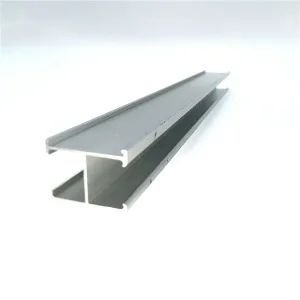
Extruded aluminum rails feature an anodized oxide film thickness of AA15 to AA25 (up to 25μm), providing robust resistance against airborne de-icing salt sprays common across the Greater Toronto highway corridors during winter months.
Streamlined EPC Toolless Pre-Assembly
Toronto labor costs demand accelerated installation timelines. Our mounting systems integrate spring-loaded T-bolts, captive lock nuts, and pre-machined purlin connectors to reduce on-roof installation hours by upwards of 35%.
Material & Mechanical Comparison for Northern Climates
Direct technical parameters ensuring compliance with Canadian CSA and international ASTM benchmarks.
| Component Element | Standard Market Grade | Youlong High-Spec (Toronto Validated) | Cold-Climate Performance Value |
|---|---|---|---|
| Primary Rail Profiles | AL6063-T5 (Standard extrusion) | AL6005-T5 / AL6082-T6 Extruded Alloy | +40% Tensile Yield Strength (Rp0.2 ≥ 240 MPa) |
| Fasteners & Hardware | Carbon Steel Galvanized / SS201 | Austenitic Stainless Steel 304 / 316 (A2/A4-70) | Zero brittle fracture transition at -40°C |
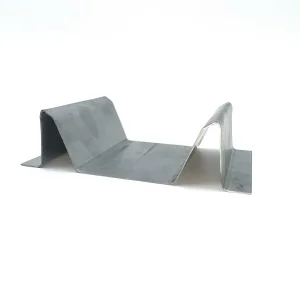
| Waterproofing Drainage | Thin EPDM Sheets | M-Type Structural Aluminum Water Channel | Handles thermal freeze-thaw cycles without rupturing |
| Surface Protection | Standard Anodized (8-10μm) | Class 1 Architectural Anodizing (≥ 15-20μm) | 1,500+ Hours Neutral Salt Spray (NSS) Tested |
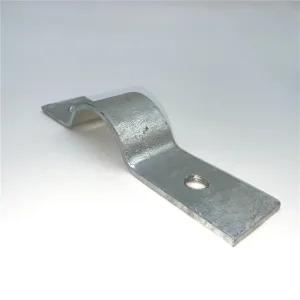
| Wind-Clamping Pressure | Fixed Mid/End-Clamps | Dual-Hole Adjustable Reinforced Pressure Plates | Resists micro-vibration backout under persistent lake gusts |
Localized Application Scenarios Across the Toronto Metropolitan Area
Custom structural engineering adapted to the microclimates and architectural archetypes of Southern Ontario.
Flat-Roof Logistics Warehouses (Mississauga & Brampton)
Ballasted and low-penetration photovoltaic racking engineered to distribute load uniformly over TPO and EPDM roofing systems. Prevents membrane damage and accommodates seasonal meltwater pooling while maintaining strict dead-weight limits.
Commercial Solar Carports & Parking Canopies
Integrating our Solar PV M-Type Aluminum Water Channels, these multi-bay canopies provide 100% watertight coverage for vehicles while generating clean power for EV charging infrastructure across Toronto commercial real estate hubs.
Standing Seam & Metal Roof Industrial Facilities
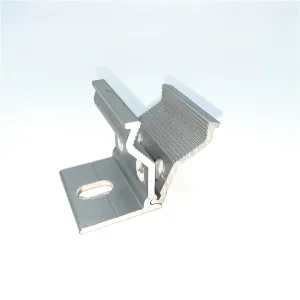
Utilizing high-tensile non-penetrating clip locks and purlin connectors. Prevents thermal expansion shearing and preserves roof warranties across industrial manufacturing plants in Scarborough, Vaughan, and Markham.
Compliance, Traceability & Technological Roadmap
Meeting rigorous Canadian safety codes and aligning with the future of intelligent solar structures.
Procuring PV mounting hardware for Tier-1 Canadian infrastructure requires transparent supply chains and thorough documentation. Handan Youlong Fastener Co., Ltd. operates in compliance with ISO 9001:2015 quality management standards. Full mill test certificates (MTC) according to EN 10204 3.1 accompany every shipping container, verifying raw alloy chemistry, ultimate tensile strength, yield limits, and elongation rates.
Looking toward future system evolutions, our R&D engineering divisions are actively developing:
- Integrated Earthing & Bonding Pathways: Incorporating serrated stainless grounding pins within aluminum clamps to satisfy UL 2703 standards without requiring standalone copper bonding jumpers.
- High-Span Lightweight Truss Rail Profiles: Reducing aluminum consumption by 15% via FEA-optimized interior wall profiles while maintaining high bending moment resistance against snow accumulation.
- Bifacial Solar Module Optimization: Racking geometries specifically configured with minimized back-rail shading to maximize energy yield from high-albedo winter snow reflections.
Ready to Engineer Your Next Toronto Solar Project?
Connect with our technical sales division for comprehensive load calculations, material samples, and direct factory container pricing.
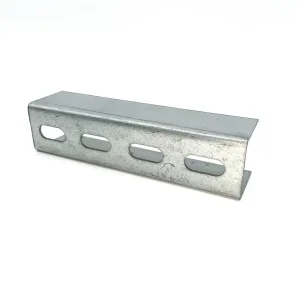
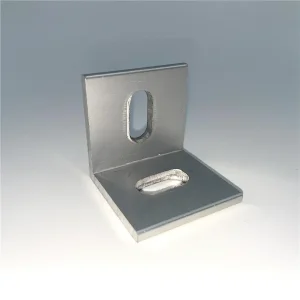
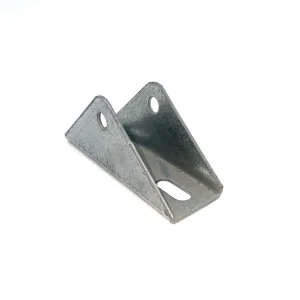
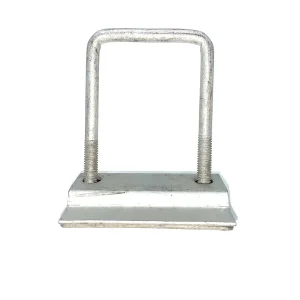
Send Inquiry NowStandard Factory Hardware & Mounting Fasteners Portfolio
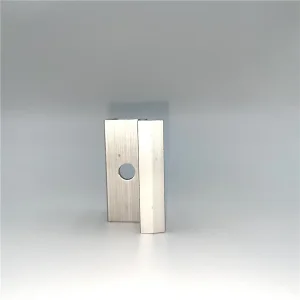
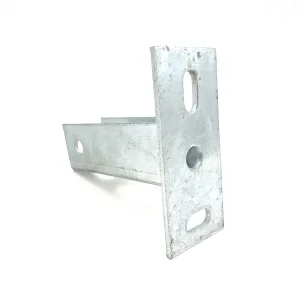
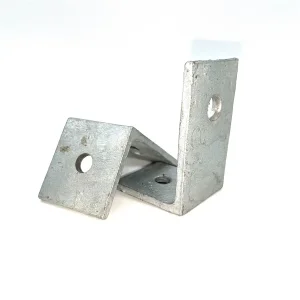
Full suite of specialized solar brackets, clamps, bases, and connectors available for rapid export to North American ports.
Technical & Procurement FAQ for Toronto Solar Installations
Direct answers for solar EPC contractors, engineers, and supply chain managers.
How do Youlong mounting systems accommodate Ontario Building Code (OBC) snow load criteria?
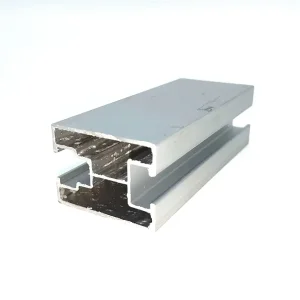
Our guide rails, such as the PV 3040 reinforced series, feature thicker cross-sectional wall geometries and internal strengthening ribs engineered to withstand heavy snow accumulation of up to 2.4 kPa without excessive deflection. Complete section modulus (Zx, Zy) and moment of inertia (Ix, Iy) calculation packages are provided for local engineering stamping.
How is galvanic corrosion prevented between stainless fasteners and aluminum rails in winter conditions?
Winter road salting and urban atmospheric conditions in Toronto can accelerate galvanic reactions. We supply non-conductive UV-stabilized EPDM or nylon insulating washers with our A2-70 / A4-70 stainless steel bolt assemblies to electrically isolate dissimilar metals, preventing electrolytic corrosion.
What are typical production and shipping lead times from your factory to the Port of Montreal or Toronto intermodal depots?
Standard OEM extrusion runs require 15 to 20 days. Maritime freight to Canadian East Coast entry points (such as Halifax or Montreal) followed by CN/CP intermodal transit directly to Toronto rail hubs typically spans 28 to 35 days. We coordinate full EXW, FOB, and DDP shipping terms.
Can mounting components be customized to proprietary engineer drawings for unique roof profiles?
Yes. In addition to our standard lines of PV 3040 rails, M-Type channels, and angle brackets, we operate internal tooling workshops for CNC cutting, custom punching, high-speed stamping, and anodizing to manufacture brackets precisely tailored to Canadian project specifications.
What documentation is supplied to satisfy municipal building inspectors in the Greater Toronto Area?
Every shipment is accompanied by comprehensive Material Mill Test Certificates (EN 10204 3.1), mechanical tensile testing reports, anodizing thickness verifications (ISO 2360 compliant), and salt spray corrosion test certifications.