Buy PV 3040 Reinforced Aluminum Guide Rail Manufacturer, Factory
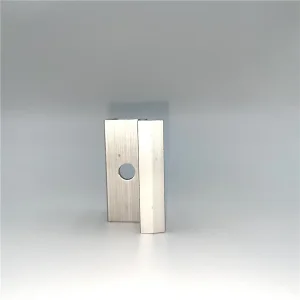
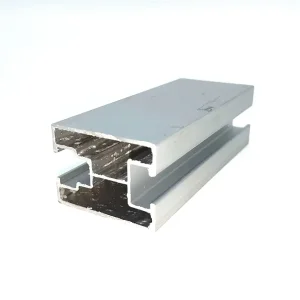
Reinforced 30×40mm high-moment profile engineered to withstand cyclonic gusts in coastal NZ. Internal spline-channels streamline module clamp placement.
Technical Specs & RFQ →Factory-Direct OEM Structural Racking, Corrosion-Proof Aluminum Rails & High-Tensile Solar Fasteners Engineered to AS/NZS 1170.2 Wind Standards
Engineered for the demanding wind and seismic conditions across New Zealand's North and South Islands. Manufactured using architectural-grade anodized aluminum and marine-grade stainless alloys.
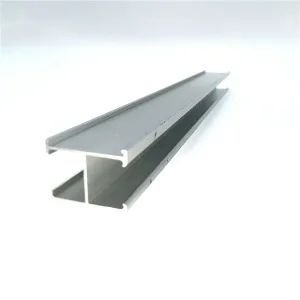
Reinforced 30×40mm high-moment profile engineered to withstand cyclonic gusts in coastal NZ. Internal spline-channels streamline module clamp placement.
Technical Specs & RFQ →
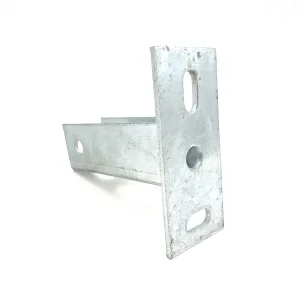
Architectural-grade anodized structural rail offering high rigidity-to-weight ratio. Ideal for residential tilt-frames and commercial purlin clamping across Canterbury and Waikato.
Technical Specs & RFQ →
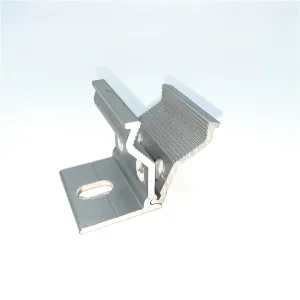
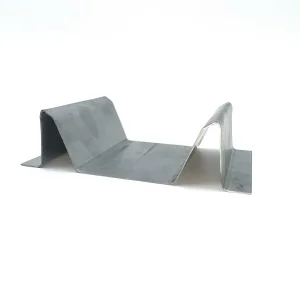
Water-shedding extruded gutter profiles specifically designed for agri-photovoltaics, solar pack-houses, and commercial solar carports in high-rainfall regions.
Technical Specs & RFQ →
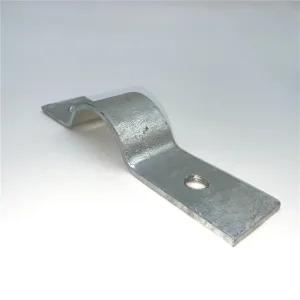
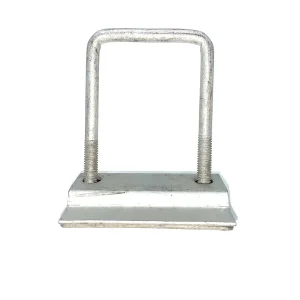
Heavy-gauge stainless steel tension bands providing slip-proof column and pole integration for telecom towers, off-grid farm solar, and remote weather stations.
Technical Specs & RFQ →A comprehensive assessment of structural engineering challenges, microclimates, and compliance protocols governing utility-scale and commercial PV deployments in Australasia.
New Zealand's renewable energy landscape is transitioning from historical hydro-geothermal reliance to large-scale distributed solar PV. As regional utilities, viticulture estates in Marlborough, dairy facilities in Waikato, and logistics hubs in South Auckland transition to self-generation, solar installations must overcome severe environmental stress profiles.
Unlike continental European or Australian outback installations, Kiwi projects encounter intense sub-tropical UV indexes, high maritime salinity under ISO 9223 C4/C5 classifications, and volatile wind loading across Cook Strait and the Canterbury Plains. Meeting the statutory requirements of AS/NZS 1170.2:2021 (Structural Design Actions - Wind) and NZS 4219 (Seismic Performance) is non-negotiable for project bankability.
Globally, the solar mounting structures sector has evolved beyond commodity metal forming into precision structural engineering. As N-type TOPCon and bifacial glass-glass modules exceed 600W+ with surface areas surpassing 3.1 square meters, dynamic mechanical load testing has exposed vulnerabilities in legacy clamp designs, leading to severe cell micro-cracking.
Global procurement teams now require integrated rail-clamp structural assemblies that optimize load dissipation through purlin and ground screw anchor points. Simultaneously, global tracker and fixed-tilt markets are standardizing on continuous automated production lines that eliminate secondary machining errors, guaranteeing consistent metallurgy across hundreds of megawatts.
Combining primary aluminum smelting access, automated multi-station cold-heading, and progressive stamping to give New Zealand developers an unassailable cost and quality edge.
Situated in the heart of China's largest structural hardware industrial hub, Youlong Fastener controls the raw material conversion lifecycle. Direct integration with primary aluminum extrusion foundries and billet casters guarantees trace chemistry controls, tight grain structures, and zero reliance on second-tier scrap metal recycling.
Our workshop integrates high-tonnage automated CNC punch presses, automated anodizing tanks, and high-speed multi-station cold headers. This setup guarantees dimensional precision within ±0.15mm across large production runs, ensuring effortless field bolt alignment without cross-threading delays during site assembly.
Every shipment bound for Port of Tauranga, Auckland, or Lyttelton is supported by comprehensive batch test reports. Our testing facility conducts continuous ASTM B117 salt spray checks (exceeding 1,000 hours), Vickers micro-hardness profiling, tensile proof load tests, and optical profile projector verifications.
| Evaluation Parameter | Generic Commodity Importers | Youlong Precision Engineering Standard | Impact on New Zealand Asset Life |
|---|---|---|---|
| Extrusion Alloy & Temper | Recycled 6063-T5 (Lower yield point) | 100% Virgin AL6005-T5 / AL6082-T6 | Higher tensile yield resists deflection under peak cyclone wind loads. |
| Surface Anodizing Layer | 8 - 10 µm (Inadequate for coastal C4) | ≥ 15 - 20 µm Clear Matte Anodized | Prevents white oxidation and pitting when exposed to salt-laden onshore winds. |
| Hardware Metallurgy | Standard SS201 / SS304 Mixed Batches | Certified SS304 (A2-70) & Marine SS316 (A4-80) | Eliminates stress corrosion cracking (SCC) and fastener shearing failures. |
| Bimetallic Isolation | Direct metal-to-metal contact | Integrated UV-Stable EPDM Isolators | Prevents galvanic degradation between stainless bolts and aluminum rails. |
| Traceability & QA | No heat-number or batch tracing | Heat-Numbered EN 10204 3.1 Mill Certs | Full bankability and engineering sign-off for institutional solar portfolios. |
Custom structural mounting profiles engineered to deliver resilient, durable performance across diverse regional installation environments.
Common on industrial facilities in Penrose, Mount Wellington, and Christchurch industrial parks. Youlong's specialized bracket feet and non-penetrative clamp brackets interface cleanly with Colorsteel® Corrugate, Trapezoidal, and Klip-Lok® profiles using high-durability EPDM backing that protects weather seals.
Dairy parlours in Taranaki, orchard packhouses in Hawke's Bay, and vineyard canopies in Marlborough require flexible, high-span racking geometries. Our M-Type water-channel rails direct heavy run-off away from equipment while structural splice connectors accommodate ground heave and seasonal temperature swings.
For multi-megawatt developments across Northland, the Bay of Plenty, and Central Otago. Engineered for driven C-posts, ramming piles, and concrete ballast pads. Featuring adjustable three-hole splice plates that cut installation labor hours and simplify grade adjustment across undulating terrain.
The foundational mechanical connections ensuring your solar arrays maintain structural integrity under extreme AS/NZS 1170.2 cyclonic and seismic conditions.
Precision-profiled aluminum end clamps designed for framed panels from 30mm to 40mm. Built with anti-slip micro-ribbing to prevent module migration under extreme lateral wind vibration.
Technical Specs & RFQ →
High-strength cast and forged mounting foot footings. Designed for direct mechanical attachment to concrete anchors, steel footings, or heavy timber roof structures.
Technical Specs & RFQ →
Specialized standing-seam and clip-lock metal clamps. Secures racking securely to commercial roofs without penetrating the sheet steel or voiding building envelope warranties.
Technical Specs & RFQ →
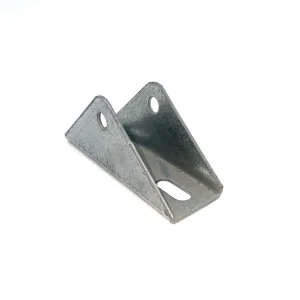
Heavy-gauge stamped SS304/SS316 L-brackets engineered for high-shear purlin connections. Resistant to coastal salt air and acid-rain corrosion profiles.
Technical Specs & RFQ →
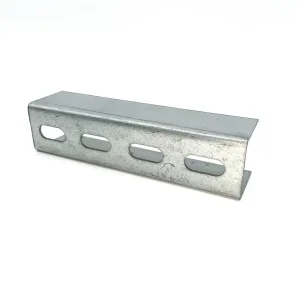
Precision C/Z purlin transition brackets designed to span broad rafters. Simplifies ballast distribution and avoids concentrated point loads on older warehouse frames.
Technical Specs & RFQ →
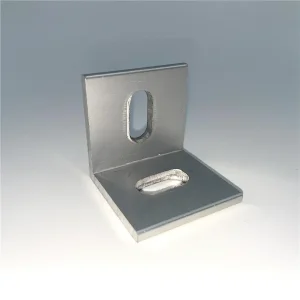
Anodized aluminum angle connectors with CNC slotted bolt channels. Supports smooth adjustments on irregular timber purlins or variable-pitch industrial roofs.
Technical Specs & RFQ →
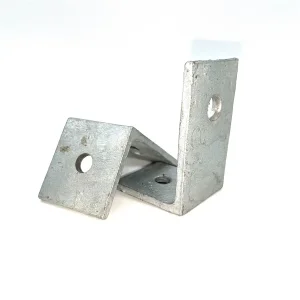
Multi-point rail jointing bracket providing high bending-moment capacity. Maintains full structural continuity across long continuous rail runs without sagging.
Technical Specs & RFQ →
High-tensile forged clamping plate engineered to secure adjacent framed modules. Distributes surface pressure evenly to eliminate localized frame deformation.
Technical Specs & RFQ →Key technical answers for solar structural engineers, EPC procurement directors, and wholesale hardware distributors operating throughout New Zealand.
Our mounting systems are designed around the ultimate limit state (ULS) wind-uplift requirements codified under AS/NZS 1170.2:2021. Our technical engineering division provides sectional modulus profiles, moment of inertia data (Ix, Iy), and finite element analysis (FEA) models tailored to New Zealand wind zones (Zone A through Zone D - Cyclonic). When paired with project-specific spacing tables, our systems streamline PS1 (Producer Statement 1) sign-offs by certified chartered professional engineers (CPEng).
Given that much of New Zealand’s infrastructure is within 20 kilometers of the open coast, galvanic reactions between dissimilar metals (such as raw stainless steel fasteners in contact with mill-finish aluminum) present an asset risk. We resolve this by supplying UV-resistant and non-conductive EPDM isolation shims, high-grade nylon isolation sleeves, and our proprietary high-density clear anodized coating (≥15µm) on all AL6005-T5 rail sections. For projects within 500 meters of the breaking surf, we supply marine-grade SS316 (A4-80) fastener sets.
Yes. OEM and custom structural manufacturing account for more than 40% of our facility’s volume. If your project utilizes unique trapezoidal roof rib spacings, non-standard ground anchor foundations, or custom cable management raceways, our engineers can create custom extrusion dies and stamping tooling in under 20 business days. Prototypes undergo in-house mechanical destructive testing before full-scale container runs are scheduled.
Our Handan industrial production complex links via dedicated intermodal rail directly to Tianjin (Xingang) and Qingdao ports. Ocean freight routes run directly to Port of Tauranga, Ports of Auckland, and Lyttelton (Christchurch). Typical ocean transit time ranges from 18 to 26 days. We regularly support CIF, FOB, and DDP trade terms, providing packed sea-worthy containers with fumigated timber crating, heavy-duty shrink palletization, and full bill of lading clearance documentation.
Every batch of aluminum ingots and stainless coil steel is tracked with unique heat numbers and validated via optical emission spectroscopy. During stamping, extrusion, and CNC finishing, components undergo dimensional verification checks at regular 4-hour intervals. Prior to dispatch, randomized components undergo salt spray testing, coating thickness verification, and tensile proof loading. All documentation is compiled into comprehensive EN 10204 3.1 inspection certificates provided with your shipping manifest.
Cut out distributor markups and protect project margins with direct factory supply for your New Zealand solar commercial and utility portfolios.
Send Inquiry Now & Request Factory Pricing