
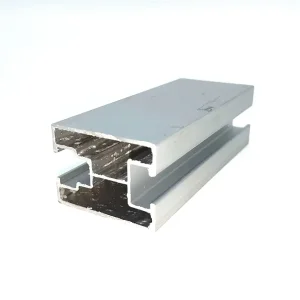
Primary Structural Framework
Seattle Ready: Premium PV Racking Profiles
Engineered to deliver exceptional strength-to-weight ratios under wet, coastal Pacific Northwest ambient environments while strictly adhering to UL 2703 standards.
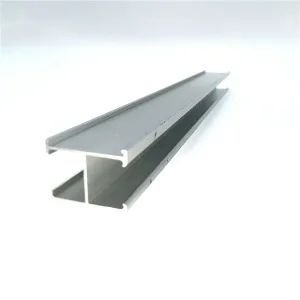
Seattle Marine-Grade PV 3040 Aluminum Alloy Rail
View Product Rail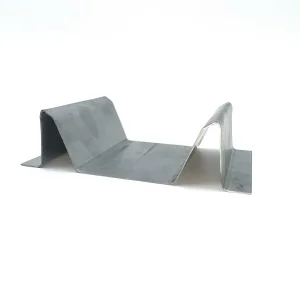
Seattle Drainage M-Type Aluminum Water Channel
View Water Channel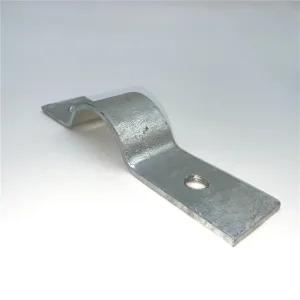
Seattle Extreme-Duty Stainless Steel Mounting Hoop
View Steel Hoop
Local Market Demands
Navigating Seattle’s Commercial & Industrial Solar Frontier
In-depth structural considerations for EPC contractors navigating King County building regulations, Puget Sound marine corrosion, and intense Pacific Northwest weather cycles.
Puget Sound Marine Corrosion Resistance
Seattle’s proximity to Elliott Bay and the greater Salish Sea generates an environment rich in saline aerosol deposition and chronic relative humidity. Standard low-grade racking hardware experiences rapid galvanic breakdown. Our mounting systems integrate anodized AL6005-T6 with minimum 15µm film thickness and SUS304/SUS316 passivated structural fasteners to permanently isolate electrolytic exchange.
- Tested under ASTM B117 salt fog beyond 1,500 hours
- EPDM and nylon dielectric isolation gaskets
Cascadia Seismic & Snow Load Thresholds
King County and the City of Seattle Department of Construction and Inspections (SDCI) impose rigorous building codes including ASCE 7-16/7-22 calculations. Racking configurations must sustain heavy Cascade foothills snow loads (up to 40-50 PSF) paired with high basic wind speeds and Seismic Design Category D ratings without joint slippage or roof diaphragm degradation.
- Finite Element Analysis (FEA) verified cross-sections
- Reinforced three-hole splice plates with torque retention
Seattle C&I Clean Energy Mandates
Driven by the Washington Clean Energy Transformation Act (CETA) and corporate decarbonization goals across tech, aerospace, and maritime logistics hubs in Kent Valley and Bellevue, Seattle commercial property portfolios are modernizing flat roofs with high-density ballasted and penetrating solar arrays to maximize energy yields during long PNW summer hours.
- Low aerodynamic drag profiles minimizing ballast weight
- Integrated grounding pins for UL 2703 equipment bonding
Macro Industry Intelligence
Global PV Mounting Dynamics & Procurement Benchmarks
Strategic hardware supply chains are pivoting toward verified structural metallurgy, unified mechanical certifications, and integrated logistics agility.
The Shift Toward Higher Wattage Modules
The global dominance of 600W+ bifacial modules has drastically expanded panel surface areas, increasing uplift aerodynamic forces and torque stress by over 32%. Global EPC firms now refuse standard rails, demanding heavy-wall aluminum extrusions with increased section modulus and engineered clamping zones that preserve bifacial rear-side albedo irradiance.
Stringent Tier-1 Global EPC Auditing
Procurement teams from North America, Europe, and the Middle East require traceable material mill test reports (MTR), third-party tensile proof testing, and certified factory QA routines. Every component across the load path must ensure zero mechanical yielding over a 25-to-30-year operational lifecycle under cyclical thermal expansion.
Zero-Defect Fastener Pre-Assembly
With field labor costs escalating across Washington State and North America ($75-$120/hr loaded rates), developers mandate factory pre-assembled clamps, click-in purlin fasteners, and drop-in sliding nuts to reduce crane and crew labor time per megawatt by upwards of 40%.
Industrial Manufacturing Advantage
Handan Yongnian: The Global Fastener & Racking Powerhouse
Combining world-scale supply chain density with rigorous technical consistency to supply international mega-projects directly from the source.
| Evaluation Parameter | Traditional Global Distributors | Youlong Factory-Direct Infrastructure | Seattle EPC Operational Impact |
|---|---|---|---|
| Supply Chain Clustering | Fragmented sourcing across third-party tiers | Located in Yongnian (China Fastener Capital), raw billet to finished bolt in a 5km radius | Cost Efficiency Up to 22-35% lower landed Bill-of-Materials cost |
| Extrusion & Stamping Lines | Outsourced third-party small run shops | Continuous multi-ton extrusion presses, progressive stamping, multi-station cold heading | Mass Delivery Rapid delivery schedules for 10MW to 500MW project schedules |
| Quality Control Testing | Occasional spot lab testing | 100% in-house chemical spectrometry, salt-spray chambers, dynamic tensile load testing | Compliance Flawless compliance with City of Seattle SDCI plan reviews |
| Custom Engineering (OEM/ODM) | Restricted to static catalog items | Custom tooling, bespoke extrusion profiles, specialized slotted brackets to CAD/BIM | Adaptability Precise integration with custom Seattle warehouse roof ribs |
Engineered Scenarios
Targeted Pacific Northwest Solar Applications
Purpose-built mounting systems addressing specific architectural and climatic configurations found throughout the Puget Sound Basin.
Seattle Standing Seam Metal Roofs
Prevalent across Kent, Auburn, and South Seattle distribution centers. Our clamp kits securely lock onto standing seams without penetrating the outer metal membrane, eliminating long-term rain leak risks while resisting 120 MPH winter gusts.
Commercial Solar Carports & Canopies
For corporate campuses and municipal parking structures across Redmond, Bellevue, and SeaTac. Features our M-type waterproof drainage channels to guide heavy rains safely away from vehicles and pedestrians while generating on-site renewable power.
Ballasted Flat Membrane (TPO/PVC) Roofs
Engineered for high-density downtown Seattle and industrial flat roofs. Features continuous aerodynamic deflectors and non-penetrating protective rubber mats to preserve delicate roofing membranes while withstanding severe wind uplift.
Factory Component Range
Structural Fasteners & Connection Components
Factory-direct clamps, splice kits, base brackets, and precision fasteners engineered to build an unbroken, durable load path for the life of your array.
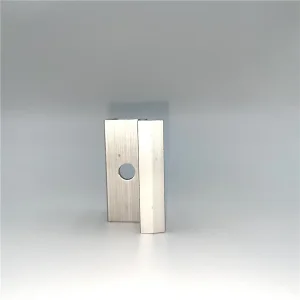
Seattle Spec Solar PV Panel Aluminum Side Clamp
View Side Clamp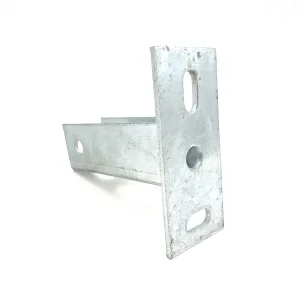
Seattle Heavy-Duty Aluminum Alloy Base Plate
View Alloy Base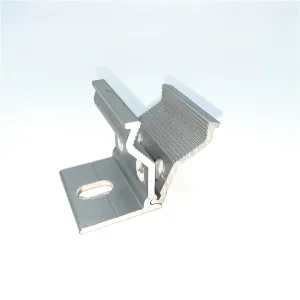
Seattle Non-Penetrating Clip Lock Aluminum Clip
View Roof Clip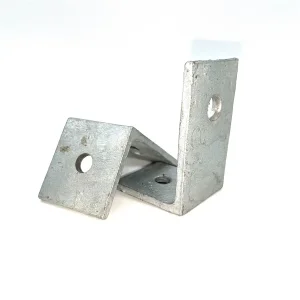
Puget Sound Heavy Stainless Steel Angle Bracket
View Angle Bracket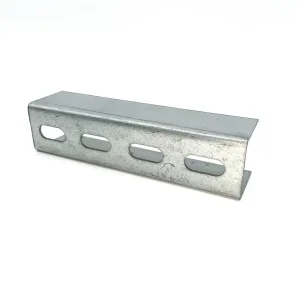
Seattle High-Torque PV Mounting Purlin Connector
View Purlin Link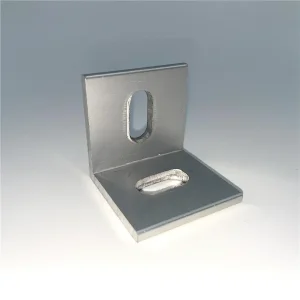
Seattle Structural Aluminum Alloy Angle Bracket
View Angle Bracket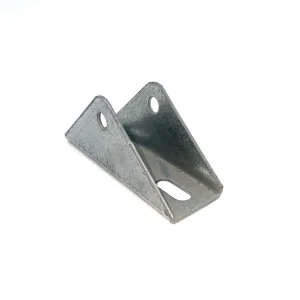
Seattle Rail Splicing Three-Hole Mounting Connector
View Splice Link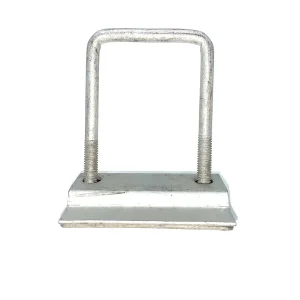
Seattle Heavy-Load Double-Hole Pressure Plate
View Pressure Plate
Future Forecast
Emerging Trends in Solar Structural Engineering
How innovations in materials science and pre-engineered components are shaping the next generation of PV mounting systems.
Zinc-Aluminum-Magnesium (ZAM) Coatings
For large ground mounts and utility trackers across Eastern Washington, ZAM self-healing coated steel profiles are rapidly complementing traditional hot-dip galvanizing, offering superior edge protection against corrosive runoff at a lower lifecycle cost.
Integrated Grounding & Bonding Paths
Modern electrical codes demand integrated grounding pins on both mid and end clamps. This enables automatic ground continuity through the anodized aluminum rail without requiring individual ground lugs on each module frame, saving significant labor time per array.
Digital Design & Custom Pre-Fabrication
Developers are pairing 3D LIDAR roof scans with factory cut-to-length rail schedules. Delivering pre-sorted, numbered kits direct to job sites across the Puget Sound region drastically reduces field cutting, metal shavings on membranes, and on-site scrap.
Procurement & Engineering FAQ
Frequently Asked Questions for Seattle Solar Projects
Direct technical answers covering structural engineering, marine-grade metallurgy, building code compliance, and global logistics options.
How do your racking systems prevent galvanic corrosion in Seattle's maritime air?
We use anodized aluminum (AL6005-T6 with minimum 15µm film thickness) paired with high-grade austenitic stainless steel hardware (SUS304 or marine-grade SUS316). We also include UV-stabilized EPDM or nylon isolation washers at all metal-to-metal contact points, fully breaking the galvanic circuit between dissimilar metals even in salt-laden coastal conditions.
Can your systems meet City of Seattle (SDCI) seismic and wind requirements?
Yes. Our mounting systems are engineered in accordance with ASCE 7 standards. We provide complete structural engineering packages, including section modulus, moment of inertia, and finite element stress analysis for AL6005-T6 profiles, making it straightforward for your local Washington State PE to stamp plans for SDCI submittal.
What is your lead time for container shipments to the Port of Seattle or Tacoma?
Typical factory production runs require 12 to 18 days depending on the customization required. Ocean transit from Tianjin Port directly to the Northwest Seaport Alliance (Seattle/Tacoma) takes roughly 15 to 22 days. We coordinate full DDP or CIF terms with experienced logistics partners for clean customs clearance.
Do you support custom profile extrusions and OEM bracket manufacturing?
Yes. Our in-house tooling workshop, multi-ton aluminum extrusion lines, and high-tonnage cold stamping presses allow us to manufacture custom profiles to your exact drawings. Tooling validation typically takes 7-10 business days, followed by rapid sample dispatch with full dimensional inspection reports.