
Engineered Fasteners for Critical Brazilian Field Operations
Supplied directly from China’s largest fastener manufacturing cluster, with fully traceable MTRs (EN 10204 3.1) and surface coatings calibrated for South America’s harshest ambient and chemical exposures.
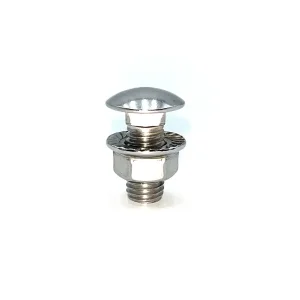
Stainless Steel Carriage Bolt (Brazil Solar & Agri Infrastructure)
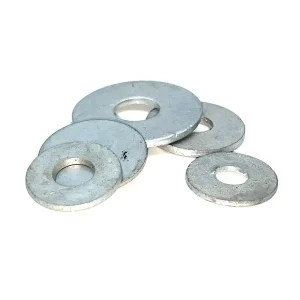
DIN 125 Stainless Steel Flat Washer (Coastal Marine Standard)
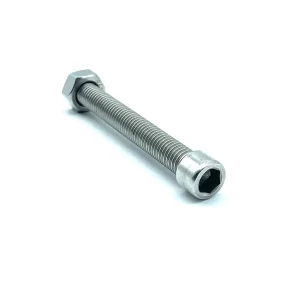
Hex Socket Cap Screw (Brazil Automotive & Machinery Grade)
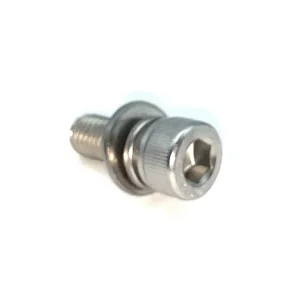
Hex Socket Combination Sems Bolt (High-Vibration Assembly)
The Fastener Ecosystem in Brazil: Demand Drivers & Industrial Realities
An authoritative analysis of Brazil's structural industrial revitalization, regional mega-projects, import dynamics, and the rigorous operational demands governing heavy mechanical hardware.
The Re-Industrialization Era: NIB & Novo PAC
Brazil’s industrial landscape is undergoing massive transformation propelled by the federal Nova Indústria Brasil (NIB) and the multi-billion-dollar Novo PAC (Growth Acceleration Program). These state-backed frameworks direct capital into cross-continental railway corridors, clean energy transitions, agricultural logistics modernization, and municipal water sanitation networks.
Every bridge girder, high-voltage transmission pylon, and rail tie requires verified structural bolts. Because domestic forging facilities face heavy overheads and high carbon-steel raw material costs, Brazilian EPCs and distributors increasingly rely on qualified, volume-ready direct-factory partnerships with Chinese manufacturing hubs.
- Transmission Corridors: Tens of thousands of metric tons of HDG ASTM A394 tower bolts.
- Urban Sanitation: Corrosion-proof 316 stainless anchors for municipal water treatment facilities.
Deconstructing "Custo Brasil" & Supply Arbitrage
Navigating the Brazilian market requires master-level understanding of the "Custo Brasil"—the structural and tax overheads embedded in local logistics, complex tariff codes (NCM - Nomenclatura Comum do Mercosul), ICMS interstate circulation levies, and PIS/COFINS port taxes. Sourcing small, piecemeal shipments from secondary intermediaries inflates capital expenditure by up to 35%.
Factory-direct integration eliminates multiple tiers of broker margins. By consolidating high-volume standard hardware (DIN 933, DIN 931, DIN 6921, ASTM A325) into FCL (Full Container Load) shipments dispatched directly to Santos, Paranaguá, Suape, and Itajaí, corporate procurement teams safeguard margins while anchoring delivery schedules against supply volatility.
- Tariff Alignment: Precise NCM code classification (e.g., 7318.15 for threaded bolts) ensures tariff compliance.
- Container Optimization: Engineered palletizing maximizes payload within Brazilian highway weight regulations.
Regional Industrial Clusters & Distinct Demands
Brazil is not a monolithic market; each geographic cluster imposes radically different mechanical and chemical requirements on fastener assemblies:
São Paulo & ABC Paulista: Automotive assembly lines, gearbox machining, and robotics demanding tight tolerance socket cap screws (ISO 4762), 10.9/12.9 tensile classes, and automated-feeder-ready finishes.
Northeast (Bahia, Ceará, Piauí): The solar belt, where UV degradation, abrasive semi-arid silica dust, and coastal marine winds require high-durability Dacromet, Ruspert, or HDG solar hardware capable of lasting 25 to 30 years without micro-pitting or torque relaxation.
Minas Gerais & Pará: Severe open-pit iron ore extraction calling for heavy hex foundation anchors subjected to cyclical shock loads and continuous gravel vibration.
Global Fastener Production Dynamics & The Yongnian Capital Advantage
How our automated cold forging, precision continuous quenching, and multi-stage surface treatments bridge global supply shortages and deliver economic advantages directly to Brazilian buyers.
Supply Chain Agglomeration
Operating in Yongnian District, Handan—renowned as China’s Fastener Capital—provides unmatched ecosystem velocity. Over 50% of the nation’s standard fasteners originate within this industrial basin. Raw coil rod stock, dedicated wire drawing, tool and die fabrication, automated heading, heat treatment, and surface finishing occur within a 15-kilometer radius, collapsing production lead times.
Multi-Station Cold Forging
Rather than relying on metal-cutting processes that interrupt grain flow lines, our factory deploys multi-station cold-heading formers. The unbroken fiber structure of cold-forged steel ensures superior fatigue endurance and shear load resistance, which is essential for Brazilian structures subject to cyclic aerodynamic buffeting and heavy seismic/vibrational loads.
Continuous Controlled Quenching
Our computer-controlled mesh-belt heat treatment lines maintain tight atmospheric regulation to prevent decarburization or superficial carburization. Achieving exact quenching and tempering parameters ensures Grade 8.8, 10.9, and 12.9 hardware exhibits uniform core hardness without the risk of brittle failure or hydrogen embrittlement under high pre-load torque.
Environmental Compliance & Green Steel
In accordance with global CBAM (Carbon Border Adjustment Mechanism) evolutions and ISO 14001 environmental frameworks, our manufacturing implements clean-electricity closed-loop pickling, zero-effluent surface treatment rinse systems, and non-cyanide, heavy-metal-free passivation, ensuring seamless import into sustainability-mandated Brazilian ventures.
Engineering for Brazil's Climate: ABNT, DIN, ASTM & C5-M Corrosion Resistance
Bridging international manufacturing tolerances with Brazilian local technical norms to protect mission-critical equipment across humid equatorial, coastal marine, and chemical mining zones.
Engineering hardware destined for Brazilian job sites requires strict harmonization across diverse engineering traditions. Brazilian engineering design consultancies commonly specify fasteners using the national ABNT NBR (Associação Brasileira de Normas Técnicas) framework, which frequently derives from German DIN standards and Anglo-American ASTM / ASME benchmarks. Discrepancies between metric pitch tolerances (e.g., DIN 13-1 vs. coarse metric ABNT NBR ISO 965) or imperial thread specifications (UNC/UNF per ASME B1.1) can paralyze field installations if not managed proactively at the factory level.
| Brazilian & Global Spec | Common Designation | Material & Strength Class | Anti-Corrosion Finish Available | Primary Brazilian Industrial Application |
|---|---|---|---|---|
| ABNT NBR ISO 898-1 / DIN 933 | Full-Thread Hex Bolt | Class 8.8, 10.9, 12.9 Carbon Steel | HDG (ISO 10684) / Dacromet | Utility-scale solar tracker framing, steel warehouse purlins |
| ASTM A325 / A325M Type 1 | Heavy Hex Structural Bolt | Quenched & Tempered Medium Carbon | Hot-Dip Galv (ASTM A153) | Novo PAC bridges, mining hoists in Carajás, port cranes |
| ABNT NBR ISO 3506-1 | Stainless Hex Socket Cap | Austenitic A2-70 (304), A4-80 (316L) | Passivated / Electro-polished | Offshore Petrobras platforms, coastal Santos food processing |
| ASTM A193 / A194 B7/2H | High-Pressure Stud Bolt & Nut | AISI 4140 Chromium-Moly Alloy | Xylan / PTFE / Zinc-Nickel | Oil & gas flanged pipelines, Santos Basin subsea manifolds |
| DIN 603 / ISO 8677 | Round Head Carriage Bolt | Grade 4.8, 8.8, SS304, SS316 | HDG / Geomet / Zinc Plate | Agribusiness grain storage silos in Mato Grosso, conveyor skirts |
| ETA-Approved Wedge Anchor | Heavy-Duty Expansion Anchor | Carbon Steel Class 5.8 / SS316 | Sherardized / Hot-Dip Galv | Concrete foundation tie-downs for wind towers & substation bays |
Overcoming Tropical Micro-Pitting & Galvanic Degradation in C5 Coastal Zones
A major cause of fastener failure across coastal Brazil (such as Santos, Rio de Janeiro, Salvador, and Suape) is aggressive atmospheric corrosion classified as ISO 12944 C4 to C5-M (Marine). The combination of high ambient humidity, elevated year-round temperatures, and salt-laden ocean air rapidly degrades standard electro-galvanized coatings (which frequently fail within 24–36 months). Our manufacturing facility mitigates this risk by providing heavy hot-dip galvanizing with coating thicknesses exceeding 55–85 μm (ISO 1461), micro-layered non-electrolytic zinc flake (Dacromet/Geomet) coatings offering 1,500+ hours of ASTM B117 salt spray endurance, and marine-grade austenitic 316L or Duplex stainless steels. When clamping stainless fasteners onto extruded aluminum PV rails, we integrate pre-fitted EPDM or nylon insulating washers to systematically prevent destructive galvanic cell creation.
Custom Mechanical Fastening Solutions Across Brazilian Industry
Field-tested hardware configurations engineered to meet the operational stresses and regulatory mandates of Brazil’s core industrial sectors.
Solar PV Trackers & BIPV Systems
Regional Focus: Bahia, Minas Gerais, Piauí, and Pernambuco Solar Corridors.
Utility-scale tracking systems in Brazil operate under intense cyclic wind flutter, demanding hardware that maintains clamping pre-load without routine manual re-torquing. We supply complete BOM kits featuring flange-serrated lock bolts, Huck-style blind fasteners, and hot-dip galvanized carriage bolts that resist dynamic resonance across 1P and 2P single-axis tracking systems.
- Torque Stability: Serrated under-head flange locks into steel purlins.
- Longevity: Multi-layer protective coatings pass 2,000 hrs salt spray.
Pre-Salt Deepwater & Marine Terminals
Regional Focus: Santos and Campos Basins, FPSO Construction Yards in Rio de Janeiro.
Offshore exploration in Brazil's deepwater pre-salt reserves requires zero-defect bolting able to endure high concentrations of chlorides, hydrogen sulfide (H2S), and extreme hydrostatic pressures. We manufacture ASTM A193 Grade B7/B7M and B8/B8M stud bolts treated with fluoropolymer PTFE (Xylan) coatings that guarantee low friction coefficients and total resistance to salt crust galling.
- Standards Compliance: NACE MR0175 / ISO 15156 sour service verification.
- Non-Galling: Controlled coating thickness ensures smooth nut breakout after years of subsea exposure.
Agribusiness Silos & Processing Mills
Regional Focus: Mato Grosso, Paraná, Rio Grande do Sul, Goiás.
Brazil’s agricultural sector leads global soybean, corn, and sugar output. Massive grain storage terminals require fasteners capable of holding heavy outward lateral grain pressure while providing 100% weather-tight hermetic seals. Our silo carriage bolts feature cold-headed, broad-diameter heads equipped with UV-resistant EPDM bonded washers, protecting grain from moisture and microbial damage.
- Tensile Integrity: Class 8.8 and 10.9 prevent shear failures during bulk filling.
- Hermetic Seal: Pre-installed concave EPDM cushions prevent water seepage into bin panels.
Macro Solutions: Turnkey Logistics & Engineering BOM Kitting for Brazil
Eliminating on-site downtime and assembly bottlenecks through customized hardware kitting, containerized shipping direct to Brazilian ports, and audited quality management.
Structured BOM Kitting
EPC contractors building remote solar or wind farms across Brazil’s interior (such as the Sertão) lose hundreds of labor hours when hardware arrives in unsegregated bulk containers. We solve this by implementing factory-level Project Kitting: grouping exact quantities of bolts, matching hex nuts, and isolated washers in tagged, barcoded, weather-resistant polymer packs corresponding to specific installation drawings.
Direct Maritime Dispatch to Brazilian Ports
Through our dedicated international logistics division, we handle end-to-end containerized export workflows from Tianjin and Qingdao ports directly to Santos (SP), Paranaguá (PR), Itapoá (SC), Suape (PE), and Itaqui (MA). We coordinate standard Bill of Lading documentation, Certificates of Origin, and packing declarations that streamline clearance through the Brazilian Receita Federal (Siscomex) system.
Full Inspection & Mill Test Reports
Every consignment dispatched to Brazilian corporate buyers includes full EN 10204 Type 3.1 inspection documentation. Our internal QA laboratory confirms chemical composition, proof-load test results, Rockwell/Vickers hardness values, and salt spray exposure data. Third-party testing through SGS, TÜV Rheinland, or Bureau Veritas is available on demand prior to container sealing.
Technology Roadmap: High-Strength Metallurgy & Smart Fasteners
Anticipating the technological demands of next-generation infrastructure, green hydrogen power systems, and autonomous industrial facilities across Latin America.
Sensor-Integrated "Smart Fasteners"
As Brazil's offshore wind farms and remote critical bridges expand, regular manual torque inspection becomes economically impractical. Our technical pipeline integrates ultra-thin piezoelectric sensors and RFID chips directly into heavy structural bolt heads. Field technicians can scan hundreds of bolted joints wirelessly in minutes, reading residual clamping tension and identifying micro-movement before mechanical failure occurs.
Super-Duplex & Nickel-Alloy Solutions
With deepwater pre-salt reserves tapping hotter, more corrosive wells, conventional 316L stainless steel reaches its thermal and pitting resistance limits. We are expanding scalable cold-forging for Super Duplex UNS S32750 (2507) and Inconel 625/718 fasteners, providing pitting resistance equivalent numbers (PREN) above 42 for subsea manifolds and petrochemical processing units throughout South America.
Eco-Friendly Nanotech Coatings
Stricter global environmental mandates require the complete elimination of hexavalent chromium and toxic solvent-based treatments. Our surface-engineering laboratories are pioneering aqueous, nano-zinc-graphene composite coatings that deliver superior barrier protection with thinner film thicknesses (under 12 μm), preventing thread fitment jamming while matching the cathodic protection of heavy galvanization.
Frequently Asked Questions by Brazilian Engineers & Importers
Authoritative, data-backed answers addressing the most common commercial, logistical, and metallurgical inquiries received from Brazilian industrial clients.
How do your fasteners comply with Brazilian ABNT standards versus DIN and ASTM?
What is the recommended anti-corrosion coating for solar trackers in Northeast Brazil?
How do you handle shipping logistics and customs compliance for Brazilian ports?
How is thread galling avoided when using stainless steel bolts on Brazilian job sites?
Can you manufacture custom dimensions and special stampings from CAD drawings?
Certified Hardware Series for Heavy Construction & Infrastructure
High-load concrete anchors, self-drilling metal screws, structural HDG assemblies, and vibration-resistant fasteners tailored for Brazilian industrial and civil works.
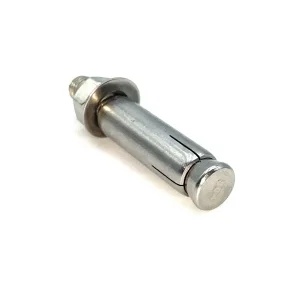
Stainless Expansion Bolt (Civil Construction Grade)
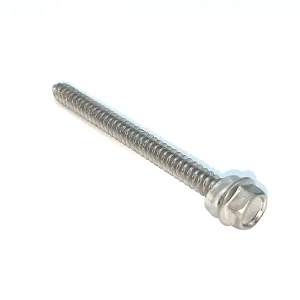
Bi-Metal Self-Drilling Screw (Industrial Roofing & BIPV)
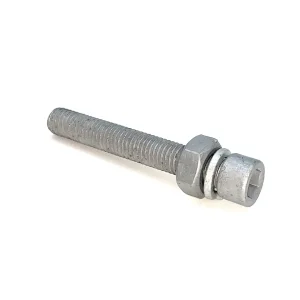
High-Tensile Hex Socket Bolt (Mining & Heavy Machinery)
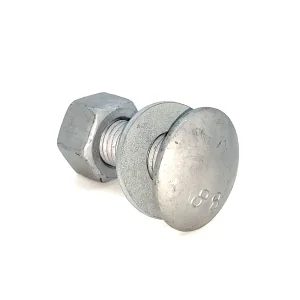
Hot-Dip Galvanized Carriage Bolt (Outdoor Utility Grade)
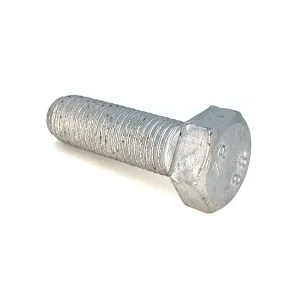
HDG Heavy Hex Structural Bolt (Grid Towers & Bridges)
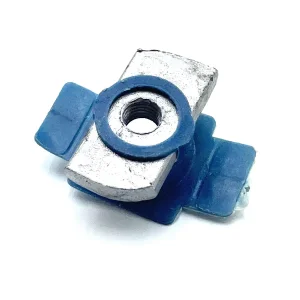
Engineered Polymer Wing Nut (Electrical & Telecom Grade)
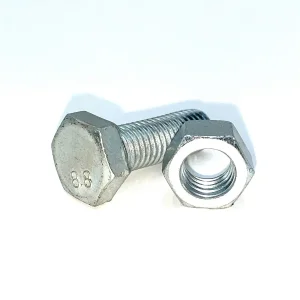
Precision Hex Head Bolt (Automotive & Machinery Assembly)
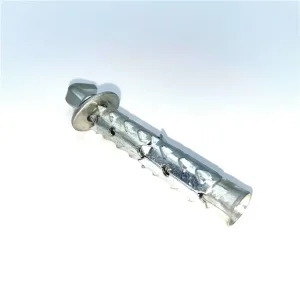
Fish-Scale Sleeve Expansion Bolt (Heavy Foundation Anchor)
Streamline Your Fastener Procurement for Brazil
Connect with our technical engineering desk. Receive complete product specification catalogs, volume container freight rate schedules to Brazilian ports (Santos, Paranaguá, Suape), and customized CAD manufacturing feasibility analyses.