China Using Expansion Bolts Supplier & Companies
Precision Structural Anchorages, Seismic Engineering, and Advanced Fastener Solutions for Global Infrastructure & Clean Energy Projects
Featured Industrial Expansion Anchor Systems
Engineered hardware and certified anchorage components optimized for high-tensile installations and extreme climate environments.
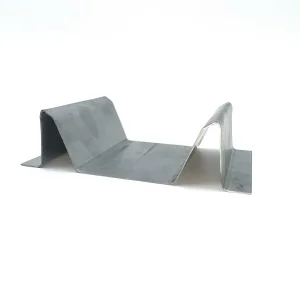
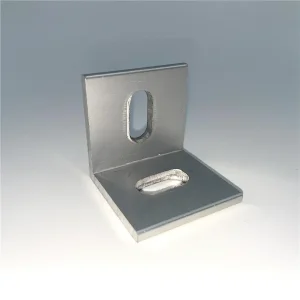
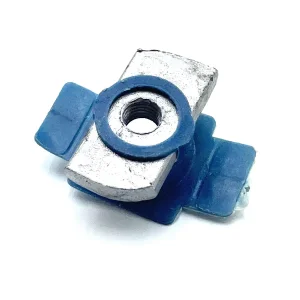
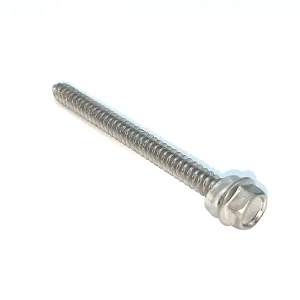
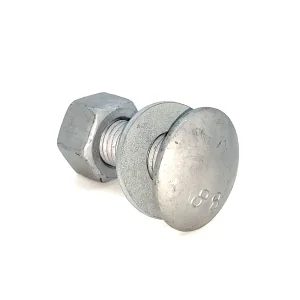
Global Macro Industrial Landscape: The Role of Expansion Anchoring
Analyzing structural post-installed anchoring dynamics across international civil infrastructure, renewables, and heavy mechanical assets.
Supply Chain Aggregation
Situated in the Yongnian industrial cluster, the epicentre of China's fastener supply chain, Chinese manufacturers benefit from direct metallurgical feeds, scalable hot-dip galvanizing plants, and automated cold-forging hubs. This cluster density reduces logistical lead times while insulating global EPC buyers from regional upstream raw material bottlenecks.
Cracked Concrete Engineering
Modern structural standards (including ETAG 001 Annex E, ACI 318 Chapter 17, and EN 1992-4) demand expansion bolts qualified for cracked concrete conditions. Advanced torque-controlled expansion anchors operate by forcing an expansion cone into an engineered sleeve, generating friction and positive mechanical interlock capable of bridging concrete fracture dynamics during cyclic seismic drift.
Metallurgical Integrity
High-integrity expansion anchors demand strict controls over cold working embrittlement, hydrogen-induced microcracking, and non-metallic inclusions. Leading Chinese manufacturers incorporate multi-stage heat treatments, spheroidizing annealing, and vacuum carbonitriding to balance core ductile yield with extreme surface hardness required for sleeve expansion.
Technical Anchorage Matrix: Specifying Expansion Fasteners
A reference matrix matching concrete substrate integrity, static/dynamic load vectors, and environmental exposure zones.
| Bolt Classification | Common Metallurgy | Expansion Mechanism | Critical Use Cases | Corrosion Rating |
|---|---|---|---|---|
| Wedge Anchors (Through-Bolts) | Carbon Steel Gr 8.8 / SS316 | Torque-controlled drawn cone | Structural column basements, PV ground piles, heavy racking | ISO 9223 C1 to C5-M (Marine) |
| Heavy-Duty Sleeve Anchors | Q235B / Stainless Steel 304 | Full-depth expander sleeve compression | Solid masonry, hollow core slabs, curtain wall transoms | ISO 9223 C2 to C4 (Industrial) |
| Drop-In Anchors | Cold-forged low-carbon alloy | Internal displacement-controlled core | Suspended MEP ducting, fire pipelines, cable tray fixtures | Interior / C1 Dry environment |
| Chemical / Capsule Hybrid Bolts | Alloy Steel 42CrMo / B7 | Adhesive bonding + mechanical undercutting | Seismic retrofitting, edge-distance critical substructures | Severe Chemical / Coastal Exposure |
Localized Application Scenarios & Field Engineering
Delivering certified mechanical anchorage across demanding infrastructure environments worldwide.
Utility-Scale Solar Foundations
Fixing PV base brackets to pre-stressed concrete ballast blocks demands high resistance to uplift and shear fatigue caused by cyclic vortex shedding. Precision stainless steel expansion bolts provide reliable pull-out capacities without fracturing brittle concrete structures.
Seismic Curtain Wall Façades
Commercial skyscrapers demand curtain wall anchor plates capable of withstanding dynamic lateral wind loading and seismic floor displacements. High-strength wedge anchors engineered with custom bevel washers accommodate localized tilt, ensuring permanent axial engagement under severe stress.
Heavy Machinery Anchorage
Industrial presses, turbines, and conveyor systems transmit persistent harmonic vibration to foundation slabs. Torque-controlled expansion anchors prevent vibration-induced loosening through sustained radial friction, retaining pre-set clamping forces across millions of continuous operating cycles.
Compliance, Traceability & Material Testing Standards
Ensuring complete risk elimination across commercial purchasing through rigorous international laboratory verifications.
ISO 9001:2015 QC
Continuous quality gates from billet spectrometer analysis to finished thread micro-optical scanning, documented with EN 10204 Type 3.1 inspection certification.
Salt Spray Testing
Standard ASTM B117 and ISO 9227 neutral salt spray validation (NSS) exceeding 1,000 to 2,500 hours without red rust for hot-dip galvanized and marine grade 316 finishes.
Tensile Verification
Full destructive proof-load, yield strength, and elongation testing executed on micro-computerized electro-hydraulic universal testing machines, confirming yield ratings.
Spectrometric Analysis
XRF elemental analysis confirming exact concentrations of Chromium, Nickel, and Molybdenum to prevent pitting, intergranular stress corrosion, and material substitution.
Technical Roadmap: The Next Generation of Anchorage
Pioneering advancements in high-stress metallurgy, environmental plating, and structural sensor integration.
Zinc-Flake & Eco Passivation
Transitioning from traditional hexavalent galvanizing to closed-loop zinc-flake (Geomet/Dacromet) and eco-friendly trivalent passivation. This eliminates the risk of hydrogen embrittlement in high-strength 10.9-grade anchors while reducing processing carbon intensity.
RFID & Load Sensing Anchors
Integrating micro-piezoelectric sensors and passive UHF RFID chips directly into bolt heads. This allows on-site maintenance technicians to instantly measure residual preload, structural torque relaxation, and seismic fatigue without manual disassembly.
AI Cold-Heading Tolerancing
Deploying automated in-line computer vision and neural-network tool-wear prediction during multi-station cold heading. Real-time feedback loops maintain critical taper angles and expansion sleeve geometries within ±0.02mm, ensuring consistent field pull-out performance.
Frequently Asked Questions (FAQ)
In-depth technical and commercial answers regarding manufacturing, export logistics, and structural application of Chinese expansion bolts.
How does edge distance affect the load capacity of mechanical expansion bolts?
Expansion bolts work by creating outward radial pressure against the base material. Installing an anchor too close to a concrete edge reduces the available shear cone area and risks concrete edge spalling before the bolt reaches its full mechanical capacity. Following standard design guidelines like ACI 318 Chapter 17, anchor edge distances and on-center spacing must be engineered to prevent localized concrete cone fracture.
What is the practical mechanical difference between wedge anchors and sleeve anchors?
Wedge anchors feature a localized expansion clip mounted on a precision-machined taper cone, offering high tensile and shear capacities in solid, high-strength concrete. Sleeve anchors use a full-length tubular sleeve that expands along more of the borehole depth. This makes sleeve anchors more forgiving in lower-strength concrete, solid brick, or hollow-core base materials where concentrated radial stress might cause premature cracking.
How do Chinese manufacturers mitigate hydrogen embrittlement in high-strength fasteners?
Hydrogen embrittlement is prevented by tightly managing both raw material metallurgy and surface finishing steps. For high-tensile anchors (Grade 8.8, 10.9), electroplating acid-pickling cycles are closely controlled, followed by immediate de-hydrogenation baking (typically 200°C–220°C for 4 to 8 hours). High-criticality lines often employ mechanical plating, zinc-flake coating, or hot-dip galvanizing, which inherently minimize hydrogen absorption risks.
Can custom embedment depths and non-standard geometries be produced?
Yes. Chinese fastener facilities maintain automated tool-and-die workshops with multi-station cold-heading machines and multi-axis CNC lathes. We can produce custom embedment lengths, extended threading, metric-to-UNC thread transitions, and custom head profiles to your specifications. Production drawings are reviewed by our engineering team to verify tooling feasibility, dimensional tolerances, and structural capacity before run sign-off.
Certified Fasteners & Structural Mounting Hardware
Explore our extended catalog of structural hardware, precision sockets, and solar mounting accessories produced to global specifications.