
Primary PV Mounts & Structural Fastener Solutions
Engineered to deliver high pull-out capacity, superior anti-shear resistance, and atmospheric durability in utility-scale ground and rooftop installations.
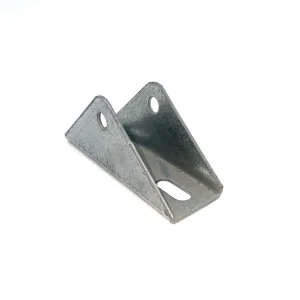
China Factory Premium Three-Hole Solar PV Mounting Connectors
View Specifications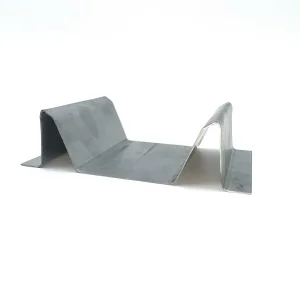
Best Durable M-Type Aluminum Water Channel for Solar PV Systems
View Specifications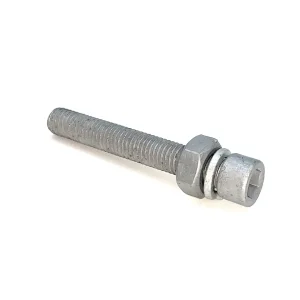
China High-Strength Hex Socket Bolt Carbon Steel Fasteners
View Specifications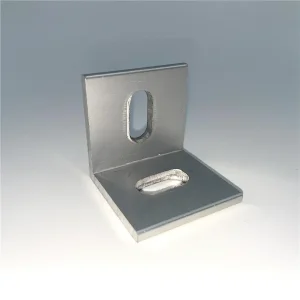
China High-Quality Aluminum Alloy Angle Bracket for Solar Mounting
View Specifications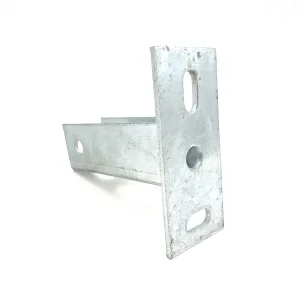
Best High-Strength Aluminum Alloy Solar PV Mounting Base
View Specifications
Factory Premium Aluminum Alloy Side Clamp for Solar Panels
View Specifications
Best China Suppliers Three-Hole Mounting Connector for PV Rails
View Specifications
High-Strength Hex Socket Bolt Carbon Steel Fasteners
View SpecificationsGlobal Threaded Rod Anchor Bolt Market Dynamics
A comprehensive examination of geopolitical shifts, infrastructure renewals, metallurgical standards, and seismic demand cycles driving the global structural fastener industry.
Global Energy Transition Pressures
With utility-scale solar PV installations demanding operational lifespans exceeding 25 to 30 years, foundation anchor bolts and threaded structural rods now carry stringent micro-metallurgical requirements. The shift from standard carbon alloys to tailored grade 8.8, B7, and 316-grade austenitic stainless steels is mandatory to counter dynamic wind uplifting forces, cyclical thermal expansion, and mechanical vibration without tensile embrittlement.
- Extended 30-year design cycles without structural creep
- Yield stress retention in high-temperature desert arrays
- Critical interface protection in coastal and agrivoltaic zones
Codified Compliance Paradigms
Structural engineers worldwide increasingly demand verifiable traceability to international building standards. Procuring threaded rod anchor bolts requires alignment with EN 1992-4 (Eurocode anchoring in concrete), ACI 318 Appendix D (cracked concrete anchorage provisions), and ISO 898-1 mechanical properties. Tier-1 manufacturers must supply Mill Test Certificates (EN 10204 3.1) reflecting complete heat numbers and tensile test validations.
- Crack-tested seismic performance under cyclic loads
- Certified chemical assays eliminating trace impurities
- Tightened tolerance control on pitch diameter and lead angle
Regional Structural Upgrades
Aging North American bridge foundations and European rail modernization initiatives have surged demand for structural retrofits utilizing post-installed adhesive chemical anchors and heavy-duty pre-cast embedded J-bolts and L-bolts. Engineering procurement teams consistently favor high-volume Chinese manufacturing centers capable of fulfilling rapid customizations across unusual thread lengths and hot-dip galvanized coating thicknesses.
- Rapid re-engineering for heavy commercial retrofits
- High shear load capacity in seismic risk zones (Category C-F)
- Optimized embedment depths mitigating concrete breakout
China Factory Supply Chain Resilience & Handan Cluster Strength
How the Yongnian Fastener Industrial Cluster delivers unmatched lead-time stability, automated cold-heading efficiencies, and economies of scale for global megaprojects.
Immediate Upstream Raw Material Access
Situated in Yongnian District, Handan City (China's undisputed fastener capital), our facility maintains instantaneous access to domestic top-tier steel mills producing premier wire rods (such as Q235B, 35K, 45#, 40Cr, 35CrMo, and stainless 304/316). Raw billet stock is sourced within hours, buffering overseas procurement contracts against volatile global commodities pricing and mitigating spot-market surcharges.
Integrated Surface Treatment Ecosystem
Corrosion mitigation requires precise chemistry. Our proximity to centralized, environmentally certified galvanic processing clusters allows high-throughput Hot-Dip Galvanizing (HDG) per ASTM A153/ISO 10684, mechanical zinc plating, Dacromet, and Sherardizing. Automated bath temperature monitoring guarantees uniform coating thickness without thread clogging or hydrogen embrittlement.
Rapid Prototype-to-Bulk Logistics
With an agile tooling shop and synchronized multi-station cold heading machinery, we can translate complex architectural structural CAD prints into physical pilot samples within 48 to 72 hours. Standard metric (M6 to M64) and UNC/UNF (1/4" to 2-1/2") threaded rods, anchor bolts, and cage assemblies are fabricated under tight production schedules, backed by immediate rail and sea intermodal connectivity via Tianjin Port.
Localized Application Engineering Scenarios
Tailored structural anchors optimized for demanding geographic, climatic, and metallurgical environments worldwide.
Desert Utility Solar Installations
Deployed in arid regions (e.g., Middle East, Southwest US, Atacama Desert) where high UV, severe diurnal thermal cycling, and abrasive sandstorms occur. Anchor bolts feature hot-dip galvanized coatings with layer thicknesses exceeding 85 μm to eliminate corrosion and avoid torque loosening caused by repetitive thermal expansion.
Offshore & Marine Structures
Coastal and offshore docks, naval infrastructure, and near-shore wind turbine foundations subject to ISO 9223 Category C5-M extreme marine corrosive classes. We engineer specialized Grade 316 / 316L (A4-70/80) and 2205 Duplex Stainless Steel threaded anchor rods with Passivated finishes that halt pitting and crevice corrosion.
Commercial Rooftop & Ballasted Racking
Fixing PV arrays and mechanical penthouses to concrete slab structures requires crack-tested mechanical expansion bolts and internally threaded drop-in anchors. Designed to minimize edge distance requirements while maintaining high pullout resistance without cracking pre-stressed architectural concrete floors.
Heavy Machinery Foundations
Vibration-intensive stamping mills, industrial turbines, and crane rails require high-tensile embedded anchor rods (ASTM A193 Grade B7 / Grade 10.9) combined with double-clamping heavy hex nuts and chemical adhesive anchors to resist cyclic fatigue, shear stress, and shock loading over decades.
Technical Roadmap: Fastener Engineering Evolution
Emerging material formulations, smart-anchoring diagnostics, and sustainable surface metallurgy transforming our manufacturing plant through 2026 and beyond.
| Technology Phase | Core Innovation Focus | Material / Engineering Parameters | Target Industry Application | Deployment Status |
|---|---|---|---|---|
| Phase 1: Nano-Zinc Passivation | Ultra-thin self-healing eco-coatings replacing hexavalent chrome | Salt-spray resistance > 1,500 hrs without red rust; zero thread pitch dimensional interference | Offshore Solar & Coastal Infrastructure | Active Commercialization |
| Phase 2: High-Strength B7M Anti-H2 | Mitigation of Hydrogen Embrittlement in high-tensile anchor rods | Controlled hardness under 22 HRC with guaranteed yield strength > 720 MPa | Petrochemical, LNG Tanks & Marine Ports | Active Production |
| Phase 3: RFID Smart Anchor Assemblies | Embedded passive micro-sensors for preload tension monitoring | NFC/RFID contactless strain and clamp-load verification for post-earthquake structural audits | High-Speed Rail Bridges & Skyscraper Plinths | Pilot Field Trials |
| Phase 4: Low-Carbon Green Steel Rods | Scope 3 carbon reduction via hydrogen-reduced electric arc steel billets | Up to 45% lower carbon footprint per tonne, meeting EU Carbon Border Adjustment Mechanism (CBAM) | European Renewable Megaprojects | Certification Phase |
Global Quality Assurance & Compliance Framework
Eliminating non-conformance risks through rigorous end-to-end metallurgical verification, third-party testing, and multilingual export engineering support.
Full Heat-Number Traceability
Every threaded rod, expansion bolt, and anchor base leaves our plant with laser-etched heat batch identifiers or dedicated packaging tags directly mapped to raw chemical ladles. Complete 3.1 Mill Test Certificates are available verifying carbon, manganese, phosphorus, sulfur, and chromium contents, guaranteeing 100% genuine metallurgy.
In-House Mechanical & Salt Spray Lab
Our quality assurance protocol includes calibrated Universal Tensile Testing (up to 1,000 kN capacity), Charpy V-Notch impact resistance testing at sub-zero temperatures (-40°C), thread pitch optical projection comparators, and continuous cyclic neutral salt spray (ASTM B117) chambers to confirm protective zinc longevity.
Direct Global EPC Logistics Support
We streamline international trade with end-to-end documentation: verified Certificate of Origin (CO, Form E, Form A), packing lists with container load optimization, and custom palletizing engineered to withstand intermodal transshipment without thread damage.
Frequently Asked Questions on Sourcing Anchor Fasteners
Key technical insights on materials, load calculations, anti-loosening measures, and export logistics for procurement managers and EPC contractors.
What are the key technical differences between cast-in-place anchor bolts and post-installed threaded rods?
Cast-in-place anchor bolts (such as J-bolts, L-bolts, and welded plate studs) are positioned prior to concrete pouring. They achieve maximum pull-out capacity primarily through physical bearing of the hook or anchor plate against the cured concrete core. Post-installed threaded rods are introduced after curing via mechanical expansion (expansion anchors) or chemical bonding (epoxy/vinylester adhesive capsules). While post-installed rods offer superior placement flexibility for retrofits and solar rail alignment, cast-in anchors provide unmatched structural stability against high seismic overturning moments.
How does your factory prevent galvanic corrosion between aluminum PV rails and steel anchor bolts?
Galvanic corrosion occurs when dissimilar metals (such as aluminum mounting profiles and carbon or stainless steel bolts) make direct electrical contact in the presence of an electrolyte. Our solutions include supplying high-grade EPDM isolating washers, Dacromet or specialized organo-mineral coated fasteners, and recommending 300-series stainless steel fasteners with anodized isolation shims to break galvanic continuity, ensuring the entire solar load path remains structurally intact over 25+ years.
Can Handan Youlong Fastener manufacture custom threaded rods to non-standard lengths and specialized thread pitches?
Yes. Our in-house manufacturing lines feature automated high-tonnage cold heading and high-precision CNC thread rolling machinery capable of producing threaded rods and anchor studs up to 6 meters in length, in diameters ranging from M6 to M64 (metric) and 1/4" up to 2-1/2" (UNC/UNF). We support both standard coarse pitch and custom fine pitch requirements, complete with double-end threading, stepped diameters, or bend angles tailored to your project drawings.
What documentation and Mill Test Reports (MTR) are provided with overseas bulk shipments?
With every export consignment, we issue a standardized inspection dossier conforming to EN 10204 Type 3.1. This includes raw billet chemical ladle analysis (confirming carbon, silicon, manganese, sulfur, phosphorus, etc.), tensile and yield strength certifications, elongation and core hardness tests, zinc coating thickness inspection certificates (magnetic and micro-weighing tests), and dimensional calibration charts.
How does your Yongnian factory handle anti-loosening and fatigue performance under high-vibration conditions?
For installations subject to continuous wind buffeting or heavy machinery operation, we provide anti-loosening assemblies such as pre-assembled prevailing torque all-metal lock nuts, nylon insert lock nuts (DIN 985), Nord-Lock style wedge-locking washers, and micro-encapsulated thread adhesive coatings. Additionally, cold-rolled threads produce compressed grain flow that enhances fatigue life compared to machine-cut threads.
Heavy-Duty Construction & Infrastructure Fasteners
Complete mounting rails, anchoring hardware, socket cap screws, and self-drilling fasteners engineered for high load paths.
China High-Strength Aluminum Alloy Solar PV Mounting Base Support
View Specifications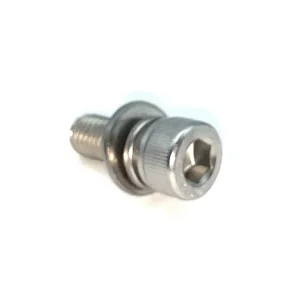
China Stainless Steel Hex Socket Anti-Loosening Combination Bolt
View Specifications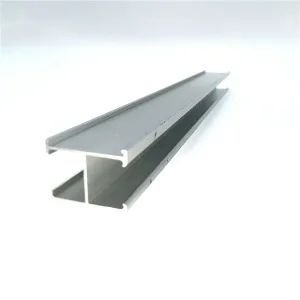
3040 Aluminum Alloy Guide Rail Lightweight PV Mounting System
View Specifications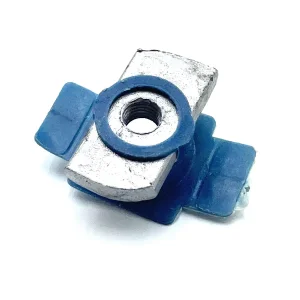
Ergonomic Plastic Wing Nut Durable Tool-Free Fasteners
View Specifications
Best High-Strength Hex Socket Bolt Carbon Steel Fasteners
View Specifications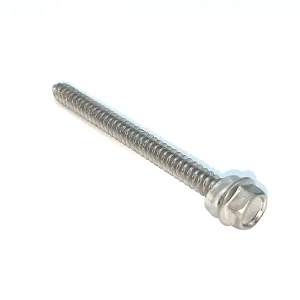
Stainless Steel Self-Drilling Screws for Metal and Wood
View Specifications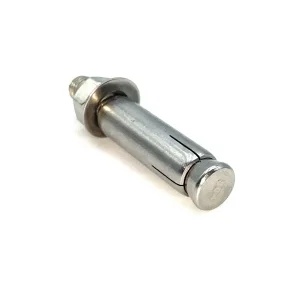
China Stainless Steel Expansion Bolt Heavy-Duty Fasteners
View Specifications
Premium Aluminum Side Clamps for Solar PV Mounting Solutions
View SpecificationsAccelerate Your Project with Handan Youlong Fastener
Whether you require standard bulk deliveries of anchor bolts, high-tensile threaded rods, or customized OEM mounting components tailored to complex load paths, our technical team is ready to assist.