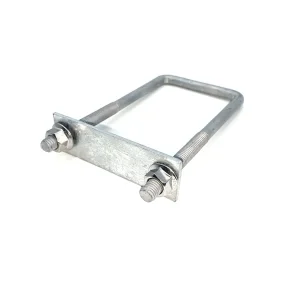
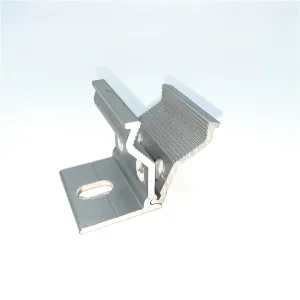
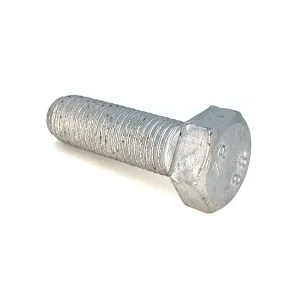
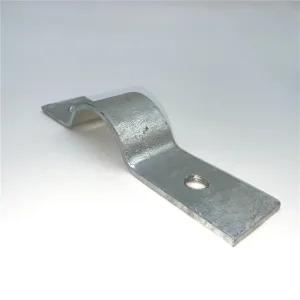
Featured Photovoltaic Mounting & Clamping Series
Fully compliant with international wind load, pull-out, and corrosion specifications for high-reliability modular assemblies.



Global Industrial Status: The Strategic Role of Stainless Steel Cassette Nuts
Why mission-critical telecom enclosures, renewable energy installations, and aerospace avionics racks rely on advanced Chinese precision cold-heading and spring-cage engineering.
Floating Tolerance Absorption
Stainless steel cassette nuts (also known as cage nuts) enclose a threaded core within a spring-steel or austenitic stainless cage. This architecture allows intentional floating play to neutralize structural hole misalignment in folded sheet-metal enclosures.
- Absorbs thermal expansion differentials
- Eliminates stripping cross-threads in unthreaded rails
- Enables single-operator rapid snap-in assembly
Passivated Corrosion Shielding
Fabricated using AISI 304 (A2) and molybdenum-alloyed AISI 316 (A4) grades, our cassette nut configurations undergo complete electrochemical passivation to survive severe C4 and C5 atmospheric corrosive stresses.
- Superior resistance against marine chlorides
- Prevents galvanic cell reaction on aluminum framing
- Validated up to 1,500+ hours neutral salt spray (ASTM B117)
High-Torque Anti-Spin Geometries
Engineered cold-formed square nuts retained inside heavy-gauge cage clips exert balanced counter-torque. The cage's spring wings physically bite into the square punched chassis holes, resisting rotational torquing during high-speed pneumatic fastening.
- Exceeds DIN 34814 torsional strength indexes
- Field-replaceable without thermal cutting or drilling
- Supports automated robotic assembly picking
Emerging Technological Trends in Cassette Nut Manufacturing
How intelligent automation, conductive bonding, and micro-alloy metallurgy are redefining structural joints in global data center racks and solar tracking infrastructures.
Grounding & Bonding Integration
Traditional server racks and solar arrays required separate copper bonding ground jumpers. Next-generation stainless cassette nuts integrate serrated cage teeth that pierce paint and powder-coated layers upon torque-down, establishing instant electrical continuity meeting UL 467 safety protocols.
Automated Progressive Stamping
Yongnian's industrial ecosystem utilizes multi-stage progressive stamping dies operating at up to 250 strokes per minute. The cold-stamped spring legs maintain precise elasticity tolerances of ±0.05 mm, eliminating cage fatigue and permanent yield failure during repetitive cycling.
Anti-Galling Tribological Coatings
Stainless steel threaded assemblies suffer from galling (cold welding) under automated tightening torque. Contemporary manufacturers apply sub-micron solid film lubricants, including MoS2, PTFE-dispersed dry films, or micro-encapsulated wax, which stabilize clamping friction coefficients without fluid contamination.
Stainless Steel Cassette Nut Material & Load Verification Matrix
Empirical mechanical data guide for procurement engineers selecting fastening grades across diverse operating environments.
| Alloy Grade & Standard | Nominal Thread Sizes | Chassis Panel Range | Proof Load Stress | Corrosion Resistance | Optimal Industry Application |
|---|---|---|---|---|---|
| AISI 304 / A2-70 DIN 34814 / ISO 3506 |
M4, M5, M6, M8, M10 | 0.8 mm – 4.0 mm | 700 N/mm² | ISO 9223 C3 Medium | Data Server Racks, Inverter Cabinets, Indoor Switchgear |
| AISI 316 / A4-80 Molybdenum-Enriched |
M6, M8, M10, M12 | 1.2 mm – 4.5 mm | 800 N/mm² | ISO 9223 C5 Very High | Offshore Solar Racking, Coastal Telecom, Chemical Scrubbers |
| Spring Steel C67S + Geomet Zinc-Flake Coated |
M5, M6, M8 | 0.8 mm – 3.2 mm | 650 N/mm² | ISO 9223 C4 High | Automotive EV Battery Trays, Industrial Automation Gantries |
| Duplex SS 2205 (Cage/Nut) Ferritic-Austenitic |
M8, M10, M12 | 1.5 mm – 5.0 mm | 900 N/mm² | Extreme Marine | Heavy Rail Signaling Boxes, Subsea Modular Conduit Brackets |
Localized Application Scenarios in Global Infrastructure
From utility-scale solar farms in desert climates to hyper-scale cloud server centers, see how cassette nuts optimize structural uptime.
Solar Tracking & Combiner Boxes
Utility photovoltaic sites experience severe diurnal temperature fluctuations causing thermal contraction and expansion across tracker torque tubes. Stainless cassette nuts eliminate cold binding, absorbing thermal axial shifts up to ±1.5 mm without loosening.
19-Inch Cloud Data Center Enclosures
Modern hyperscale data racks demand frequent hot-swap reconfiguration. Using stainless steel cassette nuts inside vertical EIA-310-D square punched rails prevents thread strip-out on expensive painted chassis frames while preventing airborne galvanic dust particles.
Automotive & High-Speed Rail Signaling
Rolling stock wayside control boxes undergo harmonic vibration frequencies that shake standard threaded fasteners loose. The captive cage spring mechanism dampens resonant frequencies, preserving clamp preload and ensuring unbroken electrical connectivity.
Frequently Asked Questions: Sourcing Stainless Steel Cassette Nuts
Answers to common structural engineering, surface treatment, and international logistics questions.
What gives stainless steel cassette nuts an advantage over riveted nuts or weld nuts?
Unlike weld nuts, cassette nuts require no heat input, preserving pre-painted, galvanized, or powder-coated surfaces without post-weld corrosion remediation. Compared to rivet nuts (blind inserts), cassette nuts provide dynamic floating play (tolerance compensation) and can be replaced effortlessly in seconds if a technician strips a thread.
How does Handan Youlong control thread galling during automated high-speed torque installation?
Galling is common with austenitic stainless alloys (A2 and A4). We offer custom micro-lubrication finishes, including wax-coating, MoS2, and passivated silicate seals. These dry-to-touch barriers stabilize thread friction coefficients (µ = 0.10 - 0.15), facilitating safe pneumatic torque application without galling or seizing.
Can Youlong customize the cage clip thickness for unusual sheet-metal gauges?
Yes. While standard cassette nuts match panel thicknesses between 0.8 mm and 2.5 mm, our in-house progressive tooling line produces custom long-leg cages engineered for structural rail thicknesses up to 4.5 mm or 5.0 mm. We verify snap-in retention force and extraction resistance for your exact panel profile.
What quality documentation accompanies every export consignment?
Every delivery batch is accompanied by comprehensive EN 10204 Type 3.1 Mill Test Certificates (MTC), spectroscopic chemical analysis, optical dimensional inspection records, Rockwell hardness tests, and neutral salt-spray test certifications validating C3 to C5 atmospheric performance.
Engineered Fasteners & Structural Components
Certified cold-formed bolts, structural screws, and hardware accessories manufactured in Yongnian, China's Fastener Capital.